
Review · DINGLE, IRELAND
Dolphin & Whale Watching (4hrs) + Blasket Island Landing (3hrs)
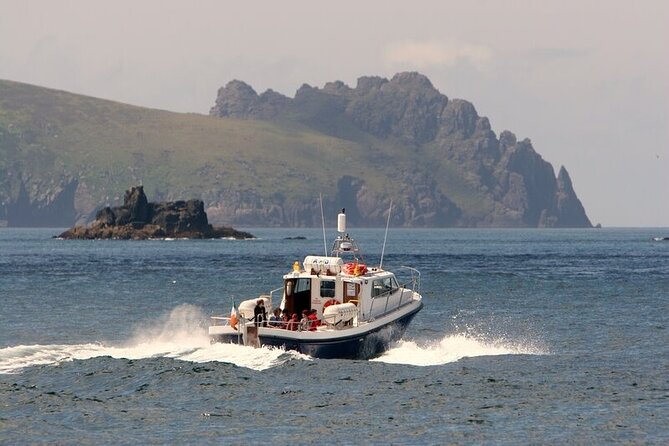
Great Blasket Island is the star here, but the real thrill is the changing scene between Ventry and the outer islands. You may watch dolphins race alongside the boat, scan the water for Minke whales, then step ashore on a deserted island where seals lounge below the rocks. The mix of wildlife and island history gives this trip more substance than a simple boat ride.
I like the small maximum group of 12, which makes the boat feel personal and keeps the viewing less crowded. I also like the generous three hours on Great Blasket, enough time for the loop walk, a swim, the island tea room, or a quiet look at the abandoned village. The main drawback is that wildlife sightings and the full outer-island route depend on weather, sea conditions, and luck.
Key points to know before booking
- Great Blasket gets three full hours ashore, with time for the village, loop walk, beach, seals, tea room, and toilets.
- The boat carries no more than 12 people, a useful advantage for wildlife watching and a more relaxed ride.
- Wildlife sightings are possible, not guaranteed, with common dolphins and Minke whales among the regular hopes, plus puffins, seals, seabirds, and occasional larger whales.
- The outer islands add drama, including Cathedral Rocks on Inish na Bró and the bird cliffs of Inishvickillane.
- You must reach Ventry Pier 15 to 20 minutes early, since the 10am departure will not wait.
- A moderate level of fitness is needed, and the tour is not suitable for children under 10.
Why this seven-hour trip feels different
Many boat trips around Dingle focus on the water alone. This one gives you a proper island stop, which changes the pace. You spend roughly four hours aboard a small vessel, then three hours making your own way around Great Blasket before returning to the sea.
That split matters. Four hours on open water can feel long if the sea is rough or wildlife is quiet. The island break gives you solid ground, a walk, a beach, and a chance to explore at your own speed. You are not simply sitting in the same position waiting for a fin to appear.
The maximum group size of 12 is another real benefit. A small boat makes it easier to hear the skipper and guide, move your view from one side to the other, and ask questions. It also suits people who prefer a low-key outing rather than a large sightseeing cruise.
The price is $155.43 per person. That is not a cheap half-day outing, but you are paying for about seven hours, a small-group boat, the island landing, the guided visit to the deserted village, and the chance to travel among several of the Blasket Islands. I see the value most clearly if you want both wildlife and history. If your only goal is to see dolphins, a shorter boat trip may be enough.
More Whale and Dolphin Watching Tours in the world:
- Tenerife: Eco-Yacht Whale and Dolphin Watching and Swimming
★ 4.7 · 15,619 reviews - Los Cristianos Respectful No-Chase Whale and Dolphin Safari
★ 4.6 · 12,782 reviews - From Funchal: Ecological Catamaran Dolphin Whale Watching
★ 4.5 · 8,204 reviews
Leaving Ventry Pier at 10am
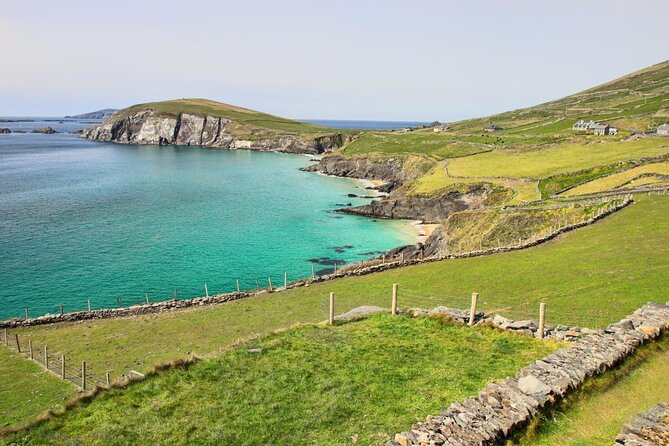
The day begins at Ventry Pier in Ventry Harbour, County Kerry. Plan to arrive 15 to 20 minutes early so you have time to park on the pier and prepare for the safety meeting. The departure is firm at 10am, and the boat does not wait for late arrivals.
Bring warm, windproof clothing even if the morning in Dingle feels mild. Conditions can change quickly once you are out in Dingle Bay, and standing or sitting in sea air for several hours can feel colder than expected. You will also want practical footwear and protection from spray, though the supplied information does not specify any special equipment.
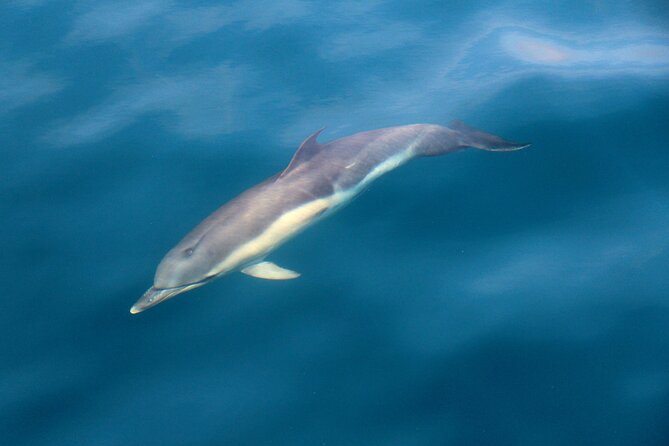
The route first heads across Dingle Bay toward the Blasket Islands. Keep your eyes on the water from the start. Common dolphins and Minke whales are among the main sightings, while bottlenose dolphins, Risso’s dolphins, and basking sharks can appear in season.
These are wild animals, not a scheduled show. You might see a pod close to the boat, or you might spend time scanning empty water. That uncertainty is part of the experience, but it is worth keeping expectations sensible. The boat can take you to good viewing areas, yet no operator can promise a whale or dolphin sighting.
Three hours on Great Blasket Island
The boat is expected to reach Great Blasket Island at about 11am. It ties up at a mooring off White Strand, and you go ashore by a licensed Zodiac dinghy or tender to the island slipway.
The landing itself is worth taking seriously. You are transferring from the main boat to a smaller tender, then stepping onto the slipway. The tour requires moderate physical fitness, so this is not the right choice if you need completely step-free boarding or find small-boat transfers difficult.
Once ashore, you have about three hours to choose your own pace. The island’s deserted village is the main cultural stop, and an OPW guide provides the historical tour. The abandoned homes give you a direct sense of island life rather than a museum display removed from its setting. You are looking at the buildings in the place where families once lived, worked, and faced the hard conditions of the Atlantic edge.
You can also take the loop walk, which lasts about 1.5 hours. That leaves time for a slower stroll, photographs, a swim in the clear water off the beach, or a rest near the shore. The island has a small tea room and toilets, useful facilities on an otherwise remote stop.
The three-hour allowance is one of the strongest parts of the outing. You are not rushed through the village and straight back onto the boat. If you enjoy walking, you can use most of the time on the loop. If you prefer a quiet visit, you can sit near the beach and watch the seals from the nearby rocks.
The drawback is that the island stop is not a guided walking tour from beginning to end. The OPW-led village visit is included, but much of your time is free. That is ideal for independent visitors, less so if you want a tightly structured program with constant commentary.
Watching seals from White Strand
The seal colony is one of the easiest wildlife encounters on the island because you do not need to be on the water to look for it. From nearby rocks, you can watch the seals resting and moving around the shore.
Give yourself time to sit quietly. The seal viewing is not a quick photo stop, and the animals may be farther away than you expect. Binoculars would be useful, though they are not listed as included, so bring your own if you have them.
Swimming is possible off the beach, but only you can judge the conditions on the day. The tour information describes the water as pristine, not necessarily warm or calm. Treat the swim as an option rather than a central promise of the trip.
More whale trips worth the boat ride around the world:
- Reykjavík: Whale Watching and Marine Life Cruise
★ 4.6 · 9,838 reviews - Juneau Wildlife Whale Watching
★ 5.0 · 7,379 reviews - Juneau Wildlife Whale Watching & Mendenhall Glacier
★ 5.0 · 6,236 reviews - Funchal: Dolphin and Whale Watching Catamaran Cruise
★ 4.5 · 5,697 reviews
The outer Blaskets after 2pm
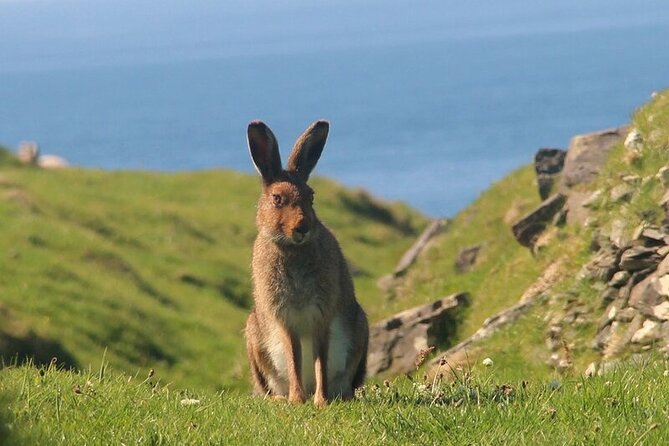
At about 2pm, the boat collects everyone from Great Blasket and continues around some of the outer islands. This is when the trip becomes especially rewarding for people interested in birds, rock formations, and remote sea views.
The exact route depends on the skipper and the conditions. You may pass Inish Tuaisceart, also known as The Dead Man or The Sleeping Giant. Seen from near Slea Head, its shape can suggest a reclining figure, and some people see an outline resembling Abraham Lincoln. The island is best viewed from a distance, where its form is easier to read.
You may also reach Tearaght, the westernmost of the Blasket Islands. It has a lighthouse on its western end, described as the most westerly lighthouse in mainland Europe. The boat only circles Tearaght in fine, settled weather with a light swell, which is uncommon around the Blaskets. Consider this an extra possibility, not part of the guaranteed route.
That weather rule is sensible. The more exposed islands are at the Atlantic edge, and a safe, comfortable trip matters more than forcing the longest route. If Tearaght is not possible, the tour can still include Great Blasket, Inish na Bró, Inishvickillane, and wildlife watching around the islands.
Cathedral Rocks on Inish na Bró
The boat spends about 15 minutes near Inish na Bró, where Cathedral Rocks form a striking natural structure on the island’s northeastern point. Openings in the rock resemble windows and doors, while the surrounding stone can look like buttresses on a giant Gothic church.
You pass close beneath the formation, giving you a good view of the rock from sea level. This short stop is not a landing, but it breaks up the open-water ride and shows what winter storms have carved into the islands.
The timing is brief, so keep your camera ready and listen for instructions from the skipper. The view changes quickly as the boat moves past the rocks.
Puffins and red deer at Inishvickillane
Puffins are associated with the Blaskets, but the main Great Blasket sees too much marine traffic for the best viewing. The boat therefore heads toward outer islands such as Inishvickillane and Inish na Bró.
Near Inishvickillane, puffins may gather in groups on the water. They are smaller than many people expect, so do not look only for a large, colorful bird close to the boat. Their bright beaks are easier to notice through binoculars.
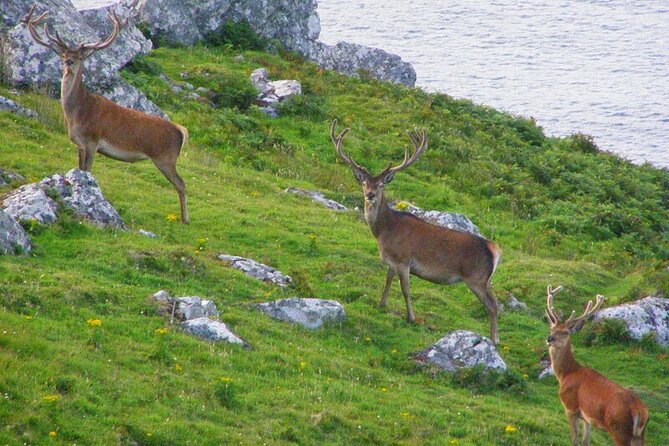
The cliffs may offer another surprise. Native red deer stags can sometimes be seen high above, silhouetted near the tops of the cliffs. This is a good reminder to scan vertically as well as across the water. One moment you are watching puffins below, and the next you may be looking toward a stag on the skyline.
Bird sightings are seasonal and weather dependent. The tour may also include other seabirds, but the provided details do not promise particular species or numbers. If birdwatching is a major reason for booking, bring binoculars and accept that conditions will shape the day.
What the wildlife watching is really like
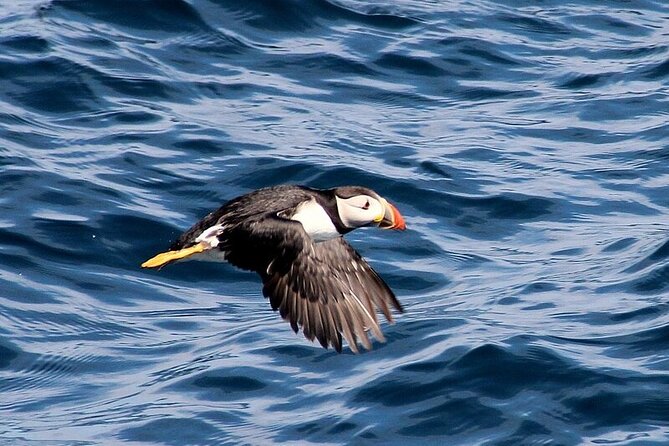
The main hopes are common dolphins and Minke whales. Bottlenose dolphins, Risso’s dolphins, and basking sharks may also appear, with basking sharks noted as seasonal sightings. Humpback whales can occasionally be seen migrating past the coast.
You should think of this as a search through a living marine area, not a guaranteed animal encounter. The skipper chooses the course based on conditions and what is being seen, but wildlife remains unpredictable.
I like that the trip combines several kinds of viewing. Dolphins may keep you focused on the surface near the boat. Whales require patience and a wider view. Puffins and seabirds call for attention near cliffs and the water, while seals are best watched from the island shore.
The small boat helps here because you are closer to the sea than you would be on a large vessel. It can also mean more movement in the swell. If you are prone to seasickness, the four-hour marine portion deserves careful thought, especially since the tour needs good weather but can still encounter normal Atlantic motion.
Who will get the most from this experience
I would recommend this trip to adults and families with children aged 10 or older who enjoy a full day outdoors and do not need every minute planned. It suits people who want a combination of natural history, island culture, walking, and photography.
It is also a good match for anyone staying around Dingle who wants to see the Blaskets from both perspectives: on the water and on land. The deserted village gives the trip a human story, while the seals, birds, and rock formations keep it tied to the sea.
You should think twice if you want a guaranteed whale sighting, dislike boat transfers, or prefer a short and simple excursion. The island walk can be skipped, but you still need to manage the tender landing and spend several hours at sea.
Booking, cancellations, and practical details
The experience is offered in English, and you receive a mobile ticket. Confirmation arrives at booking. Service animals are allowed.
The tour has free cancellation up to 24 hours before the 10am start time. Changes or cancellations made less than 24 hours before departure are not accepted for a refund. If poor weather forces a cancellation, you are offered another date or a full refund.
The return is to Ventry Pier, the same place where you begin. Snacks are not included, so plan accordingly. The island tea room is available, but it is wise not to depend on it for every food need.
The experience is booked an average of 46 days ahead, which suggests that you should not leave it until the last minute if your Dingle dates are fixed. Since weather can also affect the trip, booking early while keeping the cancellation deadline in mind gives you the best chance of fitting it into your plans.
Should you book the Blasket Islands EcoMarineTours trip?
Book it if you want more than a wildlife cruise. The strongest reason to choose this outing is the balance: three hours on Great Blasket Island, a guided visit to the deserted village, seal watching, and several more hours among the outer islands.
The $155.43 price makes sense for a full seven-hour day with a maximum of 12 people, but only if you value the island landing and cultural stop. Go prepared for wind, sea motion, and wildlife that may not appear on schedule.
Arrive early, dress warmly, bring binoculars if you have them, and keep your plans flexible. If the sea is kind, you may see dolphins, whales, puffins, seals, seabirds, and some of Ireland’s most unusual rock formations in one day. Even when nature keeps its distance, Great Blasket and its deserted village give the trip a solid reason to go.
FAQ
Where does the tour begin?
The tour begins at Ventry Pier in Ventry Harbour, County Kerry, Ireland.
What time does the boat leave?
The boat leaves at 10am. You should arrive 15 to 20 minutes early to park on the pier and attend the safety meeting. The boat will not wait for late arrivals.
How long is the experience?
The experience lasts approximately seven hours. The schedule includes about four hours on the water and three hours on Great Blasket Island.
How much time do I have on Great Blasket Island?
You have about three hours on the island, from roughly 11am until the boat collects passengers again at 2pm.
What wildlife might I see?
Possible sightings include common dolphins, Minke whales, bottlenose dolphins, Risso’s dolphins, basking sharks in season, puffins, seals, seabirds, red deer stags, and occasional humpback whales.
Is the tour suitable for children?
The tour is not suitable for children under 10 years old. Participants should have a moderate level of physical fitness.
What happens if the weather is poor?
The experience requires good weather. If it is canceled because of poor conditions, you are offered a different date or a full refund. You can cancel for a full refund up to 24 hours before the scheduled start time.
Newly added whale trips around the world
- Victoria, BC: 3-Hour Ultimate Whale & Marine Wildlife Tour★ 4.6 · 191 reviews
- Vancouver Whale Watching Safari★ 4.6 · 45 reviews
- Vancouver: Day Trip to Victoria Seaplane with Whale Watching★ 4.5 · 109 reviews
- Vancouver: Open-air Whale Watching Tour, Granville Island★ 4.9 · 51 reviews
- Victoria: Whale Watching Adventure in a Zodiac Boat★ 4.5 · 129 reviews
- Vancouver Island: People Water Land – Indigenous & Whales★ 4.6 · 8 reviews
- Vancouver Island: Whale Watching Tour★ 3.3 · 2 reviews
- Vancouver: Zodiac Whale Watching Tour from Granville Island★ 4.6 · 6 reviews
Whale and Dolphin Watching Tours, side by side.
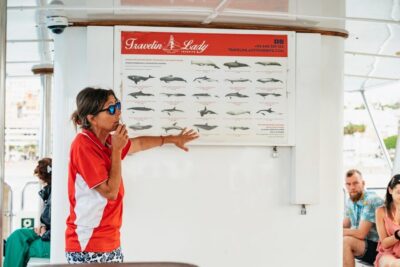
Eco-Yacht Whale and Dolphin Watching and Swimming
Read our review →
Los Cristianos Respectful No-Chase Whale and Dolphin Safari
Read our review →

Whale & Dolphin Eco-Cruise with Snacks & Drinks
Read our review →
Dolphin & Whale Watching Cruise with Swim Stop
Read our review →
Dolphin & Whale Watching Cruise, Drinks & Swim
Read our review →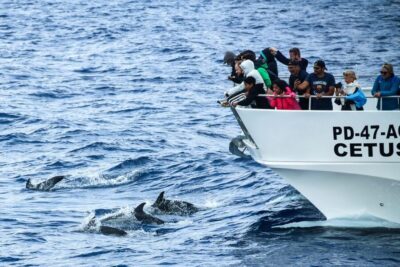
Lists this trip appears in