Review · CANADA
Newfoundland Puffin and Whale Watch Cruise
The star of this cruise is the Witless Bay Ecological Reserve, where millions of seabirds gather on rocky islands and whales feed offshore. You may see Atlantic puffins, murres, gannets, kittiwakes, and dolphins, with icebergs adding another layer of drama in May and June.
I like the roomy catamaran, which gives you outdoor viewing space plus an inside cabin when the North Atlantic turns cold or wet. I also like the local flavor: crew members mix wildlife facts with Newfoundland stories, music, humor, and sometimes a memorable screech-in ceremony. The main caution is simple: whales and icebergs are never guaranteed, and a full boat can make a quick whale sighting hard to catch.
At a glance
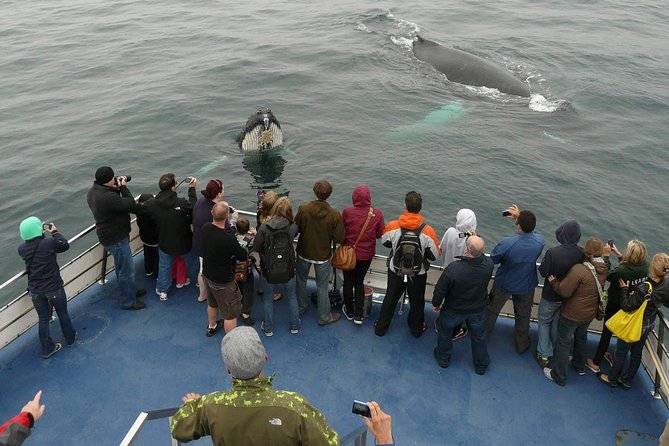
- Millions of seabirds at close range: The reserve is home to more than 2.5 million birds, including Atlantic puffins and northern gannets.
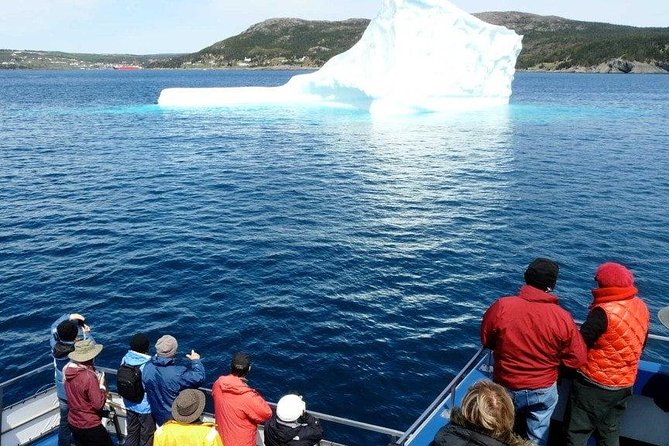
- Icebergs in May and June: Ice from Greenland drifts along the coast and reaches the reserve in changing shapes and sizes.
- Best whale odds from mid-June to mid-August: Humpbacks are a seasonal highlight, but sightings depend on nature.
- A catamaran built for groups: The vessel can carry up to 100 people on its outside decks, with an interior cabin and washrooms.
- Newfoundland culture on the water: Expect live commentary, local stories, songs, and a friendly crew.
- Easy access from St. John’s: The Bay Bulls dock is about 25 minutes from downtown by car, with paid pickup available from select hotels.
From Bay Bulls to the Witless Bay Reserve
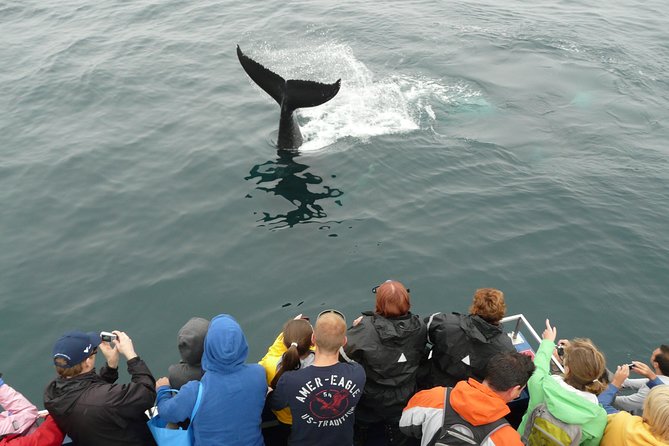
You begin at a private dock in Bay Bulls, roughly 25 minutes south of downtown St. John’s. Free parking is available on site, so driving yourself is the simplest and least expensive option if you have a car.
At the dock, you board a large catamaran and receive a safety briefing before departure. The boat has outside decks for viewing and an enclosed cabin for rough weather. That indoor space matters in Newfoundland, where a sunny morning in town can turn into a cold, windy ride offshore.
The vessel is built to handle a sizable group, with room for up to 100 people on the outside decks. That capacity is useful for families and larger groups, but it also creates the main viewing challenge. If everyone rushes to one side when a whale surfaces, your view may be blocked. Try to spread out early and listen closely to crew directions.
The cruise lasts about 90 minutes, although some departures run closer to two hours depending on conditions and wildlife activity. The crew may spend extra time with animals when the sea and schedule allow. Plan your day around the stated 90-minute duration, but do not be surprised if you spend a little longer aboard.
More Whale Watching and Wildlife Cruises in Canada
- Victoria Whale and Wildlife Cruise
★ 5.0 · 1,729 reviews - 2 Hour Award-Winning Whale and Seabird Boat Tour from St. John’s
★ 4.5 · 455 reviews - Cowichan Bay Half Day Whale & Wildlife Adventure
★ 5.0 · 393 reviews
Stop 1: Gatherall’s dock and the Bay Bulls departure
The dock is more than a place to line up. It is the practical base for the cruise, with free parking, a small shop, drinks, snacks, and souvenirs. If you are not driving, a shuttle from select St. John’s hotels can be arranged for an extra fee.
This pickup option needs careful attention. The booking information can make hotel transportation sound included, but the shuttle is actually an added service. It costs roughly CA$35 plus tax per person, or about CA$40 depending on the current charge, and must be confirmed in advance. Call Gatherall’s several hours ahead, and ideally at least a day before departure, rather than assuming your hotel pickup is set.
The drive from St. John’s takes about 25 to 30 minutes. A shuttle can be worthwhile if you do not have a rental car, and drivers such as Janice and Joanne have been praised for sharing local information along the way. If you already have transportation, driving yourself saves a noticeable extra charge.
Stop 2: Bull Head and the open North Atlantic
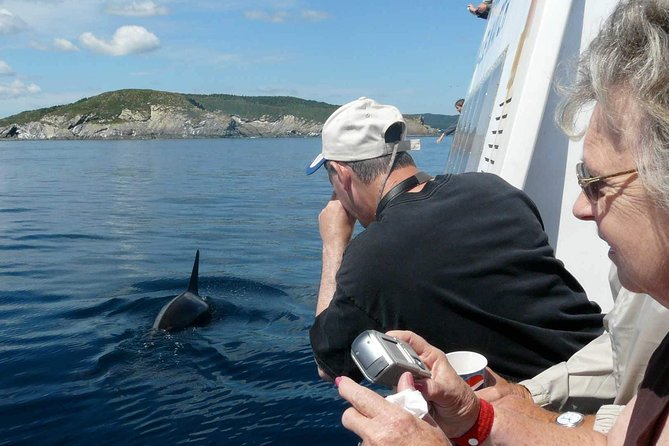
Once the catamaran leaves Bay Bulls, the ride itself becomes part of the experience. Bull Head and the surrounding coast give you broad views of cliffs, islands, open water, and the rugged edge of Newfoundland.
Do not dress for the weather you see at your hotel. It can feel cold and windy offshore even on a warm, sunny day. Wear layers, bring a waterproof outer jacket, and keep a hat or hood handy. You will enjoy the viewing decks much more if you are comfortable enough to stay outside.
The boat’s movement can change with wind and waves. Crew members may ask you to remain seated or stop standing in certain sections. Follow those instructions. They are intended to keep people safe when the vessel turns, slows, or meets rougher water.
If you are prone to seasickness, plan ahead. The tour operator does not promise calm water, and one passenger described becoming sick despite still enjoying the trip with help from the crew. The interior cabin offers shelter, and wildlife can sometimes be seen from inside, but sitting lower and looking toward the horizon may help.
Stop 3: Gull Island and the seabird colonies
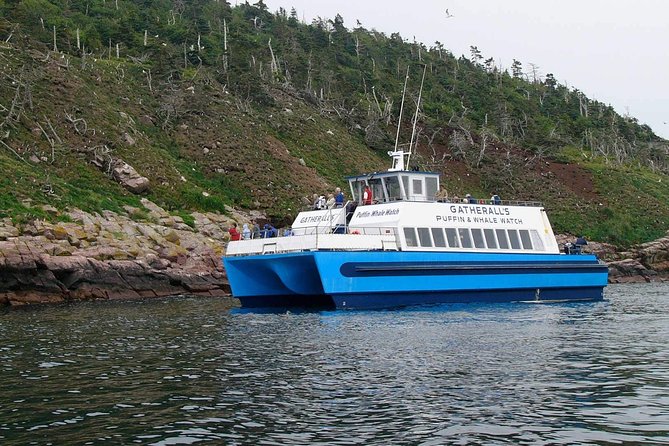
The central wildlife stop is the Witless Bay Ecological Reserve, including the islands around Gull Island. The boat pauses near sheltered areas so you can watch the birds on the rocks and in the air.
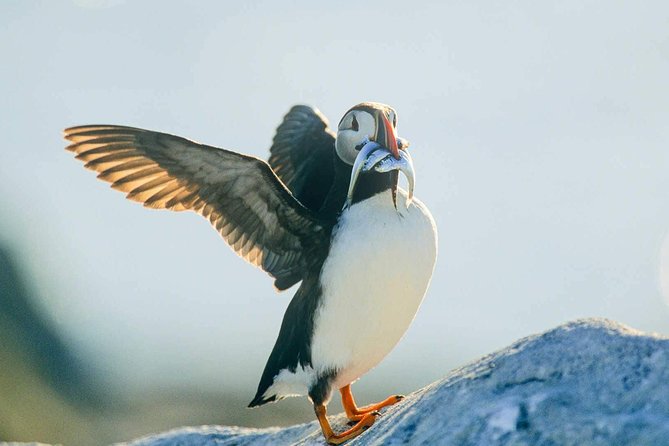
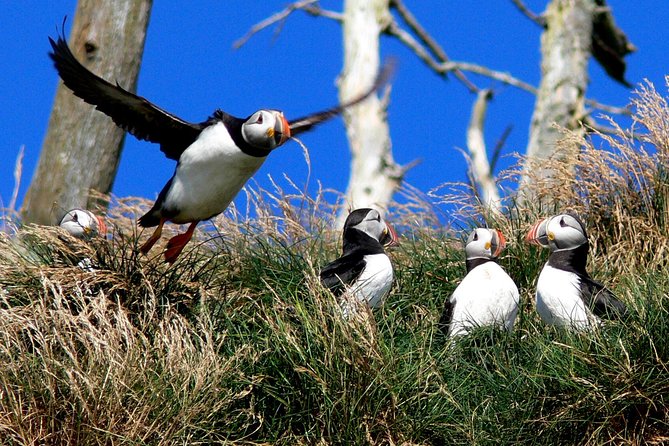
The scale is impressive. More than 2.5 million seabirds use the reserve, and the sound and movement build as the boat approaches. Atlantic puffins are the crowd favorite, but they are smaller than many people expect. Binoculars help you see their bright bills, compact bodies, and movements around the nesting sites.
You may also see common murres, black guillemots, northern gannets, greater shearwaters, northern fulmars, and black-legged kittiwakes. Each species uses the cliffs and water differently, so the onboard commentary adds real value. The crew explains what you are seeing instead of leaving you to identify a blur of black, white, and gray birds.
This is a good cruise for children because there is constant activity. Birds fly overhead, land on the islands, and disappear into the water. The crew’s humor and lively presentation also help hold attention during stretches when wildlife is farther away.
Bring binoculars if you have them. The boat gets you close, but seabirds still occupy cliffs and ledges at a distance. A camera with a strong zoom lens helps, too, although you should make time to watch rather than spend the whole cruise chasing photographs.
More Whale Watching Cruises in Canada
- Victoria Whale Watching Cruise with Expert Naturalists
★ 4.5 · 305 reviews - Victoria Sunset Whale-Watching Cruise
★ 5.0 · 281 reviews - Campbell River: Whale & Wildlife Discovery Cruise
★ 4.8 · 143 reviews - Victoria Shore Excursion: Whale-Watching Cruise with Expert Naturalist Guides
★ 4.5 · 23 reviews
Iceberg Alley in May and June
Icebergs are seasonal visitors. Ice drifting down from Greenland reaches Newfoundland in spring and early summer, with May and June offering the main chance to see them on this cruise.
By the time the ice reaches the reserve, it has been shaped by waves, sunlight, wind, and salt water. You might see small pieces of ice, large sculpted formations, or nothing at all. Their presence depends on the year, the current, and the timing of your departure.
This makes May and June appealing if icebergs are your main goal. The tradeoff is that the strongest whale period comes later, from mid-June through mid-August. A mid-June trip can offer some overlap, but nature does not follow a firm timetable.
Whale watching from mid-June to mid-August
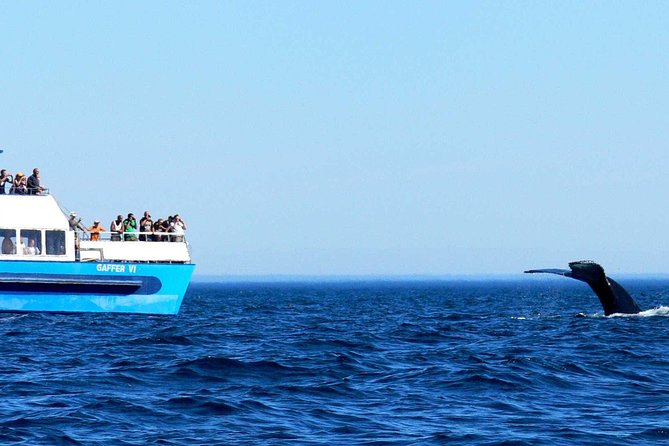
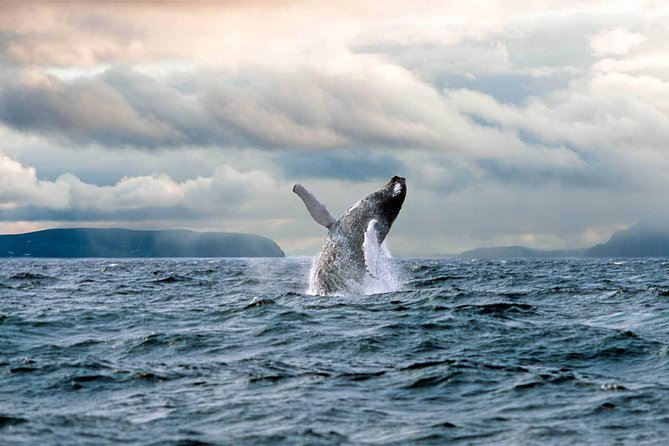
The best chance for whales comes from mid-June through mid-August. Humpbacks are the main seasonal draw, and lucky departures have seen mothers with calves, male escorts, dolphins, and even a rare sperm whale.
That kind of sighting can be unforgettable, but you need to set fair expectations. Whales are wild animals. They can surface for only a few seconds, appear on the far side of the boat, or never show up during your trip. Even when a whale is present, one quick blow may be all you get.
This is where the crew’s experience helps. Staff use wireless microphones, point out sightings, repeat information, and answer questions. Still, no crew can control where an animal surfaces. If whale watching is your top priority, book during the peak season and, if your schedule allows, leave room for a second attempt.
A full boat adds another variable. The outside decks are large, but a crowd may gather at the same rail. Stand where you have a clear line of sight, avoid blocking others, and move when directed by crew. You may miss a brief appearance, so keep watching rather than waiting for an announcement.
The crew, commentary, and Newfoundland character
The wildlife matters, but the people shape the day. The crew combines practical safety guidance with stories about the coast, seabirds, geology, and Newfoundland culture.
Names connected with the operation include guides Jane, Rebecca, and Cole, along with shuttle drivers Janice and Joanne. Captain Al has also been praised for calm handling and clear expectations. Staff assignments can change, but you can expect local crew members who are comfortable speaking about the animals and the place.
Music and storytelling are part of the tone. Crew members may sing Newfoundland songs during the trip, and some departures include a screech-in ceremony on the way back. If you want a quiet scientific outing, this lively local style may feel more social than expected. If you enjoy humor and a sense of place, it adds something a standard wildlife cruise often lacks.
The commentary comes through wireless microphones, which makes it easier to hear from different parts of the boat. Ask questions if you need something repeated. The crew is used to helping people follow a sighting or understand why the boat has stopped.
Is CA$94.06 a fair price?
At CA$94.06 per person, the cruise is not a cheap add-on, but it is a reasonable price for a boat trip into a major protected wildlife area. The cost covers the guided cruise, safety equipment, the pre-departure briefing, and access to the onboard crew and naturalists.
The value is strongest when you see several kinds of wildlife. Puffins and other seabirds are the most dependable seasonal feature, while whales and icebergs add a welcome bonus. If you pay the same price mainly for a guaranteed whale encounter, you may be disappointed.
Transportation changes the calculation. Driving from St. John’s and using the free parking keeps the total down. A hotel shuttle adds about CA$40 per person, but it may be worth the cost if you do not have a car or prefer not to manage the drive to Bay Bulls.
Multiple departure times make it easier to fit the cruise into a St. John’s visit. The activity ends back at the same meeting point, so allow extra time for the return drive if you have dinner plans or another booking.
Who should book this cruise?
I would choose this cruise for families, bird lovers, photographers, and anyone who wants a short trip with a strong sense of place. Children have plenty to watch, and the crew’s songs and humor help keep the ride lively.
It also suits first-time visitors who want a guided introduction to Newfoundland’s coast. You do not need specialist birding skills. The crew helps you identify species and explains what makes the reserve important.
You should think twice if you dislike cold, wind, crowded viewing areas, or uncertain wildlife sightings. The boat has an indoor cabin, but the best views are usually outside, and the North Atlantic can be rough. This is a nature outing, not a controlled animal show.
Cancellation is free up to 24 hours before departure. If poor weather cancels the cruise, you can choose another date or receive a full refund. The operator can also reschedule or refund a trip it cancels, so keep an eye on your phone before departure in case the time changes.
My recommendation
I would book this cruise if you can accept the basic rule of wildlife watching: you pay for access to the right habitat, not a guaranteed performance. Puffins and seabirds are the core experience, while whales and icebergs depend on season and luck.
For the best match, aim for mid-June through mid-August if whales matter most, or May and June if icebergs are your priority. Drive yourself to Bay Bulls when possible, bring binoculars and warm layers, and leave enough time to enjoy the commentary rather than chasing every photograph. The mix of seabird colonies, open water, local music, and Newfoundland hospitality makes this a strong choice for a St. John’s itinerary.
FAQ
Where does the puffin and whale cruise depart?
The cruise departs from a private dock in Bay Bulls, Newfoundland, about 25 minutes from downtown St. John’s by car.
How long does the cruise last?
The advertised duration is approximately 1 hour and 30 minutes. Some trips may last closer to two hours, depending on sea conditions and wildlife activity.
What wildlife can I see?
You may see Atlantic puffins, common murres, black guillemots, northern gannets, greater shearwaters, northern fulmars, black-legged kittiwakes, whales, dolphins, and other marine life. Sightings vary by season and are not guaranteed.
When is the best time to see whales?
Peak whale watching runs from mid-June through mid-August. Whales are wild animals, so even during peak season, sightings cannot be promised.
When can I see icebergs?
Icebergs are most likely in May and June as pieces of Greenland ice move along the coast through Iceberg Alley.
Is transportation from St. John’s included?
Hotel transportation is available from select hotels for an additional fee. It must be confirmed in advance. Driving yourself is another option, and free parking is available at the Bay Bulls dock.
Is the boat equipped for bad weather?
Yes. The catamaran has outside viewing decks, an interior cabin, and washrooms. The cruise operates in all weather conditions unless the operator cancels for poor weather, so you should dress in warm, weather-appropriate layers.
Can children join the cruise?
Yes. Children can participate but must be accompanied by an adult. All passengers receive a safety briefing and must follow the crew’s instructions.
Newly added whale trips around Canada
- Vancouver Whale Watching Safari★ 4.6 · 45 reviews
- Victoria, BC: 3-Hour Ultimate Whale & Marine Wildlife Tour★ 4.6 · 191 reviews
- Vancouver: Open-air Whale Watching Tour, Granville Island★ 4.9 · 51 reviews
- Victoria: Whale Watching Adventure in a Zodiac Boat★ 4.5 · 129 reviews
- Vancouver: Day Trip to Victoria Seaplane with Whale Watching★ 4.5 · 109 reviews
- Vancouver Island: People Water Land – Indigenous & Whales★ 4.6 · 8 reviews
- Vancouver Island: Whale Watching Tour★ 3.3 · 2 reviews
- Vancouver: Zodiac Whale Watching Tour from Granville Island★ 4.6 · 6 reviews
Canada Whale Watching Tours, side by side.
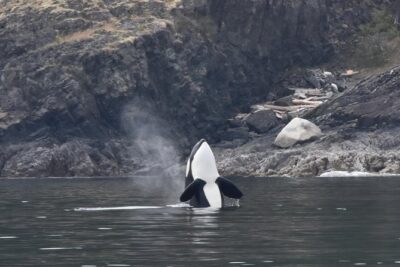
Vancouver Half-Day Whale Watching Adventure with Free Photos
Read our review →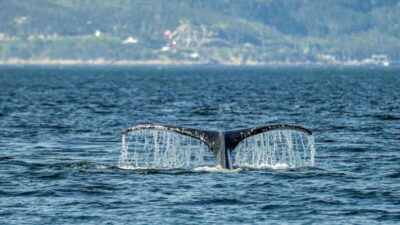
Tadoussac/Charlevoix: Whale Watching Zodiac Tour
Read our review →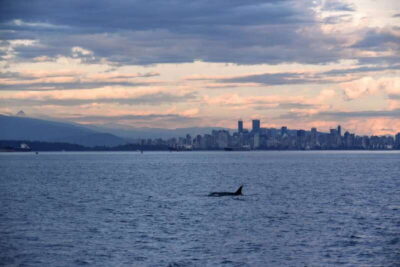
Covered Whale Watching Adventure with Free Photos
Read our review →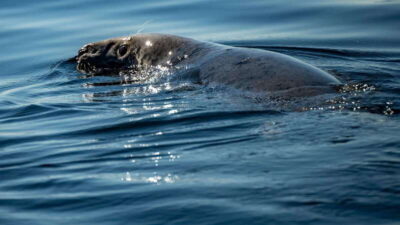
Tadoussac/Charlevoix: 3-Hour Whale Watching Boat Tour
Read our review →