
Review · TENERIFE
Whale Watching Eco-Adventure from Costa Adeje
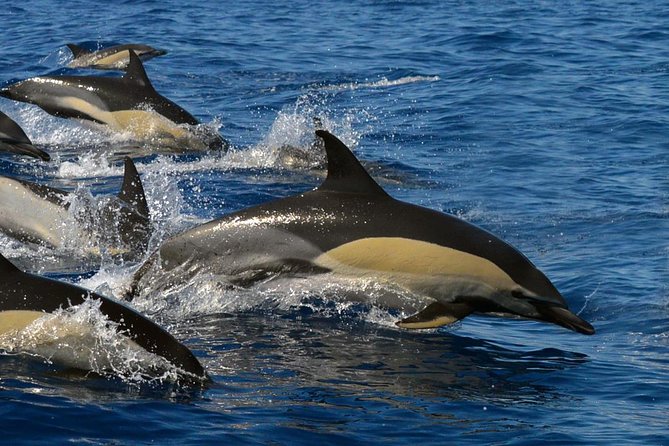
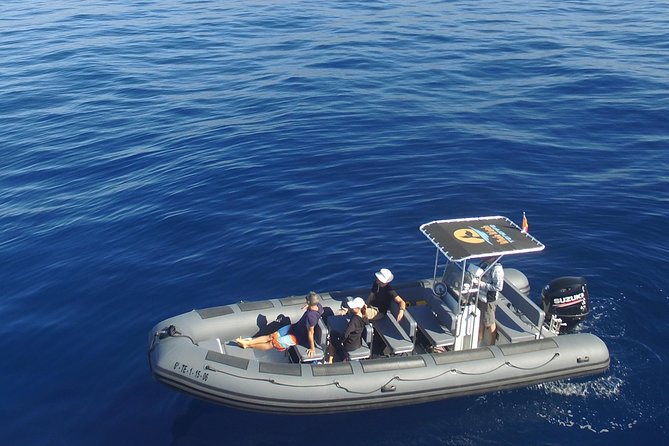
The best part of this Costa Adeje whale-watching trip is its small eight-meter boat, which carries no more than 10 people into the Teno-Rasca Marine Protected Area. You get a close view of the sea without the crowd and engine noise of a large excursion vessel. Pilot whales and dolphins are the main targets, with turtles and flying fish possible extras.
I like the use of a hydrophone, which lets you listen for whales and dolphins below the surface, and the free wildlife photos sent after the tour. I also like the careful approach to the animals, with guides such as John and Ion explaining what you see while keeping their distance.
The main drawback is simple: this is a wildlife trip, not a guaranteed sighting. The boat is quick and exposed, the sea can be rough, and the tour is not suitable for infants under three, pregnant passengers, people with certain medical conditions, or anyone over 130 kilograms.
Key points to know before booking
- Small group of up to 10: You get a much better view than on a large boat, and it is easier to hear the guide.
- Two hours on the water: The trip is short enough to fit into a busy Costa Adeje day, yet long enough to reach regular whale and dolphin areas.
- Teno-Rasca Marine Protected Area: The route takes you into protected waters where pilot whales and several dolphin species may be seen.
- Biologist guides: John, Ion, and other guides provide live commentary in English and Spanish, covering wildlife, safety, and conservation.
- Hydrophone and free photos: You can listen for cetaceans underwater and receive high-resolution wildlife photographs by email.
- Respectful wildlife watching: The boat is operated to avoid putting unnecessary stress on the animals.
Why this small boat changes the experience
Puerto Colón is one of Tenerife’s main boating points, so you will find plenty of whale-watching options along the Costa Adeje coast. This one takes a different approach. The boat is a rigid hull inflatable vessel, often called a RIB, built for speed and visibility rather than for lounging in a cabin.
That design matters. With only 10 people aboard, you are not fighting for a place at the rail. A small group also makes it easier for the guide to point out a distant blow, a fin, or a sudden movement without shouting across a crowded deck.
You should expect a firm, open-air ride. The boat can move quickly between sightings, which helps cover more water during the two-hour trip. The trade-off is less shelter from sun, wind, and spray. If you prefer a slow, stable cruise with indoor seating, this may not be your best choice.
For most people, the compact format is the reason to book. You spend less time looking past other passengers and more time watching the sea. The guide can answer questions directly, and the group usually feels more like a field outing than a standard harbor cruise.
More whale trips worth the boat ride around Tenerife:
- Tenerife: Eco-Yacht Whale and Dolphin Watching and Swimming
★ 4.7 · 15,619 reviews - Los Cristianos Respectful No-Chase Whale and Dolphin Safari
★ 4.6 · 12,782 reviews - Costa Adeje: Whale & Dolphin Eco-Cruise with Snacks & Drinks
★ 4.6 · 5,096 reviews
Leaving Puerto Colón for protected waters
The meeting point is Whale Watch Tenerife at Puerto Colón Marina, Pantalán Number 3, in Costa Adeje. The activity begins and ends at the same place, which keeps the day simple. The marina is near public transportation, and the departure point is in a busy coastal area with other boat services.
Arrive with enough time to find the correct pontoon and settle in before boarding. One piece of useful advice comes from the practical setup of this tour: early departures can be easier for parking at the port. If you are driving, do not assume the marina will be quiet at every hour.
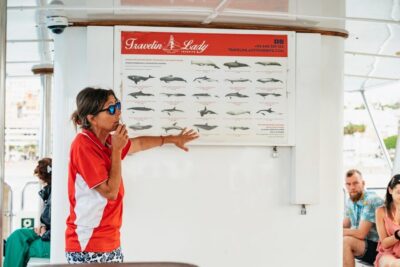
Once aboard, the guide gives the safety information and explains how the boat will approach wildlife. Guides speak English and Spanish. John and Ion are both frequently praised for their warmth, clear explanations, and strong interest in marine life, so the quality of the commentary is an important part of the outing.
The route heads toward the Teno-Rasca Marine Protected Area. This stretch of sea is known for regular cetacean activity, especially pilot whales. You are not visiting an aquarium or a managed animal park. The animals move freely, and the crew must work with the conditions on that particular day.
That is the right mindset. Some trips may produce whales within 20 minutes. Others may require more searching, and sightings can never be promised. The crew may also hear or locate animals through cooperation with other boats, but the aim is to observe rather than chase.
Pilot whales, dolphins, and the value of patience
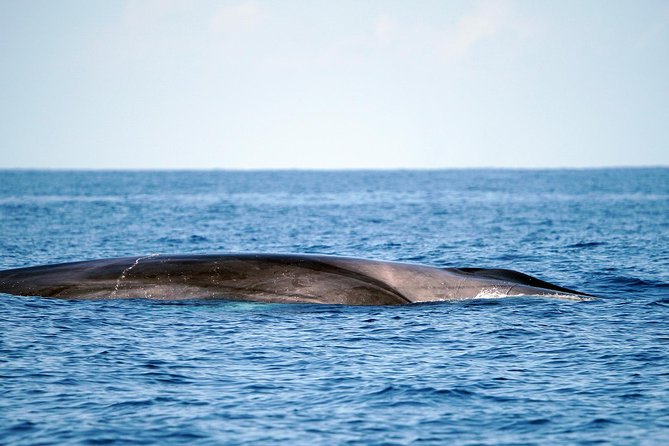
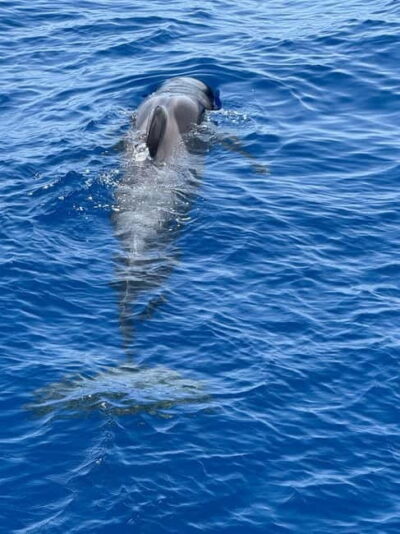
Pilot whales are the main regular sighting in the supplied trip information. You might see a single animal, several groups, or a larger pod spread across the water. The boat may pause near them, allowing you to watch their movements without pressing too close.
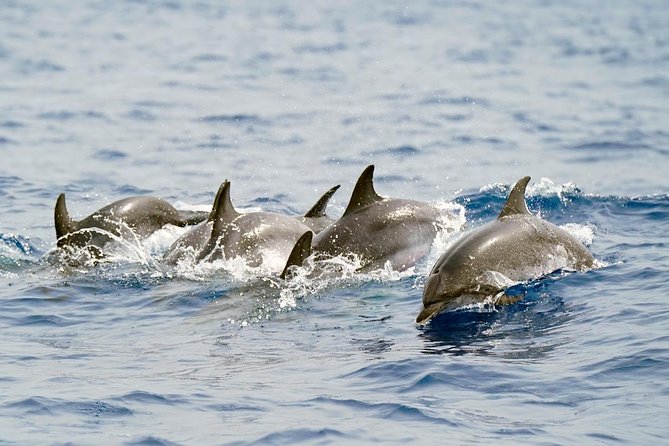
Dolphins can add a burst of energy to the trip. Atlantic spotted dolphins and bottlenose dolphins have been seen, sometimes in the same outing as pilot whales. Dolphins may travel beside the boat, leap, or disappear just as quickly, so keep watching the water rather than waiting for a perfect photo opportunity.
The most useful advice is to scan widely. Look ahead of the boat, behind it, and across the open water. Your guide will help, but sightings can happen on either side, and the small boat gives you a clear view in several directions.
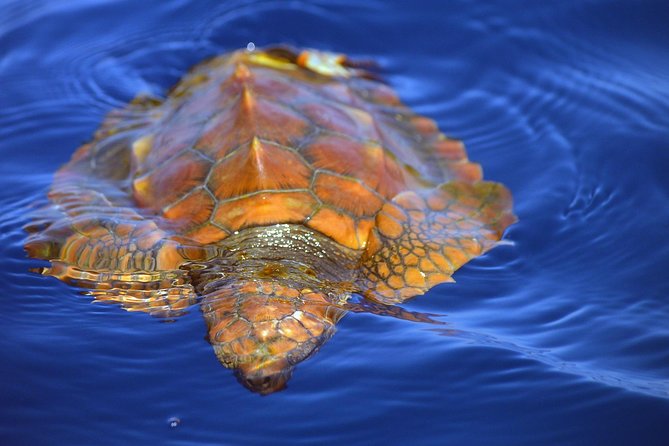
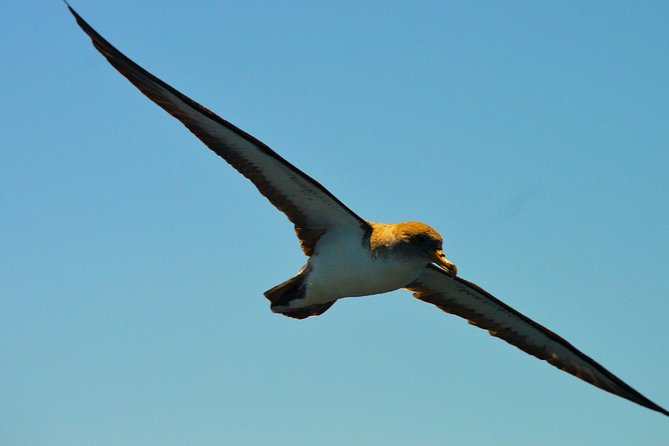
You might also see sea turtles, flying fish, or a Portuguese Man of War. These are chance sightings, not promises, but they show why the trip is more than a search for one headline animal. You are spending two hours paying attention to a living marine environment.
The tour’s approach is deliberately restrained. The boat does not try to force a close encounter or cut across the animals’ path. That may mean a sighting feels less dramatic than a boat racing right toward a pod, but it also makes the experience more responsible. You get to observe wildlife in its own setting without treating the animals like performers.
What the biologist commentary adds
A good whale-watching trip depends on more than finding an animal. You also need help understanding what you are seeing. The guides explain species, behavior, marine conservation, and the need to give animals room.
John is especially noted for making safety instructions clear while keeping the tone friendly. Ion is also praised for his island and wildlife knowledge. Both names appear often in connection with passionate guiding, but the exact guide on your departure can vary.
The live commentary is in English and Spanish. The hydrophone adds another layer by letting you listen for whales and dolphins beneath the surface. This is a useful feature because it reminds you that much of the action is happening below the boat, even when the surface looks calm.
The explanations also help younger passengers understand why wild animals should remain wild. This can be a thoughtful alternative to seeing marine mammals in a captive setting. Families are welcome when children meet the age and safety requirements, and the trip can turn a holiday outing into a practical lesson in conservation.
Do not expect a formal classroom presentation. The information comes as the boat moves, pauses, and responds to what appears in front of you. That informal rhythm suits the setting and leaves room for questions.
Same migration, a different deck:
- Los Gigantes: Dolphin & Whale Watching Cruise with Swim Stop
★ 4.7 · 4,539 reviews - Costa Adeje: Whale Watching Catamaran Tour with Drinks
★ 4.7 · 3,653 reviews - Tenerife: Whale & Dolphin Watching Cruise with Swim Stop
★ 4.7 · 3,227 reviews - Los Cristianos: Viking Cruise Whales & Dolphins Watching
★ 4.6 · 3,132 reviews
Photos without the pressure to get the perfect shot
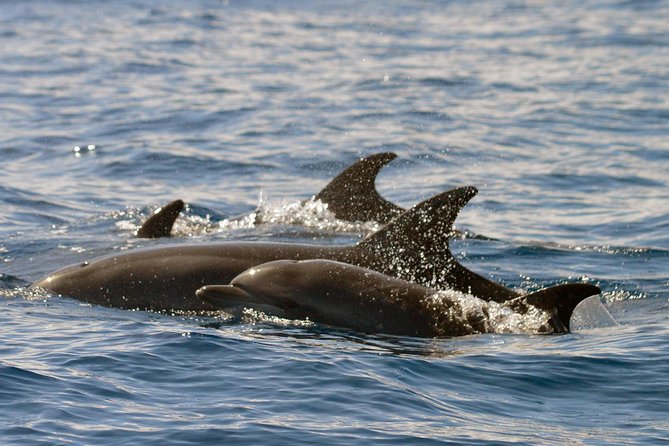
The crew takes photos of the cetaceans during the trip and sends them by email at no extra charge. That is a useful benefit on a fast-moving boat, where a phone camera may catch only a blur or a patch of water.
You should still bring your phone if you want personal pictures, but do not spend the whole trip staring at its screen. Wildlife photography from a moving RIB is difficult, especially when dolphins surface for only a second. The supplied images give you a better chance of keeping a clear record of what you saw.
The free photos also add value to the $72.56 price. You are paying for a small boat, a trained guide, a two-hour trip, and the chance to hear animals through a hydrophone. The photos provide a lasting extra rather than another charge at the end.
Food and drinks are not included, though you may bring food and non-alcoholic drinks. For a two-hour outing, most people will want water at minimum. Keep anything you bring secure in the boat, since spray and movement are part of the experience.
Comfort, safety, and who should skip it
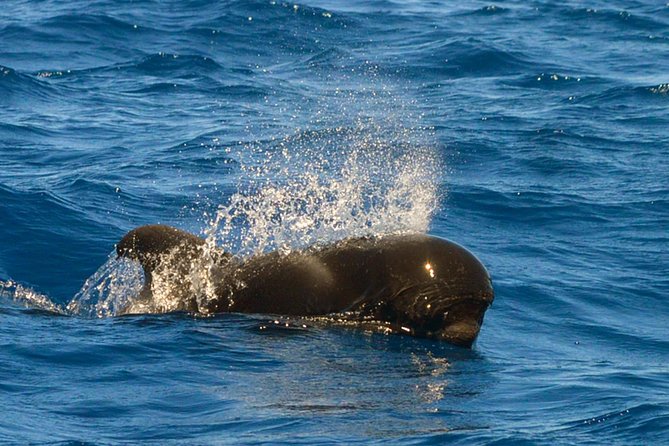
This is not a passive harbor cruise. You are in an open rigid inflatable boat, and the sea may be unsettled. The operator requires favorable weather and can reschedule or cancel if conditions are poor.
The tour is not suitable for infants or children under three years old, pregnant passengers, or people with back, neck, or mobility problems. Recent surgery is also a restriction, as is a body weight over 130 kilograms. Most other participants can take part, but you should be honest about any condition that could make a fast boat ride unsafe.
Wear clothing that can handle wind and spray. Sun protection is sensible, though the supplied information does not specify whether shade is available. A secure phone case or small waterproof bag is useful if you plan to bring valuables.
The small group helps with comfort and viewing, but it does not make the boat spacious in the way a large vessel is. If you need room to move freely or want a calm indoor seat, think carefully before booking. If you enjoy an active ride and like being close to the water, the format should suit you well.
Getting there from a cruise stop
Costa Adeje is on Tenerife’s southwest coast, while many cruise ships dock at Santa Cruz. The meeting point is not at the cruise port. You must arrange your own journey to Puerto Colón.
One cruise passenger made the trip by local bus from Santa Cruz to Costa Adeje and reached the marina for the scheduled outing. That can work, but you need to allow generous time for the journey, traffic, finding the marina, and returning to your ship. A cruise passenger should book only if the schedule leaves a wide safety margin.
For a hotel stay in Costa Adeje, the meeting point is much easier to manage. The activity ends back at the marina, so you can continue with lunch, the beach, or another local plan afterward.
Confirmation is provided when you book. If the weather changes or the minimum number of passengers is not reached, the operator will call to arrange another date. If poor weather cancels the trip, you can choose a new date or receive a full refund.
For your own cancellation, you receive a full refund if you cancel at least 24 hours before the start time. Cancellations or changes within 24 hours are not refunded or accepted. That rule matters if your Tenerife plans are still uncertain.
Is $72.56 good value?
At $72.56 per person, this trip costs more than a basic large-boat outing, but the comparison is not quite fair. The price includes a maximum group size of 10, a specialist whale-watching boat, live commentary from biologist staff, hydrophone use, local taxes, and free wildlife photographs.
I see the strongest value in the small group. You are not paying only for transport across the water. You are paying for a better chance to hear the guide, see around the boat, and watch animals without a large crowd pressing for space.
The price is less appealing if you mainly want a guaranteed photo or a sightseeing cruise. Wildlife is unpredictable, and a two-hour trip can produce excellent sightings or a quieter day at sea. The crew can search carefully, but no ethical operator can promise whales and dolphins on demand.
For someone who cares about animal welfare, the responsible approach is part of the value. The boat aims to give wildlife space rather than forcing close contact. That makes the experience more respectful, even if it occasionally means the animals remain farther away.
Who should book this Costa Adeje whale-watching trip?
I would choose this tour if you want a small group, direct contact with a guide, and a more careful style of wildlife watching. It is a strong fit for couples, families with older children, keen photographers, and anyone who wants to learn while watching the sea.
It also suits repeat visitors. Some people enjoy going out more than once because the animals and conditions change from day to day. If you have a flexible schedule, a second outing can make sense, though you should never treat a second booking as a guarantee of a particular species.
I would think twice if you are prone to motion sickness, need easy mobility, dislike wind and spray, or have a tight cruise schedule. The boat is quick and exposed, and the journey to Costa Adeje from another part of Tenerife can take longer than expected.
Should you book it?
Book this whale-watching eco-adventure if you value small groups, strong guiding, and careful treatment of wildlife more than a guaranteed close-up encounter. The combination of a 10-person limit, biologist commentary, hydrophone, and free photos gives the $72.56 price a fair case.
Go with realistic expectations. You may see pilot whales and several kinds of dolphins within minutes, or you may spend more time searching the water. That uncertainty is part of watching wild animals, and this trip handles it in the right spirit. For an active two hours from Costa Adeje, it is a thoughtful choice for seeing Tenerife’s marine life where it belongs.
FAQ
Where does the whale-watching tour depart?
The tour begins at Whale Watch Tenerife, Puerto Colón Marina, Pantalán Number 3, 38660 Costa Adeje, Santa Cruz de Tenerife, Spain. It ends back at the same meeting point.
How long is the whale-watching trip?
The activity lasts approximately two hours.
How many people can join the boat?
The boat carries a maximum of 10 travelers.
What animals might I see?
The main sightings are pilot whales and dolphins. Depending on conditions, you might also see sea turtles, flying fish, or a Portuguese Man of War. Wildlife sightings cannot be guaranteed.
Is food included?
Food and drinks are not included. You may bring food and non-alcoholic drinks with you.
What happens if bad weather cancels the tour?
If poor weather makes the trip unsafe, you will be offered an alternative date or a full refund. If the minimum number of participants is not reached, you will also be offered another date, another experience, or a full refund.
Newly added whale trips around Tenerife
- Whales and Dolphins excursion on a Luxury Yacht in Canary Islands★ 5.0 · 93 reviews
- Whale & Dolphin Watching With Mustcat Virgin Coast Trip On a Large Catamaran★ 4.0 · 3 reviews
- Whale & Dolphin Watching Boat Trip in Tenerife On a Sailing Boat (3 Hr)★ 3.5 · 10 reviews
- Whale watching and snorkelling in the whale sanctuary★ 5.0 · 14 reviews
- Whale Watching Catamaran to Los Gigantes & Masca (Including drinks & warm lunch)★ 4.0 · 55 reviews
- Whale and Dolphin Watching EcoAdventure in Tenerife★ 5.0 · 78 reviews
- Whale & Dolphin Watching in Tenerife (Puerto Colon) On a Large Catamaran★ 4.0 · 12 reviews
- 5 hr watching and listening whales and dolps. Visit Los Gigantes★ 5.0 · 185 reviews
Tenerife Whale Watching Tours, side by side.
Eco-Yacht Whale and Dolphin Watching and Swimming
Read our review →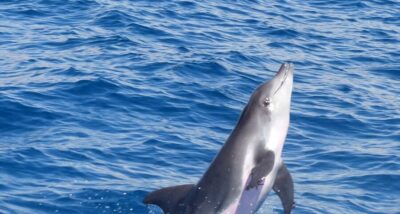
Los Cristianos Respectful No-Chase Whale and Dolphin Safari
Read our review →
Whale & Dolphin Eco-Cruise with Snacks & Drinks
Read our review →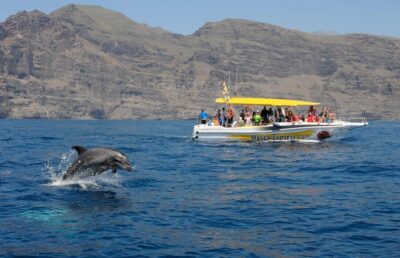
Dolphin & Whale Watching Cruise with Swim Stop
Read our review →
Whale & Dolphin Watching with Drinks and Snacks
Read our review →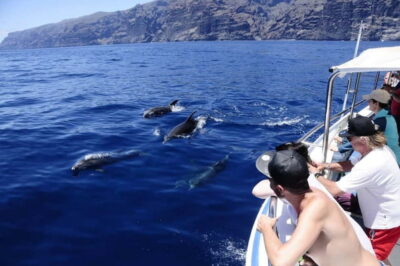
Whale or Dolphin Watching Tour and Swim in Masca
Read our review →Lists this trip appears in