
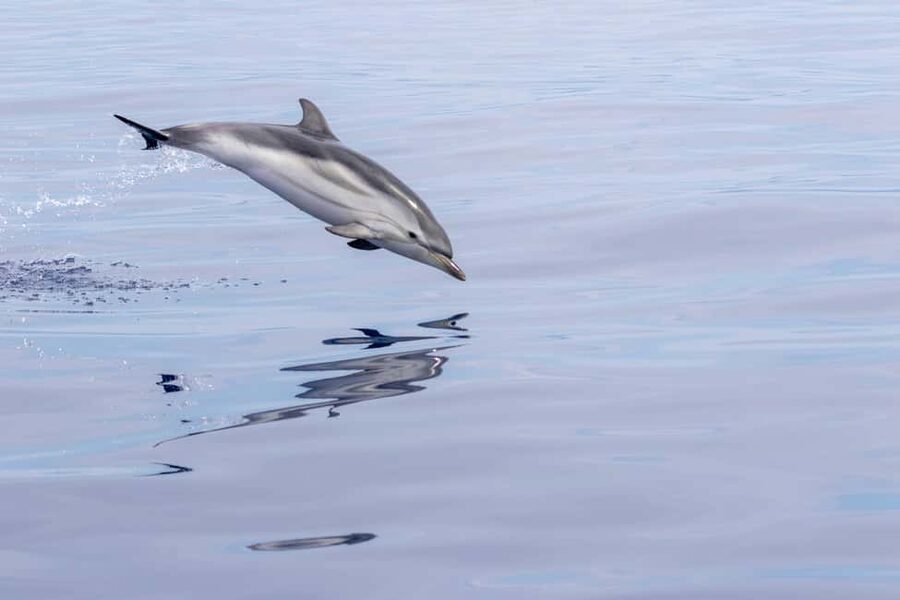
Review · SOUTH OF FRANCE, FRANCE
Horizon Large: whale watching off the coast of Saint-Cyr
Off the coast of Saint-Cyr-sur-Mer, the main attraction is the chance to spot dolphins, whales, and sperm whales in open water. Turtles, mobula rays, and seabirds may also appear, so each outing depends on nature rather than a fixed show. I like the broad mix of marine life and the fact that the trip connects wildlife watching with care for the sea.
I also like the three-and-a-half-hour schedule, long enough to get well offshore, and the included masks and snorkels. The main drawback is practical: the boat can get very wet. One September outing left passengers and their bags soaked, and the boat apparently had no compartments for storing luggage, so pack with care.
Key points to know before you book
- Three hours and 30 minutes on the water: The cruise runs from 9:00 a.m. to 12:30 p.m., giving you a substantial morning at sea.
- Wildlife is never guaranteed: You may look for dolphins, whales, sperm whales, turtles, mobula rays, and seabirds.
- Departure is from the old port: Saint-Cyr-sur-Mer is the meeting point, with boarding 15 minutes before departure.
- French is the guiding language: Some information may be presented in its original French.
- Masks and snorkels are included: These are supplied on board, though the available details do not promise a swimming stop.
- Plan for spray and wet belongings: Use waterproof bags and avoid bringing anything that cannot handle a soaking.
Watching for whales beyond Saint-Cyr-sur-Mer
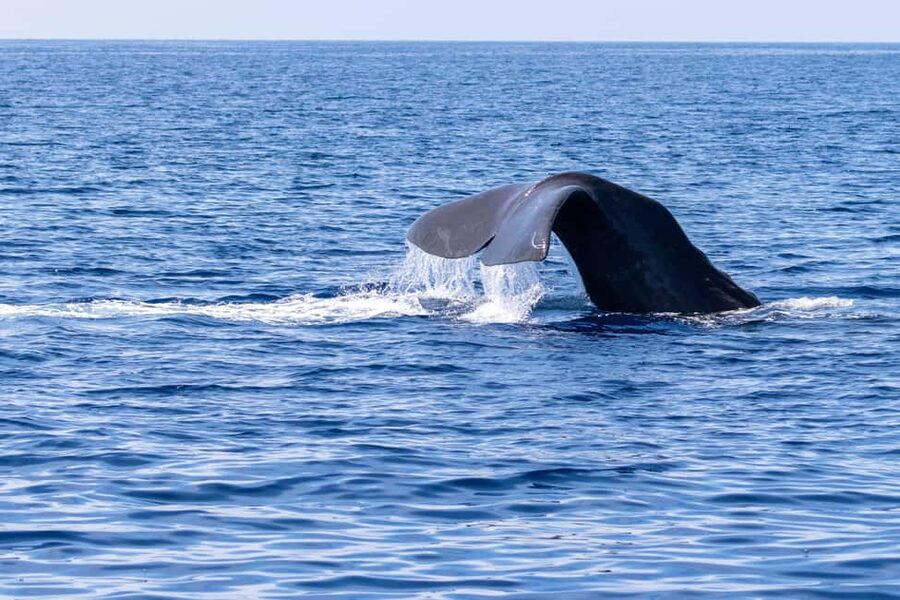
This is not a short coastal boat ride with a guaranteed animal encounter. The trip heads offshore, where the possible sightings include dolphins, whales, sperm whales, turtles, mobula rays, and seabirds. That gives the outing a genuine wildlife feel, but it also means patience matters.
I like this kind of trip because the sea sets the schedule. You may see a pod of dolphins, a seabird cutting across the water, or nothing more dramatic than open sea for a while. The appeal is the search itself, with each sighting feeling earned rather than staged.
The wording for the experience points to a coastline with a wide range of cetaceans and other marine life. Cetaceans are marine mammals such as dolphins and whales. Sperm whales are also listed, which adds a more unusual possibility to the standard dolphin-watching promise.
You should keep your expectations sensible. The tour offers the chance to encounter wildlife, not a guarantee of a whale sighting. If your main goal is to photograph a specific species, you may find the uncertainty frustrating. If you enjoy being out on the water and watching for whatever appears, the open-ended format makes more sense.
More whale trips worth the boat ride around the world:
- Tenerife: Eco-Yacht Whale and Dolphin Watching and Swimming
★ 4.7 · 15,619 reviews - Los Cristianos Respectful No-Chase Whale and Dolphin Safari
★ 4.6 · 12,782 reviews - Reykjavík: Whale Watching and Marine Life Cruise
★ 4.6 · 9,838 reviews
The 9:00 a.m. departure from the old port
The morning begins at the old port of Saint-Cyr-sur-Mer. You need to board 15 minutes before departure, so arriving at the port with time to spare is the wise move. The scheduled outing runs from 9:00 a.m. to 12:30 p.m., making it easy to keep the afternoon free for lunch, the beach, or another stop along the coast.
The timing has two useful advantages. First, you get a full morning rather than a brief one-hour ride. Second, the early start avoids turning the excursion into an all-day commitment. At 210 minutes, the trip is long enough to feel like a proper offshore expedition but short enough to fit into a larger Saint-Cyr-sur-Mer plan.
The exact boat layout and group size are not provided, so I would not assume there will be private storage, a cabin, or plenty of covered seating. The practical lesson is simple: arrive ready for a boat trip, not a gentle harbor cruise.
What the 210-minute route means for you
Three and a half hours can be a strength, especially when wildlife is the goal. The boat needs time to move away from shore, search likely areas, and pause when something catches the crew’s attention. A short trip may turn around just as the best viewing begins. This longer format gives the outing more room to unfold.
It can also test your patience and your sea legs. You may spend part of the ride scanning the horizon before anything appears. Bring a patient attitude, and consider the trip as time spent observing the sea as much as time spent collecting sightings.
The available details do not provide a stop-by-stop route or named viewing locations. You should therefore expect a general offshore search rather than a fixed sequence of attractions. That is normal for wildlife watching, but it is worth understanding before you pay for the experience.
The trip is described as an emotional adventure, which fits the nature of an encounter with a large animal in open water. Even a brief sighting can be memorable. At the same time, no one can promise that a whale will surface beside the boat, so the value depends partly on your enjoyment of the search.
Dolphins, sperm whales, turtles, and seabirds
Dolphins are often the animals most people hope to see, but the species list here is broader. Whales and sperm whales are included, along with turtles, mobula rays, and seabirds. That variety gives you more than one reason to keep looking.
Mobula rays are especially interesting because they are not the first animal most people associate with a Mediterranean boat trip. A ray moving near the surface can offer a very different sight from a dolphin pod or a breaching whale. Seabirds add another layer to the experience, particularly when marine mammals stay out of sight.
I would bring binoculars only if they are compact and protected from spray, since the boat’s storage situation may be limited. Your phone or camera should also go into a waterproof pouch. The outing can be visually rewarding, but protecting your equipment matters more than getting the perfect photograph.
The trip also presents the sea as a living system rather than just a backdrop for sightseeing. Its conservation message is part of the experience. You are encouraged to enjoy the animals while supporting awareness of the marine ecosystem, a useful angle for anyone who wants a wildlife activity with an environmental purpose.
Same migration, a different deck:
- From Funchal: Ecological Catamaran Dolphin Whale Watching
★ 4.5 · 8,204 reviews - Juneau Wildlife Whale Watching
★ 5.0 · 7,379 reviews - Juneau Wildlife Whale Watching & Mendenhall Glacier
★ 5.0 · 6,236 reviews - Funchal: Dolphin and Whale Watching Catamaran Cruise
★ 4.5 · 5,697 reviews
Masks and snorkels are supplied on board
Masks and snorkels are included, which is a useful convenience. You do not need to bring that basic equipment yourself, and the inclusion suggests that the operator may incorporate some contact with the water or wants guests prepared for marine viewing.
Still, the available details do not confirm a swimming stop or snorkeling portion. I would not book this as a dedicated snorkeling trip. Treat the equipment as an included extra unless the operator confirms that you will enter the water.
This distinction matters when comparing the $123 price. If you want a structured snorkeling session with a guaranteed swim, another excursion may suit you better. If you mainly want offshore wildlife watching and appreciate having masks and snorkels available, the equipment adds some value.
You may still want to bring your own essentials: a swimsuit if you are comfortable doing so, a towel, sunscreen, and a change of clothes. Those items are practical suggestions for any boat outing, especially given the report of heavy spray.
The wet-boat warning you should take seriously
The clearest practical caution is the risk of getting soaked. A September outing ended with passengers and their bags very wet, and the boat apparently lacked compartments where bags could be stored securely. That is not a minor detail if you plan to bring a phone, camera, wallet, or spare clothing.
Use a dry bag or waterproof backpack. Put documents, electronics, and car keys inside sealed plastic bags within it. Keep the amount of luggage small, since there may not be a dedicated place to put it.
Wear clothing that can handle spray and bring a dry change for afterward. A light waterproof layer may be more useful than a fashionable jacket. Avoid placing anything valuable loose on the deck.
This wetness may be part of the fun for some people, but it can also sour the morning if you are not prepared. I would consider this the main weakness of the experience, especially for anyone expecting a sheltered sightseeing boat.
Is $123 a fair price?
At $123 per person, this is a fairly serious spend for a morning activity. The value comes from the 210-minute duration, the offshore setting, the possible range of wildlife, the French guide, and the supplied masks and snorkels.
The price makes the most sense if you genuinely want a dedicated marine wildlife outing. You are paying for time on the water and the possibility of seeing animals that cannot be scheduled. It makes less sense if you simply want a scenic cruise along the coast or a guaranteed whale encounter.
I would compare the price with your priorities. A wildlife enthusiast may find the long search worthwhile even if the sightings are brief. A family looking for a simple boat ride may prefer a shorter, less costly trip, especially since children under four are not allowed and the wet conditions may be tiring.
People over 70 are also listed as unsuitable for the activity. That restriction may relate to the physical demands of the boat ride, the time offshore, or safety concerns, but no specific reason is provided. Check the operator’s terms if age or mobility is a concern.
French guiding and the feel of the outing
The live guide speaks French, and some content is presented in its original language. You should be comfortable receiving the main explanations in French or confirm in advance how much assistance is available in another language.
The language may be a plus if you want a locally rooted experience rather than a heavily scripted international tour. It may be a drawback if you rely on detailed explanations in English. The supplied information does not name the guide, so you should not expect a particular host.
The conservation focus can add meaning to the trip. You are not only looking for animals, but also being reminded that marine wildlife depends on a healthy ecosystem. That message suits visitors who want their time on the coast to include more than scenery and photographs.
Who should book this Saint-Cyr-sur-Mer cruise?
I would recommend it most strongly to adults and older children who enjoy wildlife, open water, and uncertain outcomes. It suits people who can spend several hours scanning the sea without needing constant activity.
It is less suitable for children under four, people over 70, anyone who needs a dry and sheltered boat, or anyone looking for a guaranteed whale sighting. You should also think twice if you are bringing delicate electronics or large bags.
Book if you value the possibility of a rare encounter and can prepare for spray. Skip it if comfort, fixed sightseeing stops, or a guaranteed animal appearance matters more than the search.
FAQ
Where does the whale-watching cruise depart?
It departs from the old port of Saint-Cyr-sur-Mer in the south of France.
What time does the experience run?
The scheduled departure is from 9:00 a.m. to 12:30 p.m.
How long is the cruise?
The experience lasts 210 minutes, or three hours and 30 minutes.
Which animals might I see?
Possible sightings include dolphins, whales, sperm whales, turtles, mobula rays, and seabirds.
What language is the tour conducted in?
The live tour guide speaks French, and some content is shown in its original language.
Are masks and snorkels included?
Yes. Masks and snorkels are provided on board.
Can children and older adults join?
Children under four and people over 70 are listed as unsuitable for the activity.
Can I cancel for a full refund?
Yes. You can cancel up to 24 hours in advance for a full refund. You can also reserve now and pay later.
Newly added whale trips around the world
- Vancouver Whale Watching Safari★ 4.6 · 45 reviews
- Victoria, BC: 3-Hour Ultimate Whale & Marine Wildlife Tour★ 4.6 · 191 reviews
- Vancouver: Day Trip to Victoria Seaplane with Whale Watching★ 4.5 · 109 reviews
- Vancouver: Open-air Whale Watching Tour, Granville Island★ 4.9 · 51 reviews
- Victoria: Whale Watching Adventure in a Zodiac Boat★ 4.5 · 129 reviews
- Vancouver Island: Whale Watching Tour★ 3.3 · 2 reviews
- Vancouver: Zodiac Whale Watching Tour from Granville Island★ 4.6 · 6 reviews
- Vancouver Island: People Water Land – Indigenous & Whales★ 4.6 · 8 reviews