
Review · HUSAVIK
Húsavík: Whale Watching – Family Run with Indoor Seats
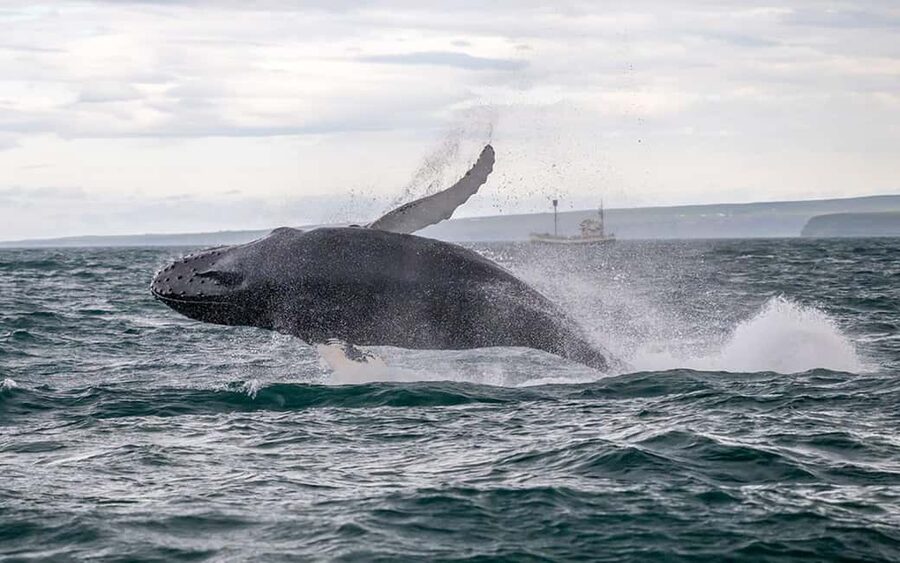
Húsavík whale watching is at its best when the sea gets equal billing with the whales. This three-hour trip takes you into Skjálfandi Bay aboard Vinur, the only whale-watching boat in Húsavík with indoor seats throughout the March to December season. I like the warm flotation suits and the choice between an open viewing deck and shelter inside. I also like the small, family-run feel and the crew’s careful approach around the animals.
The main catch is simple: these are wild whales, not scheduled performers. You may see several humpbacks, minkes, dolphins, or puffins, or you may spend much of the trip scanning the water. The $96 price is fair for a three-hour outing with local crew, warm suits, and museum savings, but the value depends heavily on your weather and wildlife luck.
Key points at a glance
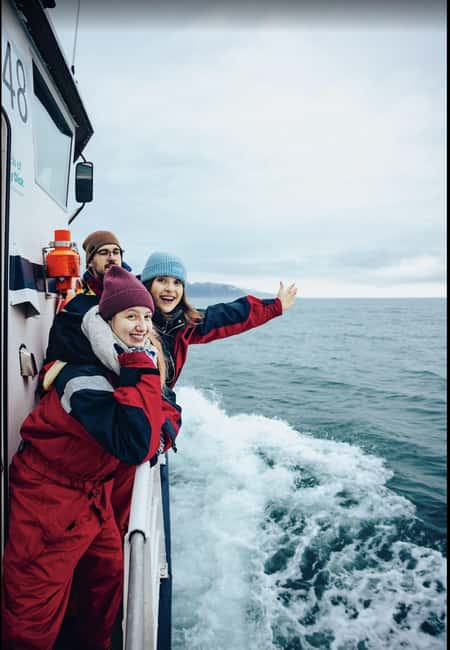
- Vinur has indoor seating: You can step inside when the wind, spray, or cold becomes too much.
- Three hours on Skjálfandi Bay: The trip gives the crew time to search beyond the harbor for feeding whales.
- Humpbacks are the main prize: Minke whales, white-beaked dolphins, porpoises, puffins, and occasional blue whales are also possible.
- Local guides add real context: Guides including Mada, Martin, Jana, and Jitka have been praised for clear explanations and warm humor.
- Warm flotation suits are included: These matter in Iceland, even on a sunny day.
- Responsible viewing is central: The crew keeps a respectful distance and follows the Code of Conduct for Responsible Whale Watching.
Setting out from Húsavík, Iceland’s whale-watching port
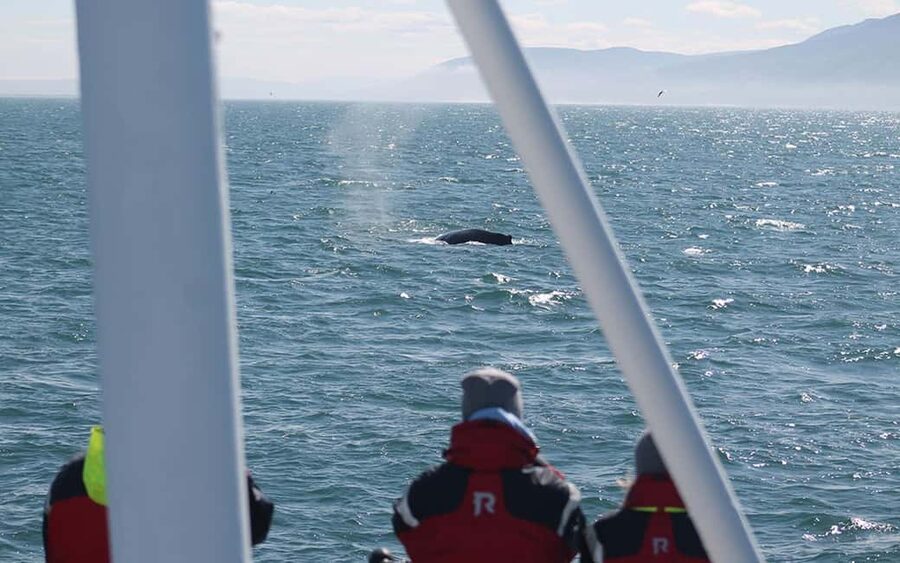
You begin at Hafnarstétt 35, near the Fish and Chips shop and the Friends of Moby Dick flags. The office is easy to find, and free parking is available nearby. Plan to arrive at least 20 minutes before departure so you have time to check in, collect a suit, and get aboard without a last-minute rush.
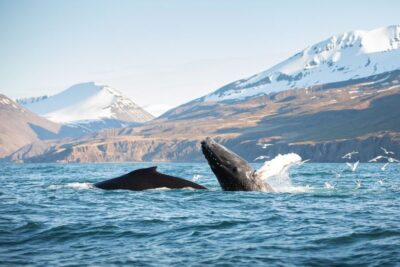
Húsavík is a fitting place for this trip. The town has a long connection with the sea, and the bay opens directly toward broad Arctic views and mountain-lined shores. From the water, the town quickly becomes part of a much larger scene: dark sea, open sky, distant peaks, and the occasional spout breaking the horizon.
There is no hotel pickup, so you need to make your own way to the harbor. That is easy if you are already in Húsavík, but it matters if you are staying outside town or building the excursion into a busy North Iceland driving day.
More whale trips worth the boat ride around Iceland:
- Reykjavík: Whale Watching and Marine Life Cruise
★ 4.6 · 9,838 reviews - Akureyri: 3-Hour Classic Whale Watching Tour by Ship
★ 4.6 · 3,000 reviews - Reykjavík: Whale Watching Cruise on the Amelia Rose Yacht
★ 4.5 · 2,911 reviews
Vinur gives you a useful choice in bad weather
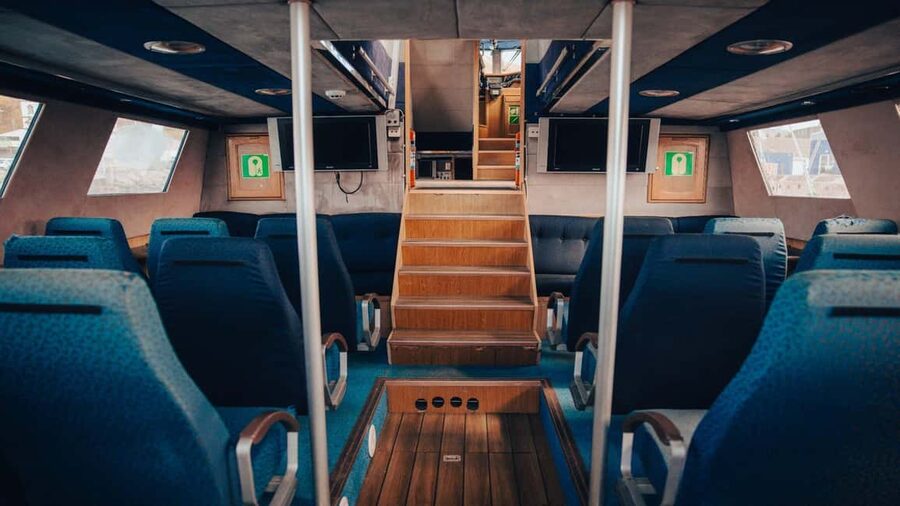
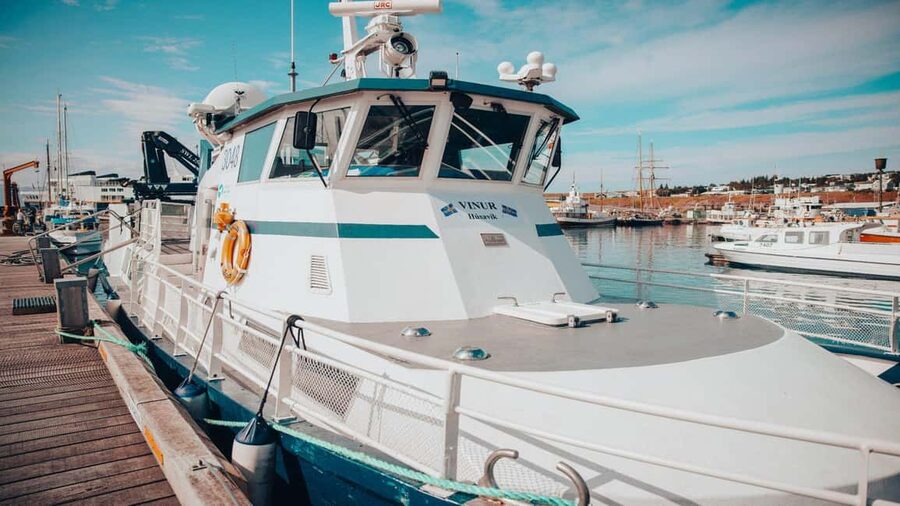
Friends of Moby Dick uses two boats, and the vessel assigned to your departure may vary. Vinur is the practical choice for Iceland’s changeable weather. This ferry-style boat has indoor seating and outdoor viewing platforms, so you can move inside to warm up and then return outside when the crew spots activity.
That flexibility is a major reason to consider this trip outside the warmest summer weeks. In November, December, or early spring, the indoor area can turn a harsh outing into a manageable one. You still need warm clothing, but you are not forced to spend every minute exposed to wind and spray.
The other boat, Moby Dick, is a restored traditional oak boat with a wide open deck. It offers a classic sea-going feel and good photo positions, but it does not provide the same indoor refuge. If shelter is important to you, confirm which boat is scheduled before booking.
The boats are not luxury yachts, and that is part of their appeal. You are going out on working-style vessels with room to move around and search from different angles. One summer departure was especially appreciated for using a smaller boat, since people could shift position more easily when whales appeared.
Warm suits, open decks, and the first minutes at sea
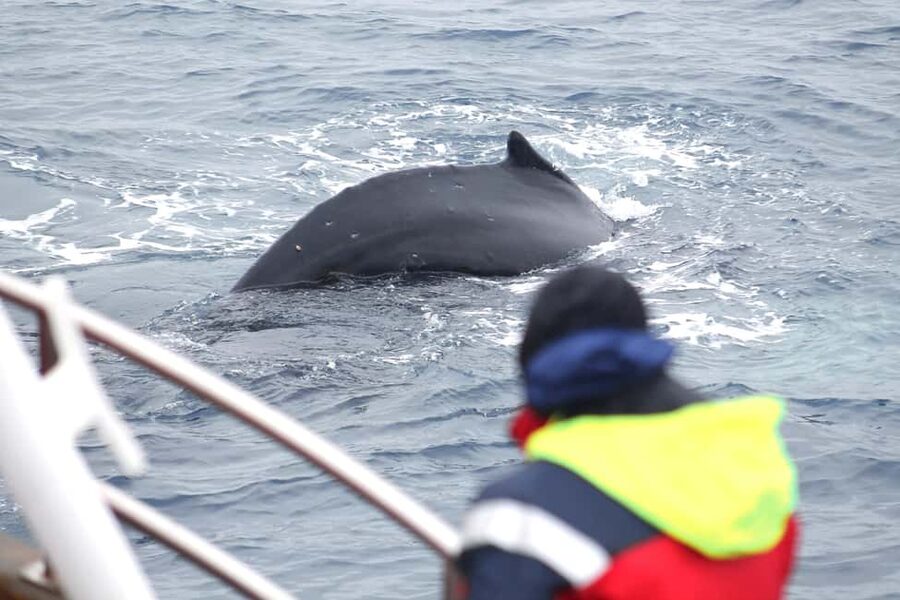
The crew supplies flotation suits, which are worn over your clothes. These are not a substitute for sensible layers, but they give you a warm, water-resistant outer shell and extra peace of mind. Several people who arrived underdressed in jeans still found the suits useful in cold October conditions.
Bring a hat, gloves, warm shoes, and closed-toe footwear. The company does not provide shoes, hats, or gloves. You should also bring any snacks or drinks you want, since food and beverages are not included.
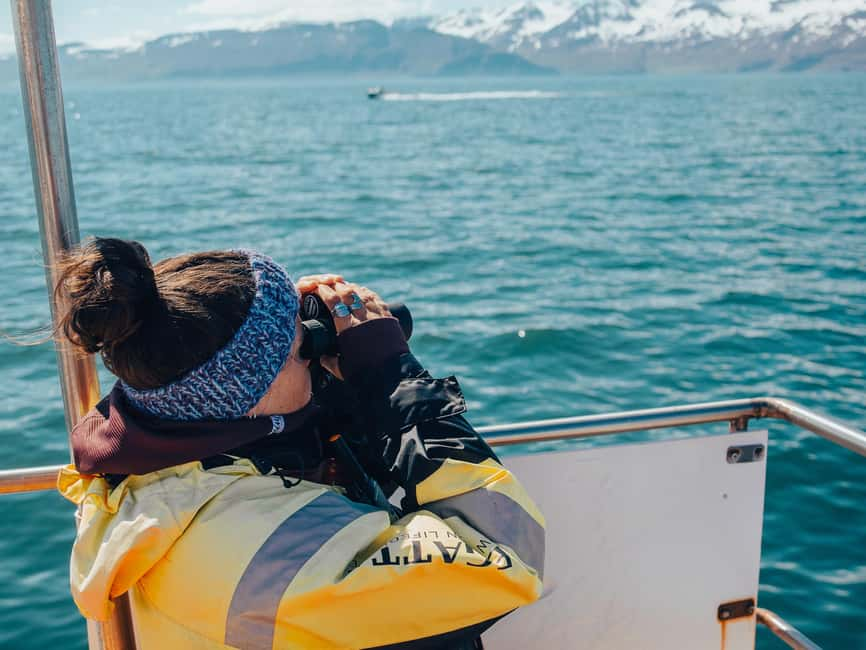
The first part of the boat ride lets you settle into the rhythm of the bay. You may stand outside, watch the mountains, and learn how to scan for a blow. Inside, you can still enjoy panoramic views while taking a break from the cold.
Seasickness deserves honest attention. The bay can be calm, but it can also be rough. If you are prone to motion sickness, this may not be the right outing for you. A guide has helped an unwell passenger during a trip, but you should still prepare in advance and choose your position on the boat carefully.
Searching Skjálfandi Bay for humpbacks and minkes
The wildlife search is the heart of the trip, but it is not a straight ride to a guaranteed sighting. The captain and guide read the water, watch for blows, and adjust the route when whales are reported farther out. The three-hour length gives them time to look in more than one area rather than turning back after a quick harbor cruise.
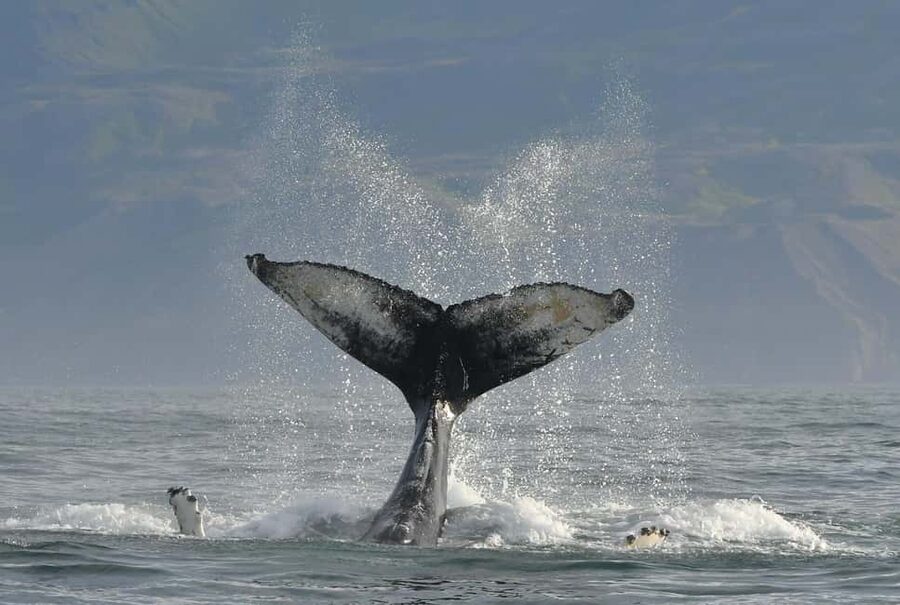
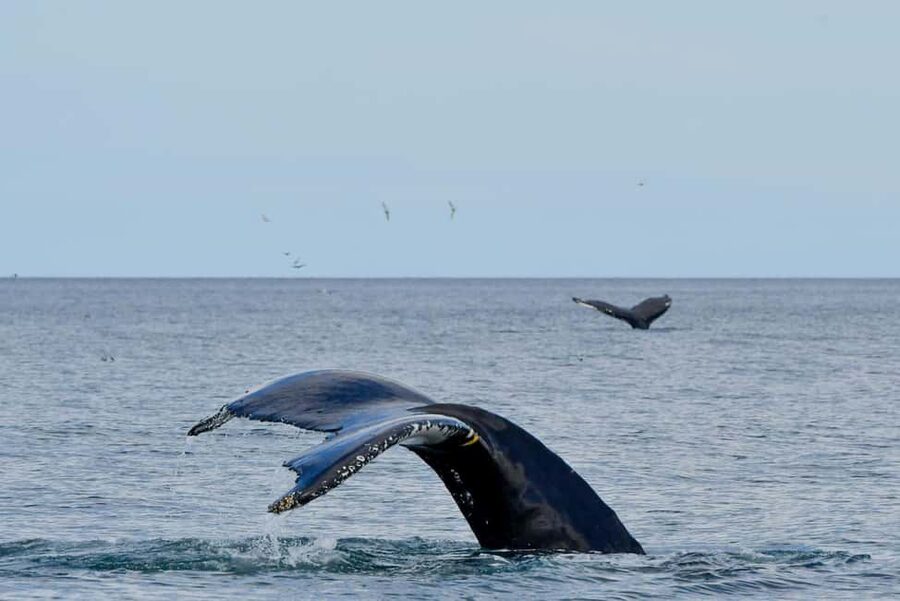
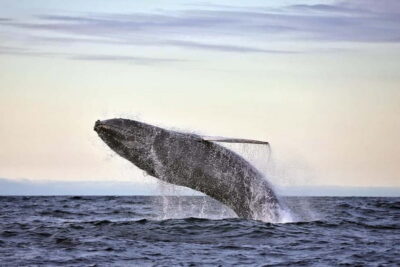
Humpback whales are the species most often associated with the strongest sightings here. You might see a broad back roll through the water, a tall blow, a tail lifted before a long descent, or a whale feeding near the boat. Some departures have recorded several humpbacks, with one summer outing producing sightings of five or more different whales.
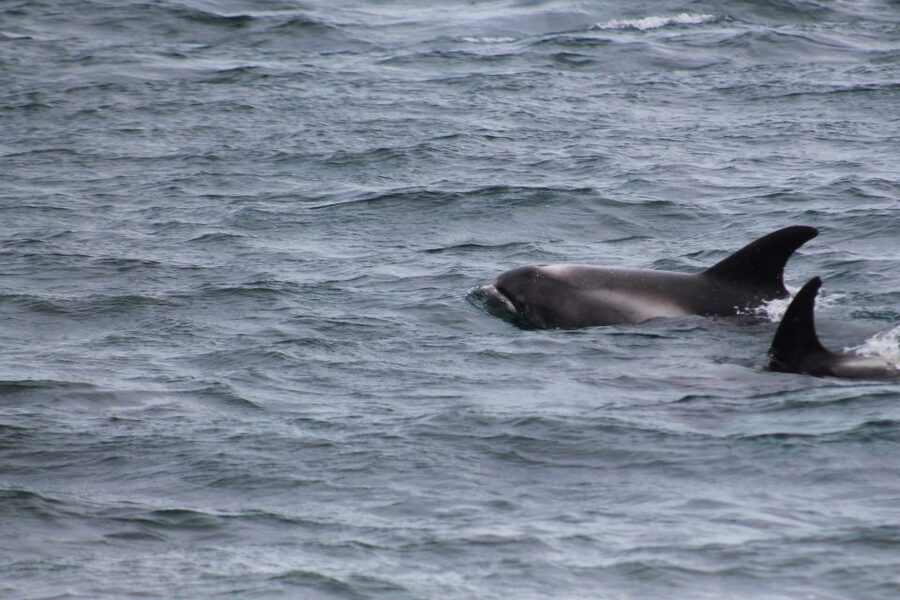
Minke whales are another regular possibility. They are smaller and can surface quickly, so the guide’s help is useful. White-beaked dolphins and porpoises may travel in groups, adding fast-moving activity when the larger whales are quiet.
A blue whale is possible but uncommon. You should treat it as a bonus, not a promise. Puffins and other seabirds are often part of the wider scene, especially in summer. Some trips have also included a seal.
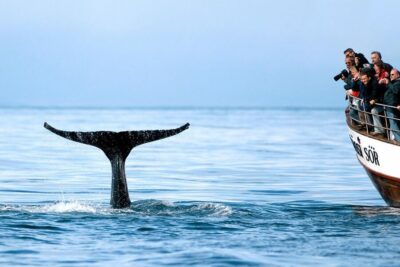
The most memorable moments tend to be quiet ones: a whale surfacing beside the boat, feeding with its mouth full, or showing its distinct tail before disappearing. The crew’s job is not to force such moments. It is to place you in a good viewing area and let the animal decide how close it comes.
Same migration, a different deck:
- Húsavík: Whale Watching Tour with Guide
★ 4.6 · 2,761 reviews - The Original Classic Whale Watching from Reykjavik
★ 4.5 · 2,626 reviews - Reykjavik: Whale Watching Tour with Expert Guide
★ 4.3 · 2,422 reviews - Húsavík: Traditional Whale Watching Tour
★ 4.6 · 2,115 reviews
Guides who make the waiting time worthwhile
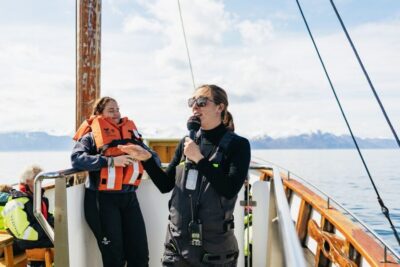
Whale watching includes waiting. A good guide makes that waiting useful rather than empty. Guides such as Mada, Martin, Jana, and Jitka have been singled out for their enthusiasm, humor, and clear explanations. You may have a marine biologist on board, depending on the departure.
Expect live commentary in English about whale behavior, feeding patterns, identification, and the history of Húsavík’s seafaring life. The guide will also help direct your attention, pointing out where to look and suggesting when to shift around the boat for a better view.
The tone can vary. Many people enjoy an energetic guide who keeps the group involved, but one passenger found the running commentary a little too constant. That is a fair point. If you prefer long quiet stretches at sea, an enthusiastic guide may talk more than you want. For most people, especially first-time whale watchers, the explanations add much more than they take away.
I especially value the focus on behavior rather than simple species spotting. Learning why a whale surfaces, feeds, or lifts its tail gives meaning to a brief sighting. It also helps you appreciate that the crew is observing animals in their own habitat, not staging an encounter.
Responsible whale watching without chasing the animals
The company follows the Code of Conduct for Responsible Whale Watching. That means the crew aims to maintain a proper distance and avoid disturbing the whales. This matters because a close photograph is not worth stressing an animal.
Several departures have involved captains changing course or traveling farther when whales were out beyond the usual area. That effort can improve your chance of seeing wildlife, but it should not mean pressing the boat into a group or cutting across an animal’s path.
The best viewing often comes when the boat is patient. You may see a whale surface several times, and the captain can position the boat so people on different sides have a fair chance. At other times, the animal may move away quickly or remain hidden.
You are also expected to respect the setting. Feeding animals, touching marine life, climbing, littering, and other unsafe behavior are not allowed. Smoking is prohibited inside and in the vehicle.
Spring, summer, and the softer Arctic light
The March to December operating season gives you several very different versions of the bay.
Spring and summer bring long daylight hours, which help with visibility and allow for a brighter ride back toward Húsavík. The water may feel more peaceful, and puffins and other seabirds can add plenty of movement around the boat. Summer is also the period when many departures report several humpbacks and calm enough conditions for easy viewing.
Autumn brings cooler air and the first snow on the mountains. The light becomes softer, and the bay can feel quieter with fewer boats around. October departures have produced strong whale sightings, but whales may be farther from shore, making the captain’s local judgment more important.
November and December offer the most obvious reason to choose Vinur. The indoor seats let you escape the cold without giving up the chance to return outside for a sighting. Winter weather is less predictable, and you should accept that a rough sea or poor visibility can limit the experience. Still, the calm atmosphere and low number of boats can make a successful winter trip feel unusually personal.
Is $96 a good value?
At $96 per person, this is not a cheap add-on. Icelandic activities often carry a high price, and you need to decide how much you value three hours on the water.
The price includes the cruise, local captain, English-speaking guide, flotation suit, and children’s life jackets. You also receive a 20 percent discount on admission to the Húsavík Whale Museum when you show your boarding pass.
The indoor seating adds real value if you are visiting outside high summer. A cheaper open-deck trip may look attractive until cold wind and spray make the final hour unpleasant. Here, you have the option to warm up, which can be especially useful for families and anyone unsure about Icelandic sea conditions.
The value is weaker if you require a guaranteed sighting. No responsible company can promise whales, and one December trip produced no visible mammals despite good intentions. You are paying for skilled searching, time on the bay, scenery, and the chance to see wild animals, not for a scheduled show.
Who should book this Húsavík boat trip?
I would recommend it to first-time whale watchers, families with older children, photographers who want outdoor viewing options, and anyone visiting Húsavík between March and December. The indoor area makes it more forgiving than a fully open boat, while the outside platforms still give you the best chance to watch and photograph wildlife.
It suits people who want information along with the sighting. The guides explain behavior and local maritime life, and the crew takes safety seriously. The family-run setup also feels more personal than a large sightseeing operation.
I would hesitate if you are highly prone to seasickness, need wheelchair access, have a mobility impairment, or are bringing a baby under one year. Unaccompanied minors are not permitted. You should also reconsider if you need a guaranteed whale encounter or dislike cold, moving boats.
Practical tips for getting the most from the outing
Arrive 20 minutes early at the Friends of Moby Dick office. Use the time to find the flags, collect your flotation suit, and ask which boat is operating.
Wear layers under the suit. Add a warm hat, gloves, and sturdy closed-toe shoes. Even a sunny day can feel cold on open water, and the boat ride lasts three hours.
Keep your camera ready, but watch with your eyes first. Whale sightings can last only a few seconds, and a phone pointed in the wrong direction can make you miss the moment.
Move around when the crew suggests it. A whale may surface on one side, and the captain may reposition the boat for a better angle. Indoor seating is a comfort option, not the place to spend the entire trip if wildlife is active outside.
If the first departure of the day has already found whales, an afternoon trip may benefit from that information. The operators in the bay share sighting updates, helping crews search more effectively.
Cancellation is free up to 24 hours before departure, and you can reserve now while paying later. That flexibility is useful in Iceland, where road and weather plans can change quickly.
Should you book Friends of Moby Dick?
Book it if you want a serious three-hour search with a local crew, warm flotation suits, responsible viewing, and the safety net of indoor seating. The strongest reasons are Vinur’s weather protection, the guides’ lively marine explanations, and the chance to see humpbacks in a spectacular bay.
Skip it if you need guaranteed wildlife, cannot tolerate boat motion, or require step-free accessibility. For everyone else, $96 is a reasonable price for a well-supported outing, especially outside summer. Just bring the right clothes, arrive early, and treat every whale sighting as a gift rather than a promise.
FAQ
Where does the whale-watching trip begin?
The meeting point is Hafnarstétt 35 in Húsavík. Look for the Friends of Moby Dick flags near the office, close to Fish and Chips.
How long is the tour?
The boat trip lasts three hours. Starting times vary, so check availability when booking.
Which whales might I see?
Possible sightings include humpback whales, minke whales, white-beaked dolphins, and occasional blue whales. You may also see porpoises, puffins, other seabirds, or a seal.
Does the boat have indoor seating?
Vinur has indoor seating and outdoor viewing platforms. It is described as the only whale-watching boat in Húsavík with indoor seating operating throughout the March to December season.
What should I wear?
Wear warm clothing, a hat, gloves, and warm closed-toe shoes. The company supplies flotation suits, but it does not supply shoes, hats, or gloves.
Are food and drinks included?
No. Food, drinks, and snacks are not included, so bring anything you want for the three-hour outing.
Are whale sightings guaranteed?
No. The whales are wild animals, and sightings cannot be guaranteed.
Is the tour suitable for wheelchair users or people with mobility impairments?
No. The activity is not suitable for wheelchair users or people with mobility impairments. It is also not recommended for people prone to seasickness or babies under one year.
Newly added whale trips around Iceland
- Icelandic Horse Riding and Whale Watching Cruise from Reykjavík★ 4.0 · 14 reviews
- Whale Wonders Morning Expedition from Reykjavík★ 4.0 · 10 reviews
- Whales Of Iceland Admission Ticket★ 4.0 · 239 reviews
- Whale Watching by RIB Speedboat from Downtown Reykjavik★ 4.5 · 26 reviews
- Whale Watching And Fly Over Iceland Guided Tour★ 5.0 · 4 reviews
- Whale Watching and Northern Lights Half-Day Combo Tour★ 4.5 · 43 reviews
- Whale Watching and Marine Life Tour in Reykjavik★ 4.5 · 55 reviews
- Whale Watching and Golden Circle Tour from Reykjavik★ 4.0 · 28 reviews
Husavik Whale Watching Tours, side by side.
Original Big Whale Safari & Puffins by Speedboat
Read our review →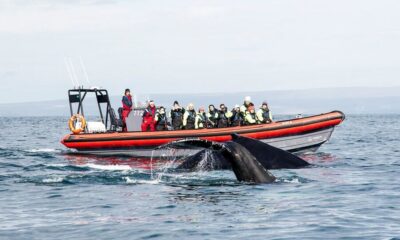
Lists this trip appears in