
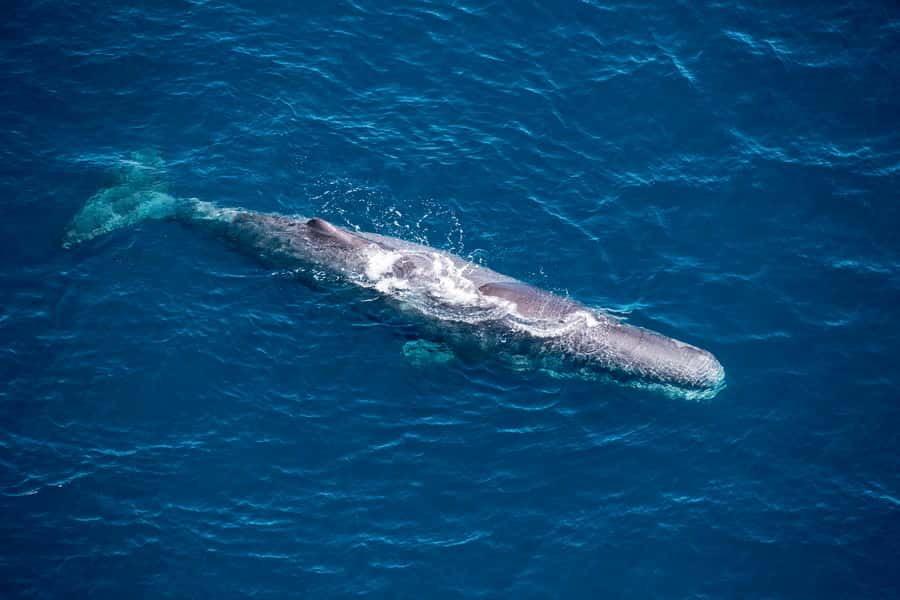
Review · KAIKOURA
Kaikoura: 1-Hour Whale Watching Helicopter Tour
Kaikōura’s whales are best understood from the air. From a helicopter, you can see a sperm whale from nose to tail, then watch it vanish beneath the Pacific. The flight also reaches the Seaward Kaikōura Range, where you step out at about 1,600 metres on Mt Fyffe for wide views of the coast and mountains.
I like the small group size, limited to six people, and the careful wildlife approach under New Zealand’s marine mammal rules. I also like the mix of sea and mountain scenery in one hour. The main catch is clear: this is not a full hour devoted to whales. Part of the time goes to the mountain landing, so choose another flight if maximum whale-watching time is your only goal.
Key points to know before booking
- Whales from above: The helicopter gives you a full view of sperm whales and lets you watch without approaching them on the water.
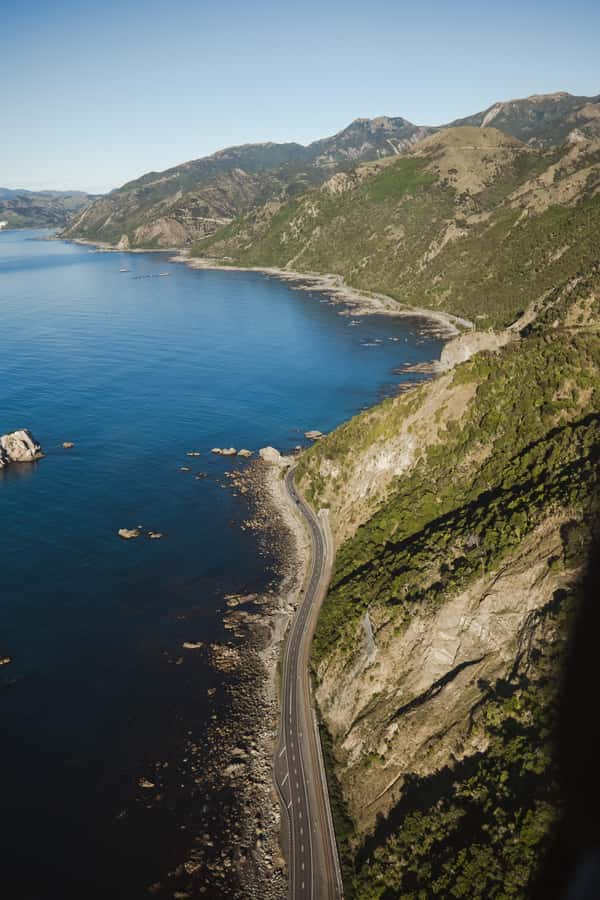
- A real mountain landing: You leave the aircraft in the Seaward Kaikōura Range, with Mt Fyffe reaching about 1,600 metres.
- Small and personal: Flights carry no more than six people, with an English-speaking pilot and headsets.
- More than whale spotting: Look for dusky dolphins and New Zealand fur seals along the Kaikōura Peninsula.
- Weather controls the schedule: The flight may be moved or changed if conditions are not suitable.
- A costly but varied hour: At $792 per person, you are paying for aerial wildlife viewing, a scenic flight, and an alpine landing in one outing.
Why the helicopter changes whale watching in Kaikōura
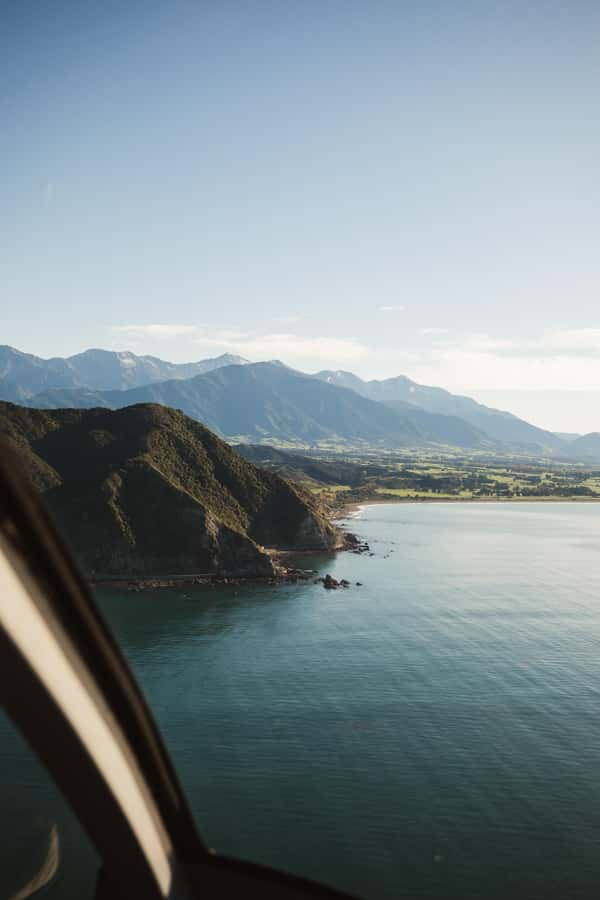
Kaikōura’s sperm whales live in the area year-round, helped by the unusual underwater shape of the Kaikōura Canyon. That deep marine feature supports food close to shore, which is one reason this coastal town is known for whale encounters.
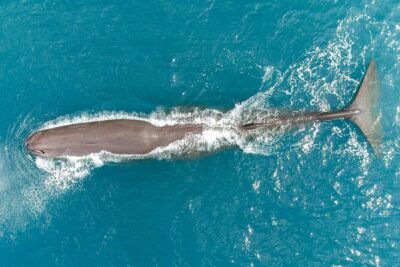
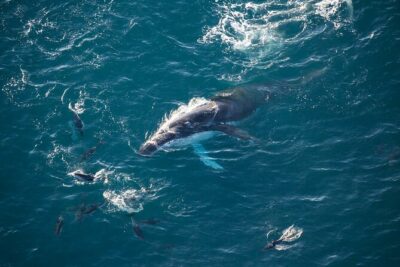
From a boat, you usually see only the part of a whale that breaks the surface. From the helicopter, you can see the whole animal, including its size and shape beneath the water. That bird’s-eye view also gives you a better sense of how alone the whale is in the wide Pacific.
The aircraft follows the Whale Sanctuary and Hikurangi Marine Reserve. The tour operates under New Zealand Department of Conservation Marine Mammal Regulations, so the aim is to watch without changing the animal’s natural behavior. That matters here. A good wildlife tour is not just about getting close. It is about seeing the animal while leaving it to feed, rest, and travel on its own terms.
Your pilot provides the commentary through a headset. The short briefing before takeoff covers safety, the local marine setting, and the year-round sperm whale population. You may also hear about Kaikōura’s earthquake fault line, landslides, barrier lake, and road restoration work, subjects that have been included during past flights.
More Helicopter Flights in Kaikoura:
- Kaikōura: 45-Minute Whale Watching Helicopter Tour
★ 5.0 · 8 reviews
From Kaikōura Airport to the Whale Sanctuary
You meet at the Kaikōura Airport terminal on State Highway 1 in Peketa. The experience begins with a safety briefing, including instructions from the pilot and the equipment you need for the flight. Life jackets and headsets are provided, and the aircraft uses real-time flight tracking.
The flight itself lasts one hour from the airport and returns there at the end. That timing makes it easy to fit into a day in Kaikōura, but you should keep your wider schedule flexible. Weather can affect both the departure time and the date. A helicopter needs favorable conditions for the marine viewing and mountain landing, so do not book a tight onward connection immediately afterward.
The aircraft heads over the coast toward the Whale Sanctuary and Hikurangi Marine Reserve. Your pilot watches for sperm whales and uses local information to help locate them. Other pilots and boat operators share sightings, which can improve the chance of finding wildlife during the available time.
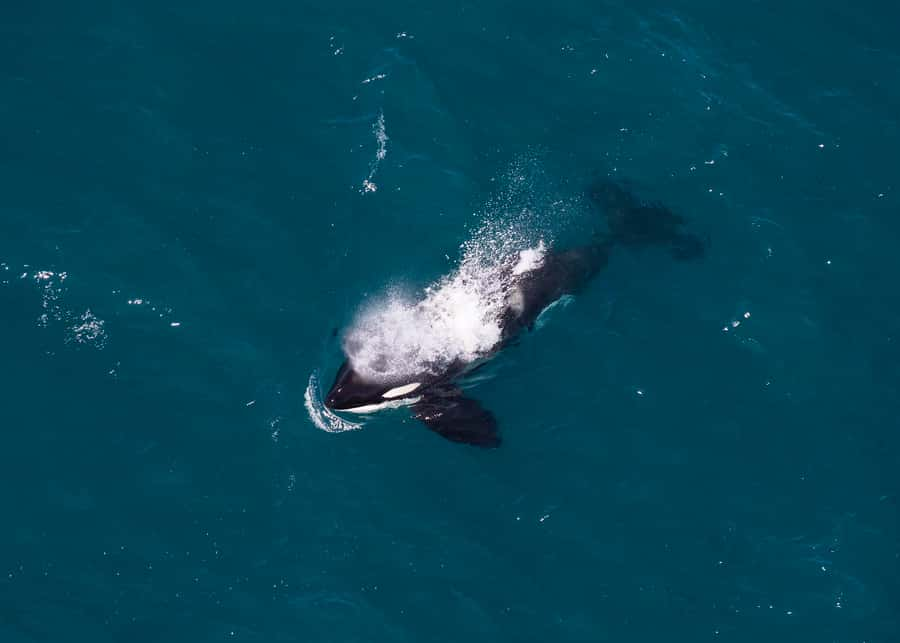
That cooperation is useful because whales are wild animals, not scheduled attractions. Even with a year-round population, the number of whales you see and the length of each sighting can vary. The flight has produced sightings of several sperm whales, and one past outing included three. Another included orcas feeding on a swordfish, though that kind of encounter should be treated as a lucky bonus rather than something promised.
Seeing sperm whales from the air
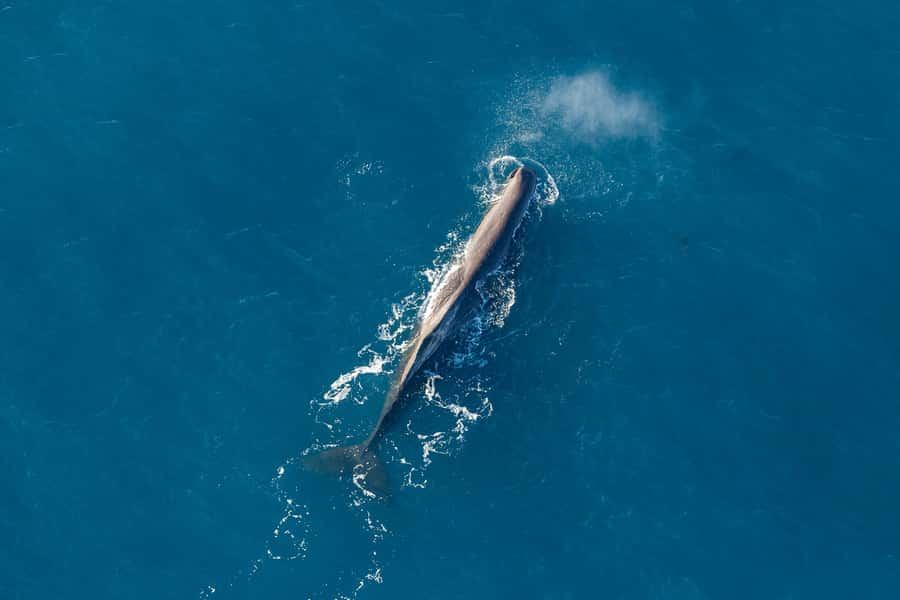
The best part of the flight is the change in scale. A sperm whale can appear as a dark shape in the water, then suddenly seem enormous when you understand its full length. One past sighting involved a whale roughly as long as a 23-metre boat, with the pilot timing its final movement and explaining when it would disappear below the surface.
From above, you may see the whale resting near the surface before it prepares to descend. The pilot can help you follow the animal and anticipate its tail display. This gives you a more complete view than a quick glimpse from sea level, and it can make photographs easier in one important way: the whale is visible against open water rather than hidden behind the side of a boat.
Photography still takes work. You are shooting through a helicopter window, with movement from the aircraft, changing light, and an animal that may move away quickly. Bring a camera if you have one, but do not expect every frame to be sharp. Sunglasses can help with glare, though they may need to come off when you are framing a photograph.
A fast shutter speed is sensible advice for moving aircraft and moving wildlife, but the supplied information does not promise photography instruction. If you use a telephoto lens, ask your pilot or ground crew for practical suggestions before departure. The aircraft’s position and the pilot’s timing matter more than fancy equipment.
Dolphins, fur seals, and the Kaikōura Peninsula
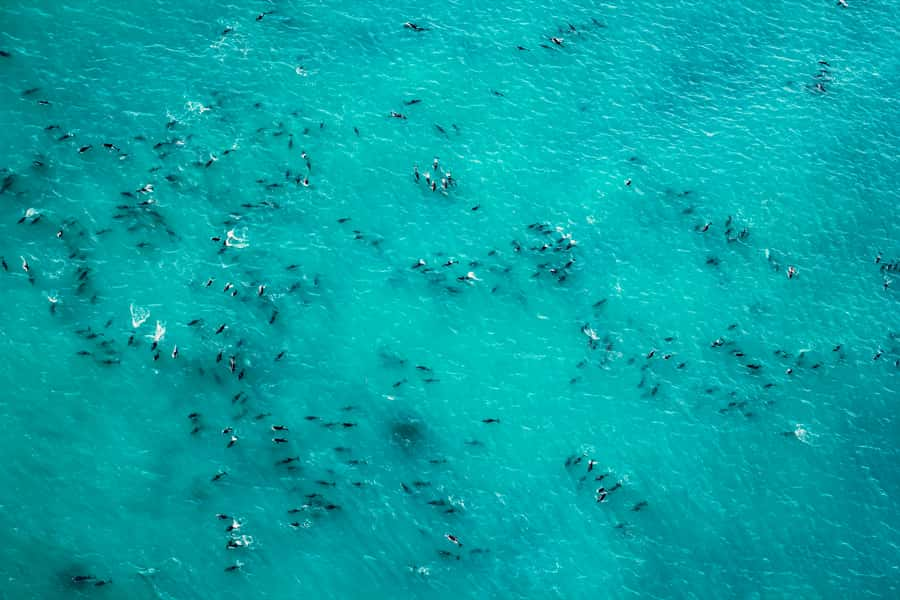
After the whale search, the flight continues along the Kaikōura Peninsula. Keep looking down for dusky dolphins, which can travel in large, lively groups. From the air, you can see the shape and movement of a pod more clearly than from the shoreline.
New Zealand fur seals are another possible sight. The tour includes wildlife viewing along the coast, but no particular number of dolphins or seals is guaranteed. The focus begins with sperm whales, then broadens to the marine life around the peninsula.
The aerial view also helps you read Kaikōura as a place shaped by both ocean and mountains. You see the peninsula from a different angle, with the Pacific stretching beyond it and the Seaward Kaikōura Range rising inland. The guide’s commentary links the wildlife to the local setting instead of treating the animals as isolated photo subjects.
One practical point: the tour information lists people prone to seasickness as unsuitable. You are flying rather than taking a boat, but helicopter motion can still bother some people. If motion is a concern for you, consider that warning seriously.
Same migration, a different deck:
- Kaikoura: Whale Watching Cruise
★ 4.6 · 3,089 reviews - Whale Watching in Kaikoura by Boat
★ 4.5 · 2,906 reviews - Kaikoura: Whale Watching Flight with Commentary
★ 4.6 · 823 reviews - Kaikōura Whale Watching Scenic Flight (40 Minutes)
★ 5.0 · 221 reviews
The mountain landing at 1,600 metres
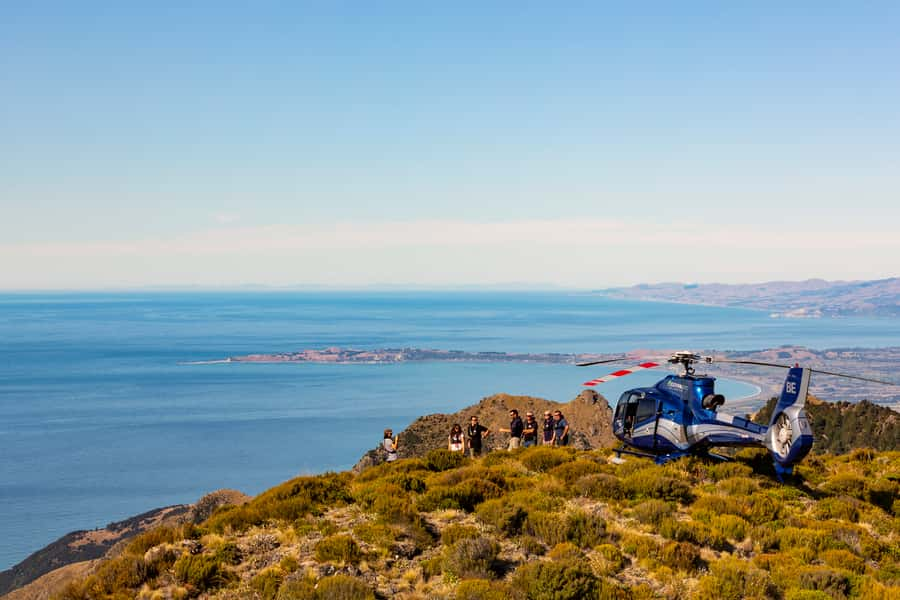
The final major part of the experience is the landing in the Seaward Kaikōura Range. The tour describes a summit landing around 1,600 metres on Mt Fyffe, with time to get out and walk on rugged, pristine ground.
This is not just a quick photo stop beside the aircraft. It gives you a few moments to take in the height, the mountain peaks, the peninsula, and the broad Pacific. The contrast is striking: you have just been watching whales in the sea, and now you are standing high above that same coast.
Snow may cover the landing area at certain times of year. That can make the stop especially memorable, but it also means you need warm clothing and comfortable shoes. Bring a sun hat and sunglasses too. High-altitude conditions can feel bright and cold even when Kaikōura itself feels mild.
The landing is also the feature that creates the tour’s main compromise. One German participant felt the hour would have been better spent entirely looking for whales because the name suggests a whale-watching flight. That is a fair criticism if your priority is animal sightings above all else.
I would think of this as a combined whale and mountain flight, not a one-hour whale search. If you want a varied view of Kaikōura, the landing adds real value. If you want the longest possible time with whales, the mountain stop may feel like a tradeoff.
What the pilot adds to the hour
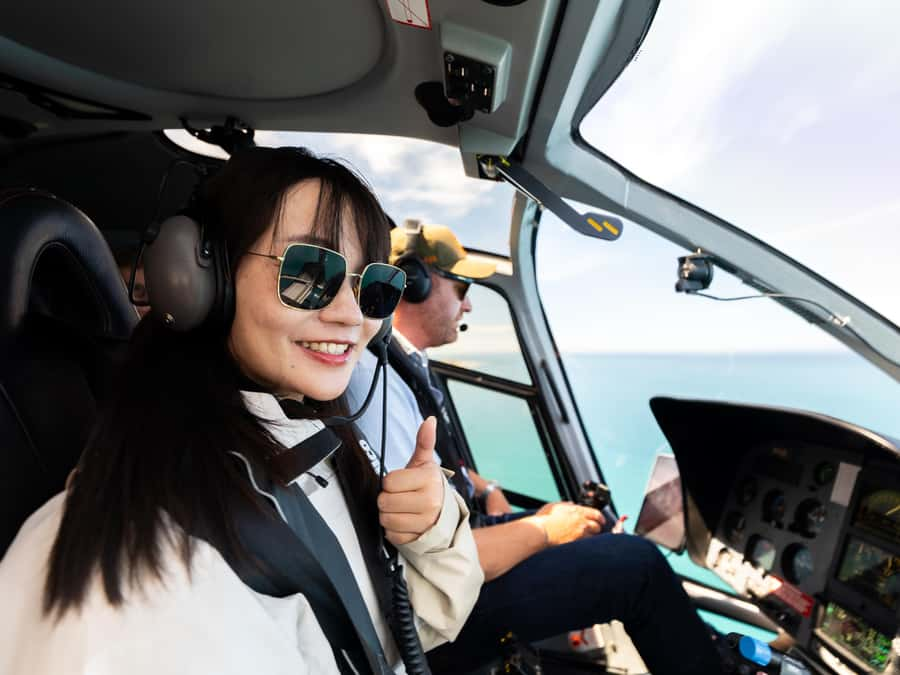
The pilot is not only flying the aircraft. The commentary covers safety, whale habits, the Kaikōura Canyon, local wildlife, and the scenery along the coast. The quality of that explanation matters because you have only one hour and need help knowing where to look.
Daniel has guided previous flights and was praised for clear safety explanations, local wildlife information, and good positioning for whale photographs. Peter has also led a past flight, explaining whale habits and helping passengers follow their movement. You cannot request that a particular pilot will operate your flight, but these details show the kind of role the pilot is expected to play.
The safety briefing comes first. You must be weighed at check-in because aircraft weight limits affect the flight. This is routine for small aircraft, but it is worth knowing before you arrive.
The small group limit of six is another benefit. You are not joining a large sightseeing crowd, and the limited capacity should give each person a better chance at the window and at the mountain stop. The precise seating arrangement is not provided, so do not assume that every passenger will have the same view at every moment.
Is $792 per person good value?
At $792 per person, this is a major splurge. You are paying for a one-hour helicopter flight, a pilot and guide, headsets, life jackets, real-time tracking, whale and marine wildlife viewing, and a mountain landing.
The value depends on what you want from Kaikōura. For a dedicated whale watcher, the aerial view can justify the price because you see the full whale and avoid the longer approach used by a boat. You also gain access to a high mountain viewpoint that would not be part of an ordinary coastal wildlife outing.
For a visitor who mainly wants a mountain scenic flight, the marine section adds another layer to the experience. For a family or group with a strict budget, however, $792 per person is hard to call casual spending. The one-hour duration makes the experience efficient, but it also limits the time available if wildlife is slow to appear.
I would book this when the combined experience matters: whales, dolphins, seals, coast, mountains, and a secluded landing. I would hesitate if you would be disappointed by anything less than a long whale-watching session.
Who should book this helicopter tour?
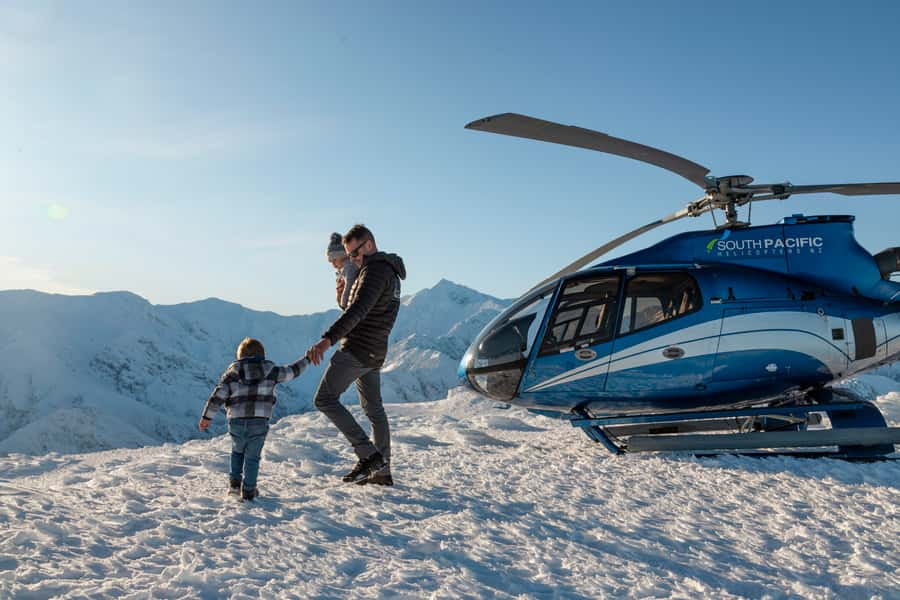
This flight suits adults and children aged eight or older who want a short, high-impact view of Kaikōura. It is especially good for photographers, wildlife lovers, and anyone who values seeing a place from several angles in one compact outing.
It also works well if you have limited time in town. You can see the marine reserve, peninsula, and mountain range without spending most of a day on an excursion.
The experience is not suitable for children under eight or people with mobility impairments. You need to get in and out of a helicopter and walk around at the mountain landing, so comfortable shoes are important.
Pack warm clothing, water, sunglasses, a sun hat, and a camera. Food and drinks are not included. Because weather may change the timing, keep your plans for the rest of the day flexible.
You can cancel up to 24 hours ahead for a full refund, and the reserve-now, pay-later option lets you hold a place without paying immediately. Check the available departure times when booking, since the exact schedule is not fixed here.
Should you book the Kaikōura helicopter flight?
Book it if you want more than a standard whale sighting. The strongest combination is the full view of a sperm whale from above followed by a landing high in the Seaward Kaikōura Range. The small group, expert local commentary, and possible sightings of dolphins and fur seals add to the appeal.
Skip it if the mountain stop sounds like a distraction or if $792 is beyond your comfort level. The tour’s own design gives you a choice between variety and maximum whale time.
For the right person, this is a memorable way to connect Kaikōura’s sea and mountains in one hour. Just book it as a combined aerial wildlife and alpine experience, not as a nonstop whale hunt.
FAQ
Where does the helicopter tour begin and end?
The tour begins and ends at Kaikōura Airport Terminal, 617 State Highway 1, Peketa, Kaikōura.
How long does the experience last?
The helicopter experience lasts one hour, including the wildlife flight and mountain landing.
How much does the tour cost?
The listed price is $792 per person.
What animals might I see?
You may see sperm whales, dusky dolphins, and New Zealand fur seals. Wildlife sightings are not guaranteed, since the animals remain in their natural environment.
Where does the helicopter look for whales?
The flight travels over the Whale Sanctuary and Hikurangi Marine Reserve, where the year-round sperm whale population is found.
Does the tour include a mountain landing?
Yes. The helicopter makes a landing in the Seaward Kaikōura Mountain Range, around 1,600 metres at Mt Fyffe. Snow landings are possible at certain times of year.
Is the tour available in languages other than English?
The live guide and audio guide are provided in English.
What should I bring?
Bring comfortable shoes, warm clothing, sunglasses, a sun hat, a camera, and water. Food and drinks are not included.
Can the flight time or date change?
Yes. Flights depend on favorable weather conditions, and the date or time may differ from the one requested.
Newly added whale trips around Kaikoura
- Kaikōura Whale Watching and Scenic Landing – 1hr Premier Tour★ 5.0 · 24 reviews
- Kaikōura Whale Watching – 1hr 20min Ultimate Adventure★ 5.0 · 8 reviews
- Kaikoura Whale Watch Day Tour from Christchurch★ 4.5 · 170 reviews
- Kaikoura Whale Watching – 45 Minute Ocean Safari★ 5.0 · 39 reviews
- Whale Watching in Kaikoura – Ultimate Experience★ 4.5 · 199 reviews
- Kaikoura Helicopters Top n Tail Whale Watch flight★ 5.0 · 7 reviews
- Kaikoura Helicopters Extended Whale Watch★ 4.5 · 15 reviews
- Kaikoura: Whale Watching Flight★ 5.0 · 100 reviews
Kaikoura Whale Watching Tours, side by side.
Kaikōura Whale Watching Scenic Flight (40 Minutes)
Read our review →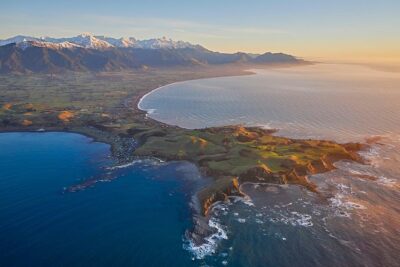
Whale Watching in Kaikoura – Ultimate Experience
Read our review →
Kaikoura Whale Watch Day Tour from Christchurch
Read our review →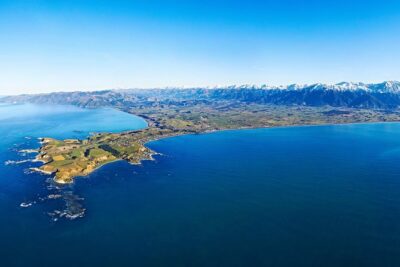
Kaikoura Whale Watching – 45 Minute Ocean Safari
Read our review →Lists this trip appears in