
Review · ICELAND
Ólafsvík: Whale Watching Tour
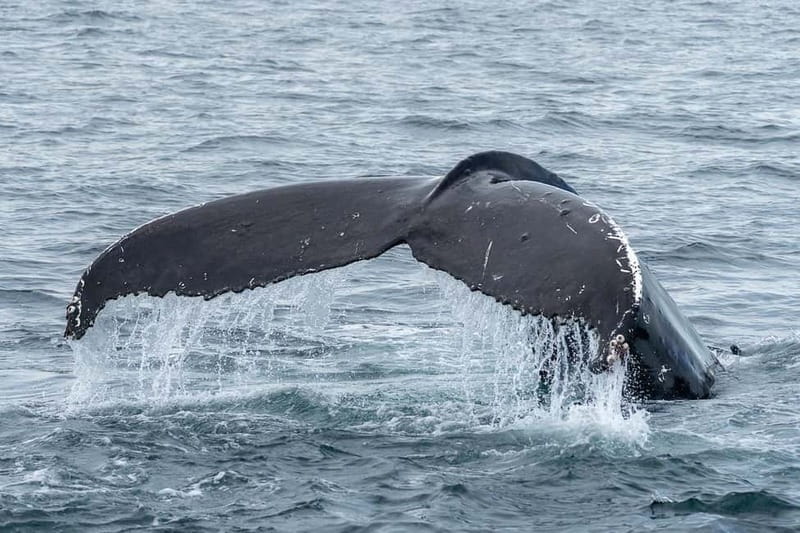
The big draw here is the chance to see orcas and sperm whales from Ólafsvík, where the boat heads along the Snæfellsnes Peninsula beneath Snæfellsjökull Glacier. This is one of Iceland’s better areas for toothed whales, and the scenery gives the cruise real character even when the animals stay out of sight.
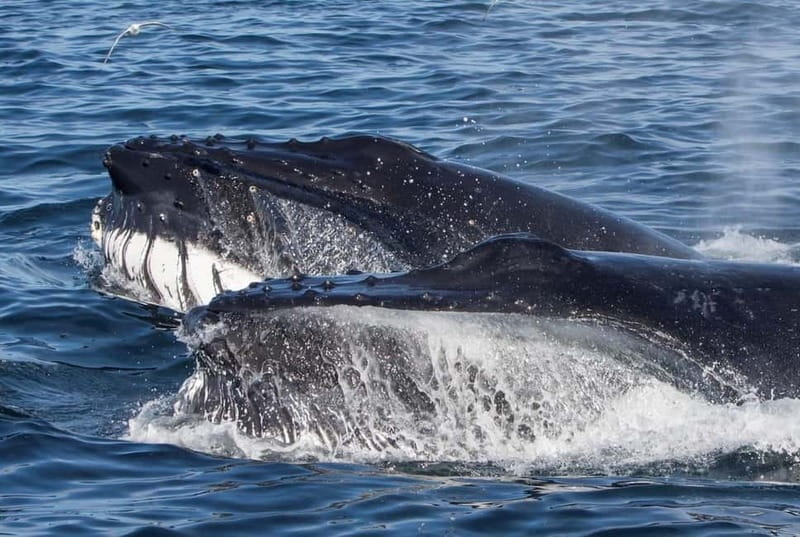
I like the clear seasonal pattern, which helps you choose your date, and I like the chance to watch several kinds of wildlife on one trip. A February outing recorded many orcas and some humpback whales, while late September brought orcas, humpbacks, dolphins, and a young whale. The main drawback is simple: this is wild nature, not a staged show, and rough water can be hard on anyone prone to seasickness.
Key points to know before sailing
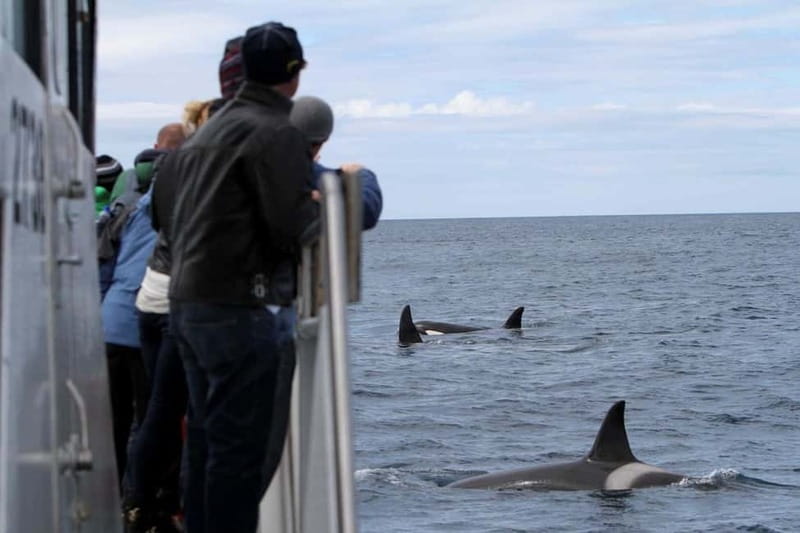
- Orcas are most likely from February through early July, though summer sightings can happen.
- Male sperm whales appear mainly from March through June, usually in deeper water.
- Late summer and autumn favor minke whales, pilot whales, humpbacks, and white-beaked dolphins.
- The three-hour route pairs whale watching with views of Snæfellsjökull from the sea.
- The $119 price includes an English-speaking guide, but not food, drinks, or transport to the harbor.
- Warm clothing is essential, and feeding the animals is not allowed.
Why Ólafsvík is a smart place for whale watching
Many Iceland whale trips focus on humpbacks or minke whales. Ólafsvík offers a different prospect. The waters along the Snæfellsnes Peninsula are known for toothed whales, especially orcas, sperm whales, and pilot whales. That makes this a particularly appealing choice if your main goal is to see predators rather than simply any large whale.
The setting adds plenty even before the first fin appears. You sail beneath the bulk of Snæfellsjökull, the glacier-capped volcano that dominates the peninsula. From the water, the glacier becomes a useful reference point as well as a memorable backdrop for photographs.
You should keep your expectations realistic. Wildlife moves according to food, weather, and luck. A three-hour cruise gives the crew time to search, but it cannot promise an orca, sperm whale, or even a whale sighting. That uncertainty is part of the bargain. If the animals are absent, the coastline and glacier still give you something worthwhile to watch.
The tour is operated by Láki Tours, with an English-speaking guide on board. No individual guide names are provided, but the guiding role matters here. Spotting a blow or a distant dorsal fin takes patience and trained eyes, especially when the sea is busy with whitecaps.
More whale trips worth the boat ride around Iceland:
- Reykjavík: Whale Watching and Marine Life Cruise
★ 4.6 · 9,838 reviews - Akureyri: 3-Hour Classic Whale Watching Tour by Ship
★ 4.6 · 3,000 reviews - Reykjavík: Whale Watching Cruise on the Amelia Rose Yacht
★ 4.5 · 2,911 reviews
Setting out for three hours from Ólafsvík
Your experience begins by meeting the guide and boarding in Ólafsvík. Hotel pickup and drop-off are not included, so you need to arrange your own way to the harbor. Food and drinks are also your responsibility, which is worth remembering before departure because the trip lasts three hours.
Once underway, the boat follows the coast of the Snæfellsnes Peninsula. This is not a sightseeing cruise with a fixed sequence of monuments. The route depends on where wildlife has been seen and what the crew can locate on the day. The guide will ask you to keep watch across the water, since a whale can surface well away from the boat and disappear quickly.
The rhythm is usually a mix of steady travel, scanning, and sudden activity. You may spend several minutes watching empty water, then see a blow, a dorsal fin, or a pod of dolphins. Bring patience and keep your eyes moving. A small group of animals can surface in several places, and it is easy to miss the first sign if you stare at one patch of sea.
The three-hour duration is a useful middle ground. It is long enough to search a broad area without taking up an entire day of your Iceland itinerary. At the same time, it is long enough for cold, wind, or motion to become tiring. If you are uncertain about your tolerance for open water, this is not a minor point.
The best months for orcas and sperm whales
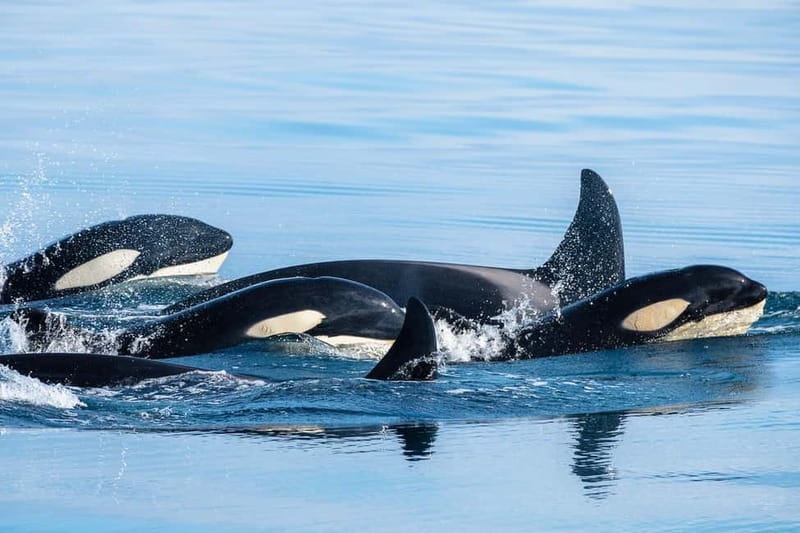
Timing makes a real difference on this tour. Orcas are more often seen from February through early July. There is still a chance during the summer, including July and August, but by September the main targets usually shift to other species.
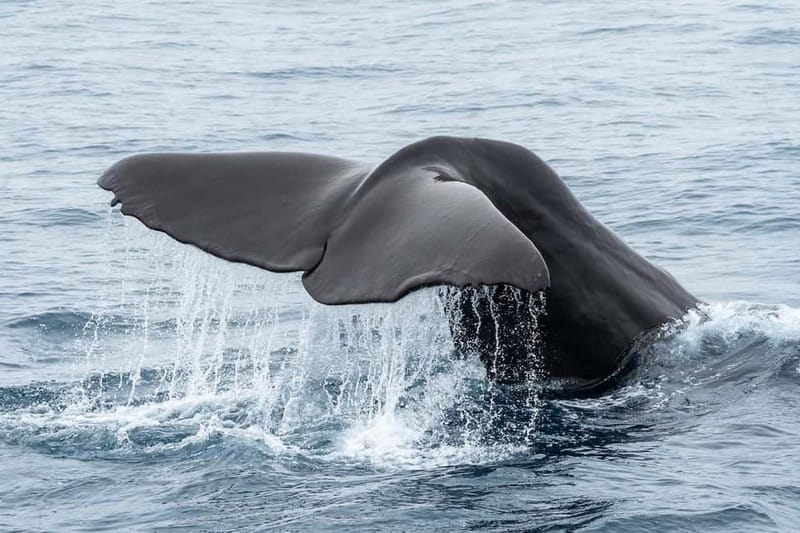
Sperm whales follow a different pattern. Male sperm whales appear regularly in deeper water, mostly between March and June. They sometimes show up later in the year, but you should treat a spring booking as the better bet if sperm whales are your priority.
Late summer and autumn bring a different mix. Minke whales, pilot whales, humpback whales, and white-beaked dolphins become the more likely possibilities. That does not mean you cannot see an orca in September. One late September trip recorded many orcas along with humpback whales. It simply means you should book with a flexible target list rather than one fixed species.
This seasonal information is one of the strongest practical features of the trip. You can match the cruise to your interests:
- Choose February through early July if orcas are at the top of your list.
- Choose March through June if male sperm whales are especially important to you.
- Choose late summer or autumn for a broader chance at dolphins, humpbacks, pilot whales, and minke whales.
- Keep your hopes open in every season, since sightings can vary from day to day.
What a good wildlife encounter can look like
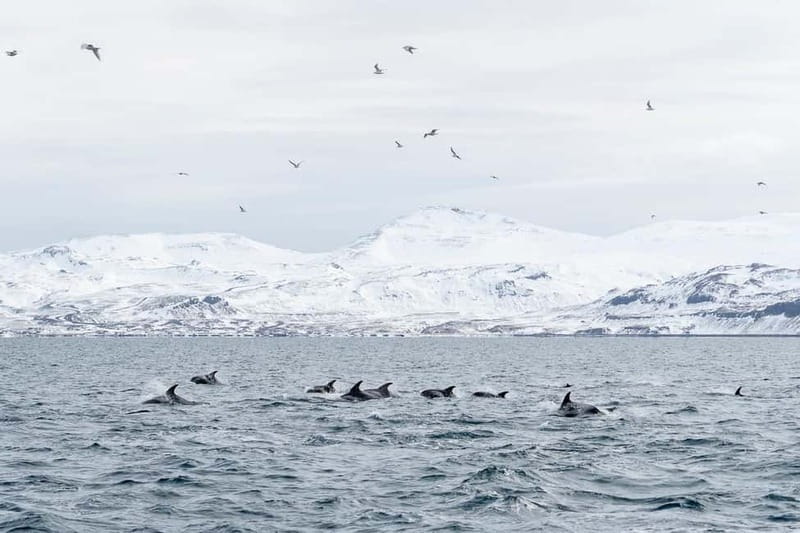
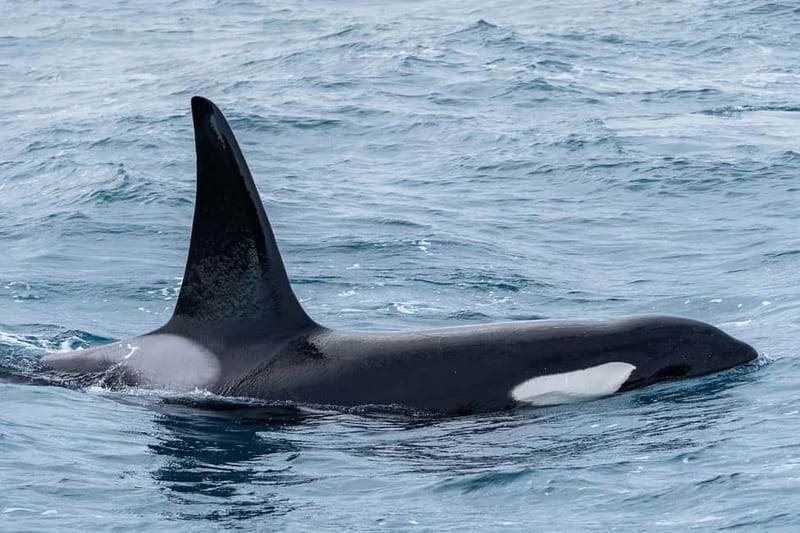
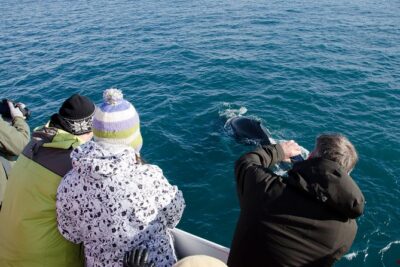
When the animals appear, the experience can change quickly. Orcas may travel in groups, and the boat may move to watch more than one group rather than stay with a single pod. A February outing recorded many orcas and several humpback whales, with the boat sometimes close enough for clear observation.
That kind of encounter is thrilling, but closeness should not be your only measure of a successful trip. Seeing a pod travel together, watching a blow rise in the distance, or spotting a fin beside a glacier-backed coast can all be memorable. The guide’s job is to help you understand what you are seeing while respecting the animals.
Dolphins can add a different kind of energy. A September trip recorded many dolphins and a small whale. Dolphins are often easier to miss than you might expect because they move quickly and cover a wide area, so keep watching after the first sighting.
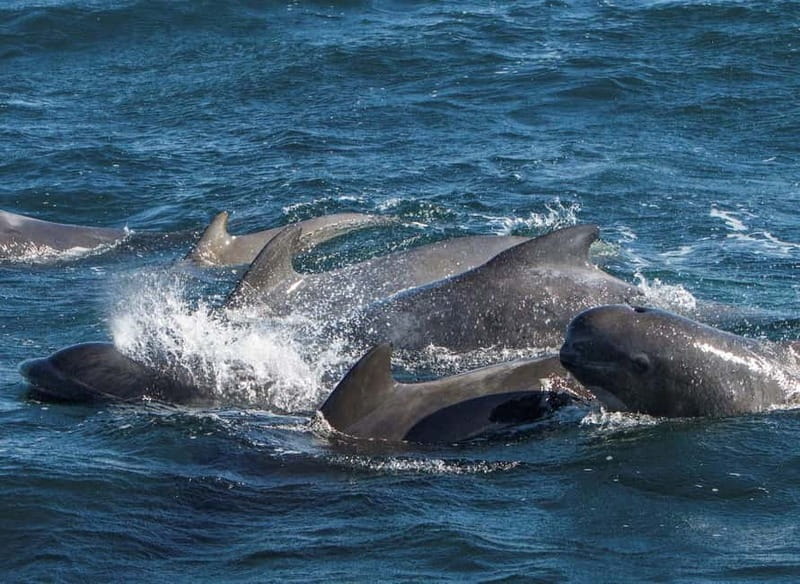
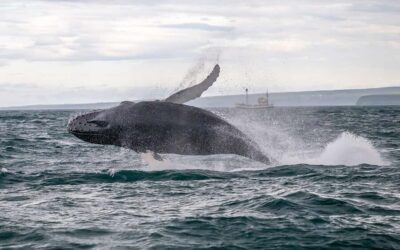
Humpbacks are another possibility, especially toward late summer and autumn, though they can also appear during the orca season. Minke whales, pilot whales, and white-beaked dolphins broaden the experience beyond the headline species.
The tour does not include feeding animals, and that is a good rule for wildlife viewing. The aim is to observe natural behavior, not coax animals closer with food. You should also expect the crew to adjust the route and speed according to conditions rather than chase every possible sighting.
Same migration, a different deck:
- Húsavík: Whale Watching Tour with Guide
★ 4.6 · 2,761 reviews - The Original Classic Whale Watching from Reykjavik
★ 4.5 · 2,626 reviews - Reykjavik: Whale Watching Tour with Expert Guide
★ 4.3 · 2,422 reviews - Húsavík: Traditional Whale Watching Tour
★ 4.6 · 2,115 reviews
Snæfellsjökull from the water
The glacier is not just background scenery. Snæfellsjökull gives the trip a strong sense of place, especially when the boat is offshore and the peninsula opens around you. From land, you tend to experience the glacier as a mountain. From the boat, you see it in relation to the sea, cliffs, and broad coastline.
This matters on a day when whales are elusive. You are not stuck looking at a featureless horizon for three hours. The coastline and glacier provide a changing frame for the search, and the boat ride itself becomes part of the reason to go.
Bring a camera, but do not plan to spend the whole trip looking through it. Wildlife surfaces without warning, and a phone or camera can slow your reaction. I would take a few landscape photographs early, then keep both hands free and watch the water.
The $119 question: is the cruise good value?
At $119 per person, this is not a bargain-priced harbor ride, but the cost is reasonable for a three-hour guided wildlife cruise in Iceland. You are paying for time on the water, a crew searching a known whale area, and the possibility of seeing species that are not common on every Icelandic whale trip.
The value is strongest if you already plan to visit the Snæfellsnes Peninsula and care about wildlife. You avoid spending a full day on a separate excursion, and the cruise gives you a chance to see the peninsula from a completely different angle.
The value is less certain if you need a guaranteed sighting or if you are comparing this with a short scenic boat ride. There is no promise of orcas, sperm whales, or any particular species. You also need to budget for your own food and drinks and make your own way to the harbor.
Recent outings show why the price can feel worthwhile. One February trip had unusually strong orca activity, with humpbacks also visible. A late September departure produced many orcas, humpbacks, dolphins, and a young whale. Those are excellent results, but they should be treated as examples of what can happen, not a forecast for your date.
Staying warm and comfortable on open water
Warm clothing is listed as essential, and I would take that advice seriously. Even if Ólafsvík feels mild on shore, wind and spray can make the boat feel much colder. Dress in layers so you can adjust as the temperature changes.
Seasickness is the main physical concern. This activity is not suitable for people prone to motion sickness, according to the tour information. If open-water movement usually causes you trouble, you may find the three-hour duration uncomfortable, and the constant scanning can make nausea worse.
The tour does not include food or drinks. Eat beforehand and bring what you need if permitted, but remember that the operator does not provide refreshments. You should also plan around the weather and avoid a tight schedule immediately after the cruise. A late return or a slower search can affect your day.
There is free cancellation up to 24 hours before departure, and you can reserve now and pay later. Those terms are useful when Iceland’s weather makes advance planning tricky. They do not remove the need to check the available start time when booking.
Who will enjoy this tour most
I would recommend this cruise to you if you want a serious chance at seeing orcas and prefer a smaller regional harbor over a busier city departure. It also suits anyone building a Snæfellsnes day around nature, since the boat ride adds wildlife and sea views without requiring a separate trip to another part of Iceland.
It is a good choice for photographers who want wildlife against the Snæfellsjökull setting, though you need patience and quick reactions. It also suits families and first-time whale watchers who can handle cold conditions and open water, but young children or anyone sensitive to motion may find the three-hour trip demanding.
You may want to skip it if your schedule cannot tolerate an uncertain wildlife result. You may also prefer a land-based activity if seasickness is a concern. This is a search for wild animals, not a guaranteed performance.
Should you book the Ólafsvík whale tour?
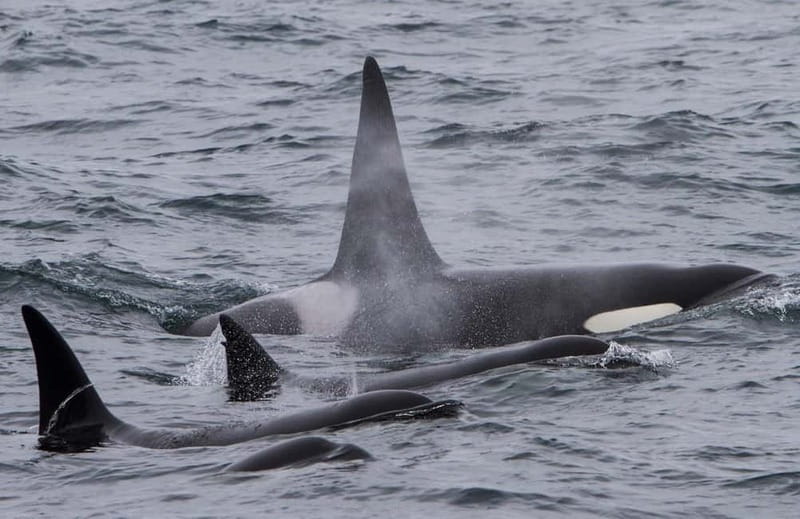
Book it if orcas, sperm whales, and the possibility of several whale species are high on your Iceland list. The seasonal details let you choose a date with better odds, and the Snæfellsjökull views give the outing value even when nature refuses to cooperate.
For the best chance at orcas, aim for February through early July. For sperm whales, March through June is the stronger window. Late summer and autumn may reward you with dolphins, humpbacks, pilot whales, and minke whales, with orcas still possible.
At $119, I see this as a worthwhile specialist excursion rather than an automatic choice for every visitor. Bring warm layers, accept that sightings are never certain, and leave enough time in your day for the sea to set the pace.
FAQ
How long is the Ólafsvík whale watching tour?
The tour lasts three hours, including the boat ride along the Snæfellsnes Peninsula coastline.
Which whales can I see?
Possible sightings include orcas, sperm whales, pilot whales, minke whales, and humpback whales. White-beaked dolphins are also possible.
When is the best time to see orcas?
Orcas are more often seen from February through early July, although sightings can happen during the summer months as well.
When can I see sperm whales?
Male sperm whales are seen mostly between March and June, usually in deeper water. They can sometimes appear later in the year.
Is food or hotel transportation included?
No. Food, drinks, hotel pickup, and hotel drop-off are not included.
What should I bring?
Bring warm clothing. You should also be prepared for open-water conditions, since the tour is not suitable for people prone to seasickness.
Newly added whale trips around Iceland
- Icelandic Horse Riding and Whale Watching Cruise from Reykjavík★ 4.0 · 14 reviews
- Whale Wonders Morning Expedition from Reykjavík★ 4.0 · 10 reviews
- Whales Of Iceland Admission Ticket★ 4.0 · 239 reviews
- Whale Watching by RIB Speedboat from Downtown Reykjavik★ 4.5 · 26 reviews
- Whale Watching and Northern Lights Half-Day Combo Tour★ 4.5 · 43 reviews
- Whale Watching and Marine Life Tour in Reykjavik★ 4.5 · 55 reviews
- Whale Watching And Fly Over Iceland Guided Tour★ 5.0 · 4 reviews
- Whale Watching – RIB Boat Adventure in Kopavogur, Iceland★ 5.0 · 5 reviews
Iceland Whale Watching Tours, side by side.
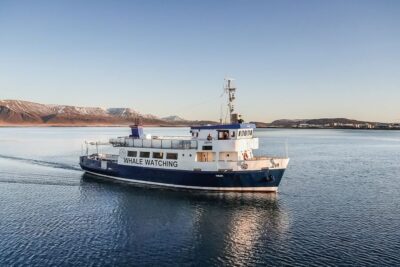
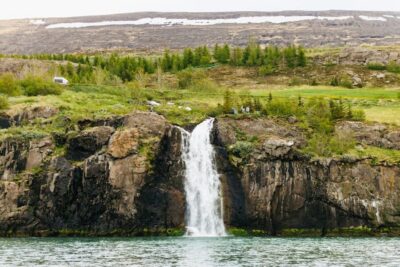
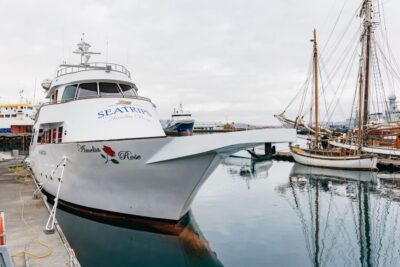
Whale Watching Cruise on the Amelia Rose Yacht
Read our review →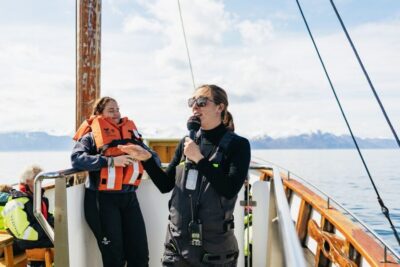
The Original Classic Whale Watching from Reykjavik
Read our review →
Whale Watching – Family Run with Indoor Seats
Read our review →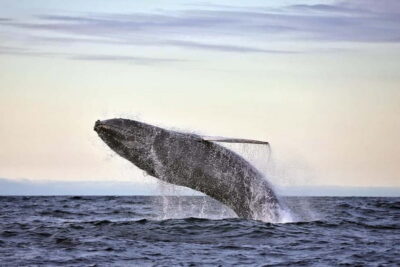
Original Big Whale Safari & Puffins by Speedboat
Read our review →Lists this trip appears in