
Review · NEW ZEALAND
Auckland Dolphin and Whale Watching Eco-Safari Cruise
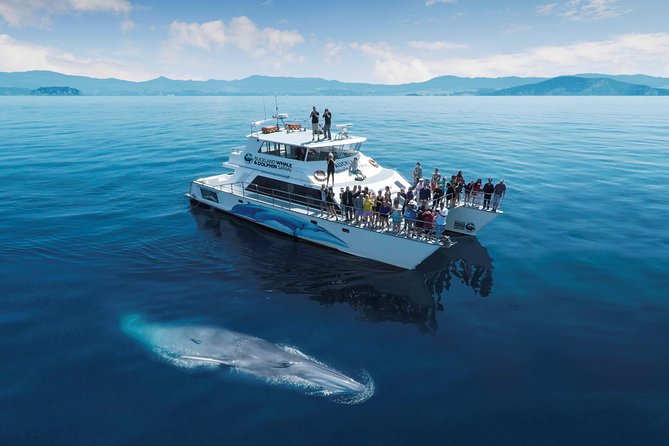
Auckland’s best wildlife cruise is less about a quick whale photo and more about spending a half-day in the open waters of the Hauraki Gulf Marine Park. Dolphins are often the star, while whales, seals, blue penguins, and rare seabirds add welcome surprises. The boat also gives you a fine view of Auckland’s islands from the water.
I like the combination of marine research and sightseeing, since the onboard scientists explain what they are tracking instead of treating the animals as mere photo props. I also like the free return-trip offer if no marine mammals are seen. The main drawback is simple: wild animals set the schedule, and a full boat can feel crowded when everyone rushes to the rail.
Key points to know before booking
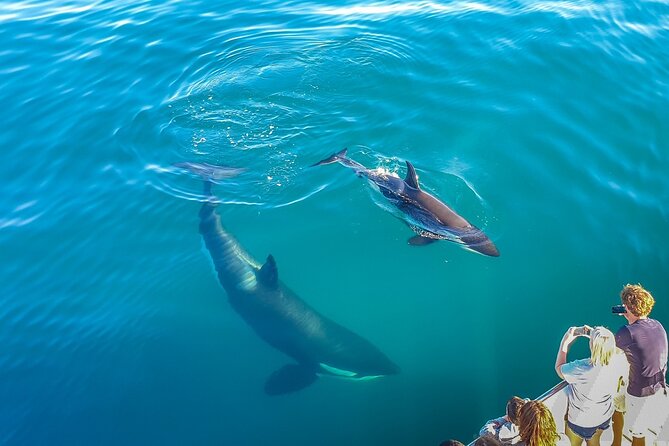
- Dolphins are the most dependable highlight: Pods may swim beside the catamaran, sometimes for long stretches.
- The trip supports conservation: Each ticket contributes directly to marine mammal conservation.
- The boat is built for viewing: The 65-foot catamaran offers indoor and outdoor seating, though prime rail space can go quickly.
- The route is scenic even without whales: You pass Auckland Harbour Bridge, Rangitoto, Motuihe, Motutapu, and other gulf islands.
- Weather changes the experience: Bring warm layers, waterproof clothing, sunscreen, and a secure hat.
- No mammals means a free second chance: If you see no whales, dolphins, or other marine mammals, you can return another day at no extra charge.
Starting at Viaduct Harbour
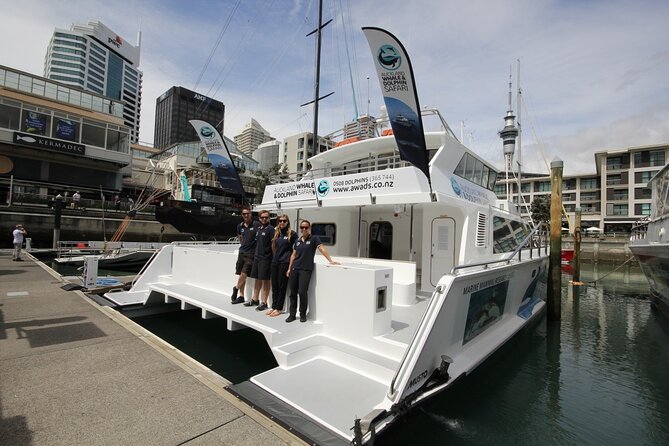
The safari begins beside the New Zealand Maritime Museum at Auckland’s Viaduct Harbour. This is a handy downtown departure point, especially if you are staying in central Auckland or already exploring the waterfront.
Check-in closes 15 minutes before departure. Take that rule seriously. The boat leaves from a busy harbour, and arriving at the last moment can put your seat at risk.
You board a custom-built 65-foot, or 20-metre, catamaran designed for marine viewing. The vessel has indoor and outdoor areas, toilets, and snacks and drinks for purchase. You do not need to bring a packed lunch, but food is not included in the ticket price.
The trip lasts about four and a half hours. That is enough time to reach the open gulf and search properly, but it is also a long time on a boat. If you are prone to seasickness, think carefully about the weather and your comfort on open water.
More Whale and Dolphin Watching Tours in New Zealand:
- Auckland: Whale and Dolphin Watching Half-Day Eco Cruise
★ 4.5 · 1,072 reviews - Auckland: Tikapa Moana Whales, Dolphins and Islands Cruise
★ 3.9 · 292 reviews - Auckland: Tikapa Moana Dolphin, Whale and Island Cruise
★ 4.0 · 17 reviews
Auckland Harbour Bridge and the first views
The first part of the route carries you through Waitemata Harbour and under or near Auckland Harbour Bridge. This opening stretch helps you settle in and gives you a different view of the city, with the skyline behind you and the gulf opening ahead.
You then head toward the island waters around Rangitoto. Auckland’s volcanic setting becomes clearer from the boat. The view is not just a backdrop for wildlife. It explains why this region feels so spacious despite beginning in the middle of a city.
The crew provides commentary about the harbour, islands, and marine park. The strongest part of the commentary is its connection to current research. Marine research scientists explain the animals being tracked and the work carried out with local partners and other organizations.
The quality of the announcements can vary by position on the boat. One useful tip is to stay near the main commentary area when you want to hear the science. On a full departure, some people have found that quiet announcements are hard to catch from the back or lower seating areas.
Searching the Hauraki Gulf for marine life
The main wildlife search takes place in the Hauraki Gulf Marine Park. This protected area includes five marine reserves and a chain of islands. It is home to about 23 marine species, including up to six types of whales.
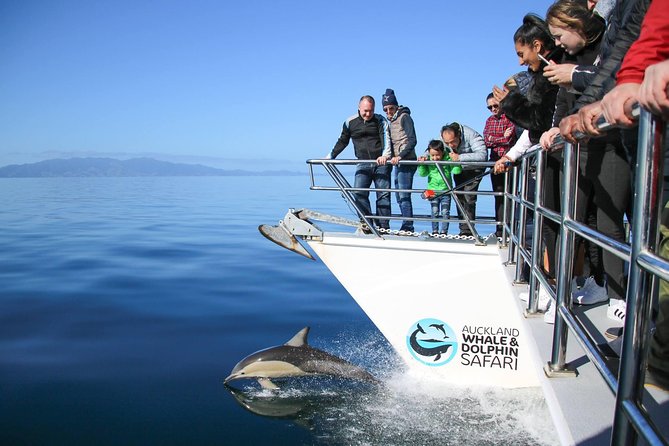
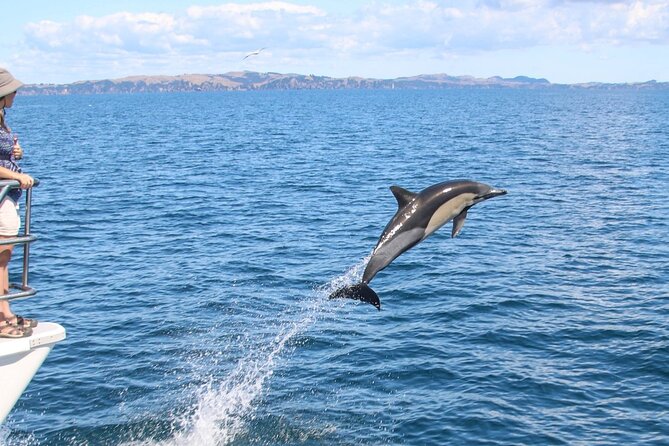
The crew looks especially for bottlenose dolphins and Bryde’s whales, which are native to New Zealand waters. The dolphin sightings can be spectacular. Pods may appear beside the boat, play near the bow, or remain in view for close to half an hour.
You might see dolphins with young calves, which makes the encounter especially memorable. The boat gives the animals room and allows them to decide how close they come. That matters. The best sighting is not always the one where the boat pushes nearest, but the one where the animals behave naturally.
Whales are less predictable. Bryde’s whales can be elusive, and some departures may go the full four and a half hours without a sighting. The crew will keep searching, but no responsible operator can promise a whale in a large area of open sea.
The return-trip policy softens that risk. If you do not see any marine mammals, you receive the chance to take the cruise again at no extra cost. This is a useful offer if you live in Auckland or have enough time in the city. It is less useful if you are visiting from overseas and leave soon.
Rangitoto, Motuihe, and Motutapu from the water
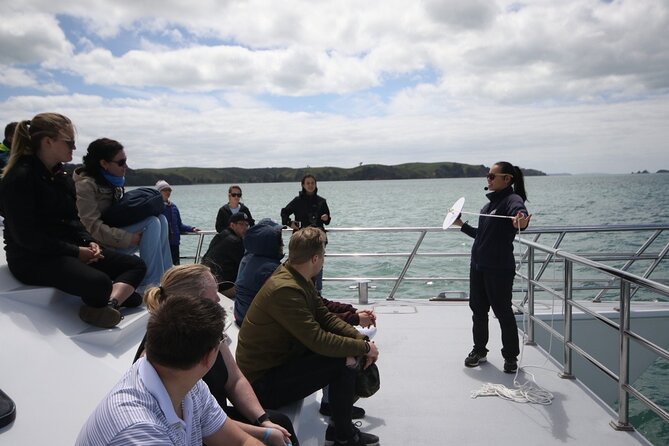
Rangitoto Island is one of the first major landmarks on the route. Its volcanic form gives the trip a strong sense of place. Seeing it from offshore also helps you understand the scale of the gulf and the distance between Auckland’s islands.
The boat may continue through waters near Motuihe and Motutapu. These islands add variety to the scenery while the crew continues the wildlife search. You are not stopping for walks or island visits, so think of these points as moving viewpoints rather than shore excursions.
Motutapu is connected to Rangitoto by a causeway, though you will experience the islands from the water. Their quieter shores contrast with the city you left behind. Keep watching the water rather than spending the whole trip focused on land. Dolphins and seabirds can appear without much warning.
Tiritiri Matangi Island is another notable point on the route. It is known in the tour commentary as part of the gulf’s important island environment. You may not get a close look at the island itself, but its presence adds to the sense that this is a broad marine sanctuary rather than a simple harbour cruise.
More Whale Watching Cruises in New Zealand:
- Kaikoura: Whale Watching Cruise
★ 4.6 · 3,089 reviews - Reykjavík: Whale Watching and Marine Life Cruise
★ 4.6 · 9,838 reviews - Funchal: Dolphin and Whale Watching Catamaran Cruise
★ 4.5 · 5,697 reviews - Costa Adeje: Whale & Dolphin Eco-Cruise with Snacks & Drinks
★ 4.6 · 5,096 reviews
Dolphins, penguins, seals, and seabirds
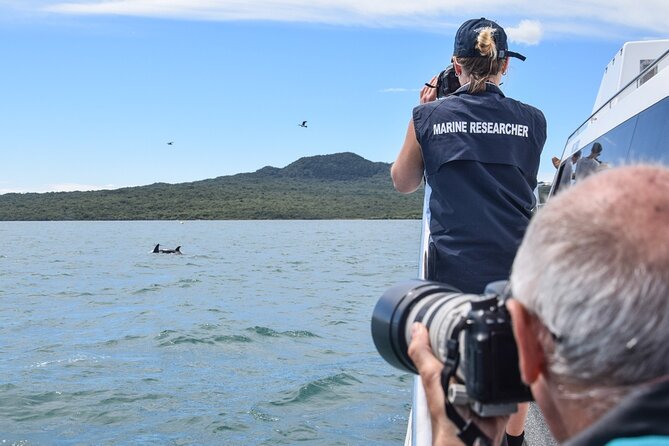
Dolphins are the most likely major sighting, but the safari covers a wider range of life. Keep your eyes open for seals, blue penguins, and several seabirds.
Australasian gannets, petrels, shearwaters, and white-fronted terns may be seen flying above the water or plunging into it. A pair of binoculars is useful, though not essential. Bring your own if you have them, since the activity information specifically recommends binoculars for birdwatching.
Blue penguins are small and can be easy to miss. They are not the kind of animal you should expect to see clearly from a great distance every time. Still, spotting one adds a special detail to the trip, especially when the larger whales do not appear.
Some departures have produced a varied list of sightings, including sharks, seals, penguins, dolphins, and whales. Others have produced only a few dolphins or none at all. That range is not a flaw in the route. It is the reality of looking for wild animals in open water.
What the boat feels like with up to 99 people
The catamaran is described as comfortable and stable, and several details make it practical for a long cruise. You can move between inside and outside areas, buy snacks and drinks, and use the onboard toilets.
The passenger limit is up to 99 people. That is a substantial group for a wildlife boat. On quieter departures, this may not trouble you. On a full summer sailing, the outside rail can become crowded when dolphins appear.
The best strategy is to avoid treating one viewing spot as permanent property. If you leave your seat, someone may take it, especially when the boat is full. Crew members ask people to rotate so everyone gets a look, but you may need to cooperate actively rather than expect an empty rail when you return.
The front deck can be excellent when the boat is underway, offering a strong view and a sense of speed. It can also be windy and exposed. People who prefer a calmer ride may do better in a more sheltered area, especially when the sea is choppy.
Weather, clothing, and comfort
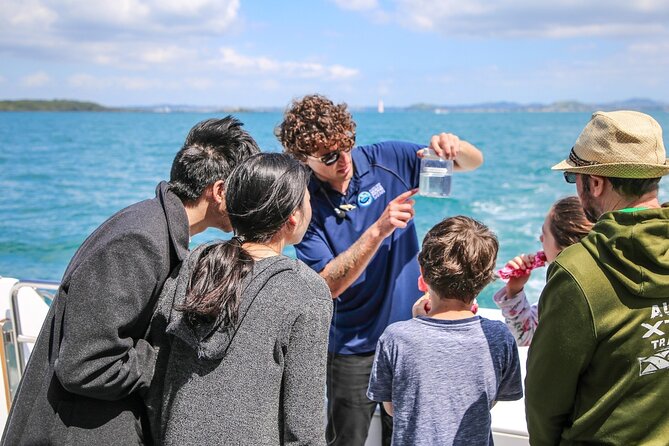
Auckland weather can change quickly, and the temperature often feels lower once the catamaran leaves the harbour. Wear warm layers and bring weatherproof gear. A waterproof jacket is more useful than a light sweater alone.
You should also pack sunscreen, sunglasses, and a sun hat with a chin strap. Wind can turn a loose hat into lost property. Flat-soled or sturdy shoes are recommended for moving around the boat.
One departure in rough seas still provided a worthwhile outing, but choppy water can make four and a half hours feel long. Another morning trip had calm water and a much easier ride. You cannot control the sea, but checking the forecast and choosing a time that suits your tolerance for motion may help.
The boat may stay out slightly longer while the crew searches for animals. That shows commitment, but it can affect plans after the safari. Avoid scheduling a tight connection or an important booking immediately after the stated return time.
Why the research element matters
The conservation work gives this cruise more substance than a standard sightseeing trip. Your ticket contributes directly to marine mammal conservation, and the onboard scientists explain how the crew tracks whales and studies the gulf.
I value this because it changes the way you watch. Instead of simply waiting for a fin, you learn why the species are present, what researchers are recording, and how boat behavior can affect marine life.
The crew aims to keep distance and limit stress on the animals. Dolphins may choose to approach the boat, but the vessel does not need to chase them tightly for the encounter to be worthwhile. That approach suits anyone who wants wildlife viewing to be respectful rather than aggressive.
The commentary also adds value during quiet stretches. If no animal appears for a while, you still learn about the park, island habitats, seabirds, and the research partnerships connected to the safari.
Is $135.91 a fair price?
At $135.91 per person, this is not a cheap harbour ride. You are paying for about four and a half hours on the water, a purpose-built catamaran, a local guide, marine science commentary, and access to a wide search area beyond the city harbour.
The price makes more sense if you care about the educational side and want a serious attempt to find wildlife. It is less appealing if your only goal is a guaranteed whale photograph. No amount of searching can force a whale to surface.
The conservation contribution also matters when comparing this with a basic sightseeing cruise. You are supporting marine mammal work while enjoying the gulf, rather than buying only a scenic boat transfer.
For families, couples, photographers, and anyone interested in New Zealand wildlife, the cost can be worthwhile. If your Auckland schedule is short and you cannot use the free return offer, remember that the value depends heavily on what the animals decide to do that day.
Who should book this safari?
I would choose this trip if you want a full marine experience from central Auckland and are happy to treat wildlife as a possibility, not a guarantee. It suits people who enjoy natural history, open-water scenery, seabirds, and a crew that explains what it is doing.
Families can enjoy the dolphins, penguins, and island views, though young children may find the long duration and moving boat tiring. Anyone sensitive to motion should be cautious on rough-weather days.
Photographers should bring a camera, but keep expectations sensible. Wildlife appears quickly, the boat may be moving, and the rail can fill up fast. A camera with a flexible zoom and a willingness to share viewing space will serve you better than a large amount of equipment.
The tour is also a good fit if you value conservation. The research element is not a short sales pitch added at the end. It runs through the way the crew searches, explains, and approaches the animals.
Free cancellation is available up to 24 hours before departure. Changes or cancellations inside that window are not accepted for a refund. Poor weather or failure to meet the minimum number can lead to a different date or a full refund.
Should you book the Auckland eco-safari?
Book it if you want a thoughtful half-day on Auckland’s water, with a strong chance of dolphins, beautiful island scenery, and useful marine science along the way. The crew works hard, the vessel offers good viewing options, and the conservation purpose gives the outing real value.
Do not book it expecting whales on demand or an uncrowded private boat. A full sailing can make the rail competitive, and rough seas can test your stomach. If you accept those limits, this is one of Auckland’s better ways to connect the city with the wildlife of the Hauraki Gulf.
FAQ
Where does the Auckland Dolphin and Whale Watching Eco-Safari depart?
It departs from Eastern Viaduct beside the New Zealand Maritime Museum in Auckland Central. The cruise ends back at the same meeting point.
How long does the cruise last?
The experience lasts approximately 4 hours and 30 minutes.
What animals might I see?
Possible sightings include up to six types of whales, bottlenose dolphins, seals, blue penguins, sharks, and seabirds such as Australasian gannets, petrels, shearwaters, and white-fronted terns.
Are whale and dolphin sightings guaranteed?
No. Wildlife sightings cannot be guaranteed. If you do not see any marine mammals during the trip, you can take the cruise again on another day at no extra charge.
What kind of boat is used?
You travel aboard a custom-built 65-foot, or 20-metre, catamaran. It has indoor and outdoor viewing areas, toilets, and snacks and drinks available for purchase.
What should I wear and bring?
Wear warm layers and weatherproof clothing. Bring a sun hat with a chin strap, sunscreen, sunglasses, a camera, binoculars, and flat-soled shoes.
How many people can join the cruise?
The maximum group size is 99 passengers.
Can I cancel for a refund?
You can cancel up to 24 hours before the experience for a full refund. Cancellations or changes made less than 24 hours before departure are not accepted for a refund.
Newly added whale trips around New Zealand
- Kaikōura Whale Watching – 1hr 20min Ultimate Adventure★ 5.0 · 8 reviews
- Kaikōura Whale Watching and Scenic Landing – 1hr Premier Tour★ 5.0 · 24 reviews
- Kaikoura Whale Watch Day Tour from Christchurch★ 4.5 · 170 reviews
- Kaikoura Whale Watching – 45 Minute Ocean Safari★ 5.0 · 39 reviews
- Whale Watching in Kaikoura – Ultimate Experience★ 4.5 · 199 reviews
- Kaikoura Helicopters Top n Tail Whale Watch flight★ 5.0 · 7 reviews
- Kaikoura Helicopters Extended Whale Watch★ 4.5 · 15 reviews
- Kaikoura: Whale Watching Flight★ 5.0 · 100 reviews
New Zealand Whale Watching Tours, side by side.
Whale and Dolphin Watching Half-Day Eco Cruise
Read our review →
Tikapa Moana Whales, Dolphins and Islands Cruise
Read our review →
From Christchurch: Kaikōura Day Tour with Whale Watching
Read our review →
Kaikōura Whale Watching Scenic Flight (40 Minutes)
Read our review →
Whale Watching in Kaikoura – Ultimate Experience
Read our review →Lists this trip appears in