
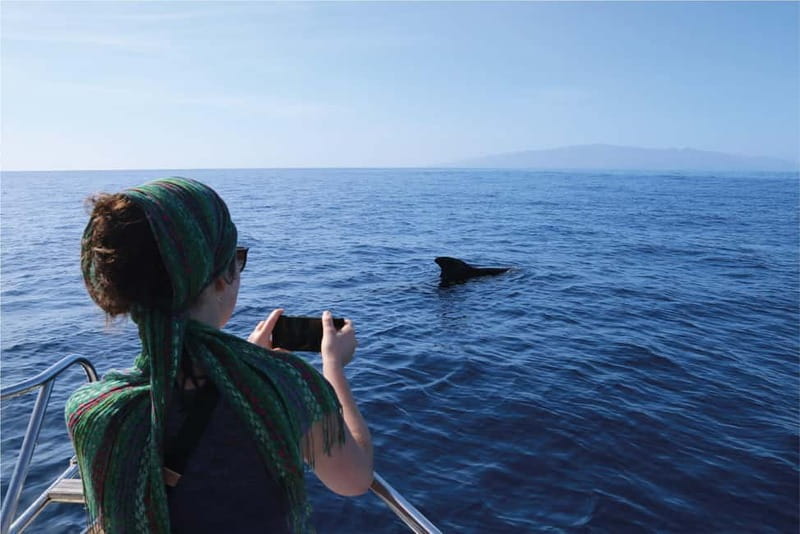
Review · TENERIFE
Costa Adeje: Whale Watching Eco Experience with Hydrophone.
The most unusual part of this Costa Adeje whale-watching trip is the hydrophone. When the boat’s engines are shut off, you can listen to whales and dolphins communicate or hunt, not simply watch them surface. The setting is the Canary Islands’ only whale sanctuary, where pilot whales are a regular possibility.
I like the small limit of 10 passengers, which gives the two-person crew room to pay attention to everyone. I also like the conservation work behind the trip, including rescue efforts and participation in a pilot-whale photo-identification project. The main consideration is simple: wildlife keeps its own schedule, so no sighting can be promised, and the 2.5-hour outing may feel short if you want a full-day boat trip.
Key points to know before booking
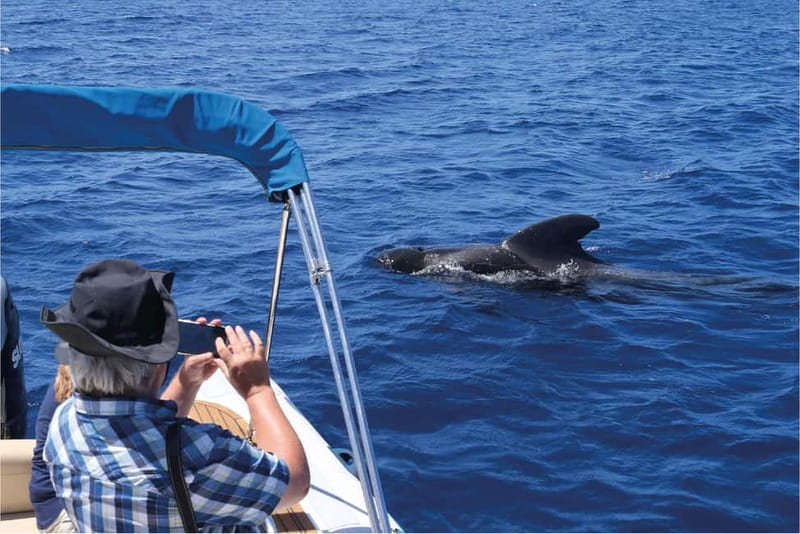
- Hydrophone listening: Hear cetacean sounds after the engines are turned off.
- Papacho 2: The boat carries a maximum of 10 passengers.
- Whale sanctuary setting: The outing takes place off Costa Adeje in Europe’s only whale sanctuary.
- Biologist on board: You receive explanations about local animals and conservation.
- Careful wildlife practice: The crew keeps a safe distance and avoids interfering with animal behavior.
- Wildlife beyond whales: You may see dolphins, turtles, seabirds, and different cetacean groups.
Setting out from Costa Adeje in Papacho 2
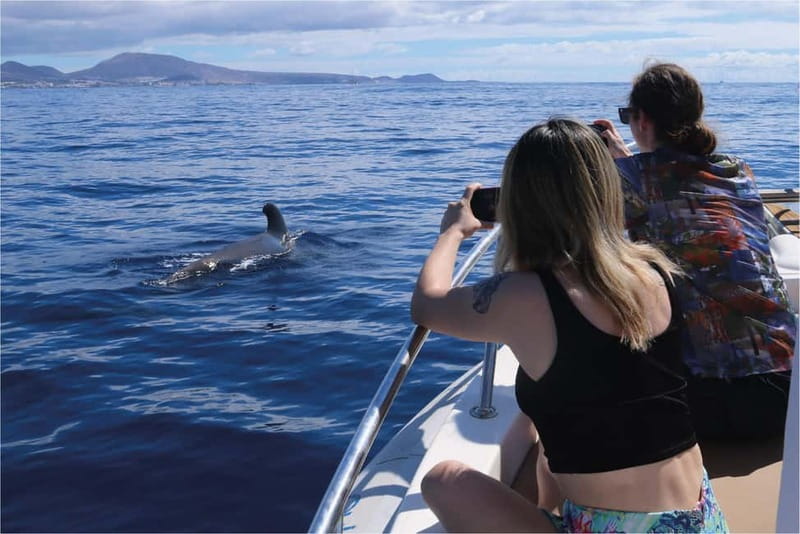
This 2.5-hour trip begins at the agreed meeting point in Costa Adeje. Once the group is gathered, you board Papacho 2, a boat limited to 10 passengers. That number matters. You are not being placed on a large excursion vessel with a crowd pressing toward one rail. The small format leaves more room for questions and makes it easier to follow what the biologist is pointing out.
The crew includes two trained people, with a biologist on board to explain the marine life you may encounter. The guiding languages are English and Spanish. Drinks are included, which is a useful touch during a boat trip, though you should still bring water if you prefer to manage your own supply.
The schedule varies, so check the available starting times when booking. The activity is long enough to give you a serious chance of finding wildlife, but compact enough to fit into a busy Costa Adeje holiday. You can often pair it with other plans on the same day, though I would leave some breathing room around it rather than stacking another fixed-time activity immediately afterward.
More whale trips worth the boat ride around Tenerife:
- Tenerife: Eco-Yacht Whale and Dolphin Watching and Swimming
★ 4.7 · 15,619 reviews - Los Cristianos Respectful No-Chase Whale and Dolphin Safari
★ 4.6 · 12,782 reviews - Costa Adeje: Whale & Dolphin Eco-Cruise with Snacks & Drinks
★ 4.6 · 5,096 reviews
Why the whale sanctuary matters
The tour operates in the waters off Tenerife’s south coast, inside the only whale sanctuary in Europe. That designation gives the outing more meaning than a simple search for animals. You are visiting an area set aside for marine life, and the crew’s job is to help you watch without turning the encounter into a chase.
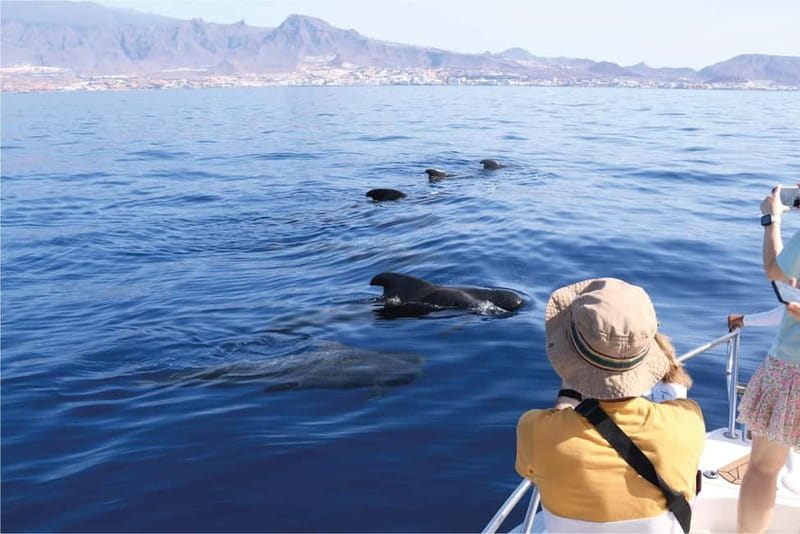
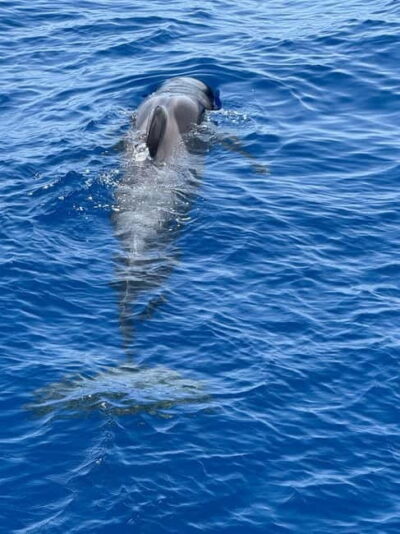
The sanctuary is particularly relevant for pilot whales, which are among the animals you may see. The setting also supports encounters with dolphins, turtles, seabirds, and other cetaceans. You are not being taken to a display area or a controlled attraction. The animals remain in their own environment, and conditions determine what appears.
That wild setting brings both the reward and the limitation. A close look at a pilot whale beside the boat can be memorable, but the crew cannot order the animals into position. Sightings can vary with the day, animal behavior, and conditions at sea. The responsible approach is to judge the tour by the quality of the encounter and interpretation, not by a guaranteed checklist.
The hydrophone turns watching into listening
Most whale-watching trips focus on the surface. You scan for a fin, a blow, or a dark shape moving through the water. Here, the crew adds a hydrophone, an underwater microphone that lets you hear sounds made by cetaceans.
The engine is completely switched off during the sighting. The hydrophone is then placed in the water so you can listen to sounds used for communication or hunting. This changes the mood on board. Instead of the steady noise of a motor, you get a quieter pause in which the animal’s sound becomes part of the experience.
For children, this can be especially helpful. Young passengers may not always have the patience to stare at open water, but listening gives them another way to understand what is happening below the surface. Adults also gain something practical from it: the ocean becomes less like a blank blue space and more like an active habitat.
The hydrophone does not guarantee that every sound will be dramatic or easy to identify. That is part of the point. The biologist can help explain what you are hearing and connect it to animal behavior, but the experience is not a staged audio show. You are listening to wildlife at the moment the crew finds it.
Watching pilot whales without a chase
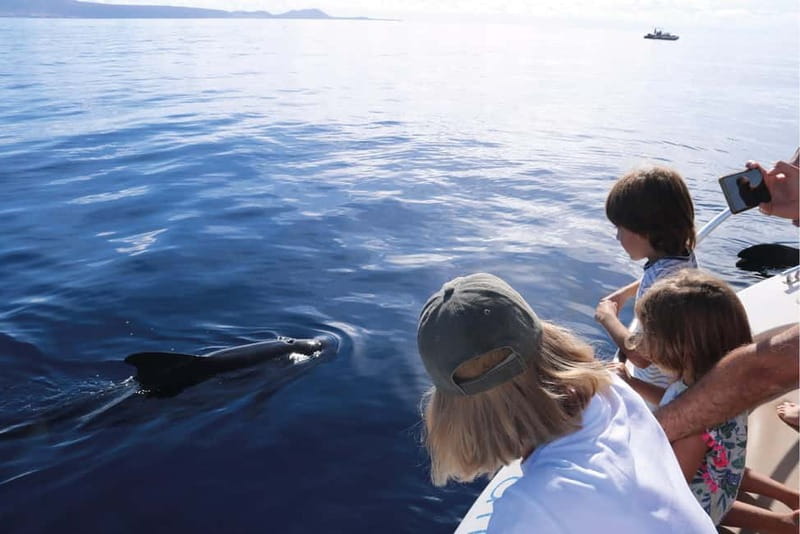
The crew’s stated method is to approach groups of cetaceans, turtles, and seabirds while respecting their space. When the boat reaches the sighting area, the engines are turned off so the animals are not disturbed. This is the right kind of restraint for a wildlife excursion.
You should expect periods of scanning, waiting, and repositioning before or between sightings. That may feel slow if you want constant action, but it is also what separates a nature outing from a theme-park ride. The goal is to read animal behavior and allow the group to remain undisturbed.
Pilot whales are a major possibility in these waters, and the boat may encounter groups rather than a single animal. The size of the group can vary. You might see animals surfacing near the boat, but the crew’s decision to keep a safe distance is more important than forcing a closer view.
The experience also makes room for other species. Dolphins, turtles, and seabirds may appear during the search. Each adds variety, but none should be treated as guaranteed. Bring binoculars only if you already own a compact pair and can use them without missing the wider scene. The supplied information does not state that binoculars are provided.
Same migration, a different deck:
- Los Gigantes: Dolphin & Whale Watching Cruise with Swim Stop
★ 4.7 · 4,539 reviews - Costa Adeje: Whale Watching Catamaran Tour with Drinks
★ 4.7 · 3,653 reviews - Tenerife: Whale & Dolphin Watching Cruise with Swim Stop
★ 4.7 · 3,227 reviews - Los Cristianos: Viking Cruise Whales & Dolphins Watching
★ 4.6 · 3,132 reviews
A small crew with a conservation role
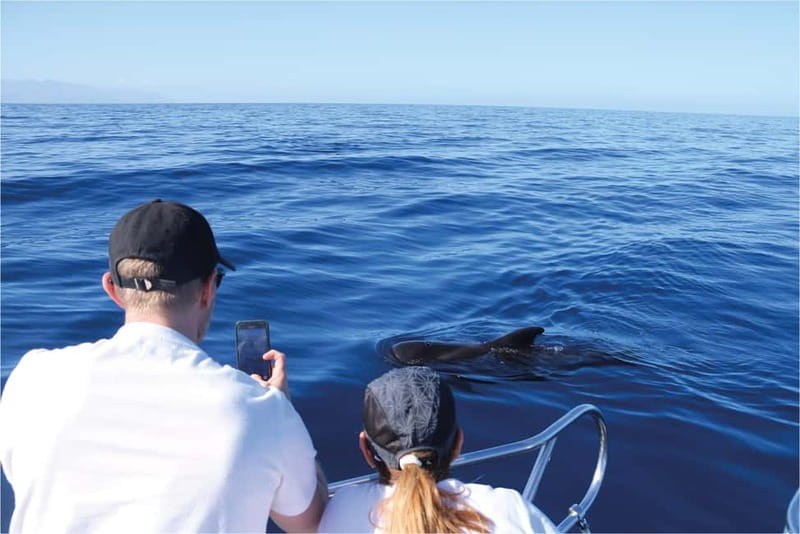
The two-person crew gives this tour a personal feel. With no more than 10 passengers, you should have a better chance to hear explanations, ask questions, and understand why the boat is stopping or changing position. That is especially useful when you are new to whale watching and are not sure what signs to look for.
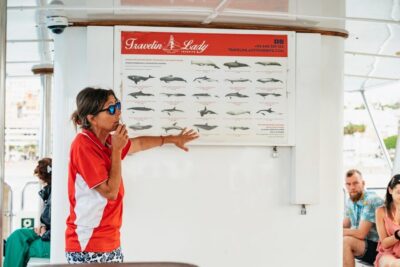
The biologist explains the fauna found in the area and the work needed to protect it. This gives the trip an educational purpose without turning it into a classroom lecture. You learn to connect what you see with the larger issue of marine conservation.
Atlantic Eco Experience is part of ACEST, the Association of Companies for the Sustainability of Tourism. The operator also takes part in rescuing injured marine animals and helping with rehabilitation. Those activities do not mean your excursion will include a rescue. They show that the company’s work reaches beyond taking people out to look at whales.
The operator also collaborates on a photo-identification catalog of pilot whales in the Canary Islands. Researchers can use distinctive markings and features to identify individual whales over time. For you, that means the guide may place a sighting within a wider effort to understand and protect local populations, rather than treating each encounter as an isolated moment.
What the 2.5-hour route feels like
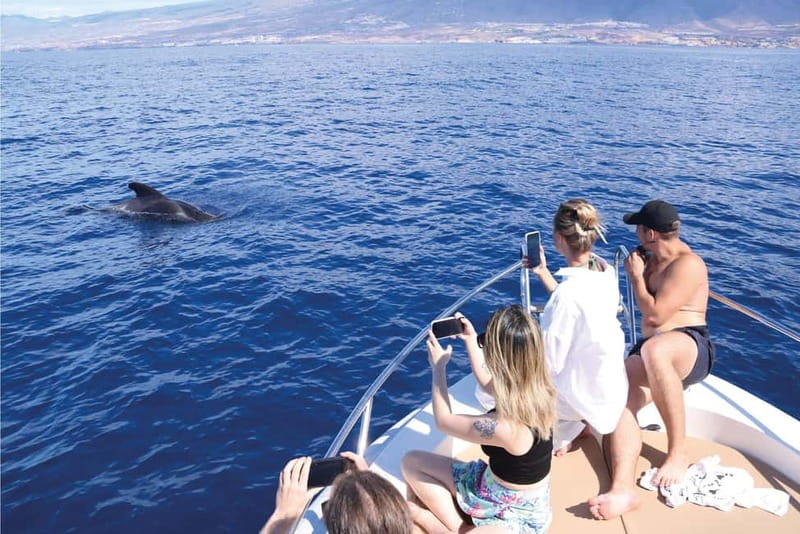
The exact route and timing depend on where animals are found, but the structure is clear. You meet the crew, board Papacho 2, receive an explanation of the wildlife and conservation approach, then head out to look for marine animals.
The main portion involves moving through the sanctuary and watching for cetaceans, turtles, and seabirds. The biologist helps interpret behavior, which is important because a whale’s surface movement can be easy to misread. You may learn to pay attention to how a group travels, how often it surfaces, or how animals respond to the boat.
When the crew locates animals, the boat approaches carefully and then shuts down its engines. The hydrophone comes into use, giving you time to listen as well as look. The crew’s method avoids interfering with natural behavior, so the animals remain the focus rather than the boat.
At the end of the outing, you return to the meeting point. There is no indication of a separate swim stop, snorkeling session, beach visit, or meal. Book this as a focused wildlife trip, not as a general coastal cruise.
Value for families and first-time whale watchers
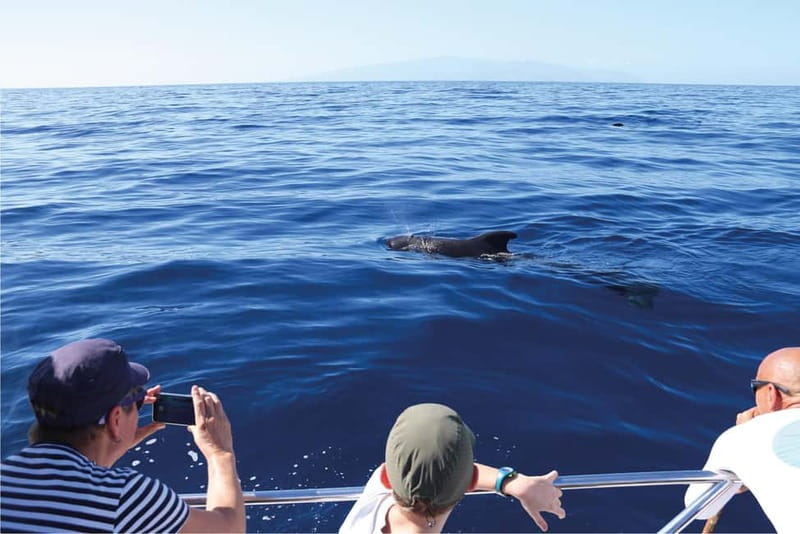
This outing is a good match for families who want a meaningful boat trip without committing to a full day. The small boat and short duration can be easier for children than a longer excursion. The hydrophone also gives younger passengers a clear activity during quiet periods.
At the same time, a small boat has a different feel from a large vessel. You are closer to the water and have fewer people around you, but you may notice movement more readily. The provided information does not state whether the boat is suitable for passengers with specific mobility needs, so ask the operator directly if that is important for your group.
First-time whale watchers should appreciate the biologist’s presence. You do not need to arrive with specialist knowledge. The guide explains what animals may be found and how to observe them responsibly.
This is also a good choice for people who care about the effect of tourism on wildlife. The engine-off policy, safe-distance approach, rescue work, and research participation all support a more careful style of observation. If your main goal is a fast, high-energy ride, this may not be the best fit.
What to bring for a comfortable outing
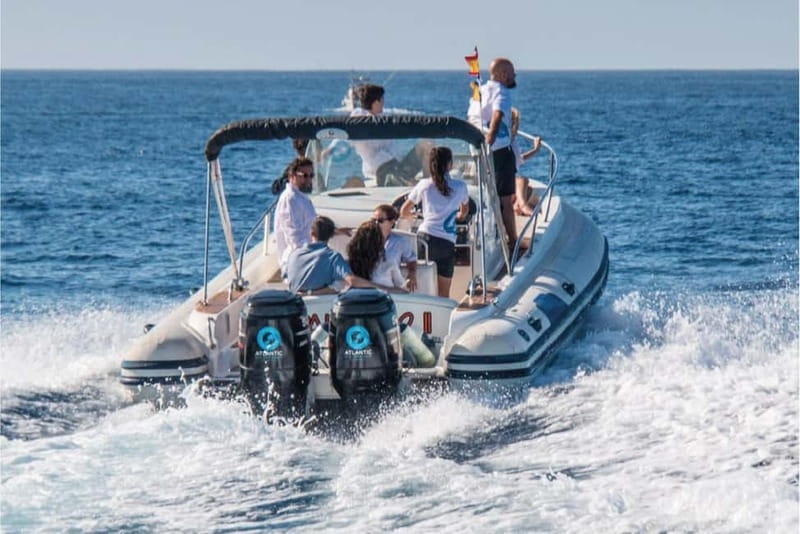
The essentials are straightforward:
- Sunglasses
- A sun hat
- Sunscreen
The south coast of Tenerife is known for strong sun, and you will be exposed while looking across open water. Apply sunscreen before boarding, since it is easy to forget when the trip begins with everyone focused on finding animals.
Wear practical clothing that allows you to sit and look around comfortably. The supplied details do not specify a dress code, waterproof clothing, or onboard storage, so avoid carrying anything you would not want exposed to sea spray. Drinks are provided, but bringing personal water may still be sensible.
Keep your camera ready, but do not spend the whole outing looking through a screen. Wildlife sightings can last only moments, and the hydrophone is something you experience best by paying attention to the crew and the water.
Value, cancellation, and the small-group tradeoff
No tour price is provided here, so I cannot judge whether the fare is cheap or expensive in euros. The value comes from what is included: 2.5 hours on the water, a maximum of 10 passengers, a biologist, drinks, careful viewing practices, and the hydrophone session.
A small boat generally offers a more personal experience than a high-capacity excursion, and that is the main reason to pay a little more if the fare reflects it. You are also supporting an operator involved in conservation and marine-animal rescue. Still, you should compare the actual price with other Costa Adeje whale-watching options before booking, since the information supplied does not include transport, meals, or extra activities.
The booking terms are flexible. You can cancel up to 24 hours before departure for a full refund, and you can reserve now and pay later. That helps if your Tenerife plans are still shifting. Starting times vary, so check availability rather than assuming a fixed departure.
Who should book this Costa Adeje whale tour?
I would choose this experience if you want wildlife watching with a clear conservation message, a quiet engine-off sighting, and a chance to hear cetaceans underwater. It is especially appealing if you prefer small groups and direct contact with a biologist.
Families with small children can benefit from the shorter format and the hydrophone, though sea conditions and each child’s comfort on a boat still matter. First-time whale watchers also get useful interpretation without needing to prepare in advance.
You may want a different trip if you need guaranteed sightings, a large stable vessel, a full-day schedule, swimming, snorkeling, or a meal at sea. None of those features is included in the information provided.
Should you book it?
Book Atlantic Eco Experience if the hydrophone and respectful wildlife approach matter as much to you as seeing a whale. The small group, biologist, and engine-off viewing make this more than a quick search for fins.
Go in with realistic expectations. You may see pilot whales close to the boat, as well as dolphins, turtles, or seabirds, but nature sets the timetable. For a compact Costa Adeje outing with conservation at its center, this is a strong choice.
FAQ
Where does the whale-watching experience take place?
The tour operates from Costa Adeje on the south coast of Tenerife, within Europe’s only whale sanctuary.
How long does the boat trip last?
The experience lasts 2.5 hours. Starting times vary, so check availability when booking.
How many people can join the tour?
The boat, Papacho 2, has a maximum capacity of 10 passengers.
What languages are available?
The live tour guide service is available in English and Spanish.
Will the boat use a hydrophone?
Yes. During a sighting, the engines are completely turned off and the crew places a hydrophone in the water so you can listen to cetacean sounds.
What animals might I see?
The tour may encounter different groups of cetaceans, including pilot whales, as well as dolphins, turtles, and seabirds. Sightings are not guaranteed.
Are drinks included?
Yes. Drinks are provided on board.
What should I bring?
Bring sunglasses, a sun hat, and sunscreen.
Newly added whale trips around Tenerife
- Whales and Dolphins excursion on a Luxury Yacht in Canary Islands★ 5.0 · 93 reviews
- Whale & Dolphin Watching With Mustcat Virgin Coast Trip On a Large Catamaran★ 4.0 · 3 reviews
- Whale & Dolphin Watching Boat Trip in Tenerife On a Sailing Boat (3 Hr)★ 3.5 · 10 reviews
- Whale watching and snorkelling in the whale sanctuary★ 5.0 · 14 reviews
- Whale & Dolphin Watching in Tenerife (Puerto Colon) On a Large Catamaran★ 4.0 · 12 reviews
- Whale Watching Catamaran to Los Gigantes & Masca (Including drinks & warm lunch)★ 4.0 · 55 reviews
- Whale and Dolphin Watching EcoAdventure in Tenerife★ 5.0 · 78 reviews
- 5 hr watching and listening whales and dolps. Visit Los Gigantes★ 5.0 · 185 reviews
Tenerife Whale Watching Tours, side by side.
Eco-Yacht Whale and Dolphin Watching and Swimming
Read our review →
Los Cristianos Respectful No-Chase Whale and Dolphin Safari
Read our review →
Whale & Dolphin Eco-Cruise with Snacks & Drinks
Read our review →
Dolphin & Whale Watching Cruise with Swim Stop
Read our review →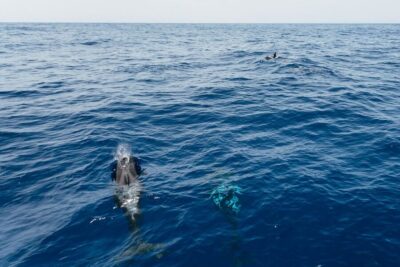

Whale & Dolphin Watching with Drinks and Snacks
Read our review →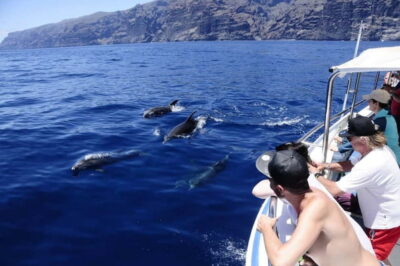
Whale or Dolphin Watching Tour and Swim in Masca
Read our review →Lists this trip appears in