
Review · MOOREA
Half day whale tour 4h00
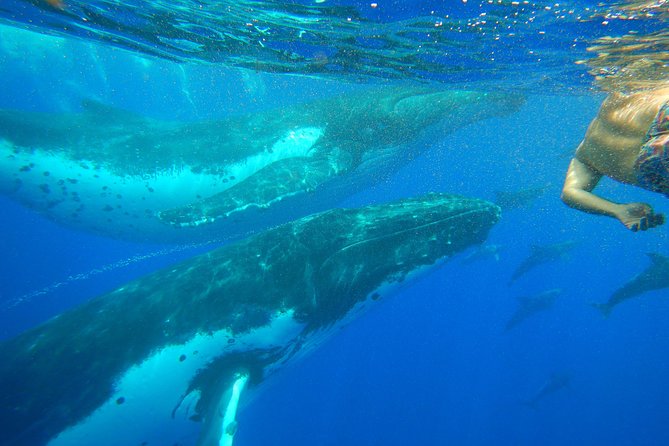
Humpback whales are the reason to book this four-hour outing, but the real adventure is the open-water swim that may follow. From July through November, Moorea’s waters can host mothers, calves, and other whales. Guides such as Kevin and Mahai use underwater listening equipment to help locate them, then work carefully around the animals.
I like the small maximum group of 12, the included masks, snorkels, fins, and drinks, and the chance to finish with reef sharks, rays, turtles, and lagoon fish. I also like that the crew explains whale behavior and safety rather than treating the animals like a staged show.
The catch is important: this is a physically demanding ocean trip, not a gentle sightseeing cruise. You may need to swim roughly 100 meters from the boat, and current rules limit the number of people in the water to six at a time. Seeing whales is possible, but swimming with them is never promised.
Key points to know before you book
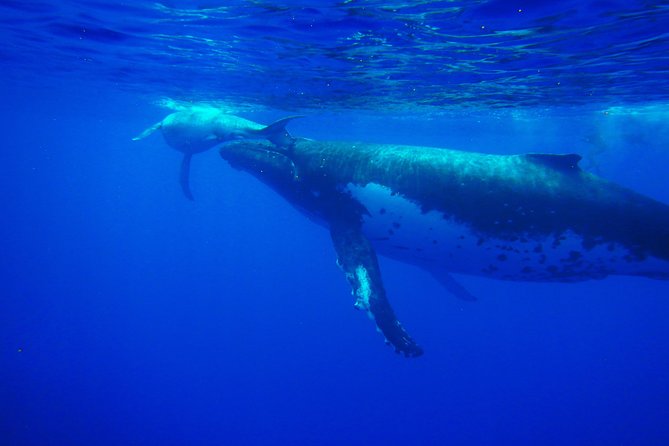
- Whale season runs from July through November, when humpback whales and calves may pass through Moorea.
- Open-water swimming is part of the challenge, and strong swimming ability is needed if you want to reach the whales.
- Only six people may enter the water at once, even though the boat can carry up to 12.
- Kevin, Mahai, Michele, Ari, and Mahi are among the guides and captains associated with the experience.
- The lagoon stop adds reef sharks, rays, turtles, and fish to the day, even if whales stay out of reach.
- The $191.91 price is fair for a successful whale encounter, but less compelling if you only want boat-based whale watching.
Why this Moorea whale trip feels different
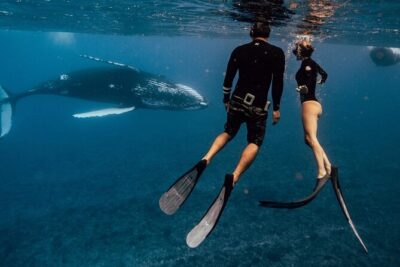
Many whale excursions keep you on the boat. This one may put you in the sea with the whales, at a respectful distance and only when conditions, local rules, and animal behavior allow it. That possibility gives the trip its special pull, but it also makes the outing less predictable and more demanding.
The crew uses high-tech listening equipment to hear whale sounds underwater. That can help locate animals in the open Pacific, where a whale may surface in one place and disappear again. It does not turn nature into a schedule. You could find a mother and calf quickly, or spend much of the outing watching from the boat.
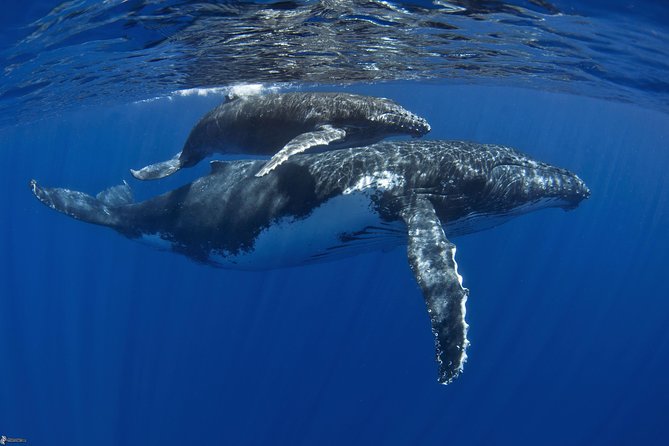
The most powerful encounters described from this tour involve mothers and young whales moving below swimmers. Some people have seen several humpbacks, pilot whales, or a mother and calf more than once. Others have seen whales from a distance but never entered the water. Both outcomes are possible.
I appreciate that the guides emphasize respectful behavior. The boat must keep a legal distance from whales, and the crew cannot simply chase an animal toward the reef or crowd it with swimmers. That restraint matters. The point is to observe wild animals, not to force a close encounter.
More whale trips worth the boat ride around Moorea:
- Swimming with Whales in Moorea (Half Day tour)
★ 4.5 · 264 reviews - Whale Tour – Observe and swim with whales
★ 5.0 · 257 reviews - Swim with humpback whales
★ 5.0 · 224 reviews
Leaving Ōpūnohu Bay for the open sea
The meeting point is the Moorea Activities Center in Ōpūnohu. The outing begins with a walk or passage through the bay before the boat heads toward whale territory. Ōpūnohu Bay gives you a calmer setting to get organized, listen to the briefing, and handle the first part of the trip before the boat reaches more exposed water.
This transition is worth understanding. The outing is not a short ride to a fixed viewing spot. The crew may search different areas, depending on whale sounds, sightings, weather, and sea conditions. The boat ride can become rocky, especially when the ocean has a strong swell.
If you are prone to seasickness, take that possibility seriously. One practical tip is to bring whatever seasickness medicine you normally use, since the ride may be rough before the whale encounter even begins. The boat trip is part of the experience, but it is not always comfortable.
The crew provides masks, snorkels, and fins. Drinks are included, but lunch is not, so eat beforehand and do not expect a meal during the four-hour outing. Confirmation is sent within 48 hours of booking, subject to availability.
The whale search from July through November
Moorea’s humpback season is the heart of this activity. From July to November, whales migrate through the area, and calves may travel with their mothers. The chance to see a young whale beside a full-grown adult is one of the strongest reasons to choose this trip over a standard boat ride.
The high-tech listening gear can help the crew locate whale calls. Once whales are found, the captain positions the boat according to local rules and the animals’ movement. You may watch a whale surface, hear it underwater, or wait while the crew decides if an entry into the water is suitable.
That wait can feel frustrating if you are eager to swim. It is also necessary. Whale behavior changes quickly, and a group that enters too loudly or too close may cause the animals to move away. The guides ask swimmers to avoid noisy splashing and to follow instructions closely.
The boat may stop several times for attempted entries. You need to move quickly when the crew gives the signal, since whales do not wait for everyone to adjust fins, cameras, and masks. At the same time, you should not expect a relaxed pool swim. The guides may ask the group to stay together and maintain a steady pace.
Swimming with whales requires real stamina
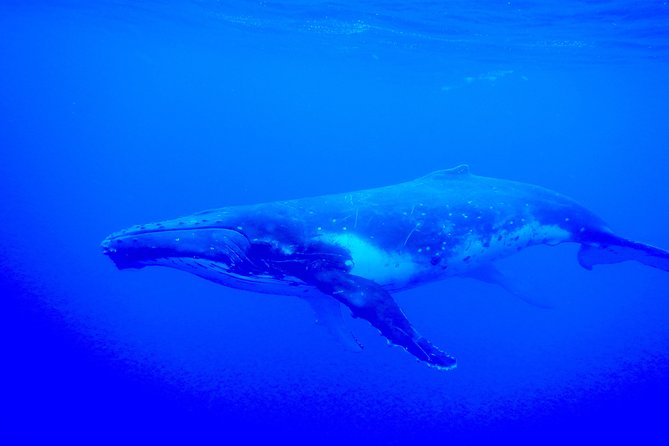
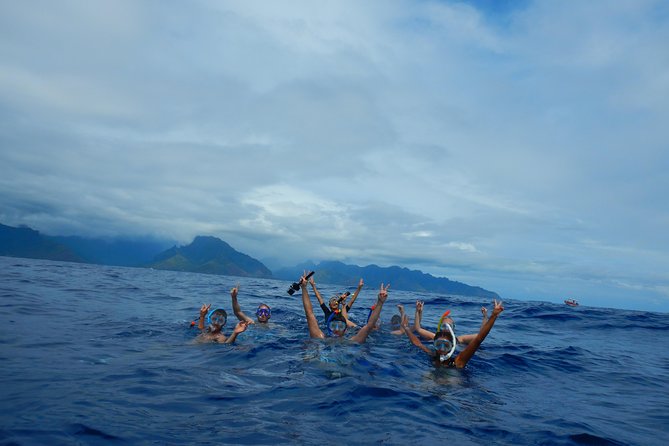
This is the most important part of the booking decision. Reaching the whales can require a swim of about 100 meters from the boat, in open sea and sometimes in rough water. Several people have described the effort as long and tiring, even when they were comfortable swimmers.
You should be able to swim confidently without relying on the boat for support. One basic test swim may take place in the bay before the group heads farther out. The purpose is to check swimming ability and comfort in the water, but some people may find this test tiring before the main attempt begins.
Life jackets are offered but are not compulsory. A flotation vest can make you feel safer, but it can also make swimming toward the whales harder. If you have doubts about your strength, tell the guide clearly and ask what equipment is available before entering the water.
The crew may divide a group of 11 or 12 into two water groups because only six people can be in the water at one time. This rule protects the animals and keeps the water activity manageable. It also creates a practical disadvantage: the second group may have less time, or the whales may move before that group enters.
The order is not a guarantee of success. A whale can disappear after the first group enters, while the second group might get the better view later. Still, the first group often has a timing advantage, and you should know that before paying the same price as everyone else.
Same migration, a different deck:
- Humpback whale watching and marine life in Moorea
★ 5.0 · 199 reviews - Private tour observing and swimming with humpback whales in Moorea
★ 5.0 · 126 reviews - Half Day Small Group Whale Watching
★ 5.0 · 88 reviews - Whale watching and snorkelling in Moorea
★ 5.0 · 64 reviews
What the crew adds to the experience
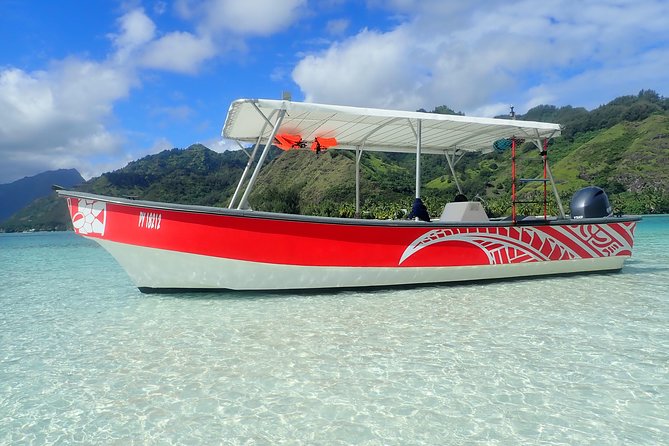
Guide Kevin receives especially strong praise for his instructions, marine-life knowledge, and calm leadership in the water. He has guided groups toward whales, pilot whales, sharks, and rays, while keeping people together and explaining what to do.
Mahai is associated with the boat operation and is often paired with Kevin. Michele, Ari, and Mahi are also named as members of the guiding and captain team. The best part of the crew’s role is not simply finding animals. It is preparing you for the moment when the boat stops and the water becomes the main setting.
That preparation includes signals, group spacing, quiet movement, and instructions for getting back to the boat. The crew may also explain what to do if sharks appear nearby. Reef sharks and other marine animals are part of Moorea’s natural waters, so you should not expect a completely controlled environment.
Safety standards have not felt consistent to everyone. One account describes rough seas, an equipment problem, concern about life jackets, and smoking on the boat despite a no-smoking sign. The operator acknowledged the smoking incident and said it should not happen again. I would inspect your snorkel before leaving the boat and speak up immediately if it does not work properly.
The crew says it conducts a test swim and can replace faulty equipment. You should still check your mask seal, snorkel, and fins before the boat reaches the whales. That simple step can prevent a bad problem at the worst possible moment.
The lagoon stop brings a second kind of wildlife
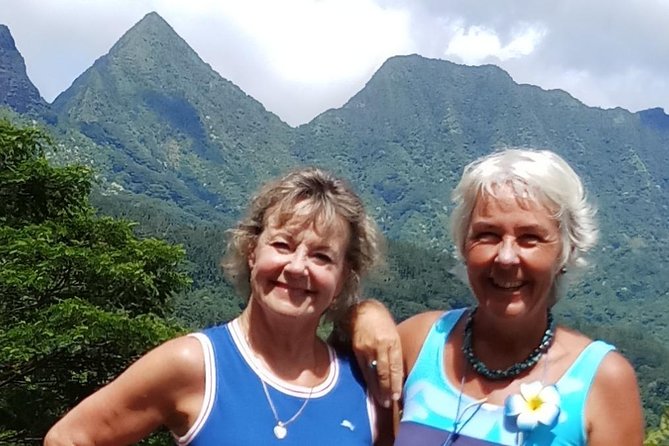
After the whale search, the boat may head into the lagoon for a calmer water stop. This part can be especially valuable if you cannot swim with the whales or if the whales move away.
The lagoon experience may include reef sharks, stingrays, turtles, and tropical fish. Several people have enjoyed this section as much as the whale search, particularly when rough conditions or swimming ability kept them on the boat during the whale attempts.
You should not think of the lagoon stop as a consolation prize. It offers a different view of Moorea’s marine life. The whale encounter is rare and dramatic, while the lagoon gives you a closer look at animals that may remain in the area longer.
The timing of this stop can vary. If the whale search takes longer, the lagoon portion may feel shorter. If the crew finds whales quickly, you may have time for several water entries and still visit the lagoon. The four-hour duration is approximate, so keep your schedule flexible afterward.
Is the $191.91 price good value?
At $191.91 per person, this is not a cheap half-day activity. The price includes a four-hour boat trip, snorkeling equipment, drinks, the crew, and the chance to search a large area for humpback whales. For a successful swim with a mother and calf, many people would consider that a strong value.
The calculation changes if you mainly want a standard whale-watching cruise. You are paying for the possibility of entering the water, along with the physical effort and uncertainty that come with it. If swimming is not realistic for you, the lagoon animals and boat-based whale sightings may not justify the full price.
The group size also affects value. A boat carrying four or six people can feel more personal and may make water entries simpler. With up to 12 people aboard, the per-person price stays lower than some private or very small-group options, but the six-person water limit means not everyone receives the same chance at the same time.
The activity is booked, on average, about 59 days ahead. That suggests planning early is sensible during whale season, especially if your Moorea dates are fixed. Free cancellation is available until 24 hours before the start time. If poor weather cancels the outing, you can receive a different date or a full refund.
Who should choose this outing?
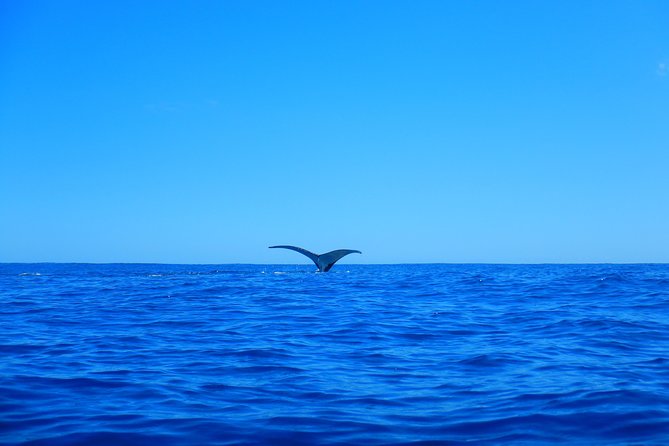
This trip suits you if you are a confident swimmer, comfortable in open water, and willing to accept that wild animals set the timetable. It is a good match for people who value a possible close encounter more than guaranteed sightseeing.
You will probably enjoy it if you like marine life, do not mind a rough boat ride, and can follow quick instructions. It is also a good choice if you want several kinds of wildlife in one morning or afternoon, since whales, sharks, rays, turtles, and fish may all be part of the day.
Think carefully before booking if you tire easily, dislike swell, or want a slow and predictable cruise. The tour requires moderate physical fitness, and some swimmers have found the distance to the whales too demanding. You can stay on the boat, but you may feel disappointed after paying for an experience built around water access.
Families and mixed-ability groups should discuss expectations before booking. A strong swimmer may have a thrilling encounter while another person remains aboard. The lagoon stop helps balance the day, but it does not remove the difference in physical demands.
What to bring and how to prepare
Wear swim clothing and bring protection from the sun. Since drinks are included but lunch is not, eat before departure and consider bringing anything allowed by the operator that you need for the four-hour outing.
Bring seasickness medicine if you usually need it. Check your mask and snorkel before the boat reaches open water, and ask for replacement equipment right away if something does not fit or function correctly.
Listen carefully during the briefing. Stay with the group, avoid splashing, and follow the guide’s signals in the water. Do not assume that a life jacket will be automatically placed on you, since it is offered rather than required.
Most of all, book with the right expectation. You are not purchasing a guaranteed swim with whales. You are paying for a serious attempt to find them, plus a possible open-water encounter under rules meant to protect both people and animals.
Should you book the Moorea whale tour?
Book it if your dream is to see humpback whales in their natural setting and you are a strong, capable swimmer. The combination of whale listening equipment, experienced guides such as Kevin and Mahai, and the added lagoon visit gives the four-hour outing real range.
I would choose a smaller boat if swimming with the whales is the only reason you are going and you want the best possible timing. A 12-person boat means two water groups, and the second group may have less opportunity if the whales move.
For most fit, flexible visitors, this is a worthwhile Moorea adventure with one firm warning: the ocean decides what you get. You may swim near a mother and calf, hear whales underwater, and finish among rays and reef sharks. You may also see whales from the boat and spend your best energy reaching animals that have already moved on. Go in ready for nature, not a performance, and the experience is far more likely to feel worth the price.
FAQ
How long is the Moorea whale tour?
The activity lasts approximately four hours.
Where does the tour begin and end?
It begins at the Moorea Activities Center in Ōpūnohu, Moorea, and ends back at the same meeting point.
When is whale season for this activity?
The possibility of seeing humpback whales and their young is highest from July through November.
Is swimming with the whales guaranteed?
No. Entering the water depends on weather, sea conditions, local rules, whale behavior, and your swimming ability.
How many people can join the boat?
The boat can carry a maximum of 12 people. Because only six people may be in the water at one time, a larger group may be split into two water groups.
Is snorkeling equipment provided?
Yes. Masks, snorkels, and fins are loaned during the tour.
Are drinks or lunch included?
Drinks are included. Lunch is not included.
Can I cancel for a refund?
You can cancel at least 24 hours before the experience for a full refund. Cancellations or changes made less than 24 hours before the start time are not refunded. If poor weather causes the operator to cancel, you will be offered another date or a full refund.
Newly added whale trips around Moorea
- WHALE TOUR – Watching and Swimming with Whales★ 5.0 · 52 reviews
- Whale watching 6 people half day★ 5.0 · 38 reviews
- Whale watching and snorkelling in Moorea★ 5.0 · 64 reviews
- Whale Watching Moorea (non-swimming)★ 4.0 · 12 reviews
- Watch and Swim with Humpback Whales in Moorea★ 5.0 · 3 reviews
- Snorkeling Lagoon Cruise and Whale Watching in Moorea★ 5.0 · 2 reviews
- Shared Whale Expedition★ 5.0 · 34 reviews
- Sacred Experience Swimming with a Whale in Moorea★ 5.0 · 46 reviews
Moorea Whale Watching Tours, side by side.
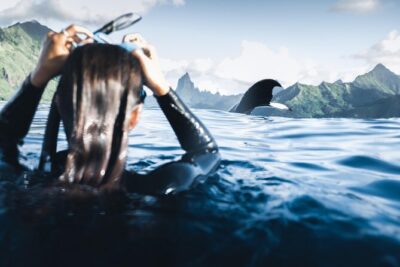
Swimming with Whales in Moorea (Half Day tour)
Read our review →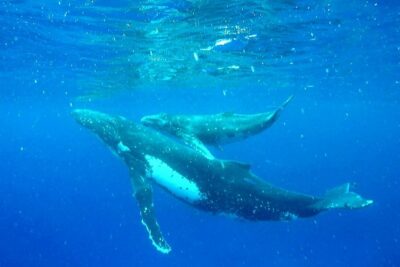
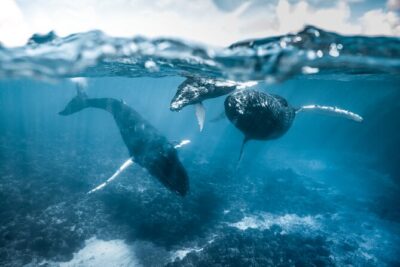
Humpback whale watching and marine life in Moorea
Read our review →
Private tour observing and swimming with humpback whales in Moorea
Read our review →
Lists this trip appears in