Review · BIG ISLAND
Kailua-Kona: Whale Watching Cruise on the Big Island
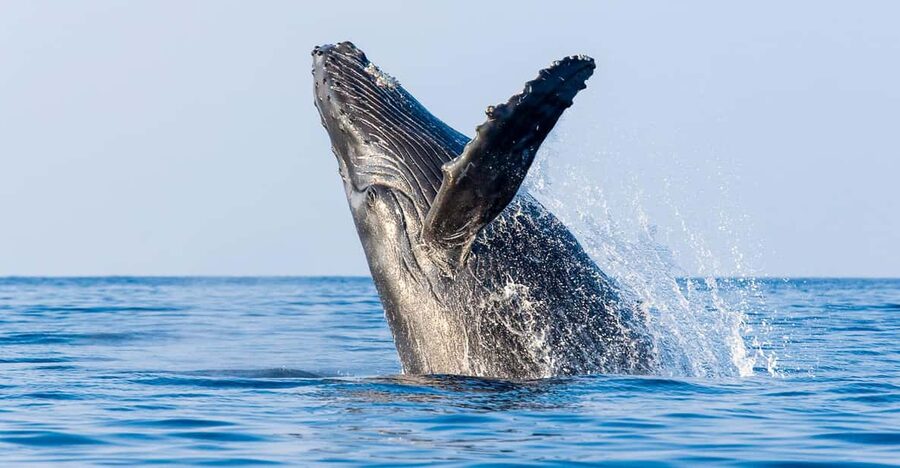
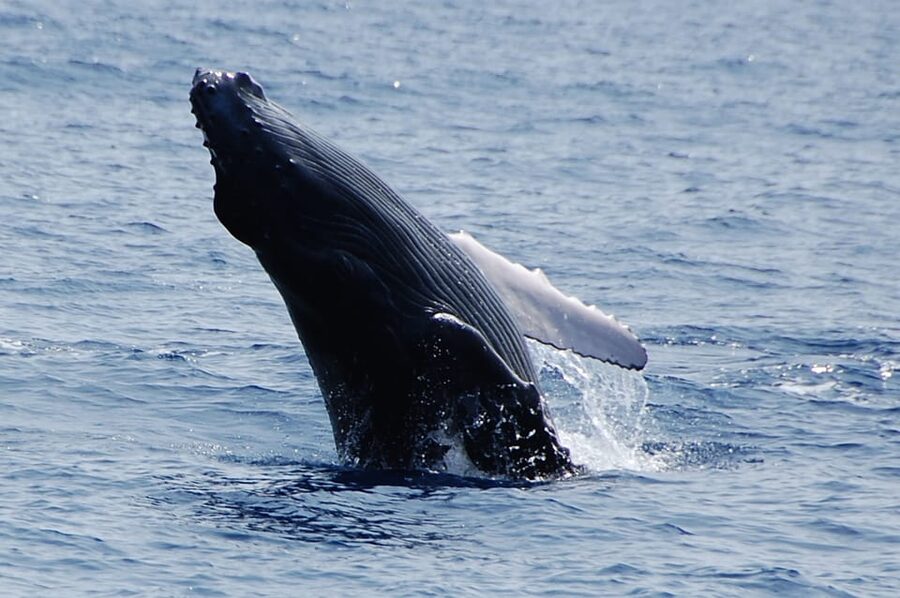
The best part of this Kona whale cruise is not simply seeing a humpback break the surface. It is hearing one underwater through the hydrophone, then watching the captain and crew work out where the next blow, breach, or tail slap will appear. Mothers and calves may travel together, and dolphins, flying fish, rays, or other sea life can add to the ride.
I like the friendly, active crew, especially captains such as Aidan, Bryce, Jacob, and Simon, who have been praised for explaining what you are seeing and keeping the boat moving toward fresh sightings. I also like the small comforts: snacks, cold drinks, a covered boat, and a 24-person catamaran setup mentioned by one passenger. The tradeoff is simple: whales are wild animals, so a close approach or dramatic breach is never guaranteed. One passenger also found the main-deck speaker hard to hear and the music distracting.
Key points to know before booking
- Whale songs are part of the show: An underwater hydrophone lets you listen to humpbacks instead of only watching for blows and flukes.
- The cruise lasts 150 minutes: That gives the crew time to search rather than turn around after one quiet patch of water.
- Honokohau Harbor is convenient: It is 4.5 miles south of Kona Airport and 3.5 miles north of Kailua-Kona.
- Dolphins are a real bonus: Sightings have included spinner dolphins, sharks, rays, flying fish, and even a whale shark.
- The crew keeps looking: Captains have sometimes stayed out longer while searching for stronger whale activity.
- The backup promise matters: If you see no whales, you receive another cruise, not a refund.
Why Hawaii is such an important place for humpback whales
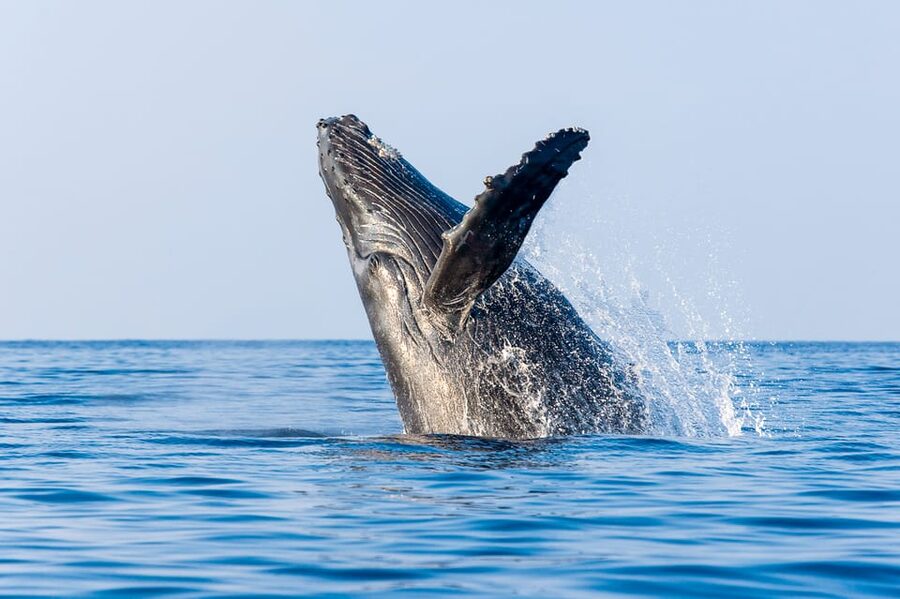
Hawaii is the only U.S. state where humpback whales mate, give birth, and nurse their young. The warm water is a major reason, but the surrounding conditions help too: good underwater visibility, different ocean depths, and few natural predators make these waters suitable for mothers and calves.
That context makes this more than a simple sightseeing boat ride. You are looking at whales during an important part of their life cycle. A mother may surface beside a calf, a male may compete with another male, or a whale may slap the water for reasons that are not always clear from the boat.
The hydrophone adds another layer. Whale watching is usually a game of patience: scan the water, look for a blow, wait for a back, and hope the whale surfaces again within view. With the underwater speaker, quiet moments can still have a purpose. You may hear the low, eerie songs of humpbacks even when the animals are below the surface.
More Whale Watching Cruises in the USA
- Wake Up With the Whales Cruise on Seasmoke
★ 5.0 · 159 reviews - Sunset Cruise with the Whales on our Sailing Catamaran
★ 5.0 · 48 reviews - Kailua Kona: Humpback Whale Watching Adventure Cruise
★ 4.5 · 33 reviews
Meeting the boat at Honokohau Harbor
You meet the crew at Honokohau Harbor, north of Kailua-Kona. From Kona International Airport, the harbor is about 4.5 miles south. From Kailua-Kona, it is about 3.5 miles north, so the location works well if you are staying in town or near the airport.
After turning into the harbor, take the first right. Follow the road as it bends left until you reach a large parking lot. Drive left toward the boat ramp, then find the crew member by the pavilion beside the public restrooms.
This is not a hotel pickup experience. You need to arrange your own ride to the harbor, allow time to park, and walk to the check-in spot. I would save the directions before leaving your hotel, since harbor roads can be less obvious than the main coastal highway.
The departure area is practical rather than polished. Think public harbor, parking lot, pavilion, and restrooms. That is perfectly suitable for a boat trip, but it is worth knowing so you do not arrive expecting a resort-style marina check-in.
What the 2.5-hour cruise feels like
The cruise runs for 150 minutes, or two and a half hours. That length is useful because whale watching requires patience. The boat may cover a fair amount of water before finding active whales, and the crew may reposition several times to give you a better view.
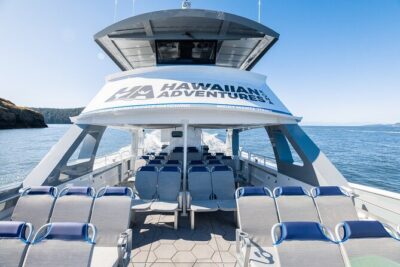
One review described a 24-person catamaran, which gives you a helpful sense of scale. The boat is not an enormous sightseeing ship, and that can make it easier to follow the crew’s directions and see activity from different sides. At the same time, a full boat means you should pay attention when the crew points out a whale. The animal may surface only briefly, and several people may be looking toward the same patch of water.
The boat is covered, which helps with direct sun. You should still bring sunscreen, sunglasses, and a hat. Conditions can change on the water, so a long-sleeve shirt or sweatshirt is also recommended.
The experience is active without being a physical expedition. You sit or stand aboard the boat, watch the water, listen to commentary, and move your attention from one side to the other. People with back or heart problems, and pregnant women, are advised not to take this tour.
Finding whales, calves, and sudden breaches
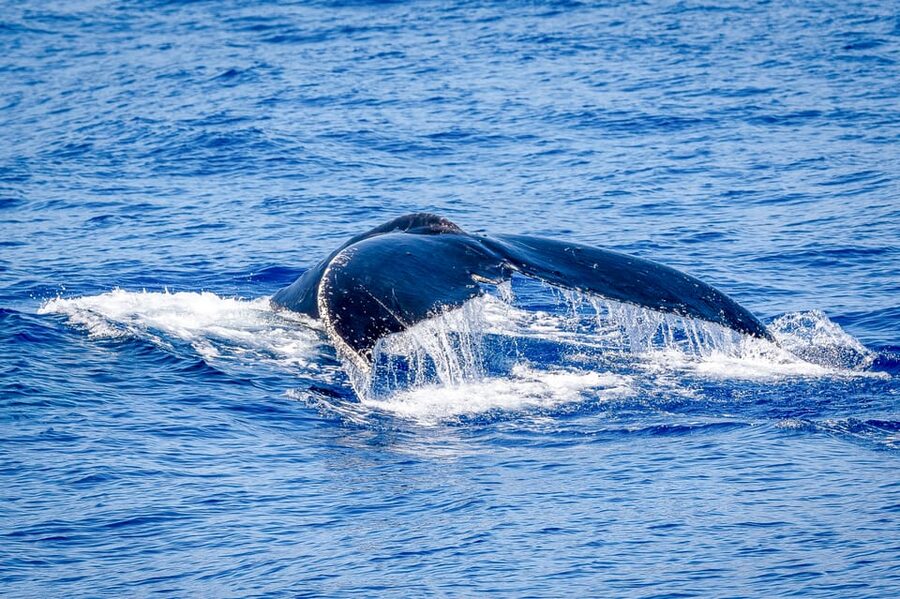
The crew’s main job is to search. Several captains, including Aidan, Bryce, Jacob, and Simon, have been singled out for directing people toward sightings and continuing to look after the first whale appears.
That matters because whale watching is not a fixed route with guaranteed stops. The captain has to read the water, respond to reports of activity, and decide when to stay with one whale or move on. A quiet opening does not necessarily mean the whole trip will be quiet. One cruise began slowly, then improved steadily, with more whales appearing even on the ride back toward the harbor.
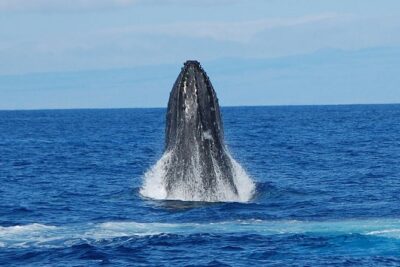
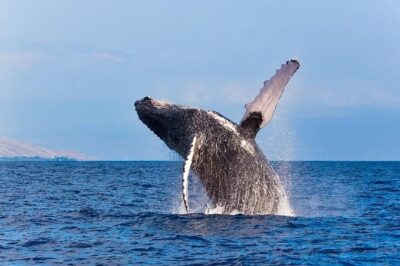
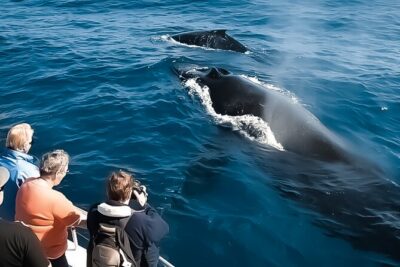
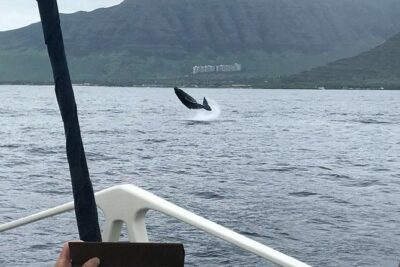
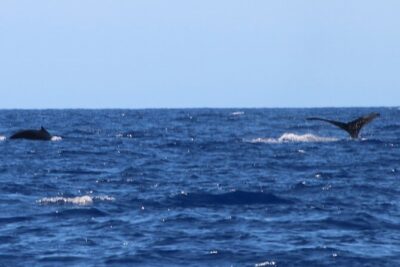
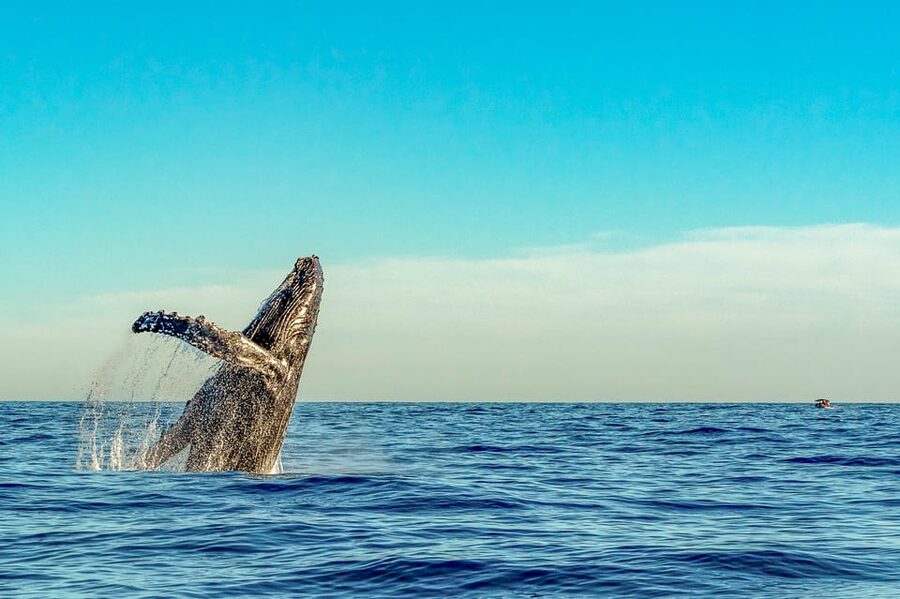
The sightings described on this cruise range from distant blows to whales near the boat. One person saw whales from roughly 400 to 500 yards away and still found the experience worthwhile. Another saw a massive breach directly in front of the boat. Those examples show the honest range of whale watching: you might get a close look, but you might also spend time tracking animals at a greater distance.
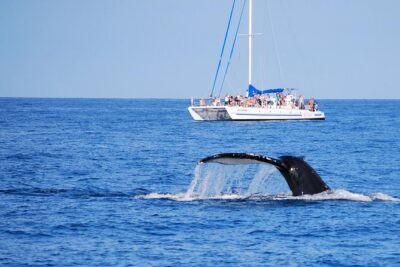
A breach is the grand prize, but it is not the only behavior worth watching. You may see:
- A whale’s tail fluke as it begins a deeper swim
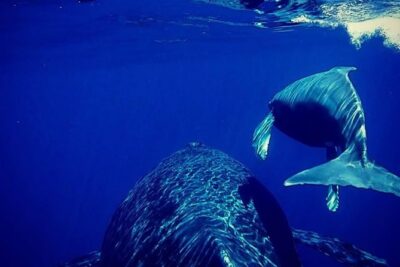
- A mother traveling with her calf
- Water slapping from a pectoral fin or tail
- A whale surfacing repeatedly near the boat
- Several blows spread across the water
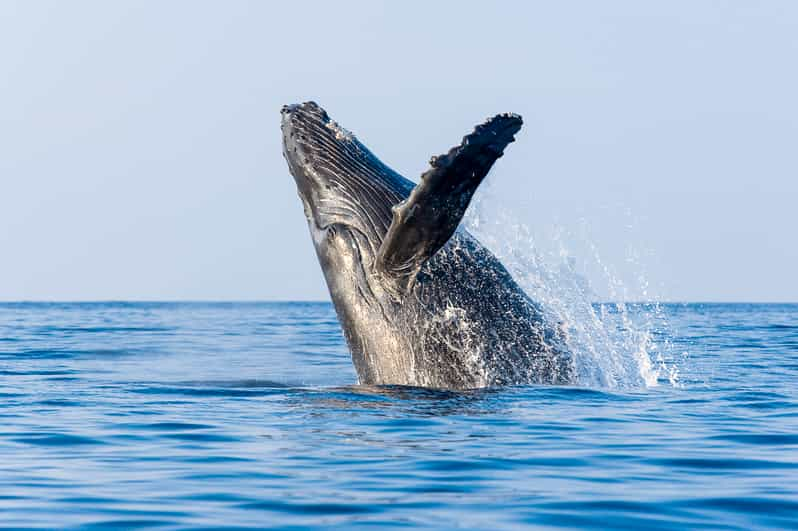
- A whale jumping or breaching
- A pod moving through the area
The captain may point out where to look, but you still need to keep watching. Whales do not follow a script, and the next surface can be behind you.
More Whale Watching Cruises in Big Island:
- Kona Deluxe Catamaran Whale Watching Cruise
★ 4.4 · 18 reviews - Late Morning Whale Watch Cruise on Seasmoke
★ 5.0 · 7 reviews - Hilo: Humpback Whale-Watching Cruise with Snacks and Drinks
★ 4.1 · 5 reviews - Sunset Cruise with the Whales on our Power Catamaran
★ 5.0 · 2 reviews
Dolphins and other sea life add value
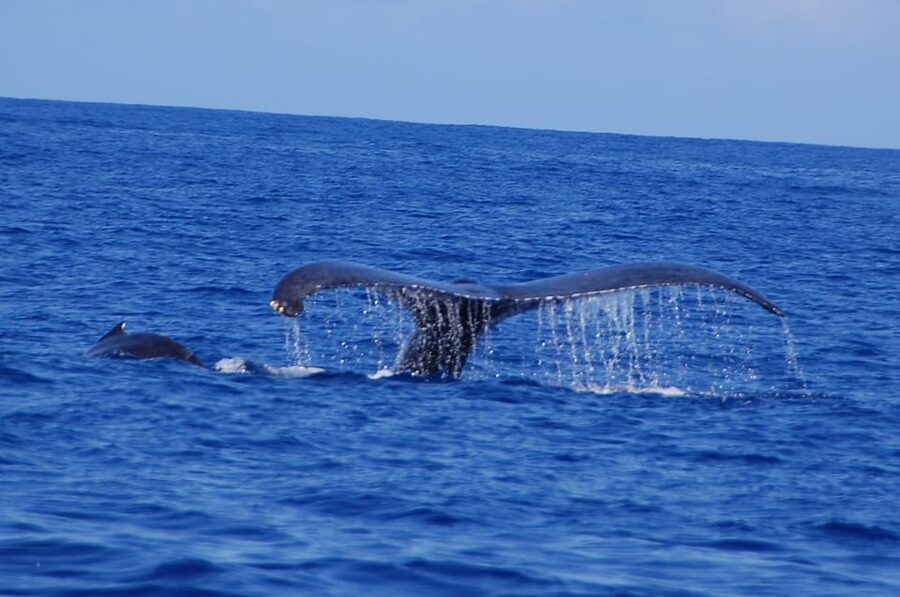
Although the main purpose is humpback whales, the water around Kona can produce pleasant surprises. Sightings have included spinner dolphins, sharks, a hammerhead shark, a whale shark, a manta ray, and flying fish.
Dolphins have appeared very early in some outings, even near the harbor. Spinner dolphins may race the boat or leap and flip, though they may also offer only quick glimpses. That unpredictability is part of the appeal, but you should book this as a whale cruise first and treat other animals as extra sightings.
The range of wildlife can make the trip worthwhile for families. Children may lose interest during a quiet stretch of water, but dolphins, flying fish, or a sudden whale blow can quickly reset the mood. The crew has also entertained younger children with bubbles on at least one outing.
Hearing whales through the hydrophone
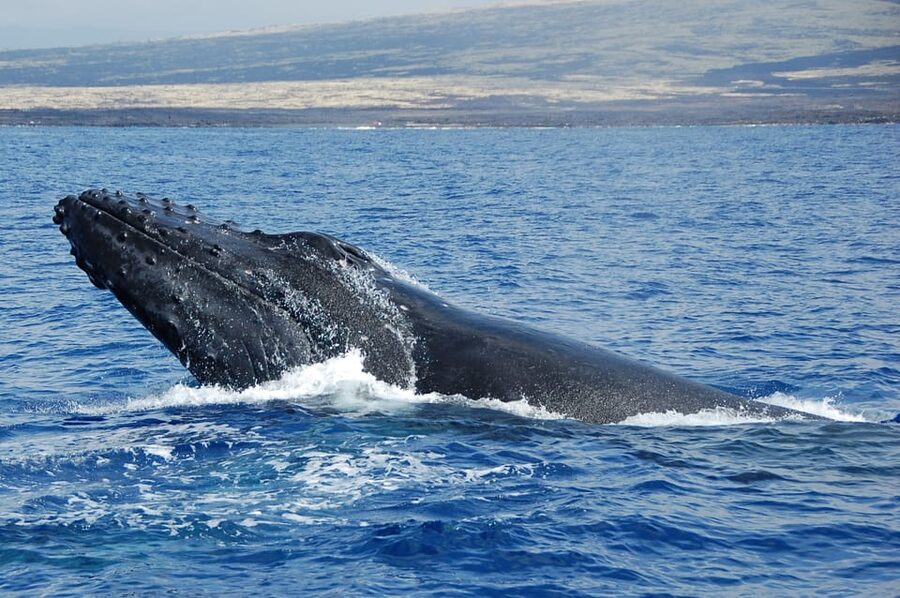
The hydrophone speaker is the feature that gives this cruise a stronger sense of place. Instead of hearing only the boat engine, wind, and people reacting to a breach, you may hear humpback calls below the surface.
That sound helps you understand that the whale is present even when you cannot see its body. It can also make a calm period feel less empty. You may be watching a smooth stretch of ocean while the speaker carries the animal’s song from beneath you.
Audio quality may vary depending on where you sit. One passenger found the public address system difficult to understand from the main deck and felt that loud rock music distracted from whale watching. Island music has also been part of the atmosphere, and many passengers enjoyed the relaxed onboard mood.
My advice is to stay near the crew when they begin an explanation, especially if you care about the natural-history details. If the music is louder than you prefer, ask a crew member where the hydrophone or commentary is easiest to hear.
The crew makes a real difference
The strongest pattern in the feedback is the crew’s attitude. Captains and guides have been described as witty, personable, entertaining, and attentive to safety. They do not simply drive to a spot and point. They search, explain, check on people, and help you understand what you are seeing.
Aidan has received praise for combining humor with useful information. Bryce has been credited with positioning the boat well for whale sightings. Jacob has been described as personable and informative, while Simon has been praised for working hard to keep the search going. Crew members such as Eloe, Ula, Aj, Hunter, Kiwami, Hayden, Jonah, and Noel have also been recognized for helping passengers feel comfortable.
Names and staffing can change, so do not book expecting one particular captain. The useful takeaway is that the crew’s role is active. They direct your attention, provide island and whale information, and try to make the two and a half hours feel worthwhile even when the animals do not cooperate.
The tone may suit you if you like a social boat ride with jokes and music. If you prefer near silence and a naturalist-style presentation, the onboard entertainment may feel a little busy.
Snacks, drinks, and what to pack
The tour includes simple snacks: chips, granola bars, Rice Krispies treats, and fruit snacks. Drinks include water, juice, and ginger ale. This is not a meal, but it is enough to keep you comfortable during a mid-length boat ride.
The free refreshments are useful for families and anyone who does not want to pack food. They also add a little value to the $115 price, especially when paired with the 150-minute duration and the hydrophone.
Bring:
- Sunscreen
- A hat
- Sunglasses
- A long-sleeve jacket or sweatshirt
- Motion sickness medicine
Motion sickness medicine works best when taken the night before and again on the day of the tour at least one hour before departure, according to the provided guidance. If you are prone to seasickness, do not wait until you feel ill. Once nausea begins, it is harder to recover while the boat is underway.
The covered boat helps with sun, but it does not remove the need for sun protection. A jacket is sensible even in Hawaii because wind can make the ride feel cool.
Is $115 a fair price?
At $115 per person, this is not the cheapest way to spend a morning or afternoon in Kona. The value depends on what you want from the outing.
You are paying for 2.5 hours on the water, a dedicated whale search, a live English-speaking guide, snacks, drinks, and the hydrophone. The crew’s willingness to continue searching and, at times, stay out longer adds value that is hard to measure in a simple ticket comparison.
The price is easier to justify if whales are a major reason for your Big Island visit. It is also a reasonable choice if you want a focused boat trip rather than a short ride that happens to pass through whale country.
The price feels less certain if your schedule is tight or if you need a guaranteed close encounter. No responsible operator can promise a breach or a whale beside the boat. The backup policy is another factor: if no whales are spotted, you receive another cruise for free, but not a refund. That helps if you have spare time and can return. It helps less if you are flying home the next day.
Booking details and the cancellation point
The activity offers reserve-now, pay-later booking, which can help if you are still arranging your Kona schedule. The stated cancellation information says you can cancel up to 24 hours in advance for a full refund, while another important-information note says cancellations within 48 hours are non-refundable. Because those terms do not match perfectly, I would confirm the exact cutoff when booking.
The cruise is conducted in English. Hotel pickup and drop-off are not included, so plan your own transportation to Honokohau Harbor.
If the tour does not spot whales, the stated remedy is a free replacement cruise. There are no refunds for a whale-free outing. That policy favors people who can adjust their plans and try again.
Who should take this cruise?
I would consider it a strong choice for families, couples, first-time whale watchers, and anyone who wants the chance to hear humpbacks as well as see them. The snacks, drinks, covered boat, and attentive crew make the outing fairly easy for a mixed-age group.
It also suits people who like a lively boat atmosphere. The crew may use jokes and music along with whale information, and the mood is not strictly quiet or academic.
I would think twice if you are pregnant, have heart or back problems, or suffer badly from motion sickness. I would also be cautious if your Kona schedule allows no room for a second attempt and seeing a whale is essential to you.
Should you book the Kailua-Kona whale cruise?
I would book this cruise if you want a well-supported search rather than a guaranteed wildlife performance. The best reasons are the hydrophone, the 150-minute duration, the crew’s repeated effort to find activity, and the chance of seeing dolphins or other marine life along the way.
Go in expecting a wild-animal experience, not a theme-park show. You may watch whales at a distance, or you may witness a breach close enough to remember for years. At $115, that uncertainty is part of the deal, but the included snacks, drinks, active guides, and free return cruise if whales are absent make the risk easier to accept.
FAQ
Where does the whale-watching cruise meet?
Check-in is at Honokohau Harbor near the pavilion and public restrooms. The harbor is about 4.5 miles south of Kona Airport and 3.5 miles north of Kailua-Kona.
How long is the cruise?
The cruise lasts 150 minutes, or 2.5 hours.
What is included in the price?
The cruise includes snacks, water, juice, ginger ale, and access to a hydrophone speaker for listening to whale songs.
What happens if no whales are spotted?
You receive another cruise for free. The stated policy does not offer a refund if whales are not seen.
What should I bring?
Bring sunscreen, a hat, sunglasses, a long-sleeve jacket or sweatshirt, and motion sickness medicine. The guidance says motion sickness medicine is most effective when taken the night before and at least one hour before the tour on the day of departure.
Is hotel transportation included?
No. Hotel pickup and drop-off are not included, so you need to arrange your own transportation to Honokohau Harbor.
Newly added whale trips around Big Island
- Sunset Cruise with the Whales on our Sailing Catamaran★ 5.0 · 48 reviews
- Small Group Whale Watching in Kona Hawaii★ 5.0 · 5 reviews
- Sunset Cruise with the Whales on our Power Catamaran★ 5.0 · 2 reviews
- Whale Watching on Big island★ 4.5 · 19 reviews
- Waikoloa Deluxe Whale Watch★ 4.5 · 124 reviews
- Wake Up With the Whales Cruise on Seasmoke★ 5.0 · 159 reviews
- Sunset Whale Watching Shared Activity★ 4.5 · 5 reviews
- Whale Watching Tour – Big Island, Hawaii★ 5.0 · 148 reviews
Big Island Whale Watching Tours, side by side.