Review · SAN DIEGO
San Diego: Whale Watching Cruise
San Diego’s best whale watching moments happen far from shore, where a fin, tail, or blow can suddenly appear beside the boat. This cruise heads quickly from Mission Bay into open water, giving you a real chance to see whales, large pods of dolphins, sea lions, and seabirds in their natural setting. Marine biologist narration adds useful context instead of leaving you to guess what just surfaced.
I like the combination of indoor and outdoor seating, which gives you a break from wind and spray without forcing you to stay inside. I also like the family-owned operation and the crew’s hands-on approach, especially when passengers need help with motion sickness or have questions about the animals.
The main drawback is simple: wildlife follows its own schedule. You may see hundreds of dolphins and no whale, or spend a long stretch riding over open water before anything appears. Check in 45 minutes early, bring motion-sickness medicine if you need it, and treat the cruise as a wildlife search rather than a guaranteed whale performance.
Key points to know before you book
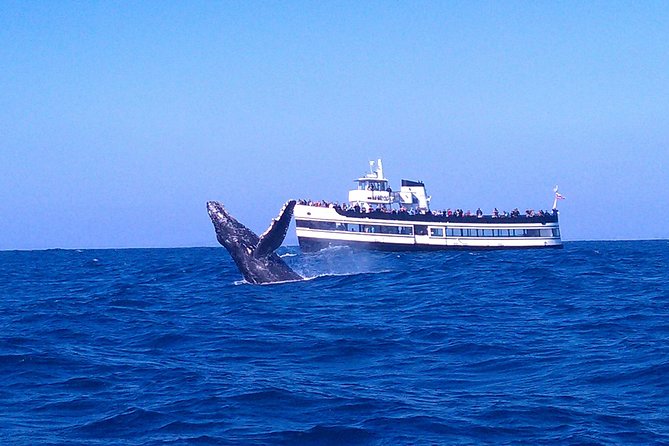
- Open-ocean wildlife search: The boat travels from Mission Bay into the Pacific, where sightings can include whales, dolphins, sea lions, seabirds, and mola mola fish.
- Seasonal trip length: Cruises run about 2.5 to 3 hours from March through November and about 2 to 2.5 hours from December through February.
- Marine biologist on board: Live English commentary explains the animals and the surrounding ocean during the outing.
- Free parking included: You can park at the departure area, a useful perk in busy coastal San Diego.
- Comfort on board: Choose indoor or outdoor seating, with snacks and drinks available for purchase.
- Strict check-in timing: Arrive at least 45 minutes before departure to complete check-in and collect your physical boarding pass.
Leaving Mission Bay for the open Pacific
Your outing begins at Mission Bay, not directly in downtown San Diego. Find the small gray ticket booth between H2O Jet Ski Rentals and the Fish & Chips Shop, facing the marina. You should complete the pre-arrival waivers before reaching the counter, then allow the full 45 minutes before departure for check-in and your physical boarding pass.
That early arrival matters. A whale watching boat cannot hold its schedule for late arrivals, and the boarding process is more than simply showing a digital confirmation. Bring enough time to park, find the booth, finish the paperwork, and get settled before the boat leaves.
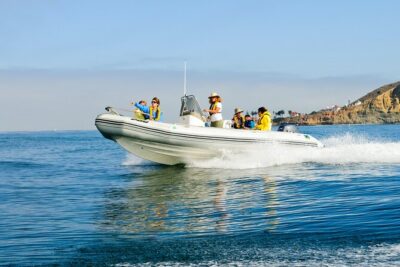
The first part of the cruise takes you away from the marina and toward open water. The boat makes the outward run at a good pace, but this is still a search expedition, not a nonstop show. You will spend part of the trip watching the horizon, listening for information from the marine biologist, and waiting for the crew to spot movement.
I appreciate that the route itself is part of the experience. San Diego’s coastline slips behind you, and the view changes from marina activity to the wide Pacific. One weakness is that the narration may feel lighter during some of the longer stretches before wildlife appears. If you want constant commentary, bring realistic expectations and enjoy the quiet time as part of the search.
More Whale Watching Cruises in the USA
- San Diego Whale Watching Cruise
★ 5.0 · 2,317 reviews - San Diego Whale Watching & Dolphin Cruise
★ 4.5 · 1,588 reviews - San Diego Whale Watching Cruise
★ 4.5 · 663 reviews
What you may see beyond the harbor
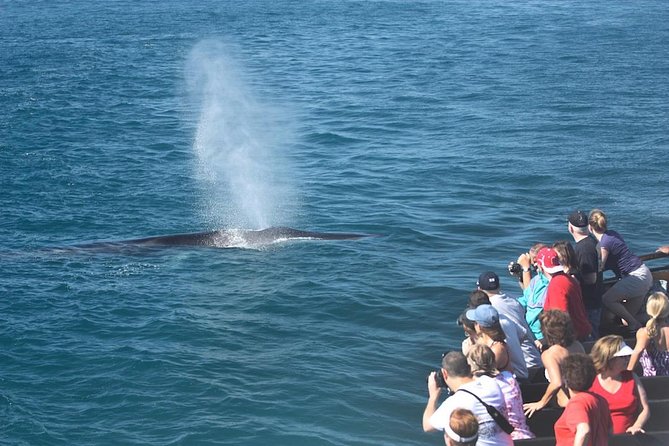
The exact wildlife depends on the day, season, and luck. Possible sightings include gray whales, humpback whales, fin whales, minke whales, blue whales, dolphins, sea lions, seabirds, and mola mola fish. That is a wide range of ocean life for one outing, but no specific animal can be promised.
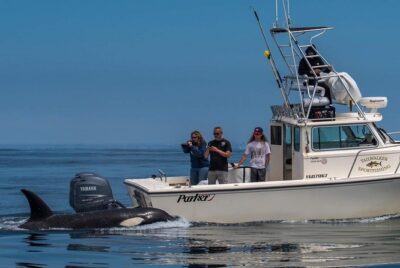
Dolphins can provide the action when whales remain out of sight. Large groups may travel near the boat, and several kinds have been seen, including common dolphins, bottlenose dolphins, and Risso’s dolphins. A pod may accompany the boat for several minutes, turning an otherwise quiet stretch into the liveliest part of the cruise.
Sea lions often add another layer to the outing. You may find a large group gathered together, while seabirds help you notice how much life is moving across the water. Mola mola, also called ocean sunfish, have also been spotted, giving you a chance to see something less familiar than the usual dolphin or sea lion.
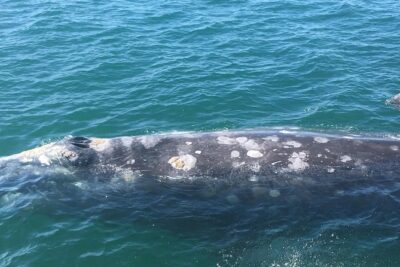
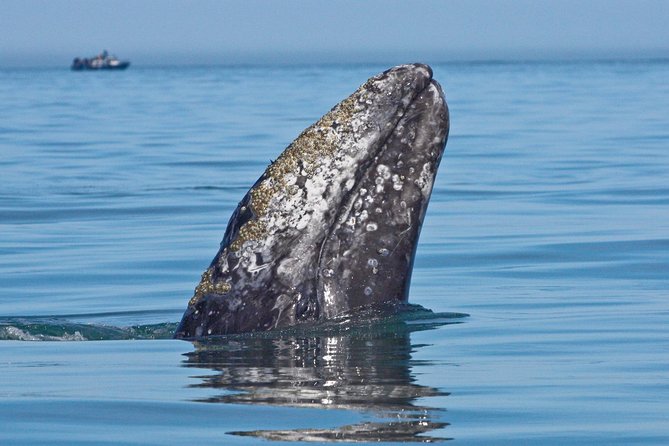
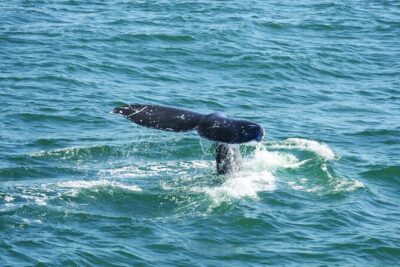
When whales appear, the sighting can be brief or absorbing. A gray whale may surface, a humpback may show its tail, or a fin whale may offer a rare glimpse of one of the largest animals in the sea. Blue whale sightings are especially unusual and memorable, but you should not book this trip expecting one.
The boat may spend an hour with a pod if the animals remain in the area. Other times, you might see a whale only once before it disappears beneath the surface. That unpredictability is not a flaw in the operation. It is the central fact of wildlife watching.
The marine biologist makes the waiting worthwhile
A certified marine biologist provides live English commentary during the cruise. That gives you more than a list of animal names. You can ask questions, learn what to watch for, and understand why the crew is changing direction or slowing down.
The guide’s role is particularly useful during the quiet sections. A whale watching trip has unavoidable pauses, and clear narration helps connect the open-water ride with the biology of the animals around you. The strongest moments come when the guide explains what has just surfaced and gives you a reason to keep scanning the water.
The commentary can also broaden the trip beyond the most obvious animals. The ocean here contains life below the surface that you will not see from the boat, and some passengers may want more discussion of that hidden world, local marine ecology, and how ocean life has changed over time. The existing presentation focuses mainly on what you can see during the cruise, so ask questions if you want to draw out more detail.
I like this balance of entertainment and education. Families can stay interested when dolphins are playing near the boat, while adults who want more science have an opportunity to ask the guide directly. The marine biologist also helps you understand that a successful trip is not measured only by the number of whale sightings.
Choosing between the inside and outside decks
The boat has both indoor and outdoor seating. Outside, you get the clearest view of the water and the best chance to spot a distant blow or moving fin. You also face more wind, spray, and sun, so dress for changing conditions rather than assuming a warm day on shore will feel the same offshore.
Indoor seating gives you shelter and a place to warm up during the ride. It is useful if you feel uneasy in rougher conditions, though you may need to step outside quickly when the crew points out wildlife. Staying inside the entire time can make it harder to see animals that surface on different sides of the boat.
Snacks and beverages are available for purchase on board, but food and drinks are not included in the $70 price. I would not count on the snack bar as a full meal. Eat beforehand if you tend to get hungry on the water, and bring only what is allowed and practical for a moving boat.
Motion sickness deserves serious attention. The cruise goes into open ocean, where conditions can feel very different from the calm water inside Mission Bay. If you are prone to seasickness, take your usual medication before boarding rather than waiting until you feel ill. The crew has helped passengers who struggle with motion sickness, but prevention is still the better plan.
The activity is not suitable for people with heart problems or wheelchair users. Those limits should be part of your decision before booking, not something to discover at the dock.
More Whale Watching Cruises in San Diego:
- San Diego: Whale Watching Tour – Flagship Cruises & Events
★ 4.1 · 315 reviews - Dolphin and Whale Watching Sunset Cruise
★ 4.5 · 249 reviews - San Diego: Whale and Dolphin Watching Cruise
★ 4.3 · 186 reviews - City Cruises San Diego: Whale and Dolphin Watching Adventure
★ 4.0 · 143 reviews
Seasonal timing changes the shape of the cruise
From March through November, the trip lasts about 2.5 to 3 hours. From December through February, it runs about 2 to 2.5 hours. The shorter winter schedule does not guarantee fewer sightings, but it does give you a slightly different time commitment when planning the rest of your day.
The cruise operates year-round, which is useful if your San Diego visit does not line up with a particular season. Still, whale and dolphin behavior changes, and sightings are never fixed. The right choice is to book for the experience of being at sea and watching wildlife, not for one species at one exact time.
Tours depart in rain or shine, but poor sea conditions can lead to cancellation. This is another reason to avoid placing an important timed attraction immediately afterward. Keep some flexibility in your schedule, especially if ocean conditions look unsettled.
The activity returns to the same Mission Bay meeting point. That makes the logistics simple once you finish the cruise. You do not need to arrange a separate pickup or find your way back from another harbor.
Is $70 a fair price?
At $70 per person, this cruise sits in a reasonable range for a three-hour wildlife outing, especially with free parking and live marine biology commentary included. The value depends heavily on what you want from the day.
If you see a whale, several dolphin species, sea lions, and seabirds, the price feels easy to justify. A blue whale or fin whale sighting can make the trip extraordinary. Even when whales stay hidden, a large dolphin pod can keep the boat busy and give you plenty to watch.
The value is less certain if you expect a polished sightseeing cruise with constant narration and guaranteed animal encounters. There can be quiet stretches, and the boat must travel into open water to search. You are paying for access, time, crew effort, and the chance to see wild animals, not for a fixed show.
Free parking improves the practical value. Parking near San Diego’s coastal attractions can add cost and stress, so having it included is a useful advantage. Snacks and drinks cost extra, but that is standard for this type of outing and easy to plan around.
The family-owned setup also gives the experience a more personal feel. Crew members answer questions, help with passenger needs, and work together to find wildlife. One small service interaction can always fall short, so I would not expect every detail of the snack bar or onboard service to be perfect. The core operation, however, centers on getting you safely into the right waters and making the most of the sightings available.
Who will enjoy this cruise most?
I would choose this cruise for families, first-time whale watchers, couples who enjoy being outdoors, and anyone who wants a marine wildlife experience without leaving San Diego for a full day. The combination of dolphins, birds, sea lions, and possible whales gives children several things to watch for.
It also suits people who like learning while they travel. The marine biologist can explain what you are seeing and answer questions, so you do not need prior knowledge of ocean wildlife. The experience remains accessible even if you cannot tell a humpback from a fin whale before boarding.
You should think twice if you dislike open water, become sick easily, or need step-free wheelchair access. The boat ride can include long periods without a sighting, and sea conditions may be uncomfortable. If your schedule is tight, remember to add the 45-minute pre-departure check-in and allow room for a possible cancellation caused by rough seas.
Photographers should bring patience. Wildlife can surface far from the boat, move quickly, or vanish before you frame a shot. You might get excellent images of a gray whale, dolphins beside the boat, or sea lions resting together, but no photograph is assured.
Practical details that make the day easier
Complete the waiver before arriving if possible. Then go to the small gray booth by the marina, check in 45 minutes early, and collect the physical boarding pass.
Wear clothing that can handle wind and spray. You can move between indoor and outdoor areas, but conditions on the Pacific may be cooler than they are at Mission Bay.
Eat before boarding if you need a proper meal. Snacks and beverages are sold on board, but they are not part of the ticket price.
Take motion-sickness medicine before the cruise if you need it. Once nausea starts, it is harder to recover while the boat is offshore.
Keep your schedule flexible after booking. The cruise runs in rain or shine, but poor sea conditions may force cancellation.
The activity is conducted in English. It begins and ends at the same Mission Bay meeting point, with free parking included.
Should you book San Diego Whale Watch?
I would book this cruise if you want a genuine open-ocean wildlife search with a strong chance of dolphins and seabirds and a real possibility of seeing whales. The marine biologist, family-run operation, free parking, and indoor seating make the $70 price sensible for a three-hour outing.
Book it with the right mindset. You may see a blue whale, fin whale, humpback, or gray whale, but you may also spend much of the trip watching dolphins and scanning an empty stretch of sea. That uncertainty is part of the deal.
For the best chance of enjoying it, arrive early, prepare for motion, dress for wind, and leave room in your day. If you can accept nature’s timetable, this is a memorable way to meet San Diego’s wild Pacific.
FAQ
How long is the San Diego whale watching cruise?
The cruise lasts about 2.5 to 3 hours from March through November. From December through February, trips last about 2 to 2.5 hours.
Where does the cruise leave from?
The cruise departs from Mission Bay. Check in at the small gray booth between H2O Jet Ski Rentals and the Fish & Chips Shop, facing the marina.
How early should I arrive?
You must check in 45 minutes before the scheduled departure. This allows time to complete the check-in process and receive your physical boarding pass.
Is parking included?
Yes. Free parking is included with the activity.
What animals might I see?
Possible sightings include whales, dolphins, sea lions, seabirds, and mola mola fish. Whale species seen on trips can include gray, humpback, fin, minke, and blue whales, but no sighting is guaranteed.
Is food included in the ticket price?
No. Food and drinks are not included, though snacks and beverages are available to purchase on board.
Is there live commentary?
Yes. A certified marine biologist provides live commentary in English during the cruise.
Does the cruise run in bad weather?
Tours depart rain or shine, but trips can be canceled because of poor sea conditions.
Can wheelchair users take this cruise?
The activity is not suitable for wheelchair users. It is also not suitable for people with heart problems.
Newly added whale trips around San Diego
- San Diego Whale/Dolphin Watching Cruise Aboard Luxury Vessel★ 5.0 · 64 reviews
- Haunted Whaley House Admission★ 4.0 · 14 reviews
- Whale and Dolphin Watching in San Diego★ 5.0 · 129 reviews
- Haunted Whaley House Guided Night Tour★ 4.5 · 25 reviews
- Whale and Dolphin Watching in San Diego Speedboat Tour★ 3.5 · 3 reviews
- San Diego: 3 Hour Whale Watching Cruise★ 4.5 · 106 reviews
- 3-Hour Guided Whale and Dolphin Watching Experience in San Diego★ 4.5 · 39 reviews
- Dolphin and Whale Watching Sunset Cruise★ 4.5 · 249 reviews
San Diego Whale Watching Tours, side by side.
Whale Watching Tour – Flagship Cruises & Events
Read our review →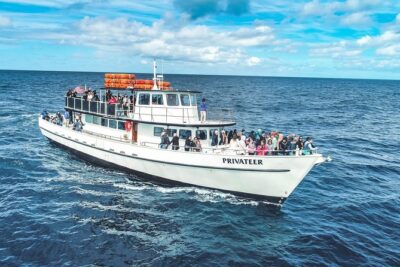
City Cruises San Diego: Whale and Dolphin Watching Adventure
Read our review →