
Review · AKUREYRI
Traditional Oak Ship Whale Watching Tour From Husavik
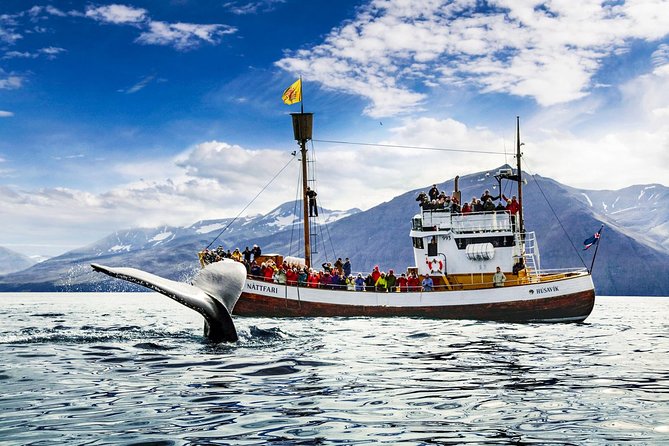
The real draw here is not simply seeing a whale. It is sailing into Skjálfandi Bay on a traditional oak ship, with the water, mountains, sea birds, and changing weather all part of the show. Humpbacks are the stars, but dolphins, minke whales, fin whales, and puffins may also appear.
I like two things in particular. First, the crew treats wildlife with care, limiting time with a single whale rather than crowding it. Second, the guides make the sightings mean something, explaining breathing patterns, feeding behavior, and how to tell one whale from another. The possible catch is simple: nature sets the schedule, and some trips see only distant animals or none at all.
Key points to know before booking
- Traditional oak ship: You sail in a boat tied to Iceland’s seafaring past, rather than a fast modern launch.
- Three hours on Skjálfandi Bay: The trip gives you time to search widely for whales, dolphins, and birds.
- Warm gear is supplied: You receive a flotation overalls suit and, when needed, a raincoat, but bring warm shoes and thick socks.
- Strong guiding: Marine guides such as Jess and Alisa explain whale behavior and help you identify what you see.
- Sweet finish: Hot chocolate and a cinnamon bun are often served on the return journey.
- Wildlife is never promised: Calm seas can make sightings easier, but no operator can control the animals or weather.
Sailing from Húsavík on an old Icelandic oak ship
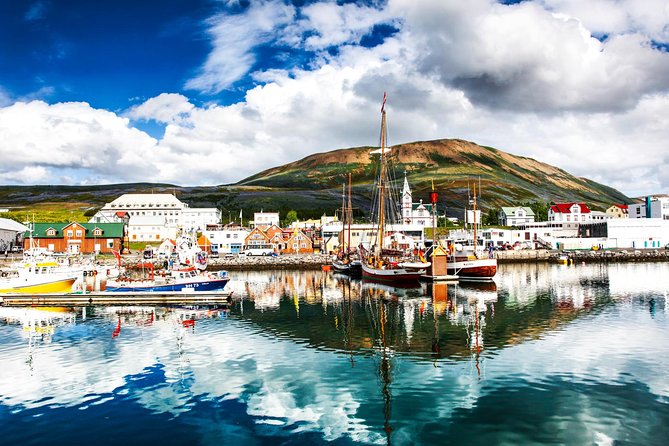
This is the original North Sailing whale watching experience from Húsavík, the North Iceland town long associated with whale watching. The meeting point is North Sailing Whale Watching on Garðarsbraut. The tour returns to the same place after roughly three hours, so you do not need to arrange a separate return transfer.
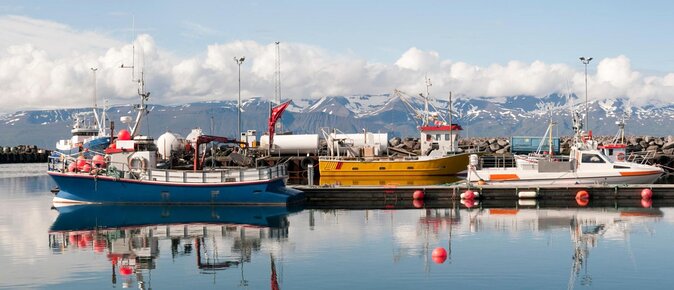
The listing gives Akureyri as the general location, but the actual departure point is in Húsavík. That distinction matters if you are planning your day. You need to reach the Húsavík harbor on your own because pickup is not included.
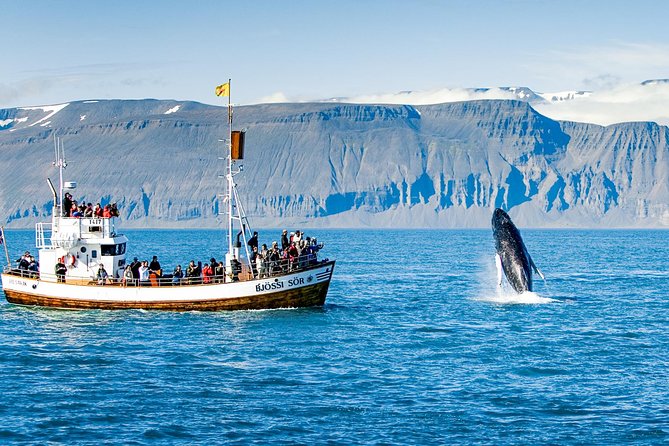
The boat is a major part of the appeal. A traditional oak ship gives the outing a slower, more old-fashioned feel. You are not simply being carried to a viewing point. You are sailing through the bay in a vessel that suits the setting, with the sea and surrounding mountains providing a fine backdrop even during a quiet wildlife spell.
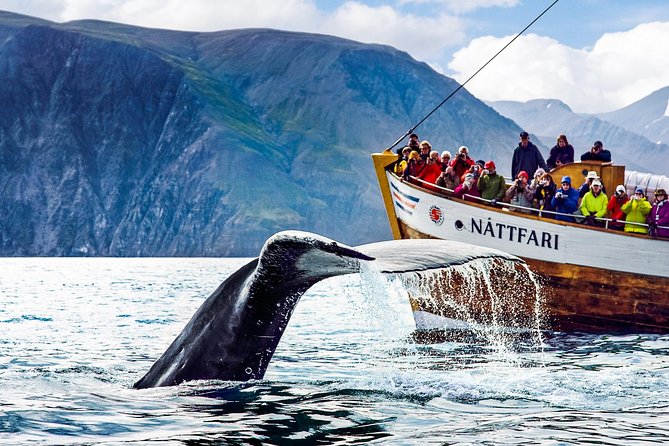
The tradeoff is capacity. The boat can carry up to 125 people, and one lower-rated experience described it as crowded. That does not mean every departure feels packed, but you should not expect a private cruise. If open viewing space matters greatly to you, arrive prepared to move around the boat and share the best sight lines.
More whale trips worth the boat ride around Akureyri:
- Akureyri: 3-Hour Classic Whale Watching Tour by Ship
★ 4.6 · 3,000 reviews - Whale Watching from Downtown Akureyri
★ 4.5 · 971 reviews - Big Whales & Puffins RIB boat tour from Húsavík
★ 5.0 · 501 reviews
What the three-hour route feels like
The itinerary is listed as one main stop, North Sailing, but the real activity takes place continuously on the bay. After boarding, the crew gets you settled, explains the trip, and supplies protective clothing. The ship then heads out across Skjálfandi Bay in search of signs of life.
At sea, the guide provides live commentary in English. This is not just a running list of species. The best information helps you read the water: a blow in the distance, a dark back, the rhythm of a whale’s breathing, or the sudden movement of dolphins beside the boat.
Guides named in the feedback include Jess and Alisa, with Alisa praised for explaining how behavior can help identify a species. The crew may discuss breeding habits, feeding, breathing frequency, and the differences between whales. That turns a brief sighting into a more rewarding lesson in marine life.
The search itself can be active. You may spend time looking across the water before an animal surfaces, then see several appearances in quick succession. Some people have seen a single humpback close to the boat, while others have watched several humpbacks together. One particularly lucky outing produced at least ten whales along with dolphins and puffins.
You need to keep those stories in perspective. Other departures have seen minke whales, dolphins, and a fin whale only at a distance. One April trip saw no whales at all, although the crew had warned passengers ahead of time that recent conditions had been quiet. That honesty is useful. It helps you book a wildlife trip with realistic expectations rather than treating it like a scheduled performance.
Humpbacks, dolphins, puffins, and the luck of the day
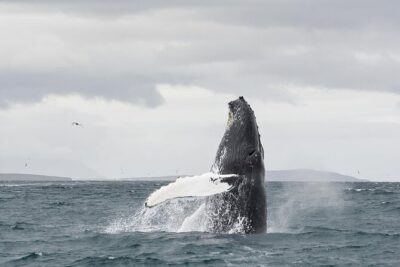
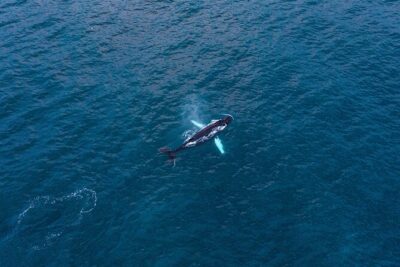
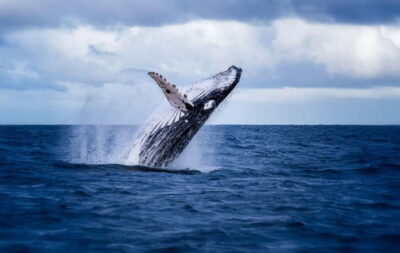
Humpback whales are the main reason to choose this excursion. Their size and surface behavior can make them especially exciting to watch, and several outings have included close approaches or active animals. A humpback may surface near the boat, feed nearby, or appear repeatedly as the ship waits at a respectful distance.
You might also see white-beaked dolphins. They have been spotted swimming alongside the boat, jumping repeatedly, and traveling in pods. Minke whales and fin whales have also been seen, though sightings can be farther away and less dramatic.
Puffins and other water birds add a second layer to the trip. One useful point from a summer outing is that puffins may be visible during the whale cruise itself. If you are considering a separate whale and puffin trip, you may decide the standard whale cruise gives you enough bird watching for your plans. That depends on how important puffins are to you, since dedicated bird outings allow more focus on them.
Bring binoculars if you have them. A whale that looks clear to the naked eye may be some distance away, and binoculars help you follow a blow, a dorsal fin, or a bird moving across the water. They are especially helpful on a day when the animals stay shy.
The mountain views also matter. Even if wildlife remains distant, you are still out on the bay with broad views of water and shore. A calm day can make the crossing pleasant in its own right. A rough or wet day may make the same three hours feel much longer.
The warm clothing works, but your footwear matters
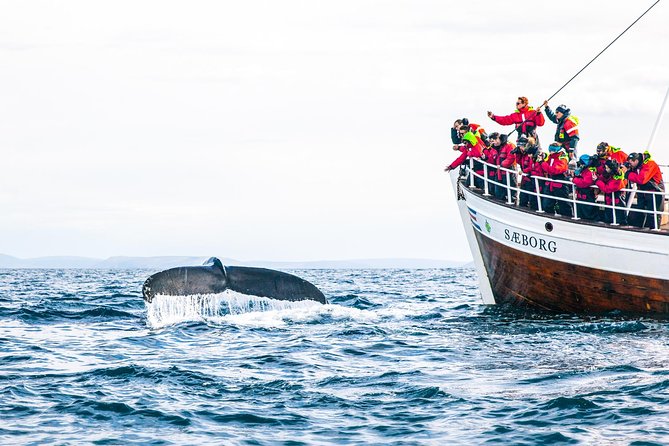
I would take the clothing advice seriously. The operator provides warm, floatable overalls to wear over your own layers, and rain protection when needed. Several people found the suits genuinely helpful in cold weather, and parents appreciated the extra help getting children into warm gear.
Do not mistake the supplied suit for a complete wardrobe. You still need your own clothes underneath. Wear layers, and bring warm shoes and thick socks. Shoes are not included, so this is the one part of the cold-weather setup you must handle yourself.
The overalls can feel warm, especially when the weather is mild or when you are standing in direct shelter. Dress in layers you can manage rather than wearing one bulky item that is hard to remove. A raincoat may be supplied, but Icelandic weather can change quickly, so keeping your own clothing warm and practical remains sensible.
Motion sickness is another consideration. One practical tip is to stay toward the back of the boat if you are prone to discomfort. You may also prefer to spend time in the most stable part of the ship rather than constantly moving from side to side to chase every sighting.
Children must be accompanied by an adult. Most people can take part, and service animals are allowed. The experience is offered in English.
Same migration, a different deck:
- Akureyri: 2-Hour Whale Watching Express by RIB Speedboat
★ 4.8 · 489 reviews - Original Big Whale Safari & Puffins Speedboat Tour from Húsavík
★ 5.0 · 417 reviews - Traditional Whale Watching from Húsavík by Local Family Company
★ 4.5 · 389 reviews - 100% Whale Watching
★ 5.0 · 273 reviews
Guides, commentary, and how wildlife is treated
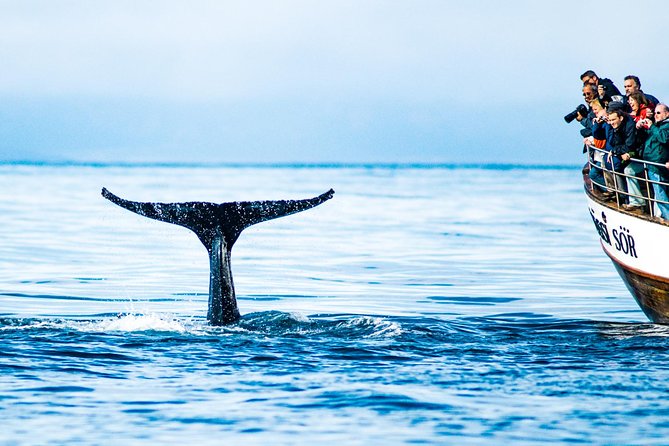
The guiding is one of the strongest parts of this trip. A good whale guide does more than point and shout. The guide helps you understand why an animal surfaced, what its breathing pattern suggests, and how its behavior may reveal what it is doing.
The guides have been praised for getting the level of talking right, giving useful information without filling every quiet moment. That balance matters. You need enough explanation to understand the animals, but you also need silence when the bay suddenly becomes interesting.
The crew’s handling of the whales is also important. The boat may spend up to about 40 minutes observing one whale before moving on, a limit intended to reduce disturbance. That approach gives you time for photographs while avoiding prolonged pressure on a single animal.
You should still bring patience. A respectful boat may wait farther back than you expect, and the best view may last only a few seconds. The result can be less dramatic than a close approach, but it is better for the animals and more in keeping with responsible wildlife watching.
The experience depends heavily on the guide’s microphone and speaker system. Most people have found the commentary clear, but one outing had trouble with the sound and passengers could not hear well. If you are far from the guide or the ship becomes noisy, you may miss some of the explanation. Stay near the commentary area when possible.
Hot chocolate and a cinnamon bun on the way home
The return journey includes light refreshments. In practice, the treat is often hot chocolate and a cinnamon bun, a small detail that comes at exactly the right time after several hours on cold water.
This is not a meal, and you should not book the cruise expecting substantial food. Still, the warm drink and bun are more than a gimmick. They give you a comfortable end to the outing and a chance to warm up while the ship heads back to Húsavík.
The food also adds a local, unhurried feel to the trip. After concentrating on the water, you can compare sightings, look back at the bay, and enjoy the final approach to the harbor.
Is $118.56 a fair price?
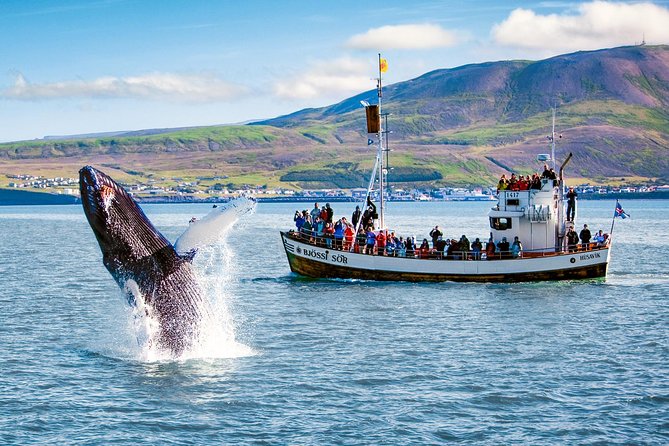
At $118.56 per person, this is not a cheap hour on the water. You are paying for about three hours aboard a historic-style oak ship, professional crew, live English commentary, protective overalls, and the chance to search a large bay for several kinds of wildlife.
The value is strongest if you care about the full setting rather than only the number of whales seen. You get the boat, the bay, the mountain views, the bird life, the guide’s interpretation, and the possibility of humpbacks or dolphins. The hot chocolate and cinnamon bun are pleasant extras, not the reason to choose the trip.
The value is weaker if you need a guaranteed close encounter. You might see many whales, a few distant animals, or none. That is the basic risk of any wildlife outing, and the price does not remove it.
The tour is also booked well ahead of time on average, around 51 days in advance. That suggests you should plan ahead if your Iceland schedule is fixed. It also means you should check the weather and cancellation terms before locking in other activities around it.
Timing, weather, and choosing your departure
Morning, afternoon, and evening departures are available. A summer morning may suit you if you want the rest of the day free, and one especially successful trip began at 9 a.m. That does not mean morning guarantees better wildlife, but an early start may fit well with a full North Iceland itinerary.
Afternoon and evening departures give you more flexibility. Choose the time that leaves room in your schedule for weather changes, since poor conditions can cancel a sailing. Do not place a tight, nonrefundable activity immediately afterward if your day cannot absorb a delay.
Weather is not just a comfort issue. Wind and sea conditions affect safety, visibility, and how enjoyable the boat feels. If North Sailing cancels because of poor weather, you can be offered another date or a full refund.
A mechanical delay has also occurred on one outing, when an engine failure kept the ship at sea for more than two hours before the crew repaired the problem and returned safely. It was an unusual event, and the operator offered a full refund. Still, it is a useful reminder to leave breathing room in your schedule.
Who will enjoy this Húsavík cruise most?
I would choose this for you if you want an authentic, sea-based Iceland experience and are happy to accept uncertainty. It suits first-time whale watchers, families with adults supervising children, photographers, bird lovers, and anyone who values a knowledgeable guide as much as a dramatic sighting.
It is also a good fit if you like traditional boats and do not mind a group setting. The oak ship gives the trip character, while the crew’s wildlife rules make the outing feel respectful rather than rushed.
You may want to reconsider if you dislike cold, motion, or crowded boats. Bring binoculars if distant wildlife would frustrate you, and plan warm footwear from home. If hearing every word matters to you, stay close to the guide and be aware that sound quality may vary.
Free cancellation is available up to 24 hours before the start time for a full refund. Changes or cancellations inside that window are not refunded. The operator can also cancel if the weather is poor or the minimum number is not met, offering another date, another experience, or a refund.
Should you book the traditional oak ship whale tour?
Yes, if you understand that this is a wildlife search rather than a guaranteed whale show. The strongest reasons to book are the oak ship, the thoughtful guides, the warm clothing, and the chance to see humpbacks, dolphins, puffins, and other species in one bay.
I would book it as part of a Húsavík visit, leave room around the sailing, and bring binoculars, warm shoes, thick socks, and realistic expectations. You may return with a close humpback encounter and a boatload of photographs. You may instead return with distant blows, sea birds, fine bay views, and a better understanding of how wild animals choose to behave. Both are honest results of time spent at sea.
FAQ
Where does the whale watching tour depart?
It departs from North Sailing Whale Watching on Garðarsbraut, 640 Húsavík, Iceland.
Where does the tour finish?
The activity ends back at the same North Sailing meeting point in Húsavík.
How long does the cruise last?
The tour lasts approximately three hours.
What animals might I see?
You may see humpback whales, minke whales, fin whales, dolphins, puffins, and other sea birds. Sightings are not guaranteed.
Is the tour available in English?
Yes. The tour includes live commentary in English.
Is hotel pickup included?
No. Pickup is not included, so you need to reach the Húsavík meeting point yourself.
What clothing is provided?
Warm flotation overalls are provided, and a raincoat is available when needed. You still need to wear your own layers and bring warm shoes and thick socks.
Are food and drinks included?
Light refreshments are included. The trip commonly ends with hot chocolate and a cinnamon bun.
Can children join the tour?
Yes. Children must be accompanied by an adult.
What happens if bad weather cancels the tour?
You will be offered another date or a full refund if poor weather causes cancellation.
Newly added whale trips around Akureyri
- Whales and Puffins Tour from Husavik★ 4.5 · 85 reviews
- Whale Watching on a Traditional Oak Sailing Ship from Husavik★ 4.5 · 68 reviews
- Whale Watching in Husavik★ 4.5 · 119 reviews
- Whale Watching on board a Traditional Oak Boat from Árskógssandur★ 4.5 · 92 reviews
- Whale and Puffin Watching around Skjálfandi Bay from Husavik★ 4.5 · 99 reviews
- Akureyri Express Whale Watching by RIB boat★ 4.5 · 168 reviews
- Whale Watching Tour from Akureyri City Central★ 4.5 · 33 reviews
- Whale Watching and Sea Angling Tour★ 4.5 · 61 reviews
Akureyri Whale Watching Tours, side by side.
Big Whales & Puffins RIB boat tour from Húsavík
Read our review →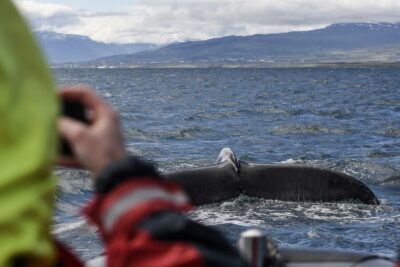
2-Hour Whale Watching Express by RIB Speedboat
Read our review →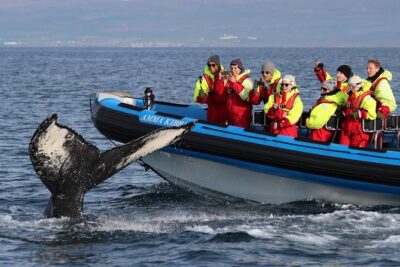
Original Big Whale Safari & Puffins Speedboat Tour from Húsavík
Read our review →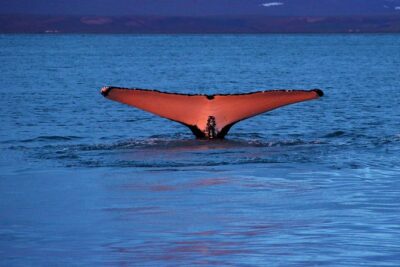
Traditional Whale Watching from Húsavík by Local Family Company
Read our review →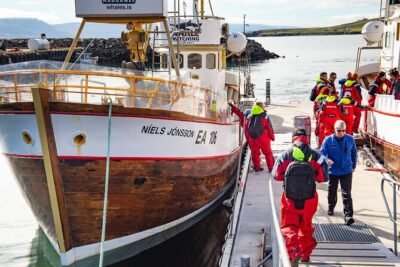
Lists this trip appears in