
Review · VICTORIA
Victoria: 3-Hour Whale Watching Tour
The big draw is the chance to see orcas and humpback whales in the open Salish Sea, with no aquarium glass between you and the animals. I like the Marauder IV’s covered cabin, outdoor decks, washroom, hot drinks, and loaner waterproof clothing. I also like that the crew, often including guides such as Katie, Morgan, Heather, Ali, and captains Jasper or Ian, explains the animals rather than simply pointing at them.
The main catch is simple: whales are wild. Some trips produce orcas, humpbacks, seals, sea lions, porpoises, otters, and birds, while another may bring only one whale. The boat is comfortable, but the wind can make the water feel much colder than Victoria’s streets, and people seated at the rear may find commentary harder to hear.
Key points to know before you go
- Marauder IV has 360-degree viewing: Walk-around outdoor decks let you change sides as the boat moves, while the heated cabin gives you a warm retreat.
- Orcas are possible, not promised: Humpbacks, seals, sea lions, porpoises, otters, and seabirds are also part of the search.
- Guides add real value: Marine biologists and naturalists explain whale behavior, local ecology, individual animals, and British Columbia’s coast.
- Plan for cold weather: Bring warm layers and closed-toe shoes. Jackets and pants are available on board.
- Check in at 1119 Wharf Street: This is the office, not the dock. Arrive at least 30 minutes early and allow extra time to park.
- The price is $123 per person: That includes the 3 to 3.5-hour trip, hot beverages, onboard staff, and a photo package.
Setting out from Victoria’s Wharf Street
Your outing begins at SpringTide Whale Watching’s street-level office at 1119 Wharf Street, between Fort and Yates Streets. Look for the whale sign above the entrance. This detail matters because you do not check in at the marina itself.
Arrive at least 30 minutes before departure. Victoria’s waterfront can be hard on parking in summer, so allow another 30 minutes if you are driving. Nearby lots exist, but availability changes, and circling for a space is a poor way to begin a boat trip.
From the office, staff guide you to the vessel. One useful feature of the departure setup is that you are not left to find the dock alone. The walk is short, but keep your group together and listen for instructions.
The exact outing lasts about three hours, sometimes closer to three and a half. That gives the captain time to reach productive whale areas and return without turning the day into a full-day commitment. You can fit it into a Victoria sightseeing plan, though I would avoid booking a tight connection afterward.
More Three-Hour Trips in Victoria:
- Victoria: 3-Hour Zodiac Whale-Watching Tour
★ 4.6 · 651 reviews - Victoria, BC: 3-Hour Ultimate Whale & Marine Wildlife Tour
★ 4.6 · 191 reviews - Akureyri: 3-Hour Classic Whale Watching Tour by Ship
★ 4.6 · 3,000 reviews
Inside the Marauder IV Ocean Cruiser
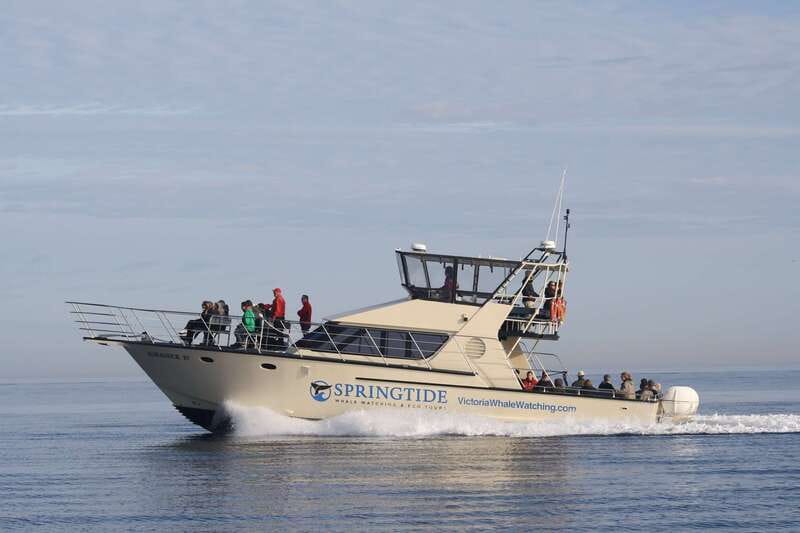
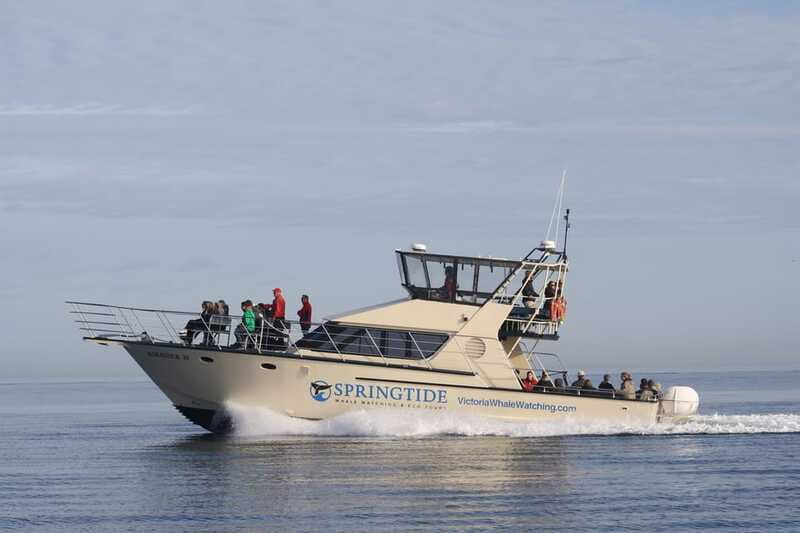
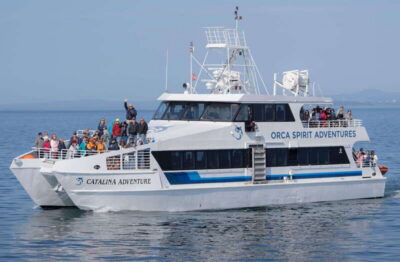
The Marauder IV is a good fit if you want wildlife viewing without giving up basic comfort. You get an indoor cabin, a washroom, an onboard sound system, and outdoor decks that wrap around the boat for broad views.
The 360-degree walk-around deck is more useful than it sounds. Whales can surface on either side, and the best position changes as the captain adjusts course. You can move instead of trying to watch through one fixed window.
The indoor cabin gives you a place to warm up when the wind cuts through your clothes. Several outings have included hot chocolate, coffee, or other hot drinks, which are especially welcome on gray or windy days. The cabin also helps families and anyone who does not want to spend three hours exposed to spray and cold air.
The boat is described as a comfortable size, with plenty of room to sit and move around. A recent departure carried about 40 people, yet the vessel still offered several places to watch. You should not expect a private charter, but you are also not confined to one narrow bench.
The design has one tradeoff. The outdoor viewing areas can be noisy when the engines are running, and the sound system may not carry equally well to every position. If the naturalist’s commentary matters to you, stay near the guide or inside where the speakers are easier to hear. One person specifically found the back of the boat harder for listening.
The first stretch across the Salish Sea
Once the boat leaves Victoria’s harbor, the tour becomes a moving search. The crew watches the water, checks reports, and looks for signs of whales. Your naturalist fills the travel time with information about the Salish Sea, marine mammals, seabirds, and the rocky coast of British Columbia.
This is not a guaranteed sightseeing route with fixed stops. The captain goes where the animals are, so the shape of your trip depends on that day’s conditions and sightings. That is part of the appeal, but it also means the ride can include longer stretches of open water between encounters.
The guides explain how to look for a whale before it surfaces. You may watch for a blow, a dark back, a fin, or a sudden change in the pattern of the water. The crew also identifies birds and smaller animals, so you are not simply waiting for a giant splash.
That educational side gives the tour value even during a quiet spell. Guides discuss feeding behavior, family groups, conservation, and the role of marine mammals in the local ecosystem. They may also identify individual whales by name, adding a sense of connection to animals the crew knows well.
Captain Jasper and Captain Ian have both received particular praise for finding productive areas and handling the vessel smoothly. Naturalists including Katie, Morgan, Heather, Ali, and Kathie have led trips with clear, lively explanations. Staff change from departure to departure, so you cannot count on one named guide, but the operation uses a full crew rather than leaving one person to steer and narrate alone.
Watching humpbacks in open water
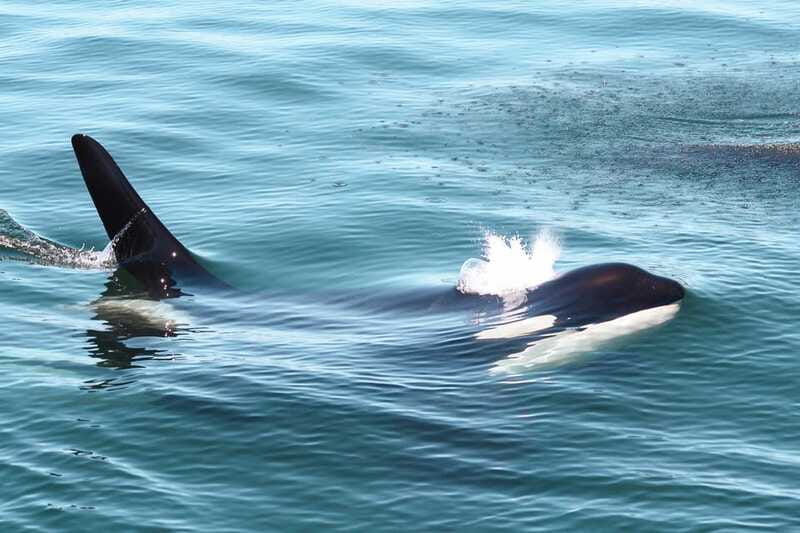
Humpback whales are among the most likely major sightings on this tour. You may see one animal surfacing in the distance, a mother and calf, or several whales using the same area.
The best moments are often not the dramatic ones. A humpback’s slow back rising through calm water can be strangely quiet and moving. A tail slap, repeated blow, or young whale playing near an adult gives you a better sense of the animal’s size and behavior.
Past outings have included single humpbacks, groups of five, and much larger concentrations. One trip produced more than 20 humpbacks, while another focused on a juvenile that stayed near the boat for an extended period. Those examples show the range of possible encounters, not a promise for your departure.
Your captain maintains a respectful distance and approaches carefully. That matters because whale watching is not about chasing an animal until everyone gets a close photograph. A calm boat and patient crew give you a better chance to watch natural behavior.
Bring binoculars if you already own a compact pair, but do not feel that you need expensive equipment. The outdoor decks provide wide views, and the crew helps you follow the action. The included photo package also reduces the pressure to keep your phone raised for the whole trip.
More whale trips worth the boat ride around Victoria:
- Victoria Half-Day Whale Watching Adventure with Free Photos
★ 5.0 · 2,259 reviews - Victoria Zodiac Boat Whale Watching Adventure
★ 5.0 · 916 reviews - Victoria Whale Watching Tour on a Covered Vessel
★ 4.5 · 482 reviews - Victoria Whale Watch Tour
★ 5.0 · 458 reviews
Hoping for orcas, and appreciating what else appears
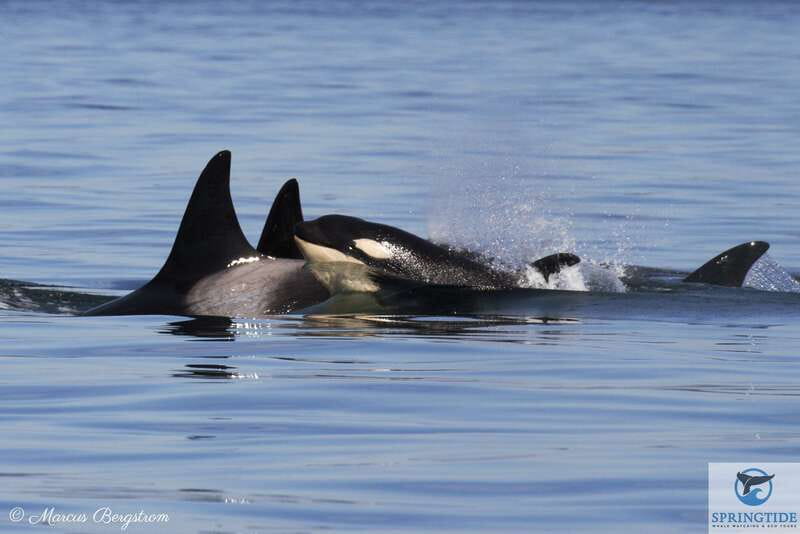
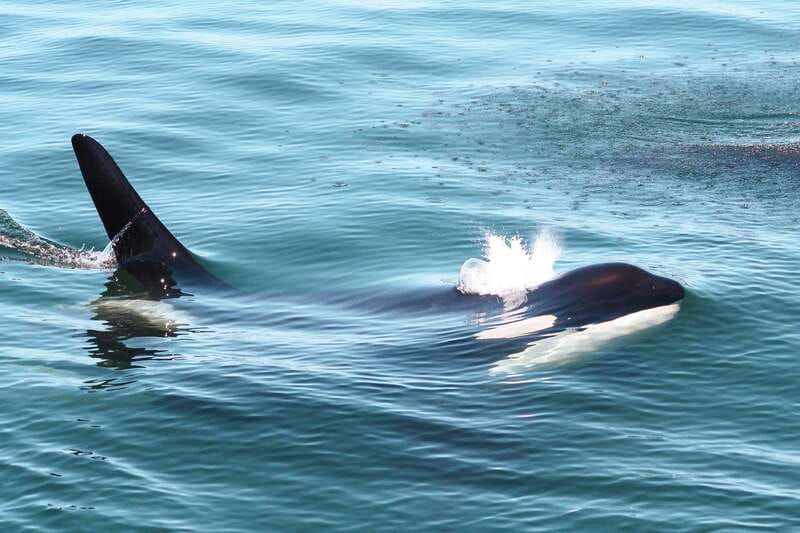
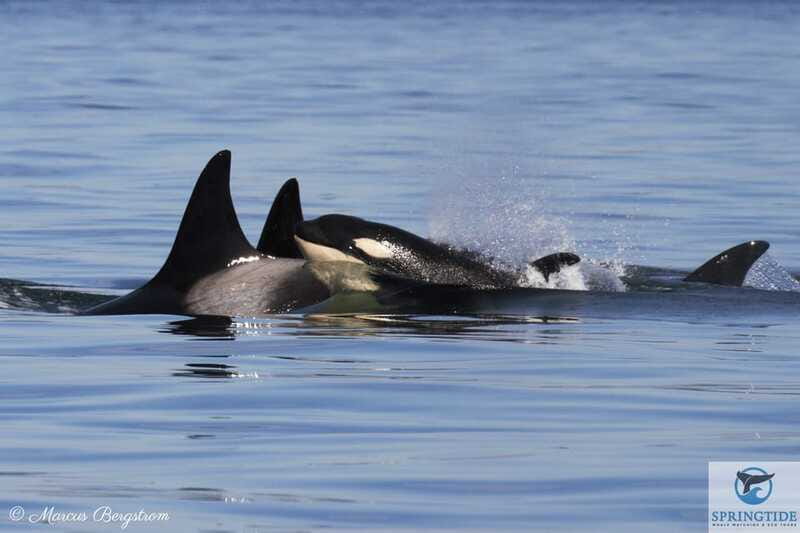
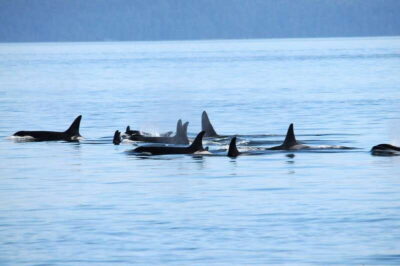
Orcas are the sighting many people have in mind when they book from Victoria. Several trips have found one or more pods, sometimes alongside humpbacks. Some groups have watched orcas hunt or share food, while others have seen playful behavior or animals moving steadily through the water.
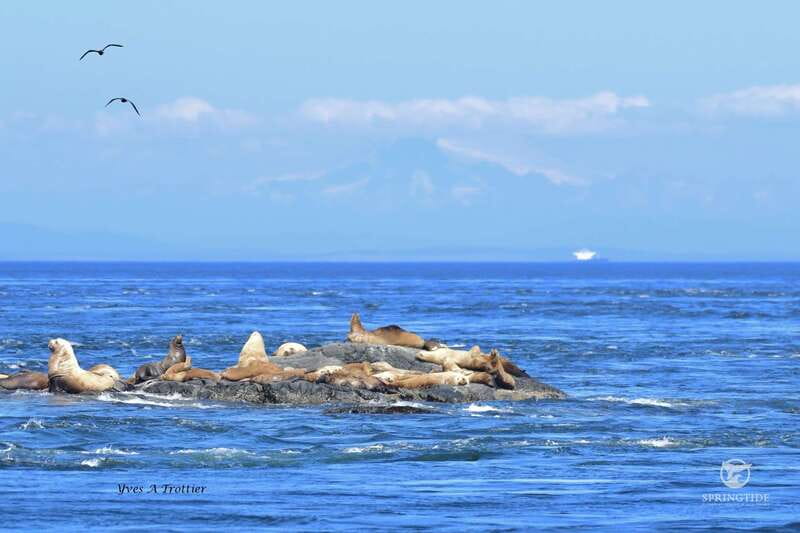
Still, you should book this as a wildlife trip, not an orca guarantee. The water has no fences, and even an experienced captain cannot place wild animals on a schedule. A trip that does not produce killer whales can still include humpbacks, seals, sea lions, porpoises, otters, eagles, and many marine birds.
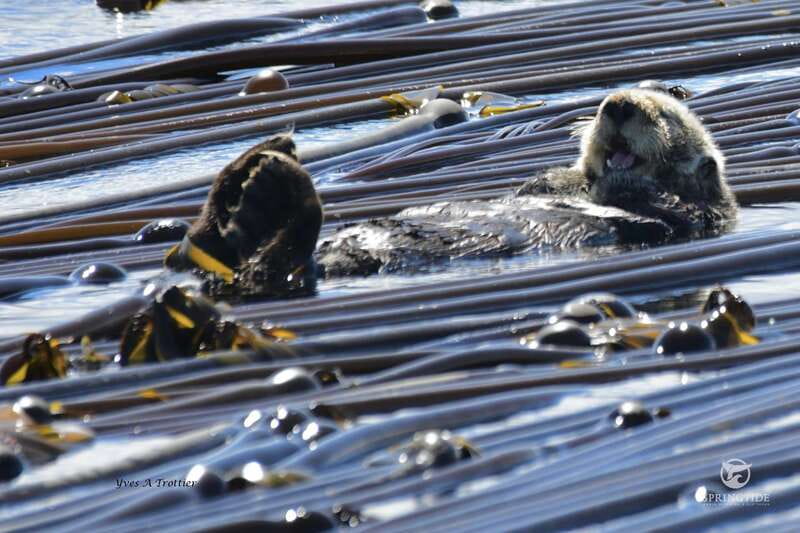
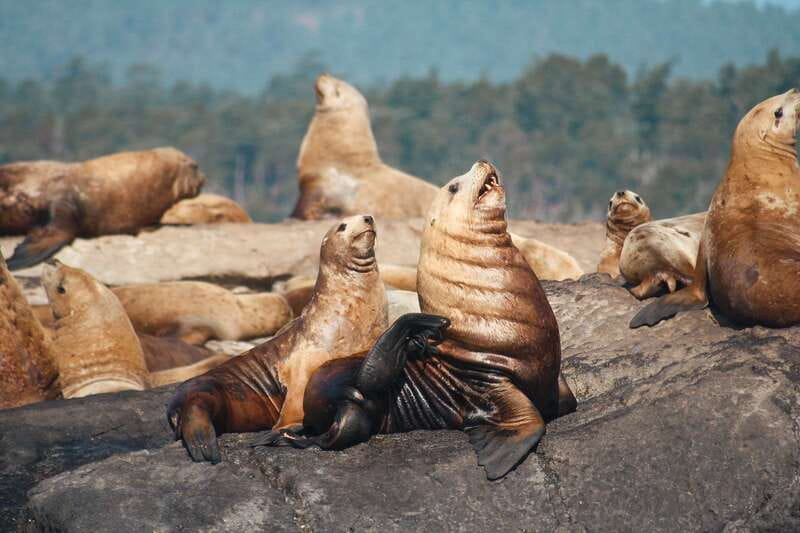
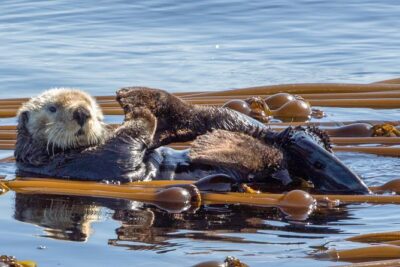
The variety is one of the tour’s strengths. A sea lion raft can be noisy and active. Harbor seals may surface briefly near the boat. A porpoise can appear for only a moment, while an otter may offer a longer look if conditions are favorable. Bald eagles and other coastal birds add interest while you scan the water.
There have also been sightings of a gray whale and bears on shore. These are special extras, not standard stops. The right approach is to enjoy the whole marine setting and treat orcas as one possible part of the day.
What the naturalists add
The strongest part of the experience is the human element. The crew does not merely announce whale on the left. Naturalists explain what the animal is doing, how it feeds, why it travels in a particular group, and how the local waters support marine life.
You might learn how humpbacks use their tails and blows to identify individuals, or how orcas cooperate when hunting. The guides also cover seabirds, seals, sea lions, and the history of British Columbia’s coast. Their enthusiasm feels useful because it turns a distant sighting into something you can understand.
The staff also keep an eye on comfort and safety. Safety instructions come before departure, and crew members offer extra coats when the temperature drops. Their attention is especially helpful for families, since younger children can become cold long before adults admit it.
The main practical weakness is audio coverage. If you stand at the back or near a noisy section, you may miss parts of the talk. Move closer to the guide when possible, and ask questions during quieter stretches. The crew is there to explain, not rush you through a script.
Staying warm on the water
Victoria can feel mild on shore and cold offshore. Wind, spray, and motion change the experience quickly, even on a sunny day.
Wear several layers, long trousers, warm socks, and closed-toe shoes. A hat is useful. SpringTide provides all-weather jackets and pants, but your own warm clothing still matters because loaner gear is a backup, not a substitute for dressing properly.
The covered cabin is a major advantage over a fully open boat. You can step inside, take a hot drink, and warm your hands before returning to the deck. On wet days, that can make the difference between enjoying the final hour and counting the minutes until shore.
The boat also has a washroom, a small but important feature on a three-hour trip. You do not need to plan the outing around finding facilities on land.
The experience is not wheelchair accessible, according to the provided information. Anyone with mobility concerns should confirm details with the operator before booking.
Is $123 a fair price?
At $123 per person, this is not Victoria’s cheapest way to get on the water. I think the price makes sense for someone who values a proper cabin, warm drinks, a washroom, protective clothing, a large viewing area, a trained crew, and included photos.
The cost also covers more than transport. You are paying for a captain who knows the local waters, naturalists who can interpret animal behavior, and a crew that can adapt the route to sightings. If you only want a quick boat ride, the price may feel high. If you want a serious wildlife outing with comfort and teaching, the value is better.
The free photo package is helpful. Whale photography is difficult, especially when the boat is moving and the animal surfaces without warning. Having crew-taken images means you can watch with your own eyes instead of spending the entire trip trying to frame a distant fin.
Free cancellation up to 24 hours before departure and the option to reserve now and pay later also reduce the risk of committing too early. Those policies are useful when your Victoria schedule is still shifting.
Who will enjoy this tour most?
I would choose this outing for first-time whale watchers, families with older children, couples, and anyone who wants wildlife viewing without riding an open zodiac. The cabin and washroom make it easier for people who prefer comfort, while the outdoor decks keep the experience active and close to the water.
It also suits curious visitors who want context. If you like learning names, behavior, feeding patterns, and coastal ecology, the naturalists add real value.
You may want another option if you need wheelchair access, dislike boat motion, or want a guaranteed orca sighting. You should also think twice if cold wind is a dealbreaker, though the cabin, hot drinks, and loaner clothing help.
For families, the crew’s safety focus is reassuring. For photographers, the 360-degree deck gives plenty of angles, but wildlife remains unpredictable. For serious bird watchers, the range of coastal birds may be a pleasant bonus, even though whales are the main goal.
My verdict: book it if you value the whole outing
I would book the SpringTide tour if I had three hours in Victoria and wanted a well-supported chance to see marine wildlife. The strongest reasons are the excellent crew, the covered Marauder IV, the open viewing decks, and the mix of orcas, humpbacks, seals, sea lions, porpoises, otters, and birds that may appear.
Go in with the right expectation. You are buying time on wild water, not a scheduled animal performance. Dress warmer than you think necessary, arrive early at Wharf Street, stay near the sound system, and let the crew guide your attention. If the day brings orcas, it may become a treasured memory. If it brings humpbacks and seabirds instead, the boat, setting, and naturalists still give you a worthwhile Victoria experience.
FAQ
Where does the whale watching tour meet?
Check in at SpringTide’s office at 1119 Wharf Street in Victoria, between Fort and Yates Streets. Do not go directly to the dock for check-in. Look for the whale sign above the street-level entrance.
How early should I arrive?
You should check in at least 30 minutes before departure. If you are driving, allow extra time to find parking because nearby lots can be limited during the busy summer months.
How long does the tour last?
The listed duration is three hours, but the full outing can take about three to three and a half hours.
What animals might I see?
Possible sightings include orcas, humpback whales, seals, sea lions, porpoises, sea otters, gray whales, marine birds, bald eagles, and occasionally a bear on land. Wildlife sightings are not guaranteed.
Is the boat heated?
The Marauder IV has an indoor cabin where you can warm up. Complimentary hot beverages are also provided.
What should I wear?
Bring warm clothing and closed-toe shoes. All-weather jackets and pants are available on board, but you should still dress in layers for cold wind and changing conditions.
Are photographs included?
Yes. A photo package is included with the tour, so you receive crew-taken images from the outing.
Is the tour available in languages other than English?
The live tour guide and stated tour language are English.
Can wheelchair users take this tour?
The activity is listed as not suitable for wheelchair users.
Newly added whale trips around Victoria
- Victoria, BC: 3-Hour Ultimate Whale & Marine Wildlife Tour★ 4.6 · 191 reviews
- Victoria: Whale Watching Adventure in a Zodiac Boat★ 4.5 · 129 reviews
- Wilsons Prom Whale Cruise★ 5.0 · 104 reviews
- Winter Victoria Whale and Wildlife Zodiac Tour★ 5.0 · 229 reviews
- Victoria Whale Watching Tour by Zodiac★ 5.0 · 137 reviews
- Victoria Ultimate Marine Whale & Wildlife Tour★ 4.5 · 142 reviews
- 4 Hour Morning Whale Watching Tour★ 5.0 · 48 reviews
- 4 Hour Afternoon Whale Watching Tour★ 5.0 · 75 reviews
Victoria Whale Watching Tours, side by side.
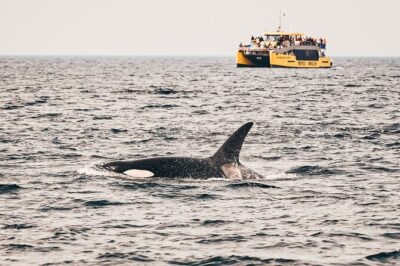
Victoria Half-Day Whale Watching Adventure with Free Photos
Read our review →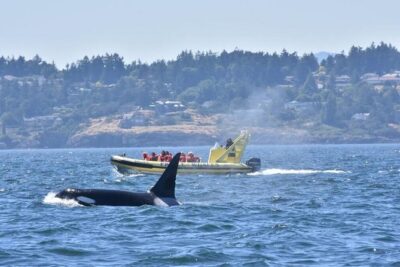
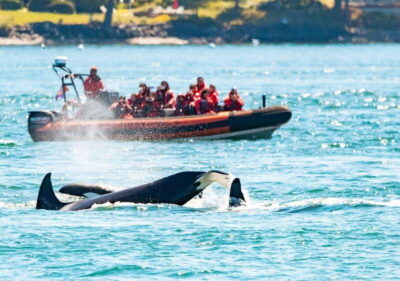
Victoria Whale Watching Tour on a Covered Vessel
Read our review →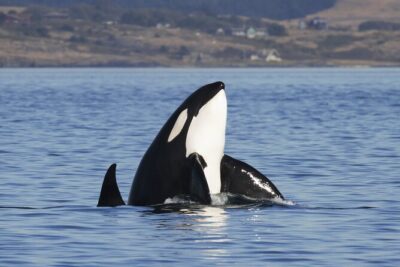
Covered Whale Watching Adventure with Free Photos
Read our review →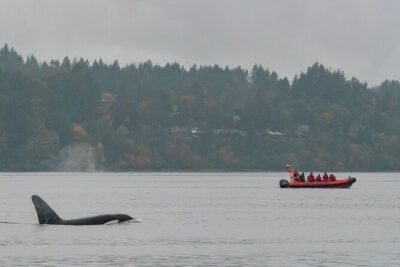
Summer Whale Watching Tour in a Zodiac Boat in Victoria
Read our review →Lists this trip appears in