
Review · BUSSELTON
Augusta Whale Watching Eco Tour
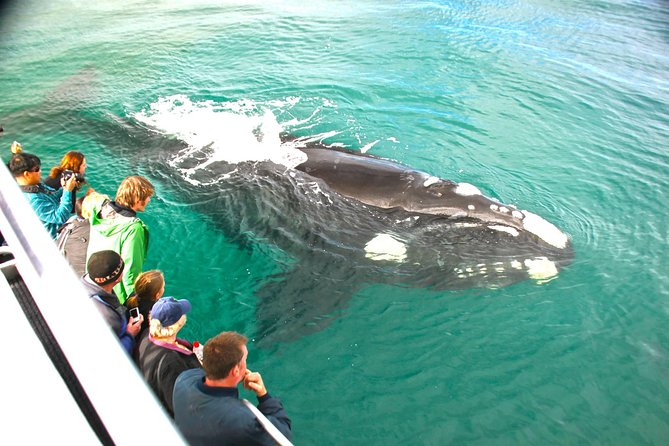
A juvenile whale tail-slapping for nearly ten minutes is the sort of moment this Augusta whale-watching cruise can deliver. You head into open water during the whales’ northern or southern migration, watching for humpbacks, southern right whales, and the occasional blue whale in its natural setting.
I like the six-month Cape to Cape season, which gives you more scheduling options than a short, fixed whale season. I also like the crew’s marine science training, the free hot drinks and biscuits, and the promise of a free return trip if no whales appear. The main caution is simple: this is wildlife, not a show, and even a well-run boat cannot control the ocean or the whales.
Key points to know before you book
- Augusta runs from May to August: The southern end of the season focuses on whales passing through the waters around Augusta.
- The cruise lasts about 2 hours and 30 minutes: That gives you real search time, but it also means you should prepare for open-water motion.
- Marine science guides explain the action: Crew members help you identify whales and share context about their migration from Antarctic waters to Australia.
- No whale sighting means a free return trip: You can come back within one year, subject to availability.
- The boat carries up to 90 people: This is a shared cruise rather than a small private outing.
- Tea, coffee, Milo, green tea, and biscuits are included: A small touch, but useful on a cool morning or afternoon.
Leaving Augusta Boat Harbour for open water
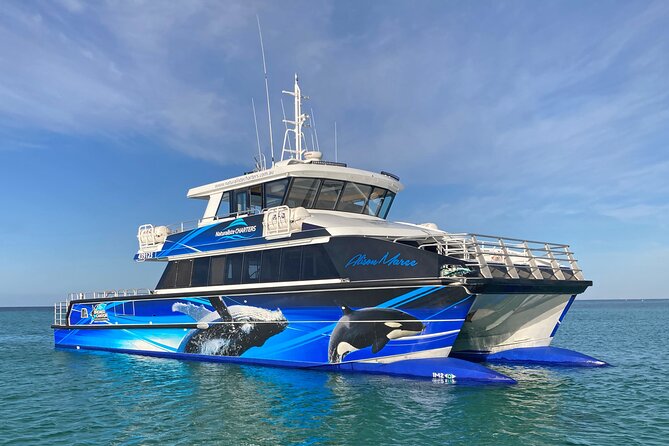
Your tour begins at Augusta Boat Harbour on Leeuwin Road in Leeuwin, Western Australia. The activity ends back at the same point, so you do not need to arrange a separate return transfer.
The departure point matters because Augusta sits at the southern end of the Cape to Cape region. The company operates from Augusta from May through August, then from Dunsborough from August through November. Taken together, this creates a roughly six-month whale-watching period tied to both the northern and southern migrations.
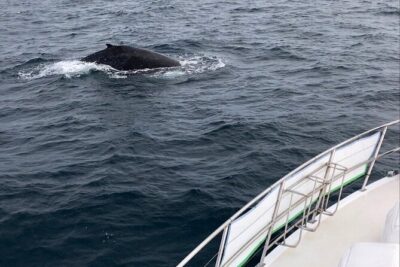
Once the boat leaves the harbor, the focus shifts from scenery to the water itself. Whale watching requires patience. You may spend time scanning the surface for a blow, a dark back, a tail, or a sudden breach. The guide’s job is not only to find animals but also to help you understand what you are seeing.
That makes the commentary more useful than a simple promise of sightings. You learn about whale movement between Antarctic waters and Australia, the difference between species, and the habits that can help you spot them. The crew members are trained in marine science, and marine biologist Pia has been singled out for both her clear guidance and her care for people who feel unwell.
More whale trips worth the boat ride around Australia:
- Sydney: Whale Watching Adventure Cruise
★ 4.2 · 1,790 reviews - Brisbane Whale Watching Cruise from Redcliffe or Sunshine Coast
★ 5.0 · 997 reviews - Freedom 3/4 Day Hervey Bay Premium Whale Watching Cruise
★ 5.0 · 919 reviews
What the 2.5-hour cruise actually offers
The tour lasts approximately two and a half hours. That is long enough to give the crew time to search a wider area and wait for natural behavior, rather than rushing back after a quick look.
The first part of the outing is likely to feel like a search. Watch for movement at different distances, follow the crew’s directions, and keep your eyes on the water. A whale may surface only briefly, then disappear. You may also see seabirds, seals, or dolphins before any whale appears.
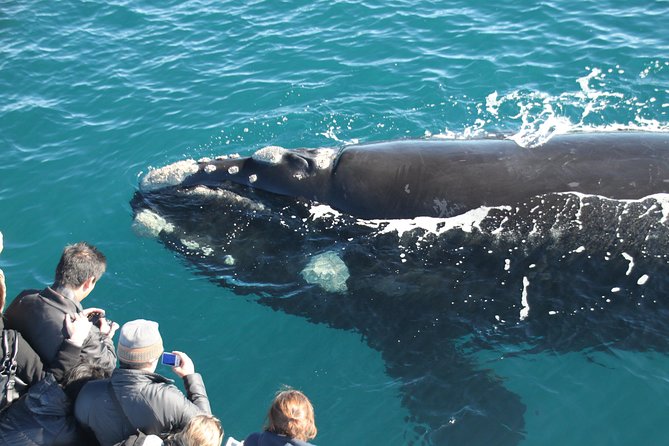
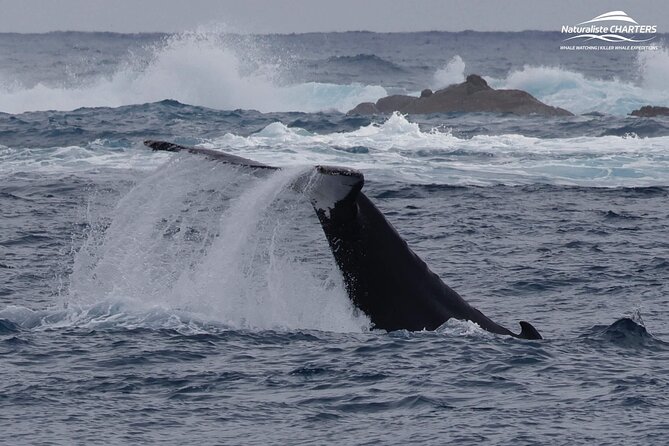
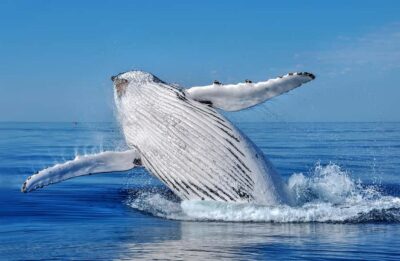
When whales are located, the experience becomes much more active. You might see a humpback breach, slap its tail, swim beside the boat, or surface with a calf. You might also see southern right whales, which use these coastal waters during migration. Blue whales are a possible sighting, but they are described as elusive, so you should treat one as a bonus rather than an expectation.
The best moments are not always the biggest ones. A whale surfacing close to the boat can be thrilling, but a long sequence of tail slaps or a mother and calf traveling together can be just as memorable. One particularly special possibility is watching a young whale play at the surface for several minutes. The crew’s commentary helps turn these fleeting scenes into something you can follow and appreciate.
You should also keep your camera ready, but do not spend the whole trip looking through it. Whale sightings can last seconds, and a phone or camera may miss the action while you are framing the shot. I would take a few pictures, then watch with your own eyes.
The whales and other wildlife you may see
Humpback whales are a main target during the cruise. Their surface behavior can include breaching, tail slapping, and swimming near the vessel. Their size makes even a short appearance dramatic, but you should expect the crew to follow the animals rather than chase them.
Southern right whales are another possibility. They are part of the seasonal migration through the region and may appear during the Augusta operating period. The tour may also encounter New Zealand fur seals, bottlenose dolphins, common dolphins, and sea birds.
A useful way to think about the wildlife list is that it gives you more than one reason to watch the water. If whales are not immediately visible, the sea is still active. Dolphins may move quickly near the boat, seals may appear around the surface, and birds can help point you toward feeding activity.
The no-sighting policy also improves the value of the experience. If no whales are seen, Naturaliste Charters offers a free return tour, which can be booked on another day within one year. It is subject to availability and cannot be transferred to someone else. You still need time and a second opportunity, but this is a fair safeguard for a wildlife outing.
Why the marine science commentary matters
A whale-watching boat ride can become a long session of staring at empty water if nobody explains what is happening. Here, the crew members are trained in marine science and provide commentary throughout the outing.
That background helps you understand why the whales are present, what migration means in this part of Western Australia, and how to distinguish the animals you may encounter. The guides also help with the practical side of spotting wildlife, directing your attention toward a blow, a fin, or movement on the horizon.
Pia is one crew member worth noting. Her role as a marine biologist has been praised, along with her attentiveness to people who become seasick. That personal care matters on a boat. One family had children who felt unwell, and another passenger received help after becoming sick. You should still prepare for motion, but it is reassuring to know the crew pays attention to comfort as well as sightings.
The commentary also gives children something to follow. Instead of simply waiting for a breach, they can learn about the whale’s journey and look for other sea life. Children must be accompanied by an adult, and the tour is open to most people, but young passengers may need extra support if the water is rough.
Same migration, a different deck:
- Whale Watching Tour with Spirit of Gold Coast
★ 4.5 · 884 reviews - Sydney Whale-Watching Cruise Including Lunch or Breakfast
★ 4.5 · 878 reviews - Sydney: 2-hour Express Whale Watching Cruise
★ 4.2 · 756 reviews - Spirit of Gold Coast 2.5-Hour Whale Watching Tour
★ 4.2 · 703 reviews
Boat size, comfort, and seasickness
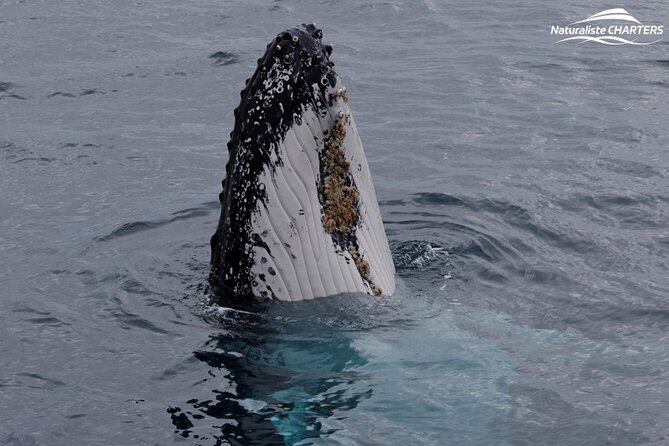
The maximum group size is 90 people. That is large enough to make this a shared outing, not an intimate private charter. A larger boat can offer more room to move around and gives the crew a broad group of eyes scanning the water, but you should not expect a quiet, personal trip with only a handful of passengers.
Open-water conditions are the main comfort issue. Seasickness affected some children during one outing, and another passenger needed help from the crew. This is not a criticism of the operation. It is a reminder that a two-and-a-half-hour ocean cruise can feel very different from a calm harbor ride.
If you are prone to motion sickness, plan ahead. Eat lightly before departure, follow any medical advice you already use for boat trips, and let the crew know early if you feel unwell. Staying attentive to the horizon may help, although the only firm fact here is that the crew has experience helping passengers who become sick.
The complimentary drinks and biscuits are a welcome extra. You can choose from coffee, tea, Milo, green tea, and biscuits, with morning or afternoon service depending on your departure. These provisions do not replace a meal, but they are useful on a cool day and add comfort during the search periods.
How the price compares with the experience

The listed price is $75.31 per person. For a two-and-a-half-hour wildlife cruise with marine science commentary, onboard refreshments, and a free return option if no whales are found, I see solid value in that price.
The strongest part of the value is the time on the water. You are not paying for a quick pass through a viewing area. The crew has time to search, wait, and observe natural behavior. That matters because whales do not appear on a schedule.
The return-trip promise also changes the risk. You still pay for your time and transport to Augusta, and the second trip requires another available date. Still, you are not left with nothing if the ocean remains quiet.
A wildlife cruise is never guaranteed in the same way as a museum visit. You may see several whales and calves, as some outings have, or you may spend more time looking for signs of movement. I would book this for the chance to see wild animals, not for a guaranteed breach beside the boat.
Choosing the right Augusta departure
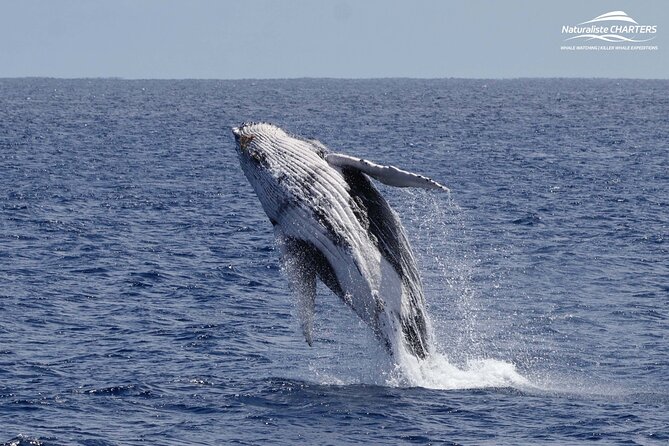
The Augusta operating period is May through August. Dunsborough operates from August through November, so the overall Cape to Cape season covers about six months and follows both northern and southern migrations.
If your plans take you to Augusta during its season, this tour fits naturally into a South West itinerary. The meeting point is clear, and the activity returns to the same harbor. If your trip falls outside Augusta’s May to August window, you should not assume the Augusta departure is available. The separate Dunsborough operation covers the later part of the season.
Weather can cancel the tour. If that happens, you are offered another date or a full refund. The activity also requires a minimum number of people, and a cancellation for that reason brings the option of another date, another activity, or a full refund.
For a normal cancellation, you can receive a full refund if you cancel at least 24 hours before the start time. Cancellations or changes inside that period are not accepted for a refund. That is worth noting before you lock the tour into a tightly packed day.
Who will enjoy this whale cruise most
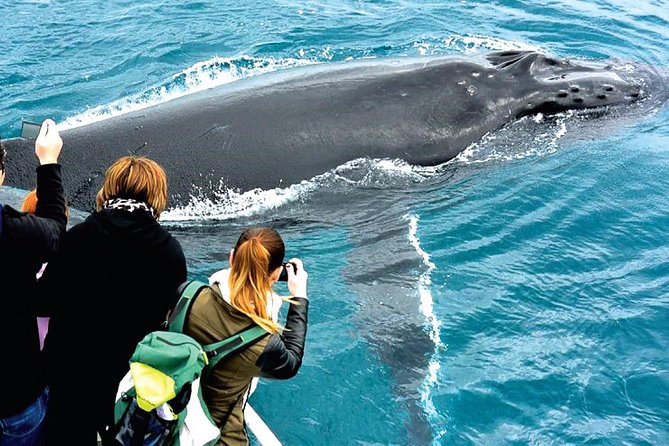
I would recommend it to anyone who wants to see whales in open water and is willing to accept a little uncertainty. Families can enjoy the wildlife and commentary, although adults should keep a close eye on children who may struggle with the motion.
It also suits photographers, especially those who understand that wildlife photography depends on timing and luck. The crew can help you find the animals, but you will need to react quickly when a whale surfaces.
This is less suitable if you need a guaranteed sighting, dislike boats, or have a schedule so tight that a weather cancellation would cause problems. The cruise is also not a private experience, since up to 90 people may be onboard.
Service animals are allowed, and most people can participate. Children must be accompanied by an adult. For any specific mobility concern not covered by those details, you should confirm directly before booking.
Should you book the Augusta whale-watching tour?
I would book this tour if you are in Augusta between May and August and want a well-supported chance to see migrating whales. The combination of expert marine commentary, a full two-and-a-half hours on the water, included refreshments, and a free return trip if no whales appear gives it a strong practical case.
The main decision comes down to your tolerance for ocean conditions and wildlife uncertainty. Prepare for possible seasickness, keep your schedule flexible, and treat a breach as a gift rather than a promise. If you can do that, the chance to watch humpbacks, southern right whales, dolphins, seals, and seabirds in their natural habitat is worth the outing.
FAQ
Where does the Augusta whale-watching tour begin?
The tour begins at Augusta Boat Harbour on Leeuwin Road in Leeuwin, Western Australia.
Where does the activity finish?
The tour ends back at the Augusta Boat Harbour meeting point.
How long does the whale-watching cruise last?
The cruise lasts approximately 2 hours and 30 minutes.
Which whales might I see?
You might see humpback whales, southern right whales, and possibly blue whales during the cruise.
What other marine life could appear?
Possible sightings include New Zealand fur seals, bottlenose dolphins, common dolphins, and seabirds.
What happens if no whales are seen?
You receive a free return tour, subject to availability. The return trip must be booked for another day within one year and cannot be transferred.
Can I cancel for a refund?
You can cancel at least 24 hours before the experience start time for a full refund. Poor weather or failure to meet the minimum number of participants may also lead to another date or a full refund.
Newly added whale trips around Australia
- Tweed Heads: Whale Watching Boat Tour★ 4.7 · 30 reviews
- Bremer Bay Orca Experience★ 5.0 · 79 reviews
- Wilsons Prom Whale Cruise★ 5.0 · 104 reviews
- Whale Watching and Wildlife Cruise Townsville and Magnetic Island★ 5.0 · 11 reviews
- Whales of Sydney Sea Safari★ 5.0 · 2 reviews
- Sydney Whale Watching Cruise from Circular Quay★ 4.5 · 207 reviews
- Whale Watching Sailing Experience in Sydney★ 5.0 · 28 reviews
- Sydney Harbour Tall Ship Whale & Sail – Whale Watching Cruise★ 5.0 · 5 reviews
Busselton Whale Watching Tours, side by side.
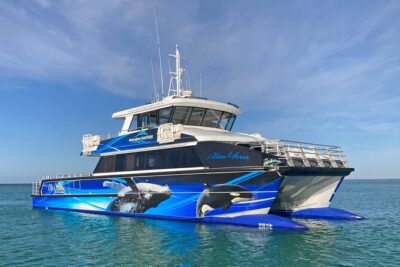
Whale Watching Cruise from Busselton, Augusta or Dunsborough
Read our review →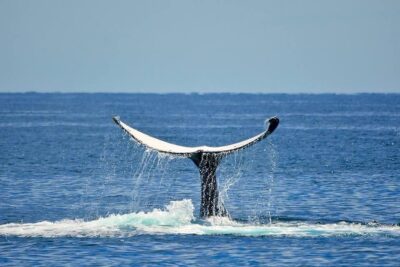
Whale Watching from Augusta in Western Australia
Read our review →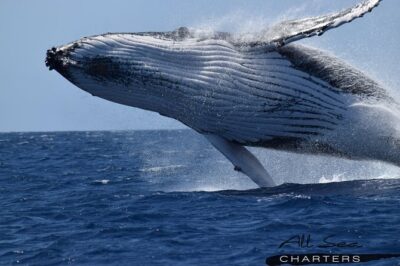
Lists this trip appears in