
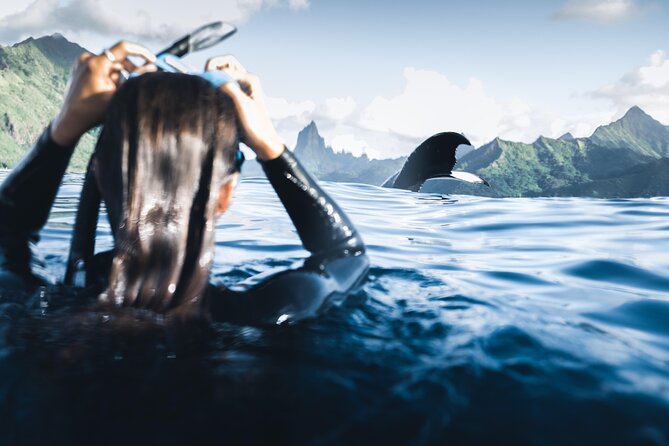
Review · MOOREA
Swimming with Whales in Moorea (Half Day tour)
A mother humpback and calf gliding past you in Moorea’s clear Pacific water is the heart of this four-hour whale-swimming trip. The crew searches for whales from a small boat, then guides qualified swimmers into the sea for carefully managed encounters. Dolphins, stingrays, blacktip sharks, and turtles may join the day.
I like the maximum of six people, which gives the guide room to watch swimmers and position the boat thoughtfully. I also like the option to stay aboard. You can still watch whales from the surface if you decide the open ocean is not for you that day.
The main caution is simple: this is not a casual snorkel. You need to swim strongly and feel comfortable using a mask and snorkel in open water. Rough seas, fast-moving whales, and French life-jacket rules can make the outing more demanding than the dreamy photos suggest.
Key points to know before booking
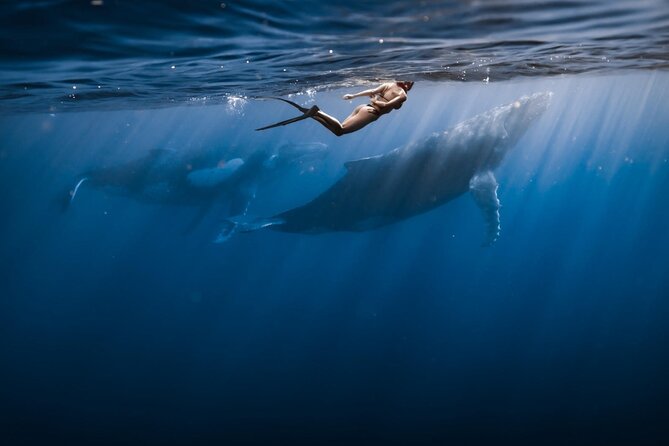
- Humpback season runs from July through late November, with the main goal being a respectful swim with whales.
- Only six people per boat may swim with humpback whales in 2025, keeping the group small in the water.
- Strong swimming and snorkeling skills are required, especially when the sea is choppy or whales move quickly.
- A wetsuit avoids the required life jacket, since French law provides an exemption for people wearing a shorty or full wetsuit.
- The wildlife is never guaranteed, but dolphins, rays, sharks, and turtles may appear during the search.
- The $305.30 price is high but easier to justify if you value a small group, several water entries, and expert animal handling.
What the four-hour Moorea expedition is really like
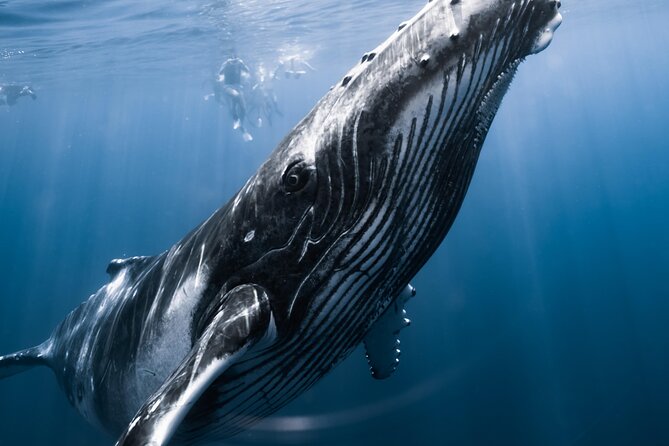
This is best understood as a wildlife search, not a scheduled swim with a guaranteed whale. The boat leaves Moorea Expedition’s meeting point, or you can use the offered pickup if that arrangement applies to your booking. From there, the crew heads out to look for humpback whales that visit French Polynesian waters during the July to late November season.
The first part may involve waiting and watching. That can test your patience, especially if the sea is rough or the whales remain below the surface. Bring a good attitude. The crew may need time to read the water, track movements, and choose an entry point that works for both people and animals.
When a whale is located, the guide explains how to enter the water and where to position yourself. The aim is not to chase or crowd the animal. You may float quietly while a whale rests, rises from below, or passes nearby. One of the most memorable possibilities is a mother and calf moving together, though the actual behavior depends entirely on the animals.
Some outings include more than one entry. People have had two or three chances in the water, sometimes with a calf on one entry and a mother and calf on another. Other days may bring only a boat-side sighting, or no whales at all. That uncertainty is part of the bargain with wild animals.
The tour ends back at the Moorea Expedition meeting point after roughly four hours. Bottled water and snorkeling equipment are provided. Sunblock and towels are not, so put both on your packing list.
More Swim-with-Whales Trips in Moorea:
- Whale Tour – Observe and swim with whales
★ 5.0 · 257 reviews - Swim with humpback whales
★ 5.0 · 224 reviews - Private tour observing and swimming with humpback whales in Moorea
★ 5.0 · 126 reviews
Why a six-person boat matters
The small group is one of the strongest features here. A maximum of six people per boat means less crowding on deck and fewer swimmers competing for the guide’s attention. It also helps the crew manage entries into the water without turning the encounter into a noisy parade.
The 2025 rule allows only six people per boat to swim with humpback whales. That makes the group limit especially important. Ask before booking how the rule applies to your departure, but the practical effect is clear: this is not a large-boat whale swim with dozens of people in the water.
A small boat also gives the captain more freedom to adjust position. The crew may watch where a whale surfaces, follow its movement at a respectful distance, and select a safer place to enter. This is where an experienced captain and guide matter more than a fancy boat.
There is a tradeoff. A smaller vessel can feel the ocean more sharply. In choppy conditions, seasickness is a real concern. If you know you are sensitive, take a seasickness tablet before the trip, not after the boat starts rocking.
The wildlife: whales first, everything else second
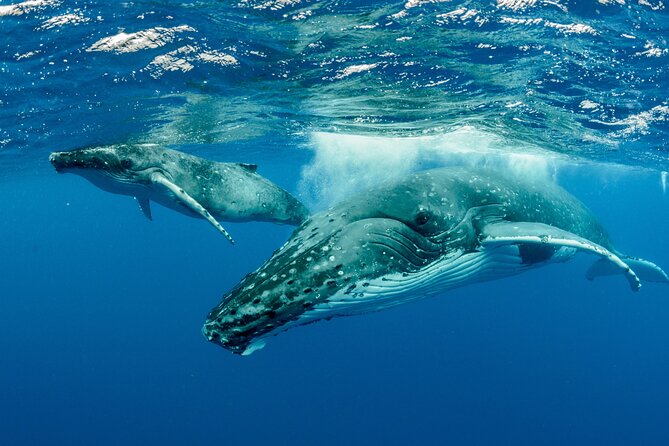
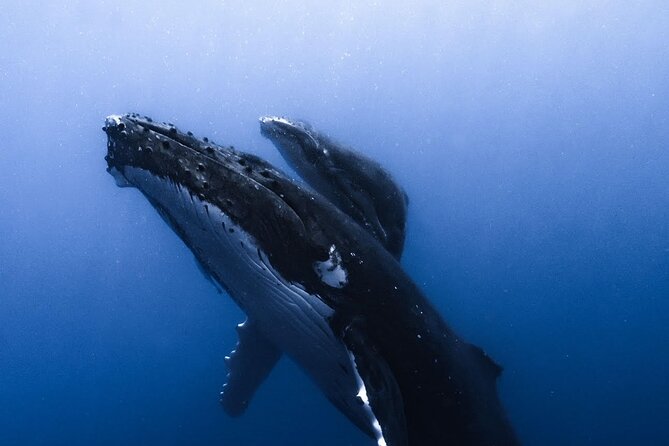
Humpback whales are the main reason to book. They are present in Moorea’s waters from July through late November, and the crew’s stated goal is to find them. The strongest encounters described here involve mothers and calves, including whales passing close by or resting below swimmers.
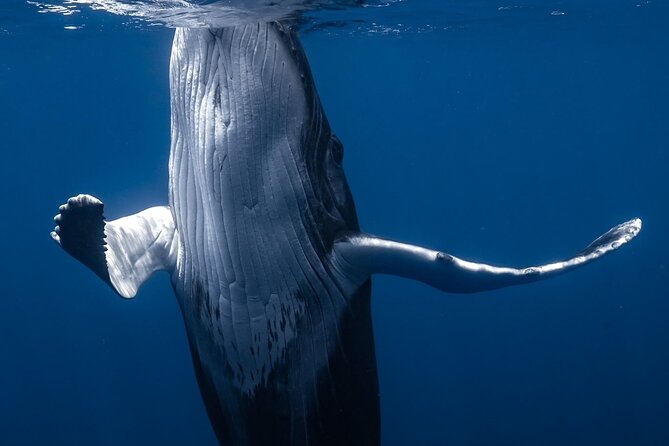
You might see a whale surface from the blue water, pass beneath you, or swim across your view before dropping out of sight. You may also hear whale song through a GoPro or other underwater camera. Keep your eyes open, but do not expect every sighting to produce a perfect photograph.
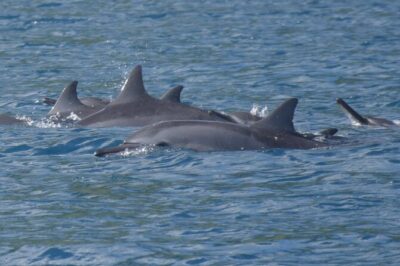
Dolphins are another possible highlight. One outing found no whales but still allowed people to swim with dolphins despite rough seas. That is a useful reminder that a day without humpbacks does not automatically mean a wasted trip.
The crew may also stop near stingrays, blacktip sharks, or turtles. These animals can make a fine second act after the whale search. Still, I would treat them as possible extras, not part of the core promise. Book this because you want a chance to see humpbacks in the wild, not because you expect a fixed list of species.
The experience is strongest when you watch rather than chase. The crew has been praised for keeping a safe distance, respecting animal behavior, and avoiding pressure on the whales. That matters. A close encounter is exciting, but the best one leaves the animal in control of the meeting.
Swimming ability is the key decision
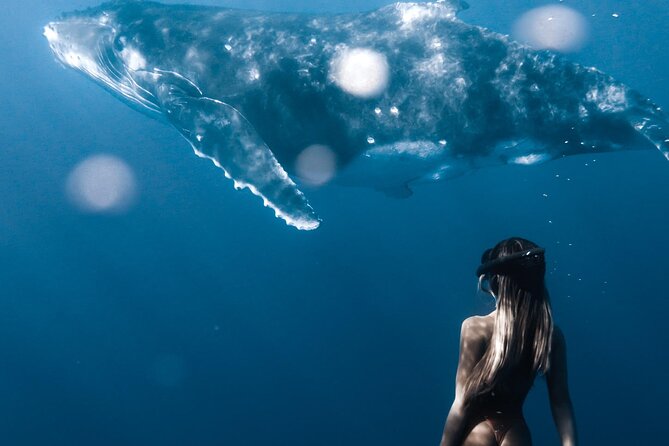
The words strong swimming ability deserve your full attention. You need to be comfortable in open water, able to use a mask and snorkel, and ready to move when the guide directs you. Some people find the effort easy to moderate on a calm day. It can become much harder when the ocean is rough or a whale changes direction.
You may need to swim at a steady pace to reach the right viewing position. You also need enough confidence to stay calm when the bottom is far below and the boat is no longer beside you. This is not the place to discover that you dislike snorkeling.
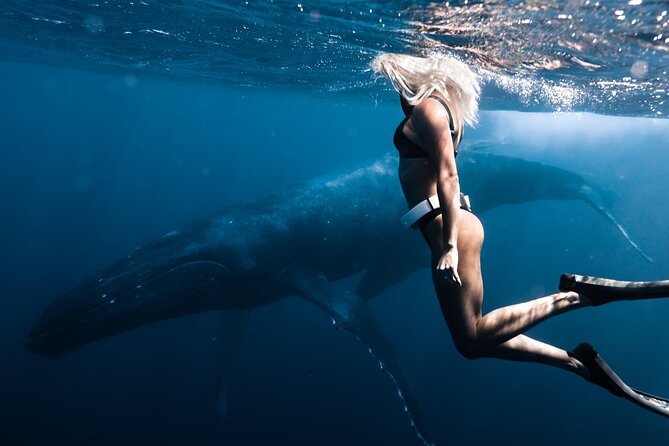
A flotation device and life jacket are available. French law requires life jackets on whale-swimming tours, but people wearing a neoprene wetsuit are exempt. A shorty or full wetsuit is therefore useful for more than warmth. It may make swimming easier and lets you avoid the bulky feel of a life jacket.
Wetsuits are available to rent through a third party, according to the operator, but you need to contact them for details. Do not assume one will automatically be waiting at the dock. If you already own a suitable wetsuit, bring it and confirm that it meets the requirements.
If you are not a confident swimmer, you can stay on the boat and watch the action. The boat itself can offer good views of surfacing whales, and this is safer than entering the water beyond your ability. If your whole party includes non-swimmers, the separate non-swimming tour may be the better fit.
More whale trips worth the boat ride around Moorea:
- Humpback whale watching and marine life in Moorea
★ 5.0 · 199 reviews - Half day whale tour 4h00
★ 4.5 · 181 reviews - Half Day Small Group Whale Watching
★ 5.0 · 88 reviews - Whale watching and snorkelling in Moorea
★ 5.0 · 64 reviews
The guides and the feel of the instruction
The crew is a major part of this outing. Johnny is praised for clear explanations and for giving information in both French and English. Joe and Laura have also been named as guides who helped swimmers feel safe and understand how to approach the animals. Grace has been associated with underwater photos on at least one departure.
Names and crew assignments can change, so do not book on the assumption that one particular guide will definitely lead your boat. Still, these details give you a sense of the service: the guide is expected to explain whale behavior, manage the water entry, and keep an eye on both people and animals.
The strongest part of the instruction is practical. You need to know when to enter, where to float, how close to remain, and when to return to the boat. Good guidance turns a thrilling sighting into a controlled encounter instead of a frantic swim.
Communication may not be perfect for everyone. One English-speaking participant found that most casual conversation happened in French and that English explanations were limited mainly to instructions. If you do not speak French, tell the crew clearly that you need safety information and whale behavior explanations in English.
What to bring for comfort and better memories
The operator supplies snorkeling equipment and flotation devices, plus bottled water. You still need to bring or arrange several basics:
- A towel
- Sunblock
- A wetsuit if you want to avoid the life jacket requirement
- A waterproof camera or GoPro
- Seasickness medication if rough water affects you
- Patience for waiting between sightings
A GoPro can record whale song and preserve the moment, but do not let the camera take over. The most powerful encounters may last only seconds, and a screen can make you miss the whale passing directly in front of you.
Do not rely on the boat for professional photography. Underwater photos may be available on some departures, and Grace has been praised for taking pictures, but the photo service is not included in the listed price and should not be treated as guaranteed. If photos are central to your decision, ask exactly what is offered before booking.
Sun protection matters even on a boat. Apply sunblock before departure, since it is not included. A towel is also essential after getting back aboard, especially if you make several water entries.
Is $305.30 a fair price?
At $305.30 per person, this is an expensive half-day. You are paying for a small boat, a limited group, crew time, fuel, snorkeling equipment, bottled water, and the chance to enter the ocean with one of the world’s largest animals.
The value depends on what happens and on what you expect. If you see a mother and calf twice, enter the water several times, and also encounter dolphins or rays, the price may feel reasonable for a rare wildlife experience. If the sea is rough and no whales appear, the cost will feel steep, even though the crew has still provided the search and boat outing.
I would compare the price with the group size and the swimming format rather than with an ordinary snorkeling tour. This is a specialized expedition with a strong element of chance. The small group and animal-first approach help support the price, but no operator can purchase a whale encounter for you.
A 4.7 rating from 264 ratings and a 90 percent recommendation rate suggest strong overall satisfaction, but those figures should not replace your own judgment. The important question is not simply if the tour is popular. It is whether you are prepared for open-water swimming, waiting, and a possible wildlife day that does not go according to plan.
Safety, animal respect, and realistic expectations
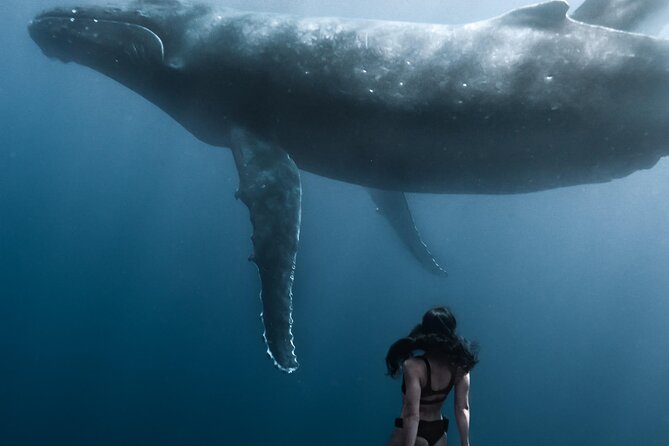
The crew’s approach is one of the best reasons to consider this trip. The guide is expected to put safety first for both swimmers and whales. That includes staying at a suitable distance, watching animal behavior, and avoiding pressure when a whale moves away.
You may be close enough to look directly at a whale, but that does not mean you should reach toward it, pursue it, or block its path. Listen to the guide and let the whale determine the encounter.
The ocean can change the difficulty quickly. Calm water and clear visibility make the outing feel manageable. Wind and swell can make the same swim tiring. Even strong swimmers should conserve energy, remain aware of the boat, and follow the crew’s signal to return.
If poor weather forces a cancellation, you can receive another date or a full refund. The same applies if the minimum number of participants is not met. You can cancel for a full refund if you do so at least 24 hours before the local start time. Changes or cancellations inside that window are not accepted for a refund.
Who should book this Moorea whale swim?
I would choose this for a confident swimmer who wants a close, carefully managed wildlife encounter and accepts that nature sets the schedule. It suits people who value a small group, clear safety instructions, and the chance to see more than one kind of marine life.
It is also a good choice for a mixed group if the non-swimmer is happy to remain aboard. The boat can still provide whale views, but nobody should feel pressured to enter the water.
I would not choose it for a first-time snorkeler, a weak swimmer, or anyone who needs a guaranteed whale sighting. I would also think twice if rough seas make you ill or if your main goal is a large collection of professional photographs.
Should you book it?
Book this tour if swimming beside a wild humpback is high on your Moorea wish list and you are fit, patient, and comfortable in open water. The small boat, limited group, careful guides, and possible repeat entries make it one of the stronger ways to seek this kind of encounter.
Before paying, confirm pickup details, the English-language support available on your departure, wetsuit arrangements, and any photo service. Bring seasickness medication, a towel, sunblock, and your own camera. Most of all, book for the quality of the search and the chance to meet whales responsibly, not for a guaranteed photograph or a fixed animal checklist.
FAQ
When can I swim with humpback whales in Moorea?
The main whale-swimming season runs from July through late November. The tour’s primary goal is to find humpback whales during this period.
How many people are allowed on the boat?
The activity has a maximum of six travelers per boat. For 2025, government regulations allow only six guests per boat to swim with humpback whales.
Do I need to be a strong swimmer?
Yes. You need strong swimming ability and snorkeling experience. The effort may be easy to moderate in good conditions, but rough seas and whale behavior can make it more challenging.
Can I join if I do not want to swim?
Yes. You can remain on the boat and watch the whales and other marine life. A separate non-swimming tour is also available.
Is a life jacket required?
French law requires life jackets for whale-swimming tours. You may avoid that requirement by wearing a neoprene wetsuit, either a shorty or a full suit.
What equipment is included?
Snorkeling equipment, flotation devices, and bottled water are included. Sunblock and towels are not included.
What happens if bad weather cancels the tour?
You will be offered a different date or a full refund if the activity is canceled because of poor weather. The same choice applies if the minimum number of participants is not met.
Newly added whale trips around Moorea
- WHALE TOUR – Watching and Swimming with Whales★ 5.0 · 52 reviews
- Whale watching 6 people half day★ 5.0 · 38 reviews
- Whale watching and snorkelling in Moorea★ 5.0 · 64 reviews
- Whale Watching Moorea (non-swimming)★ 4.0 · 12 reviews
- Watch and Swim with Humpback Whales in Moorea★ 5.0 · 3 reviews
- Snorkeling Lagoon Cruise and Whale Watching in Moorea★ 5.0 · 2 reviews
- Shared Whale Expedition★ 5.0 · 34 reviews
- Sacred Experience Swimming with a Whale in Moorea★ 5.0 · 46 reviews
Moorea Whale Watching Tours, side by side.
Humpback whale watching and marine life in Moorea
Read our review →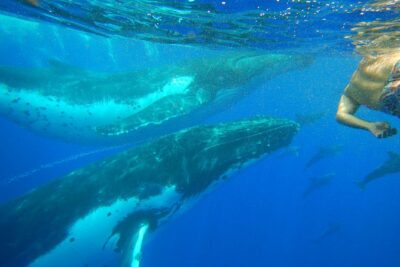
Private tour observing and swimming with humpback whales in Moorea
Read our review →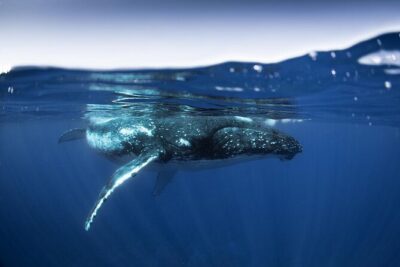
Lists this trip appears in