
Review · TAHITI
Observe and Swim with Whales in Tahiti
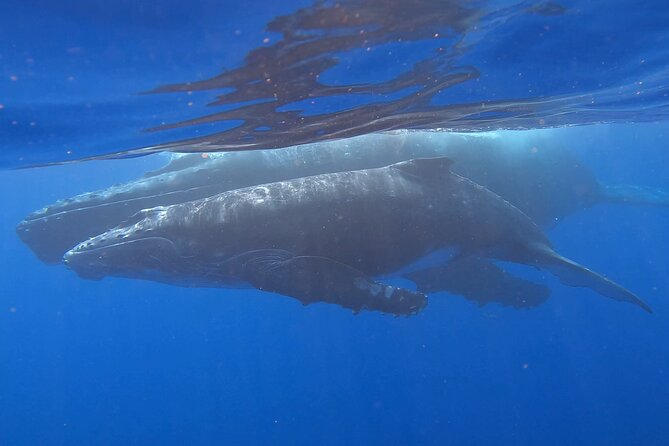
Humpback whales and their calves are the main event here, but the real thrill is seeing them on their terms. From Te Moana Tahiti Resort, you head toward the warm Polynesian waters where whales come to give birth and raise their young. If conditions and whale behavior allow, you may enter the water near them.
I like the small limit of 10 people, which keeps the boat more personal and gives the guide room to explain what you are seeing. I also like that the crew provides fins, a mask, snorkel, and towel, then adds a turtle snorkel with green turtles, hawksbill turtles, sharks, and other marine life when the day allows.
The key catch is simple: swimming with whales is not guaranteed. Rough seas, whales on the move, or animals that are not calm enough for an approach can keep you aboard. That is the right call for the animals, but it means you should book this as a whale encounter, not a guaranteed swim.
Key points before you book
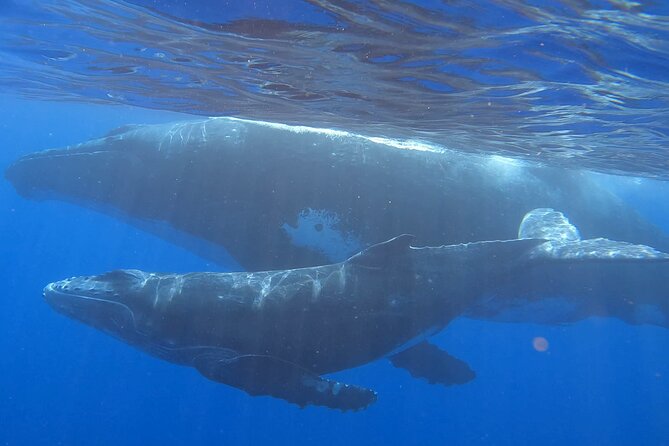
- Humpback whales and calves: The trip focuses on whales that come to Polynesian waters to give birth and raise their young.
- A maximum of 10 people: The small group keeps the boat less crowded and makes it easier to hear the captain and guide.
- Johannes and the captain lead the outing: Johannes is named as one of the guides, and the crew explains how to move around whales without disturbing them.
- Swimming depends on nature: Sea conditions, whale behavior, and the animals’ direction all decide if anyone enters the water near whales.
- Turtle snorkeling is an important extra: If whale swimming does not happen, the final swim may include green turtles, hawksbill turtles, sharks, and other sea life.
- Three hours from Te Moana Tahiti Resort: The activity returns to the same meeting point, with equipment and a bath towel supplied.
Meeting Tahiti’s humpback whales
This is not a sightseeing cruise built around a long list of stops. It is a focused three-hour search for humpback whales, with time on the water shaped by animal behavior and sea conditions.
You meet at Te Moana Tahiti Resort in Puna’auia. From there, the boat heads toward the ocean with an instructor and guide. The stated purpose is to find whales and calves that come to the warm waters of French Polynesia to be born and grow.
That detail matters. A mother and calf are not just scenic subjects. They are animals with their own space, pace, and needs. The crew’s instructions are meant to help you approach in a way that does not interrupt their behavior. You may be asked to watch first, wait for the right moment, and avoid sudden movement.
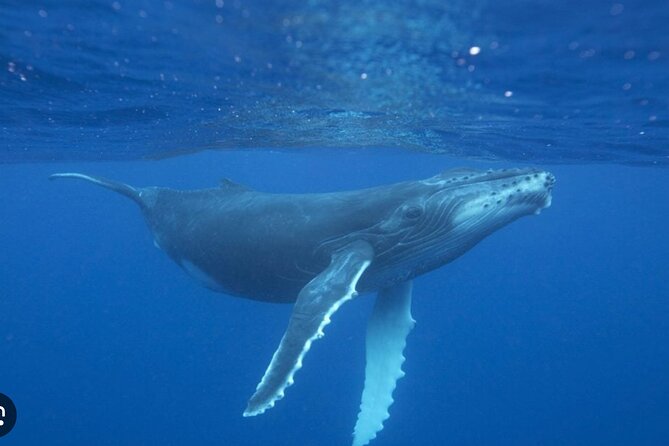
The most praised moments from this kind of outing are not limited to a whale breaching. One juvenile male was heard singing underwater, with the sound strong enough for people in the water to feel the vibration through their bodies. That is the sort of encounter that makes this trip special: not just seeing a whale’s back, but sensing how large and active the animal is below the surface.
You may also see whales swimming close to the boat. A female whale has been seen moving under and alongside the boat, and other outings have included several whales and lively behavior. These moments can be brief, so keep your attention on the water rather than waiting for a perfect photograph.
More Swim-with-Whales Trips in French Polynesia:
- Swimming with Whales in Moorea (Half Day tour)
★ 4.5 · 264 reviews - Whale Tour – Observe and swim with whales
★ 5.0 · 257 reviews - Swim with humpback whales
★ 5.0 · 224 reviews
How the three-hour outing unfolds
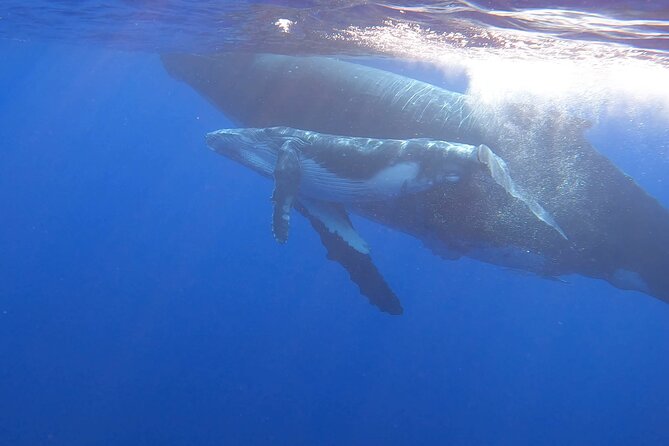
The schedule is intentionally broad. You leave the resort, spend time looking for whales, and return to the same meeting point after roughly three hours. The exact balance between cruising, watching, waiting, and swimming cannot be fixed in advance.
At the start, the instructor helps you prepare for the water and explains how to act near the whales. This is an important part of the trip, not a quick safety speech to get past. The goal is to let you observe without crowding or chasing the animals.
Once whales are found, the captain and guide decide how close the boat should come and if entering the water is appropriate. If whales are resting, moving calmly, or staying in an area, a swim may be possible. If the whales are moving steadily, the water is rough, or the situation is not suitable, you stay aboard and watch from the boat.
That can be frustrating if you arrived expecting a guaranteed swim. It is also the responsible outcome. The crew has already turned down water entry when conditions were not right, even when whales were nearby. You can still see several whales, breaches, and unusual behavior without getting in the water.
Near the end, the crew offers a separate swim that may bring you to turtles, sharks, and other marine life. Green turtles and hawksbill turtles are specifically included among the possible sightings. This gives the trip a useful second focus, especially if the whale portion ends with observation from the boat.
The turtle swim is not a substitute for whales, but it helps make the three hours feel worthwhile when the main swim cannot happen. The description also calls it a little splash, so think of it as a short closing swim rather than a full second tour.
Why the small boat matters
Only 10 people are allowed aboard. That number is worth noting because marine wildlife outings can feel very different when you are sharing a boat with a large crowd.
A small group makes it easier to hear instructions from Johannes, the captain, and the rest of the crew. It also gives you a better chance of seeing the water when a whale surfaces. You will still need patience and good timing, but there should be fewer people competing for the same view.
The limited capacity also fits the spirit of the outing. The crew is trying to approach whales with restraint, not create a noisy floating audience around them. A smaller boat group helps keep the encounter calmer, although it does not control the animals or the sea.
There is one practical trade-off. A small boat may feel more exposed in rough conditions than a large vessel. One outing had rough seas that prevented swimming, even though the crew brought the group respectfully close to several whales. If you are prone to motion sickness, consider that carefully.
One person became very seasick and was taken back to shore by the crew. That response is reassuring, but it does not remove the risk. If you often feel ill on boats, ask about your own preparation before booking and do not assume the water will be calm.
What the guides add to the encounter
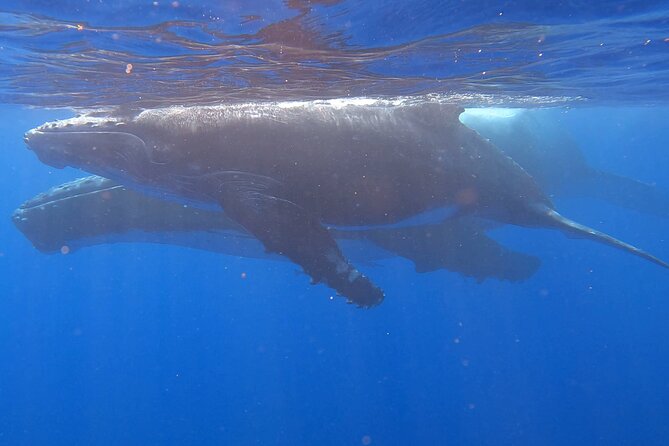
Johannes and the captain are named as key members of the crew. Their work is more than steering toward a whale and pointing at it.
The guides explain humpback behavior and the rules for approaching the animals. They also make judgment calls about distance and water entry. Those choices affect the whole outing, since the best result is not always the closest possible encounter.
The captain and Johannes have also handled days when whale swimming was not safe or suitable. Instead of forcing the advertised activity, they kept the group near the whales from the boat and moved on to other marine life when possible. That approach protects the animals and gives you a more honest wildlife experience.
You should expect the crew to put conditions first. If whales are traveling, if the water is rough, or if the animals are not relaxed, the answer may be no swim. That is not poor planning. It is the basic uncertainty of watching wild animals.
More whale trips worth the boat ride around French Polynesia:
- Whale Watching Tours in Bora Bora
★ 4.5 · 250 reviews - Humpback whale watching and marine life in Moorea
★ 5.0 · 199 reviews - Half day whale tour 4h00
★ 4.5 · 181 reviews - Private tour observing and swimming with humpback whales in Moorea
★ 5.0 · 126 reviews
Equipment, comfort, and what the price covers
The price is $169.10 per person. For about three hours, that includes the boat outing, an instructor and guide, fins, mask, snorkel, and a soft bath towel.
I consider that a fair price if your main goal is a small-group whale outing with a chance to enter the water. The value comes from the limited group size and the possibility of seeing whales at close range, hearing underwater song, or watching a whale pass beneath the boat.
The price is harder to justify if you need a guaranteed swim. No responsible operator can promise that here, and the conditions may prevent it. You are paying for the search, the guide’s judgment, and the chance to meet wild whales, not for a fixed performance.
The supplied equipment also reduces the amount you need to arrange before departure. You do not need to bring your own fins, mask, snorkel, or towel based on the stated inclusions. Confirmation is received at booking, and the activity uses a mobile ticket.
Service animals are allowed, and the meeting point is near public transportation. Most people can participate, according to the activity information, but the notes do not spell out every physical requirement. If you have mobility, swimming, or medical concerns, check with the provider before committing.
Whale swimming is a possibility, not a promise
This point deserves its own section because it will shape your decision.
The title and description center on observing and swimming with whales, but the actual water entry depends on several things. The sea must be suitable. The whales must be calm and in an area where an approach is appropriate. They must not be moving too quickly or showing behavior that calls for more distance.
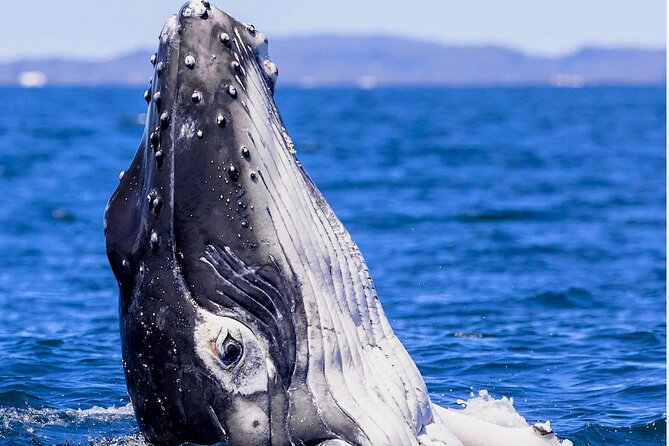
Even on a day with several whales, a swim may not happen. Rough water stopped one outing from entering the sea, while another had whales nearby but no suitable chance to swim. The groups still saw close encounters, breaches, and active behavior.
I would book this only if you can accept that outcome. You may stand on the boat watching a whale surface, hear a male singing underwater, or see a female pass beneath the boat. Those are strong experiences in their own right, but they are different from swimming beside a whale.
The crew’s restraint is one of the better features of this tour. A forced swim would be a poor trade for a checkmark on your holiday list. Here, the animals decide the pace.
The closing turtle and shark swim
After the whale search, the captain and guide may take you for a final swim with turtles and other sea life. Green turtles and hawksbill turtles are named, along with sharks and other surprises.
This part gives you a more predictable way to enjoy the water. You may not get the whale swim, but you can still use the provided mask, snorkel, and fins for a close look at Tahiti’s marine life. The setting is still wildlife-based, so sightings cannot be treated as guaranteed.
The turtle stop also changes the mood. Whale watching requires patience and attention over a large area. Turtle snorkeling is a shorter, more direct way to finish the day in the water.
Keep your expectations in proportion. The trip is not presented as a long reef-snorkeling session with a detailed series of underwater sites. It is a whale-focused outing with a final swim added when the crew can offer it.
Who will get the most from this trip
I would choose this outing if you want a small group, a short time commitment, and a genuine chance to see humpback whales in the ocean. It suits people who care more about respectful wildlife encounters than about a guaranteed photograph or scheduled swim.
It is also a good fit if you want several possible highlights in one morning or afternoon: whales, underwater song, a whale close to the boat, turtles, sharks, and a guided lesson in how to behave around cetaceans.
You should think twice if rough water causes serious discomfort or if you need a fixed itinerary. The boat is exposed to the conditions, and the group may spend more time watching than swimming. A person who is mainly seeking calm-water snorkeling may prefer an activity designed around snorkeling from the start.
Families and mixed-age groups may find the three-hour length manageable, but the information only says most people can participate. It does not give a minimum age or specific swimming standard, so confirm those points if they matter to your party.
Booking, cancellation, and weather details
You can cancel at least 24 hours before the start time for a full refund. Cancellations made within 24 hours are not refunded, and changes during that period are not accepted. The cut-off uses local Tahiti time.
The activity requires good weather. If poor weather causes the operator to cancel, you will be offered another date or a full refund. This is useful protection for a sea-based wildlife trip, since conditions can affect both comfort and safety.
The tour begins and ends at Te Moana Tahiti Resort in Puna’auia. Since the return is to the same meeting point, plan your day around being there at the stated start time and leave room afterward rather than booking a tight connection.
Should you book the Tahiti whale tour?
Book it if you want a respectful, small-group chance to see humpback whales and you can accept that nature controls the schedule. The best reasons to go are the maximum of 10 people, the hands-on guidance from Johannes and the captain, the chance to hear a whale sing underwater, and the final turtle swim.
Do not book it on the assumption that you will certainly swim with whales. The crew may keep you on the boat, and that can still mean a strong outing with close whale activity and good behavior sightings.
At $169.10, the trip offers solid value for a three-hour wildlife outing with equipment included, especially if you prize a small group. I would make the call based on your tolerance for rough water and uncertainty. If your answer is yes, this is one of the more memorable ways to spend a few hours off Tahiti’s coast.
FAQ
Where does the whale tour start?
The tour starts at Te Moana Tahiti Resort in Puna’auia, French Polynesia.
Where does the activity end?
The activity ends back at the same meeting point, Te Moana Tahiti Resort.
How long does the experience last?
The outing lasts approximately three hours.
How much does the tour cost?
The listed price is $169.10 per person.
How many people can join the boat?
The activity has a maximum of 10 participants.
Is swimming with whales guaranteed?
No. Swimming depends on good sea conditions and on the whales being calm and in a suitable area for an approach.
What happens if the sea is too rough for swimming?
You may still watch whales from the boat. The crew has operated outings where rough seas prevented swimming but allowed close and respectful whale viewing.
What equipment is provided?
Fins, a mask, a snorkel, and a bath towel are provided.
Can I see turtles or sharks?
The final swim may include green turtles, hawksbill turtles, sharks, and other marine life.
What is the cancellation policy?
You can cancel at least 24 hours before the start time for a full refund. Cancellations or changes made less than 24 hours before the start time are not accepted for a refund. If poor weather causes the operator to cancel, you will be offered another date or a full refund.
Newly added whale trips around French Polynesia
- Tahiti, land of whales: a unique experience!★ 5.0 · 11 reviews
- Whale Watching Activity★ 5.0 · 8 reviews
- Whale watching DE Humpback West Coast of Tahiti★ 5.0 · 3 reviews
- Whale watching DE Tahiti Peninsula★ 5.0 · 12 reviews
- Half Day Whale Watching in a Small Shared Group★ 5.0 · 33 reviews
- Whale watching in the calm of the peninsula with Tātahi tours★ 5.0 · 6 reviews
- 4 Hours of Humpback Whale Watching in Tahiti★ 5.0 · 36 reviews
- WHALE TOUR – Watching and Swimming with Whales★ 5.0 · 52 reviews
Tahiti Whale Watching Tours, side by side.
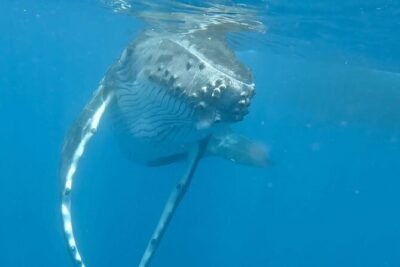
Guided Small Group Whale Watching and Swim Tour Tahiti
Read our review →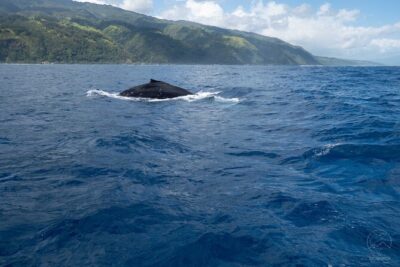
Whale watching on the preserved and quiet coast of Paea (Pk26)
Read our review →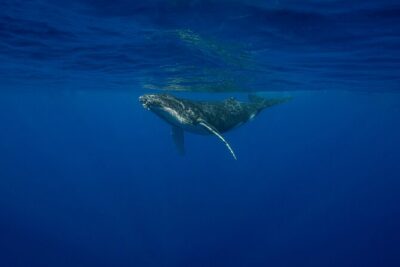
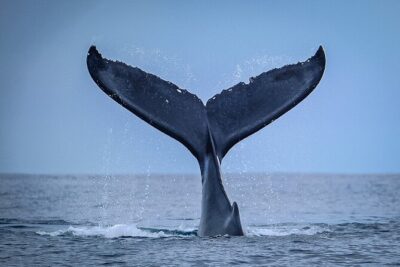
Half Day Whale Watching in a Small Shared Group
Read our review →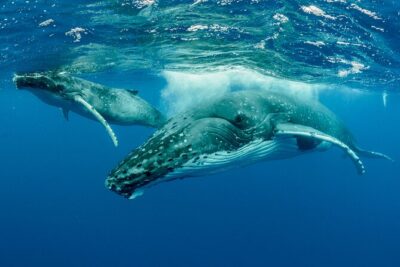
Lists this trip appears in