
Review · THE USA
Boston: City Cruises Whale Watching Cruise
The best part of this cruise is the chance to watch wild whales in their own feeding grounds, not in a tank or staged show. The boat heads from Boston Harbor to Stellwagen Bank National Marine Sanctuary, where humpback, fin, and minke whales often gather with dolphins and other marine life.
I like the New England Aquarium naturalists, who explain what you are seeing and help you know where to look. I also like the choice between wide outdoor decks and a climate-controlled cabin, especially since the open water can feel cold and windy even on a sunny day. The main drawback is the long ride to the whale grounds, which can be choppy and can make this a poor pick if you suffer from motion sickness.
Key things to know before boarding
- The whale grounds are about 1.5 hours from Boston Harbor, so the full trip usually takes 3.5 to 4 hours.
- New England Aquarium naturalists provide the commentary, with clear explanations of whale behavior, identification, and local marine life.
- Humpback, fin, and minke whales are the main targets, but white-sided dolphins, basking sharks, and other wildlife may appear.
- Outdoor viewing is best for photos, while the indoor cabin gives you a warmer place to sit during the ride out and back.
- Bring layers and motion sickness medicine if needed, since even a stable boat can feel rough on open water.
- The boat can feel crowded around a whale sighting, so patience and sharing the rail will improve your chances of a clear view.
Leaving from Boston’s Long Wharf
Your cruise departs from One Long Wharf, between the Long Wharf Marriott Hotel and the New England Aquarium. This is a handy starting point if you are spending the day in central Boston. You can reach the dock on foot from many downtown sights, and the aquarium provides a useful landmark when you are finding the boarding area.
Have your voucher ready for scanning at the boarding point. Infant tickets are required, even for very young children. The cruise is wheelchair accessible, though you should still allow time to board and settle in before the boat leaves.
Long Wharf is more than a departure point. It gives you a quick look at Boston’s working harbor before the boat turns toward open water. If you arrive early, you can watch ferries and harbor traffic while getting your bearings.
More Whale Watching Cruises in the USA
- City Cruises Boston Whale Watching Cruise by High-Speed Boat
★ 4.5 · 3,115 reviews - San Diego Whale Watching Cruise
★ 5.0 · 2,317 reviews - San Diego Whale Watching & Dolphin Cruise
★ 4.5 · 1,588 reviews
Castle Island and the Boston Harbor Islands
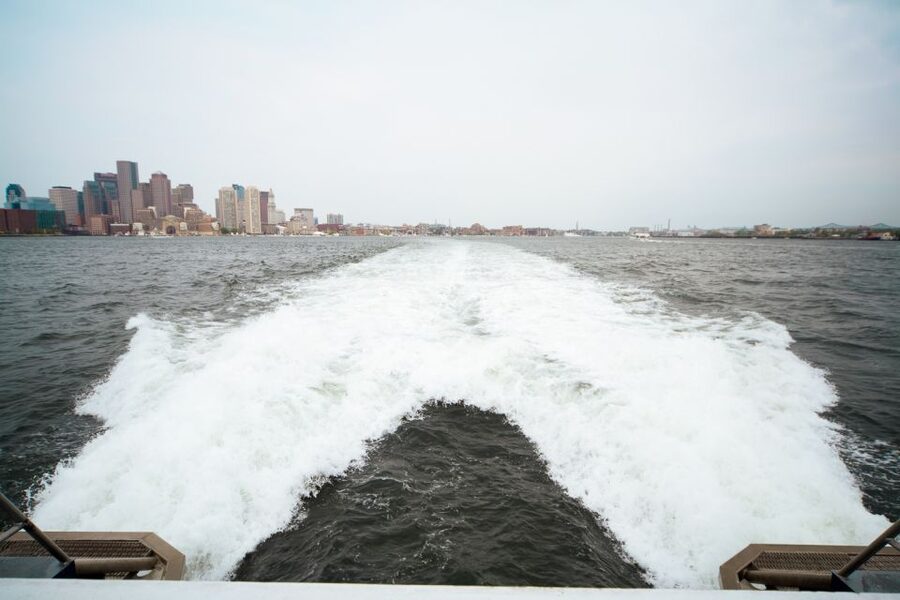
The opening part of the ride passes Castle Island and the Boston Harbor Islands National and State Park. You do not stop at either place, so think of these sights as part of the harbor trip rather than separate visits.
Castle Island is a familiar Boston shoreline landmark, and the harbor islands give you a sense of how quickly the city gives way to open water. This portion of the journey is also a gentler start than the open sea. You can find a seat, listen to the first commentary, and decide how much time you want to spend outside.
The naturalists often provide information during the ride to the whale grounds, not only once whales appear. That matters because sightings are never guaranteed, and the educational part of the trip gives the long journey a purpose even before the first blow appears.
The run to Stellwagen Bank takes patience
The boat heads toward the Gerry E. Studds/Stellwagen Bank National Marine Sanctuary, the main whale-watching area for this cruise. The sanctuary is roughly 1.5 hours from Boston, depending on sea conditions and where the whales are feeding.
That travel time is the biggest practical issue. The advertised duration is 210 minutes, but the average outing runs closer to 3.5 to 4 hours, and the trip can run longer if the whales are farther away. Do not schedule a tight dinner, airport transfer, or train connection immediately afterward.
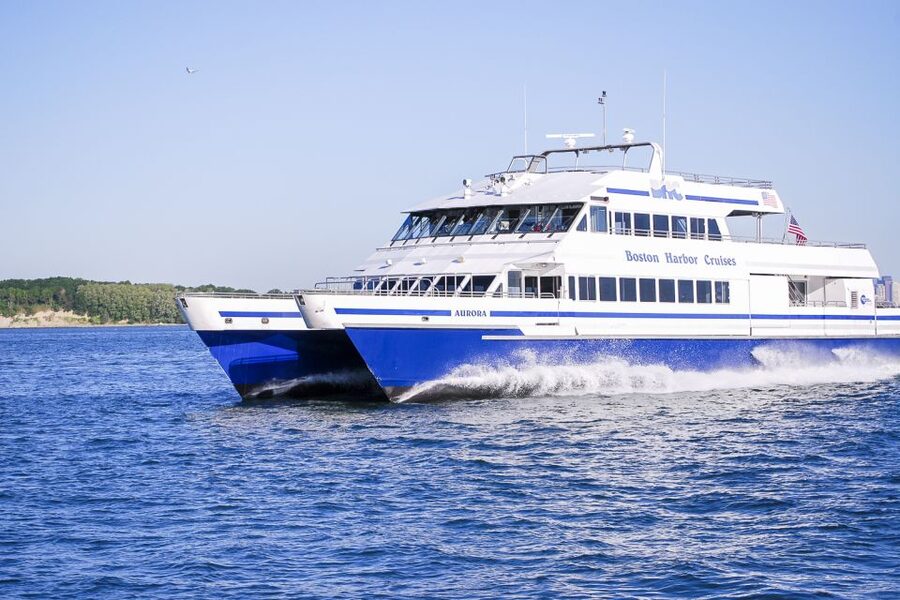
The boat is built for speed and has plenty of viewing space, but speed does not remove the motion of the sea. Several people have found the ride comfortable, while others have felt sick when the water turned rough. If you know you are sensitive, take a preventative remedy according to your usual medical advice, eat lightly, and choose a part of the boat with less movement. Crew members can also point you toward calmer areas.
What the boat is like during the cruise
The vessel offers outdoor viewing decks, cushioned seating, tables, and an indoor cabin with climate control. Large windows let you continue watching when the wind picks up or the temperature drops.
I would treat the indoor space as a useful base, not a replacement for the outside decks. The best whale views can appear on either side of the boat, and outdoor passengers usually have a wider sightline for blows, tails, and surface activity. Still, staying inside for part of the journey is a smart way to save energy for the main viewing period.
The boat has a galley selling snacks and drinks. Nothing is included toward the food stand, so budget separately if you want refreshments. Restrooms are available, and the sound and video systems support the naturalist’s commentary. A few people have found the speakers hard to understand, and some seating has seen better days, so your experience may depend partly on where you sit.
Crowding is possible, especially when a whale surfaces near one side. You may need to move around the deck or wait for a gap at the rail. Do not expect a private viewing platform. This is a shared boat, and the best approach is to take turns rather than hold one prime spot for the whole encounter.
Same migration, a different deck:
- Juneau Wildlife Whale Watching
★ 5.0 · 7,379 reviews - Juneau Wildlife Whale Watching & Mendenhall Glacier
★ 5.0 · 6,236 reviews - Whale Watching Tour in Gloucester
★ 5.0 · 4,460 reviews - Maui Eco-Raft Tour: Eye-Level Whale or Dolphin Watching – Lahaina
★ 5.0 · 2,482 reviews
Watching humpback whales in the sanctuary
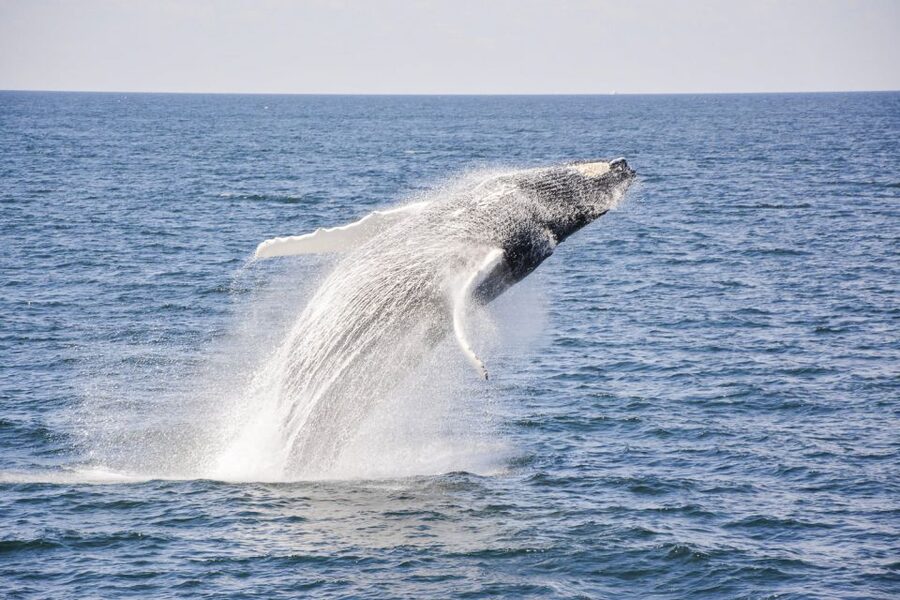
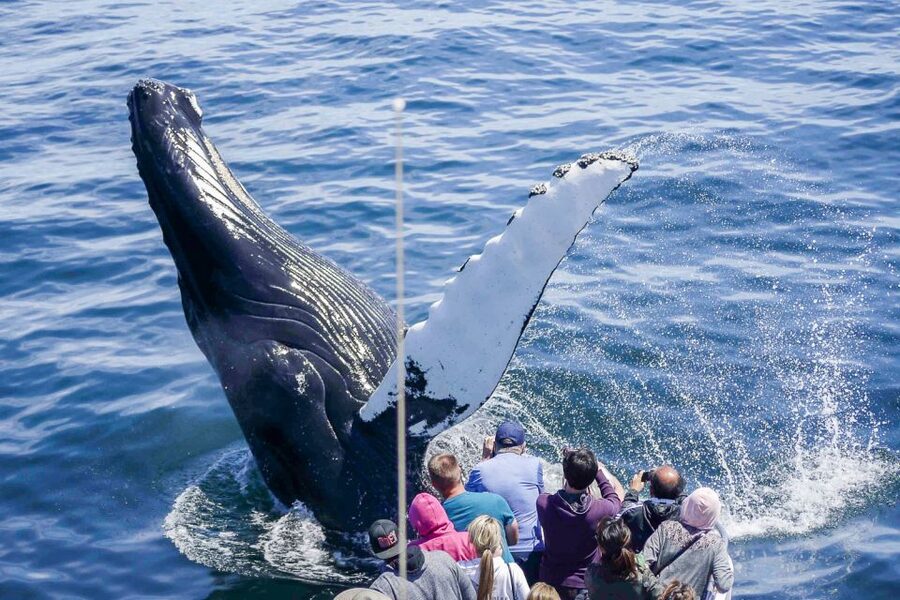
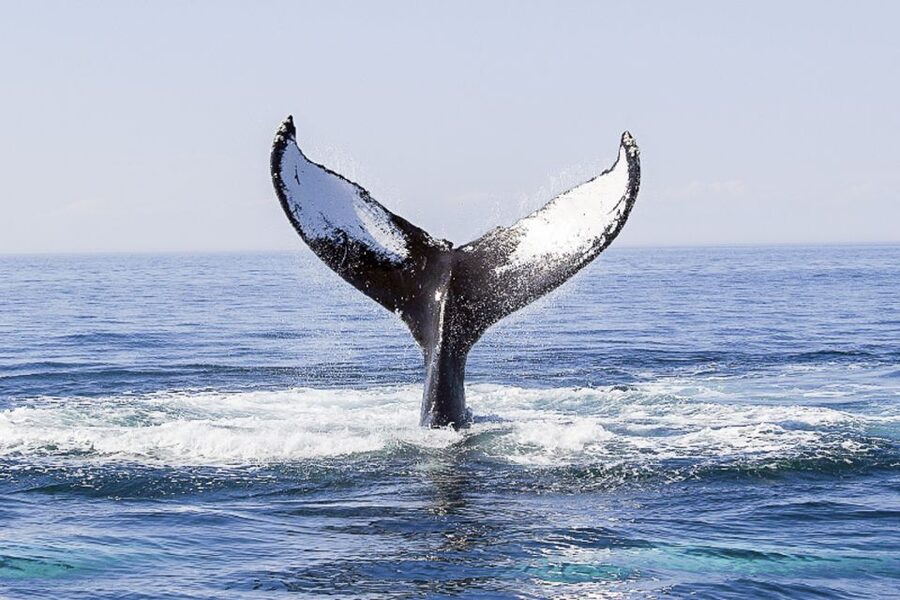
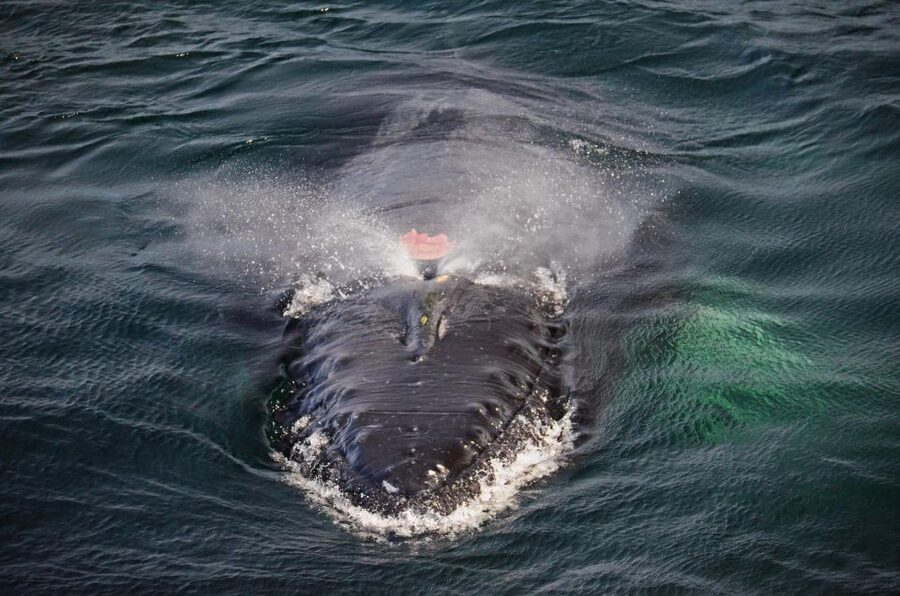
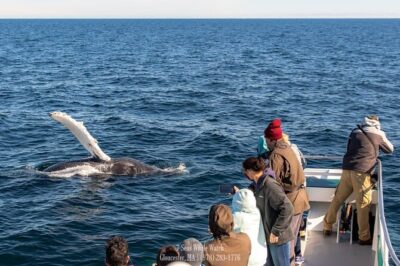
Humpback whales are the stars of most Boston whale-watching trips. Their arched backs appear as they prepare to go below the surface, and their broad tails often rise during a longer descent. The naturalists identify individual whales by markings and behavior when they can.
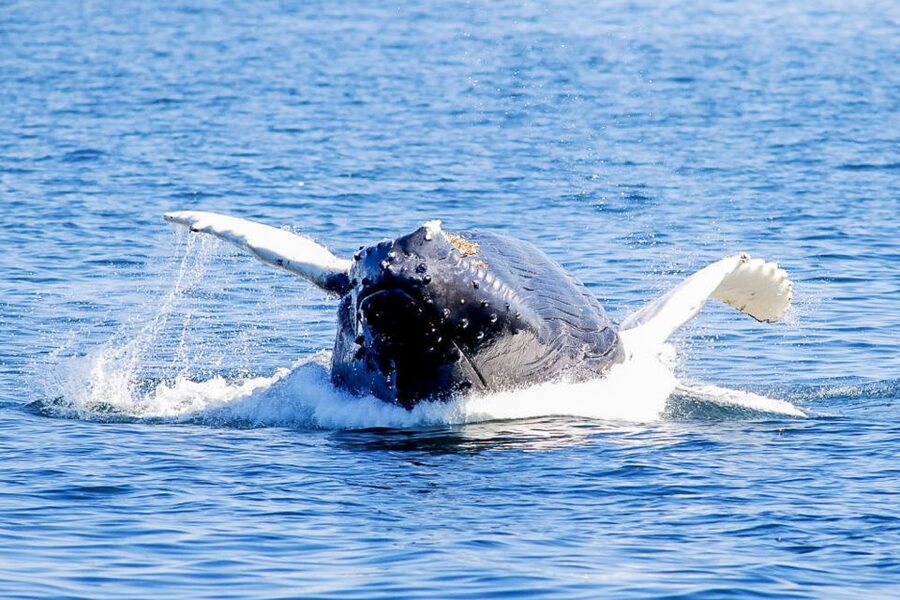
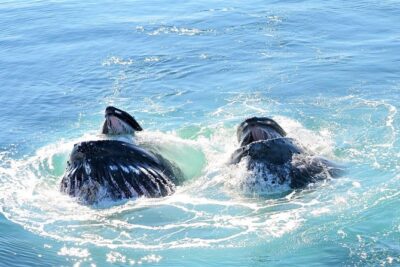
A sighting may be as brief as a blow and a back, or it may develop into a longer encounter. You might see a whale surface several times, slap its tail, raise a flipper, or feed at the surface. Breaching is possible but never promised. Some trips have produced spectacular activity, including a whale breaching close to the boat, but you should treat that as luck rather than an expected part of the program.
The naturalists add real value here. They explain how to track a whale, what a feeding pattern means, and why the animal may disappear for several minutes. On one outing, Amanda showed passengers part of an original humpback tooth, giving the commentary a hands-on detail beyond simple narration. Another guide named Andrew was singled out for his energy and enthusiasm.
The best advice is to watch the water, not only your camera screen. A phone may capture a tail or blow, but the memory of seeing the whole animal surface is often better than a blurry photograph. Keep your camera ready, but give yourself time to look up.
Fin whales, minke whales, dolphins, and surprises
Fin whales are the second-largest whale species after the blue whale. Adults can reach about 45 to 70 feet and weigh around 40 tons. Their size can be impressive even when they surface briefly, but they may be harder to photograph because they move quickly and show less of their bodies than a humpback.
Minke whales are smaller and more streamlined. They are among the most abundant whales in the world, and sightings can feel special because their appearances are often quick. Some trips have included both minke and humpback whales, giving you a useful comparison between two very different baleen whales.
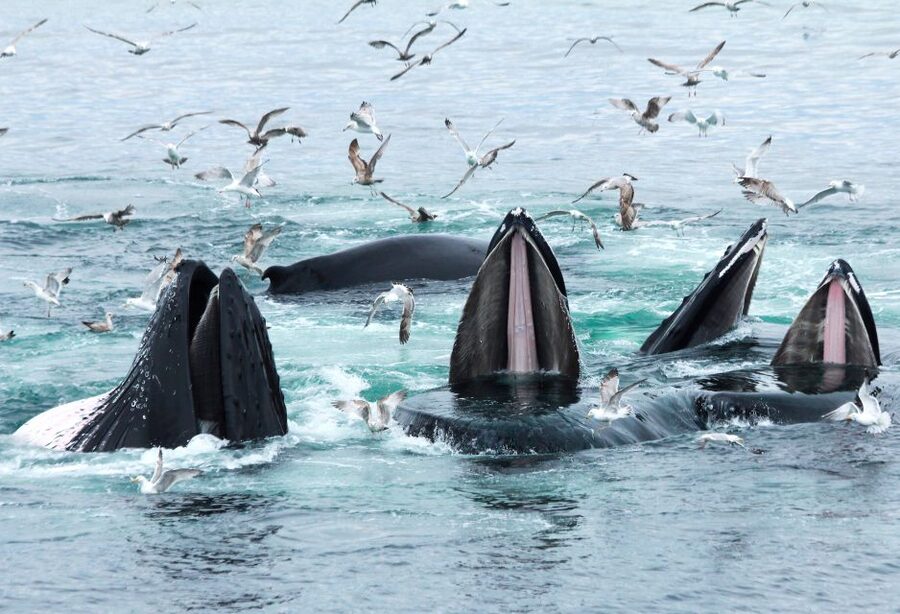
Keep watch for North Atlantic white-sided dolphins. These social mammals may travel in groups and can add fast-moving action when the whales are resting. Basking sharks have also been seen following the boat, so the wildlife list is not limited to whales.
The number of animals varies sharply. One outing produced six humpbacks, a right whale, and dolphins. Other trips have had two humpbacks, several fin whales, or a few minke whales. A day with fewer sightings is still a genuine wildlife experience, but you need to accept that the animals decide the schedule.
Why the naturalists matter
The New England Aquarium connection is one of the strongest reasons to choose this cruise. You are not simply taken offshore and left to scan the horizon. The naturalists explain species, behavior, and conservation, and they help direct your attention when a whale surfaces.
The commentary also helps during the long ride out. You learn what you might see, how to recognize a fin whale from a humpback, and why the location of the animals changes from day to day. Some guides walk through the boat on the way out and back, answering questions rather than speaking only from a fixed microphone.
The conservation message is useful without overwhelming the trip. You are watching animals that are free to leave at any moment, and the crew emphasizes respect for the whales and their habitat. The experience feels more worthwhile when you understand that the boat is observing natural behavior rather than trying to create a performance.
Weather, clothing, and motion sickness
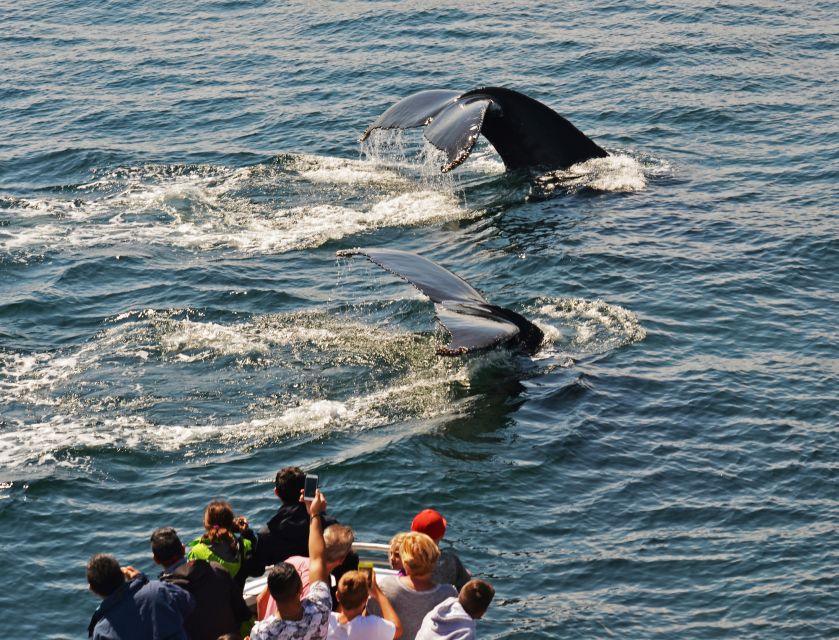
Dress for the water, not the temperature printed on your Boston weather app. Even warm days can feel cold on the top deck, and wind increases quickly once the boat leaves the harbor. Bring a jacket, layers, sunglasses, a hat, sunscreen, and comfortable shoes.
A camera and binoculars are useful, but binoculars are not essential. The boat gets you close enough to see whales without them, and the naturalists help you locate animals. A waterproof layer can be sensible if the forecast calls for rain, though the supplied information does not promise a specific weather policy, so check the local operator’s current guidance before you go.
Motion sickness is the main concern. The boat may feel stable to you, but open water can still produce a rolling motion, particularly on the journey to the sanctuary. Sit in a lower or calmer area if advised by the crew, look toward the horizon, and avoid waiting until you feel ill before taking precautions.
Is $85 a fair price?
At $85 per person, this is not a cheap harbor ride. The price pays for a three-and-a-half to four-hour outing, a fast boat, outdoor and indoor seating, professional crew, naturalist interpretation, and access to a productive whale-watching area outside Boston.
I think the value is strong if seeing whales is high on your Boston list. You are paying for time on the water and expert help finding wildlife, not for a guaranteed number of animals. The experience is less compelling if you are mainly looking for a short scenic cruise or if you have only a narrow window in your schedule.
Food and drinks cost extra, and nothing toward the snack stand is included. Build that into your budget, especially if you are traveling with children. The ability to reserve now and pay later, plus free cancellation up to 24 hours ahead, gives you some useful flexibility, but always check the current weather and cancellation information before departure.
Who will enjoy this whale watch most?
I would recommend it to families, couples, photographers, marine-life fans, and anyone who wants a break from Boston’s streets. Children may enjoy the excitement of spotting blows and tails, though the long ride and possible rough water can test younger passengers.
It is also a good choice for visitors who want substance along with scenery. The aquarium naturalists make the trip educational, and the harbor, islands, and sanctuary provide a clear sense of how Boston connects to the sea.
I would hesitate if you are prone to serious motion sickness, dislike spending several hours on a boat, or need to be somewhere on a strict timetable. You should also be comfortable with the fact that the whales are wild. There may be a spectacular breach, or there may be fewer sightings than you hoped.
Should you book the Boston whale-watching cruise?
Book it if you can give the outing a full half-day and if seeing wildlife in natural surroundings matters more to you than a guaranteed show. The strongest reasons are the experienced naturalists, the comfortable indoor and outdoor setup, and the regular possibility of humpback, fin, and minke whales, dolphins, and other sea life.
Choose a flexible day with a good forecast, bring warm layers, and allow extra time beyond the stated 210 minutes. If the first outing produces no sightings, ask about the current rain-check policy, since one passenger was able to return on another day and had a much better result.
FAQ
Where does the Boston whale-watching cruise depart?
It departs from One Long Wharf, between the Long Wharf Marriott Hotel and the New England Aquarium.
How long does the cruise last?
The stated duration is 210 minutes. In practice, the average trip lasts about 3.5 to 4 hours, and it may run longer if the whales are farther away.
Which whales might I see?
The main species are humpback, fin, and minke whales. A right whale has also been seen, but sightings vary.
Can I see dolphins on the cruise?
Yes. North Atlantic white-sided dolphins may appear, along with other marine life such as basking sharks.
Is the boat wheelchair accessible?
Yes, the activity is listed as wheelchair accessible.
Is food included?
No. Snacks and drinks are available for purchase aboard the boat.
Is there indoor seating?
Yes. The boat has a climate-controlled cabin with cushioned seating, tables, and large windows.
Should I bring a jacket?
Yes. The open decks can be windy and cold, even when Boston feels warm. Layers and weather-appropriate clothing are recommended.
Is the cruise suitable for people with motion sickness?
It is not considered suitable for people with motion sickness. The open-water journey can be choppy, so take appropriate precautions if you are sensitive.
Can I cancel the booking?
You can cancel up to 24 hours in advance for a full refund. Check the local operator’s current information for weather-related cancellations.
Newly added whale trips around the USA
- Anacortes Whale Watching Adventure Tour – Zodiac Boat★ 5.0 · 149 reviews
- Guaranteed Whale Watch Tour from Anacortes★ 4.5 · 21 reviews
- Orca whale tour near Seattle★ 5.0 · 3 reviews
- Orca Whale Inflatable Rides★ 5.0 · 3 reviews
- 8hr Kenai Fjords Whale Watching Tour w/ 1hr Fishing 16 Passengers★ 5.0 · 2 reviews
- Private Whale Watching and Marine Wildlife Tour★ 5.0 · 10 reviews
- Sitka Whale Watch and Sea Otter Quest★ 5.0 · 8 reviews
- Only Wildlife and Whale Watching Tour Leaving from Seattle★ 4.0 · 248 reviews
USA Whale Watching Tours, side by side.
Juneau Wildlife Whale Watching & Mendenhall Glacier
Read our review →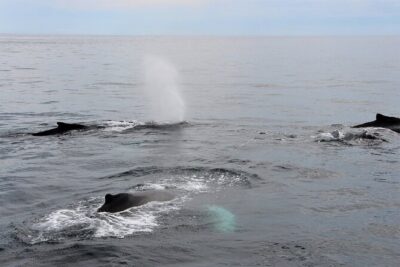
City Cruises Boston Whale Watching Cruise by High-Speed Boat
Read our review →
Maui Eco-Raft Tour: Eye-Level Whale or Dolphin Watching – Lahaina
Read our review →
Whale Watching Trips to Stellwagen Bank Marine Sanctuary. Guaranteed sightings!
Read our review →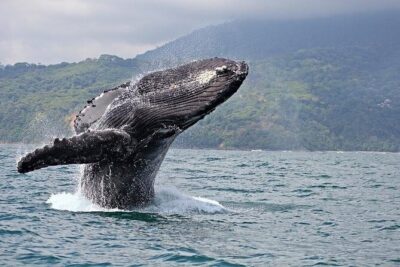
2-Hour Oahu Whale Watch from Ala Wai Harbor, Waikiki
Read our review →Lists this trip appears in