Review · CABO SAN LUCAS
SMALL GROUP Whale Watch | Cabo San Lucas | Biologist | FREE Pics
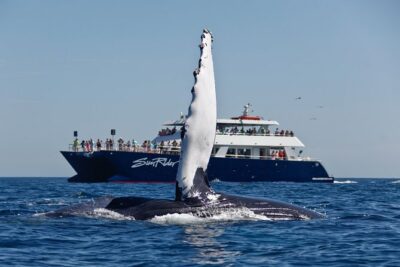
Cabo’s best whale watching is not just about spotting a tail in the distance. This small boat takes you beyond the bay with a marine biologist explaining whale behavior, conservation, climate effects, and the local geology. If conditions allow, a hydrophone lets you hear humpbacks calling underwater.
I like the 12-person limit, which makes it easier to see from different sides of the boat and ask questions. I also like that photos are taken for you and sent free after the trip, so you can watch the water instead of guarding your camera.
The main caution is the ocean itself. Conditions can be rough, and seasickness is possible. Bring water, take any usual motion-sickness precautions early, and know that a whale sighting is guaranteed only from December 15 through April 15.
Key points to know before booking
- Small boat, maximum 12 people: You get a more personal outing than on a large sightseeing vessel.
- Marine biologist on board: Guides such as Oscar, Victoria, Vittoria, Payo, and Josephine have explained whale behavior, conservation, and marine life during recent outings.
- Whale songs may be part of the trip: A hydrophone can let you hear humpbacks beneath the boat when conditions permit.
- Free photos are included: The crew takes pictures during the outing and sends them later, often within a few days.
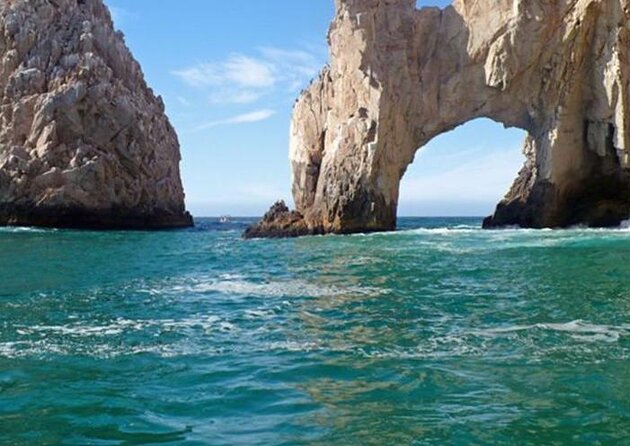
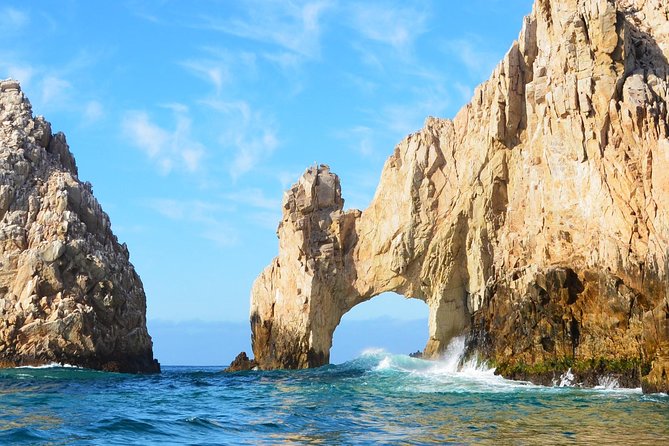
- The route begins with Cabo landmarks: You pass The Arch, Lovers Beach, and Pelican Rock before heading toward the Pacific Ocean or Sea of Cortez.
- A seasonal whale guarantee adds protection: From December 15 through April 15, no whale sighting means a free second tour.
Why this small Cabo boat makes a difference
A small group changes the feel of a whale-watching trip. With no more than 12 people, you are not packed shoulder to shoulder with a large crowd. It is easier to move your eyes from one side of the boat to the other, hear the guide, and get a clear view when a whale surfaces.
I also like the way the trip combines sightseeing with wildlife watching. You are not simply sent out to look for whales. The first part gives you a quick look at Cabo’s famous rock formations, then the focus shifts to the open water and the animals that live there.
The crew says it will go farther from crowded boats when needed. That matters for two reasons. You may get a quieter encounter, and the boat can watch the whales without adding to a tight cluster of vessels. The stated approach is to observe rather than interact with the animals.
The trip lasts about two and a half hours. That is long enough to spend real time searching, watching, and listening, but short enough to fit into a half-day of your Cabo plans. Keep the rest of your schedule flexible, though. Ocean conditions and whale activity do not follow a clock.
More Small-Group Whale Watching in Mexico
- Small-Group Whale Watching Zodiac Boat Cruise in Cabo San Lucas
★ 4.5 · 143 reviews - Whale Watching in Cabo: 2-Hour Small Group Tour to The Arch
★ 4.5 · 62 reviews - Cabo San Lucas: Up-Close Whale Watching Small-Group Tour
★ 4.7 · 57 reviews
From the marina to The Arch
You meet at Whale Watch Cabo Plaza Bonita on Boulevard Paseo de la Marina 17, in the marina area of central Cabo San Lucas. Transportation is not included, so you need to make your own way to the meeting point. The location is near public transportation.
The first stop is El Arco, Cabo’s famous stone arch at the meeting point of the Pacific Ocean and the Sea of Cortez. The boat pauses for about five minutes so you can take pictures. This is a short stop, not a full sightseeing cruise around the rock formations, but it gives you the classic Cabo photo before the wildlife search begins.
You also pass Lovers Beach on the way out of the bay. It is a quick view from the water rather than a beach visit. Pelican Rock follows, a small formation inside the marine protected area of the Bay of Cabo San Lucas.
These opening sights are useful because they give you a sense of where Cabo sits geographically. The bay, the Pacific side, and the Sea of Cortez can behave quite differently, and the captain chooses the search area based on conditions and where marine life is active.
Two hours searching for whales
After the bay, the boat heads either toward the Sea of Cortez or out toward the Pacific Ocean. The main target is the humpback whale, especially during the winter whale season, but the possible list is longer.
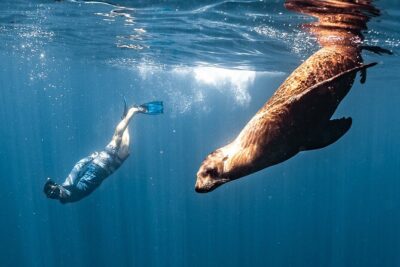
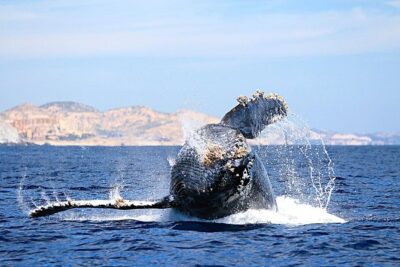
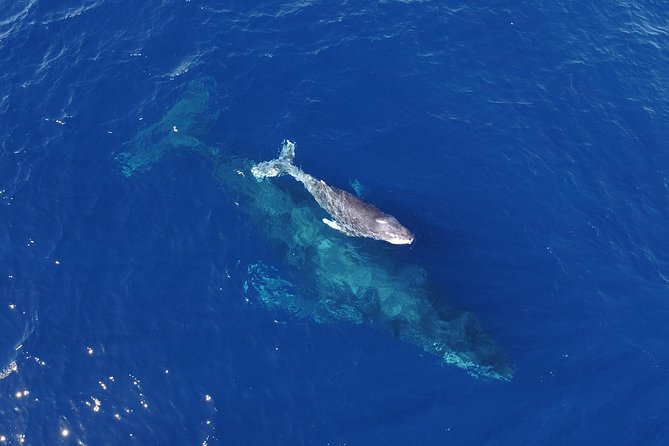
You might see gray whales, dolphins, sea lions, and sea turtles. Sperm whales have also been seen. The number of animals and the quality of the encounter depend on nature, not on the crew’s promise of a show. Some outings can bring repeated breaches and tail slaps. Other days may offer quieter sightings, including a whale surfacing nearby or passing under the boat.
That uncertainty is part of whale watching. You should book this for the chance to see animals in the wild, not for a guaranteed performance. The seasonal sighting guarantee softens that risk from December 15 through April 15. If you do not see a whale during that period, you receive a free second tour.
The boat may spend much of the trip simply searching. That does not mean nothing is happening. The guide can explain how whales surface, travel, socialize, and care for their young. You may see mothers with calves, a particularly memorable sight, but no specific animal behavior can be promised.
Hearing humpbacks with a hydrophone
One of the most unusual features is the chance to hear whales through a hydrophone. When conditions allow, the crew lowers the listening device into the water so you can hear humpback sounds beneath the boat.
This adds something a camera cannot provide. A breach may last only seconds, and a tail may disappear quickly. Whale song gives you a sense that the animals are present even when you cannot see them. The guide can place the sound in context and explain what you are hearing.
The hydrophone is not guaranteed on every outing. Water conditions, whale activity, and the practical limits of the equipment all matter. Still, it is a strong reason to choose this trip over a basic boat ride focused only on taking pictures.
More Whale Watching with a Marine Biologist in Mexico
- ZODIAC Whale Watch Tour | Cabo San Lucas | Biologist | FREE Pics
★ 5.0 · 365 reviews - PRIVATE Whale Watch Tour | Cabo San Lucas | Biologist | FREE Pics
★ 5.0 · 98 reviews - Sunrise Whale Watching boat tour with marine biologist
★ 5.0 · 14 reviews - Whale and Dolphin Watching with a Biologist in Puerto Vallarta
★ 5.0 · 666 reviews
The guide matters as much as the whales
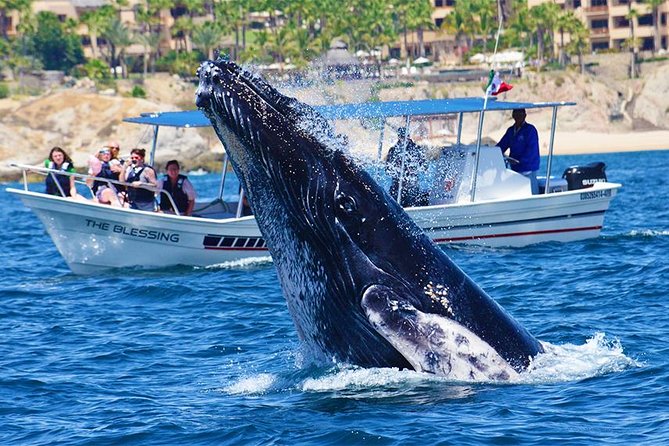
The most praised part of this experience is the crew’s ability to explain what you are seeing. Oscar has been described as engaging and funny while covering marine life, climate change, and the geology around Cabo. Victoria and Vittoria are noted for their enthusiasm and clear explanations of humpbacks. Payo, a veterinarian specializing in marine biology, has also led outings.
Josephine has focused on the importance of observation rather than interaction with whales. That point is worth hearing. A close sighting is exciting, but responsible whale watching means allowing the animals to control the encounter.
The captain is part of the experience, too. The crew positions the boat for a good view while keeping a respectful distance. When the captain and guide share the excitement without turning the animals into a stunt show, the trip feels more thoughtful.
Your specific guide may be different. Names and personalities vary by departure, but the experience is built around having a marine biologist on board rather than a guide who only points out landmarks.
Free photos are more useful than they sound
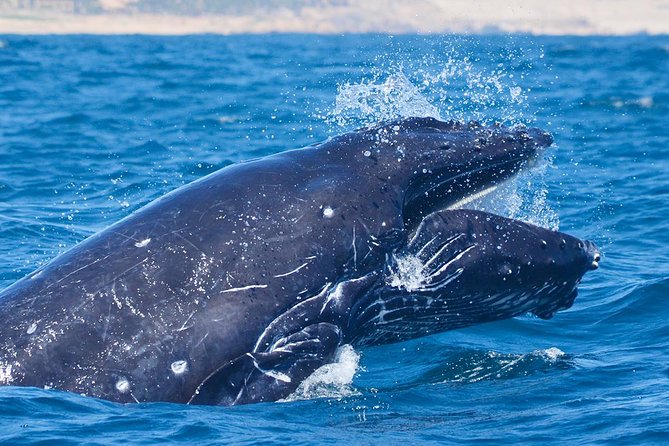
The crew takes photographs during the trip and sends them to you free of charge afterward. This is a practical perk, not just a marketing extra.
Whale watching demands attention. You need to scan the water, listen for a blow, and react quickly when a whale surfaces. If you spend the whole outing trying to frame a picture, you can miss the animal entirely. Having the crew handle some of the photography lets you keep your eyes up.
The pictures are sent after the tour, not handed over immediately at the dock. The timing can be a day or a few days later. Bring your own phone or camera if you want personal shots, but treat the included photos as a useful backup.
Do not expect every image to show a perfect breach. Wildlife photography depends on timing, distance, light, and wave movement. Still, the included service improves the value of a $109 outing, especially for families who want everyone in at least some pictures.
Is $109 a fair price?
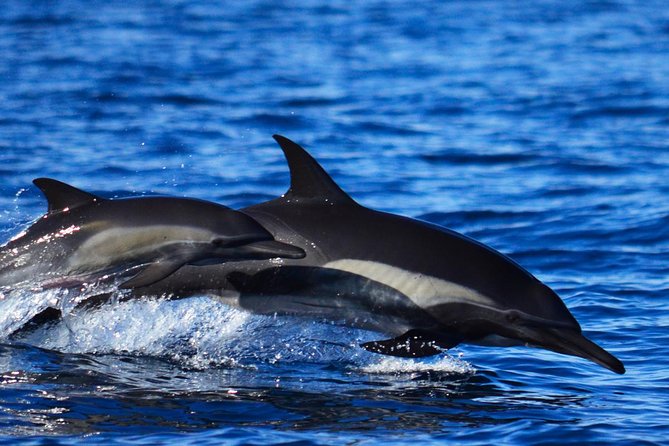
At $109 per person, this costs more than a basic group boat ride. I think the price can make sense if you care about the quality of the experience rather than simply getting offshore.
You are paying for a maximum group size of 12, roughly two and a half hours on the water, a marine biologist, a captain focused on finding wildlife, free photographs, and a seasonal second-tour guarantee. The guide’s explanations are a major part of the value. If you only want a quick boat trip to photograph The Arch, you can likely find a less expensive option.
The small group also helps with access to the guide. On a crowded boat, you may hear only a few general facts. Here, you have a better chance to ask about a whale’s behavior, identify a blow, or understand why the boat changes direction.
The price does not include transportation or bottled water. The operator no longer provides single-use plastic bottles, so bring your own water. That is both a practical need and a sensible environmental choice.
Rough water and seasickness
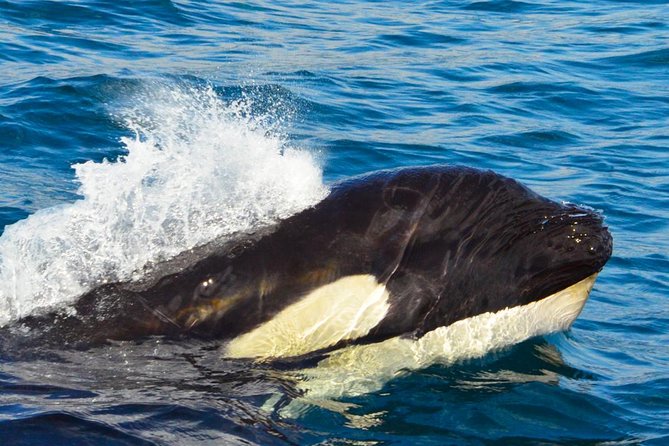
You should take the possibility of rough water seriously. One outing can be smooth, while another can be described as extremely rough. The boat travels out of the protected bay, and conditions on the Pacific side can be especially lively.
If you are prone to seasickness, take your usual medication early, according to its instructions. Do not wait until you feel ill. Eat lightly, bring water, and keep your attention on the horizon when possible.
Life jackets are available in all sizes. Most people can participate, including young children, but the tour still requires good weather and a minimum number of participants. If poor weather cancels the trip, you are offered another date or a full refund.
The boat has a restroom, which is helpful on a two-and-a-half-hour outing. Even so, use the facilities before departure and avoid assuming the ride will feel like a large, stable vessel.
Who will enjoy this trip most?
I would choose this outing if you want more than a quick sighting and a few standard facts. It suits people who enjoy marine life, photography, conservation, and natural science.
Families can benefit from the smaller group and the guide’s explanations. Life jackets are available for children, and a young baby has taken part in the experience. Still, rough seas may make the trip tiring for very young children, so think honestly about your family’s comfort on boats.
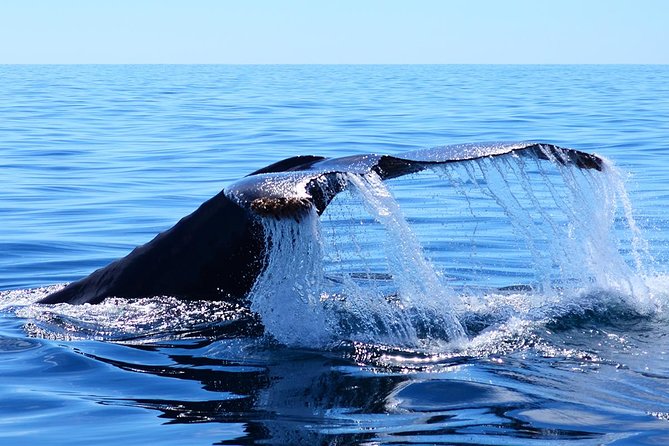
Couples and friends will appreciate the chance to share a memorable sighting without being lost in a large crowd. The experience also works well for first-time whale watchers. A guide can help you understand what to look for, from a blow to a tail fluke to the movement of a mother and calf.
I would be less likely to recommend it if you dislike small boats, get severe seasickness, or need a tightly timed activity. The tour depends on the sea and wildlife, and the scheduled start can occasionally run late.
Practical details before you go
The tour is offered in English and uses a mobile ticket. It begins and ends at the Whale Watch Cabo meeting point at Plaza Bonita, Boulevard Paseo de la Marina 17, in central Cabo San Lucas.
Plan to arrive with water, sun protection, and clothing that can handle spray. The provided information confirms a restroom and life jackets, but it does not list a meal or bottled water, so do not expect refreshments to be supplied.
Free cancellation is available if you cancel at least 24 hours before the start time. Within 24 hours, the amount paid is not refunded, and late changes are not accepted. Weather cancellations and cancellations caused by too few participants lead to a choice of another date or a full refund.
The trip is most appealing during the whale season from December 15 through April 15 because of the sighting guarantee. Whales may be present outside that window, but the guarantee does not apply then.
Should you book this Cabo whale watch?
I would book it if you want a small, educational wildlife outing and are willing to accept the unpredictability of the sea. The guide, hydrophone, free photos, and conservation focus give it more substance than a standard sightseeing cruise.
The best reason to choose it is the balance between personal attention and real time searching for animals. You may see humpbacks breach, dolphins travel alongside the boat, sea lions surface, or a mother and calf move through the water. You may also spend long stretches waiting and watching.
That is the honest trade. The ocean decides what appears. If you accept that, this is a strong choice for Cabo, especially between December 15 and April 15, when the second-tour guarantee makes the $109 price easier to justify.
FAQ
Where does the tour begin?
It begins at Whale Watch Cabo Plaza Bonita, Boulevard Paseo de la Marina 17, Centro, Marina, 23450 Cabo San Lucas, B.C.S., Mexico.
Where does the tour end?
The activity ends back at the same meeting point.
How long does the whale-watching tour last?
The tour lasts approximately two hours and 30 minutes.
How many people can join the boat?
The maximum group size is 12 people.
What animals might I see?
The tour mainly looks for humpback whales. You might also see gray whales, sperm whales, dolphins, sea lions, and sea turtles.
Is a whale sighting guaranteed?
A whale sighting guarantee applies from December 15 through April 15. If you do not see whales during that period, you receive a free second tour.
Are photographs included?
Yes. The guide takes photos during the tour and provides them to you free of charge after the outing.
Is bottled water provided?
No. Bottled water is not included because the operator is avoiding single-use plastic bottles. Bring your own water.
Is there a restroom on board?
Yes, the boat has a restroom.
What happens if weather cancels the tour?
If poor weather causes a cancellation, you are offered another date or a full refund. The same choice applies if the minimum number of participants is not met.
More Small-Group Whale Watching in Cabo San Lucas
- Whale Watching Maui: 2-Hour Small Group Raft Tour from Lahaina
★ 5.0 · 661 reviews - Whale and Dolphin Small Group Sailing from Tenerife South
★ 5.0 · 342 reviews - Small-Group Half-Day Whale-Watching Tour in Puerto Vallarta
★ 5.0 · 334 reviews - RIB Whale Watching Small-Group Boat Tour from Reykjavik
★ 4.5 · 241 reviews
More Whale Watching with a Marine Biologist in Cabo San Lucas
- Azores: Whale Watching & Islet Boat Tour w/ Marine Biologist
★ 4.7 · 2,945 reviews - São Miguel: Whale-Watching Cruise with Marine Biologist
★ 4.6 · 1,311 reviews - Sesimbra: Arrábida Dolphin and Whale Watching with Biologist
★ 4.9 · 310 reviews - Byron Bay: Whale Watching Cruise with a Marine Biologist
★ 4.8 · 261 reviews
Newly added whale trips around Cabo San Lucas
- Whale Watching Experience in Cabo San Lucas★ 5.0 · 41 reviews
- Whale Watching in Cabo San Lucas on board our Luxury Trimaran!★ 5.0 · 32 reviews
- Snorkeling and whale watching Tour in Cabo★ 5.0 · 9 reviews
- Cabo Whale Watch Three-Level Vessel and Majestic Arch★ 5.0 · 30 reviews
- Whale Watching on 2 Level Big Boat with Breakfast and Drinks INCLUDED★ 5.0 · 9 reviews
- Whale Watching Tour in Los Cabos★ 4.5 · 114 reviews
- Whale Watching by Zodiac in Cabo San Lucas with Photos Included★ 5.0 · 119 reviews
- Whale Watching Cruise in Cabos San Lucas and Ground Transportation★ 3.5 · 10 reviews
Cabo San Lucas Whale Watching Tours, side by side.
Whale Watching Cabo-Women crew-Sightings Guaranteed & Free Photos
Read our review →
ZODIAC Whale Watch Tour | Cabo San Lucas | Biologist | FREE Pics
Read our review →
Los Cabos Whale Watching (Transportation and Pictures Included)
Read our review →
Cabo: Whale-Whatching Boat Trip w/ All-Women Crew and Photos
Read our review →