Review · PUERTO VALLARTA
Whale and Dolphin Watching with a Biologist in Puerto Vallarta
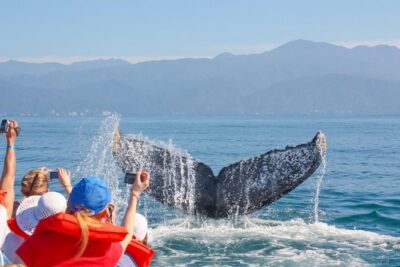
Puerto Vallarta’s winter humpback whales are the main event here, and they can appear close enough for you to see a blow, tail, breach, or mother guiding her calf. The tour adds real purpose: your observations support marine research, and your biologist guide explains the behavior instead of simply pointing at animals.
I especially like the small boat, which gives you a good view from both sides, and the use of a hydrophone, which lets you hear whale song beneath the surface. The pre-cruise lesson, complete with baleen and whale vertebrae, helps you understand what you are seeing. The main drawback is simple: there is no bathroom on the boat, and wildlife never follows a schedule.
Key points to know before booking
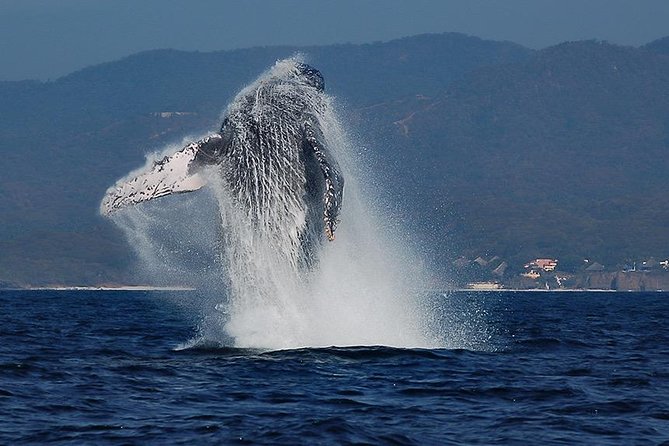
- Winter humpback season: Whales visit Puerto Vallarta to mate and give birth, with mothers, calves, males, and competing groups often seen.
- Biologist-led trip: Guides such as Jemma, Gemma, and Camilla explain communication, parenting, migration, and whale behavior.
- Citizen science included: You help support research programs focused on whales and dolphins.
- Small-group boat: The maximum is 20 people, with many departures carrying around 12 to 16.
- More than whales: You may also see several dolphin species, turtles, giant mantas, sea lions, and blue-footed boobies.
- Four hours on the water: The tour begins and ends at Opequimar Centro Marino in Marina Vallarta.
Why this whale trip feels different
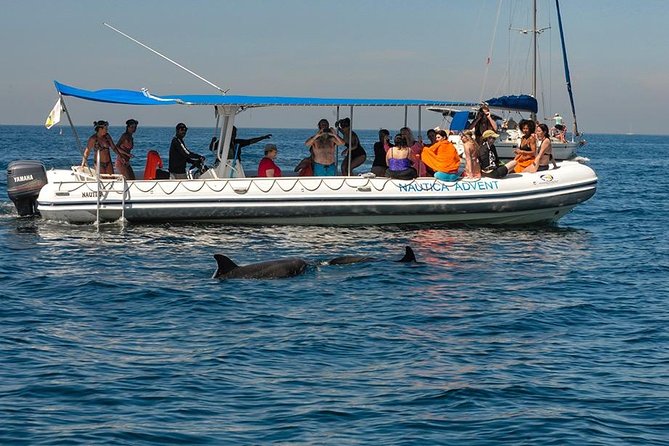
Many whale excursions are built around finding an animal, taking a photograph, and heading back. This one gives you a better way to understand the encounter. A marine biologist talks through what the whales are doing, why a mother and calf stay close, and how males compete for access to a female.
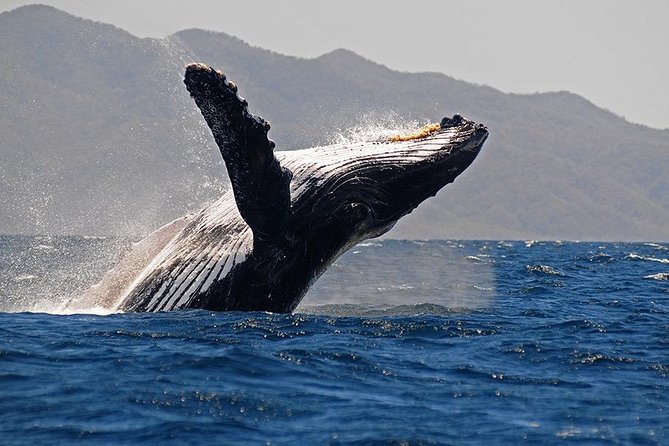
That matters because a humpback surfacing is easy to misread. A tail slap may be play, communication, or a response to another whale. A breach may last only a second, while the animal’s repeated blows help your guide predict where it will appear next. A guide trained in cetacean behavior turns scattered sightings into a story.
The trip also contributes to research programs involving whales and dolphins. Your participation helps fund and support that work. The operator says it can find the animals or provide a refund, but you should still remember that wild creatures remain unpredictable. Even a strong whale season can produce a slow morning.
The tour is offered in English and costs $105 per person. That is more than a basic harbor cruise, but you are paying for about four hours on the water, a specialist guide, a small vessel, research participation, and a chance to see several kinds of marine life. If you want only a quick boat ride, the price may feel high. If you care about learning and responsible wildlife watching, it offers solid value.
More Whale Watching with a Marine Biologist in Mexico
- Whale Watching Adventure – Led by a Marine Biologist
★ 5.0 · 176 reviews - SMALL GROUP Whale Watch | Cabo San Lucas | Biologist | FREE Pics
★ 5.0 · 1,106 reviews - ZODIAC Whale Watch Tour | Cabo San Lucas | Biologist | FREE Pics
★ 5.0 · 365 reviews
Starting at Marina Vallarta
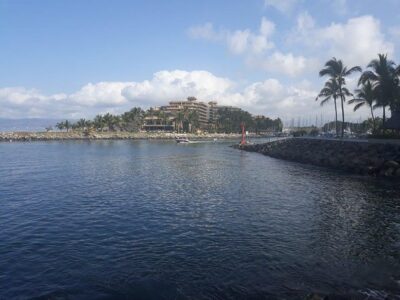
You meet at Opequimar Centro Marino, Av. Paseo de la Marina Sur 214, in Marina Vallarta. The activity ends at the same place, so you do not need to arrange a separate return transfer.
The tour begins with an educational session on land. This is one of the smartest parts of the outing because it gives you useful tools before the boat leaves. You may handle a piece of baleen and see a whale vertebra, which makes the animal’s size easier to picture. A short presentation also covers the humpbacks you are likely to see and the research taking place in the bay.
Guides have included Jemma, Gemma, and Camilla, along with captains such as Jorge, Cesar, and George. Names and crew assignments can vary, but the format remains the same: a marine specialist handles the interpretation while the captain focuses on safe boat handling and positioning.
Life jackets are provided, and the crew assists with boarding. The boat is covered, a useful feature under strong sun and on windy days. You should still expect an open-water ride, with spray and movement possible depending on conditions.
The first hour: searching for signs of whales
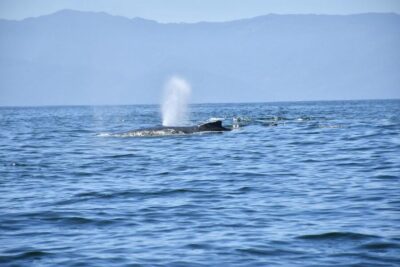
Once the boat leaves the marina, the crew searches for blows, fins, and groups of birds or dolphins that may point toward activity. Some trips find whales within 15 to 20 minutes. On another outing, the first hour was quiet before the boat reached a busy group. Both experiences are normal for wildlife watching.
The guides use their experience with local animals to choose where to look. They may stop near individual humpbacks, groups of males, or a mother and calf. The captain then positions the boat so you can watch without crowding the animals. Several accounts describe captains holding a respectful distance while still providing a strong view.
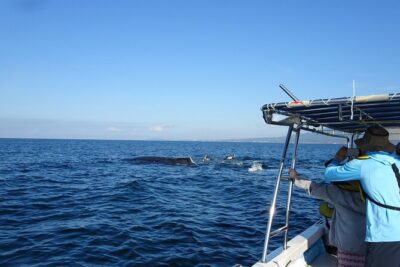
The small vessel is helpful here. With groups often reported at about 12 to 16 people, you can look over either side without feeling lost in a crowd. The official maximum is 20, so ask about the expected group size if having extra room matters to you.
Keep your camera ready, but do not watch only through the screen. A breach can happen without warning, and the best moment may be the quiet one just before a whale surfaces beside the boat. You might see a blow, a rolling back, a fluke rising from the water, or a full breach. None is guaranteed, but the guides work hard to put you in areas with active animals.
Watching mothers, calves, and competing males
The winter season is special because humpbacks come to the Puerto Vallarta area to mate and give birth. That means you may see several kinds of behavior in one outing.
Mother and calf pairs are often the most moving sight. A young whale may roll, breach, or slap its tail while the mother stays nearby. The guide can explain how close contact supports communication and protection. One especially memorable behavior described on the tour is a mother repeatedly tail-slapping while her calf appeared to practice communication.
You might also encounter an adult male escorting a female, or several males competing for access to one female. These encounters can look rough and fast, but a biologist can place them in the larger pattern of humpback courtship.
The crew may use a hydrophone to let you hear underwater whale sounds. Hearing males sing while they are out of sight adds another sense to the experience. Some songs may sound close, while others echo from farther away. It is a strong reminder that the bay is active below the surface even when you see only calm water.
More Whale Watching with a Marine Biologist in Puerto Vallarta:
- Azores: Whale Watching & Islet Boat Tour w/ Marine Biologist
★ 4.7 · 2,945 reviews - São Miguel: Whale-Watching Cruise with Marine Biologist
★ 4.6 · 1,311 reviews - Sesimbra: Arrábida Dolphin and Whale Watching with Biologist
★ 4.9 · 310 reviews - Byron Bay: Whale Watching Cruise with a Marine Biologist
★ 4.8 · 261 reviews
Dolphins, turtles, mantas, and other marine life
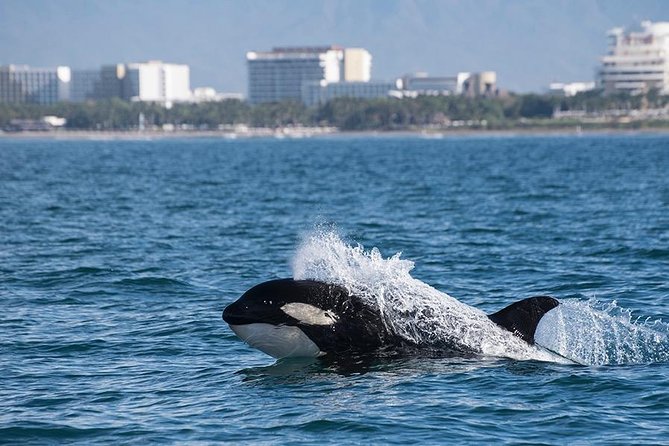
The whale search is paired with dolphin watching during the winter. Possible species include bottlenose, spotted, spinner, and rough-toothed dolphins. Orcas and false orcas are listed as rare possibilities, not expected sightings, so treat them as a bonus rather than a promise.
Dolphins may travel near the boat or appear in a larger pod. Their movement can be quick, and your guide may explain how different groups use particular areas. You may also see marine turtles and giant mantas in their natural environment.
Other sightings have included sea lions and blue-footed boobies. These are not the tour’s central goal, but they add variety during stretches when whales are below the surface. The more time you spend looking around rather than waiting for a single dramatic breach, the more rewarding the trip becomes.
The operator’s wildlife guarantee refers to finding animals, not guaranteeing every species on the list. You should expect whales to be the focus in season, while dolphins, turtles, mantas, or birds depend on what is present that day.
What the boat ride is really like
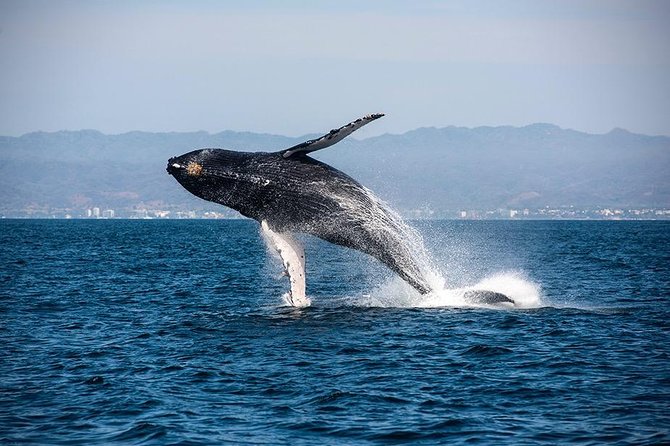
The covered boat offers shade and some protection from wind and sun. It is described as a small, nicely proportioned vessel suited to wildlife watching, with enough room for passengers to see from both sides.
There is no bathroom onboard. Use facilities before departure and plan accordingly, especially because the tour lasts about four hours. The trip includes a snack or sandwich and a soft drink on some departures, but the exact food service is not described as a formal meal, so do not book it expecting a full lunch.
A small boat gives you a closer feel for the water, but it also means more movement than a large sightseeing vessel. If you are sensitive to motion, prepare appropriately. The available information does not promise that the ride will be calm.
The trip is offered in English. Service animals are allowed, and the meeting point is near public transportation. Most people can participate, but the activity is not recommended for anyone more than seven months pregnant.
A closer look at the research element
The research component is more than a slogan attached to a sightseeing trip. The guides work with whale and dolphin programs, and they explain how passenger participation supports that work. You may hear about individual animals, behavior patterns, communication, and the local marine population.
The value for you is that the boat becomes a field lesson. You are not just waiting for a fin. You are learning how scientists observe animals, recognize behavior, and collect useful information without disturbing the group.
That approach also encourages better wildlife etiquette. The captain’s job is not to rush directly at a whale. Instead, the boat aims to reach a good viewing position while maintaining a respectful space. You get a better experience when the animals remain calm and act naturally.
The exact research tasks are not specified, so you should not expect to handle equipment or record a formal data sheet unless the crew explains that on your departure. The clear benefit is access to a specialist who can connect your sightings with real conservation work.
Timing, group size, and the luck factor
The trip lasts approximately four hours, which feels like the right length for a serious wildlife outing. A shorter tour might leave you frustrated after a slow start. Here, the boat has time to search, watch a group, move to another area, and look for dolphins or other animals.
Morning and afternoon conditions can differ, but there is no reliable whale timetable. One afternoon outing produced repeated breaches and more than 20 whales after a quiet morning. That does not mean afternoon is always better. It means you should choose the time that fits your schedule rather than assuming whales follow a fixed daily pattern.
The maximum group size is 20. Smaller departures can make a major difference when a whale surfaces on one side of the boat. With fewer people, you can shift position more easily and see over fewer heads. A full boat will still be manageable, but it may feel less personal.
The tour is booked, on average, about 26 days ahead. During the winter whale season, advance planning is sensible, especially if you have limited time in Puerto Vallarta. Confirmation arrives within 48 hours, subject to availability.
Is $105 a fair price?
I consider the price reasonable for the combination of time, crew, and purpose. You receive roughly four hours on the water, a shore-based lesson, a covered small boat, a specialist guide, and the chance to support research. A basic sightseeing cruise may cost less, but it will not necessarily provide the same level of interpretation or the hydrophone experience.
The value depends on what you want from the day. If your priority is a guaranteed photograph of a breach, no operator can control the whales. If you want a well-run search with someone who can explain what you see, the extra cost makes more sense.
The high rating, 4.9 from 667 ratings, and 97 percent recommendation rate point to a consistently strong experience. Still, the practical limits remain: no onboard bathroom, possible rough water, and no guarantee of every listed species.
Who should book this experience?
I would choose this tour if you want more than a quick wildlife photo. It suits couples, families with older children and teenagers, first-time whale watchers, photographers, and anyone curious about marine biology.
It is also a good pick for people who care about responsible wildlife encounters. The biologist-led format gives you context, while the captain works to position the boat without treating the animals like a stage show.
You may want to reconsider if you need a restroom close at hand, dislike small boats, or require a fully predictable schedule. Pregnant people beyond seven months should not take the tour. Anyone unsure about physical participation should confirm their needs before booking, since the available information says most people can participate but does not list every mobility detail.
Cancellation and weather details
You can cancel at least 24 hours before the local start time for a full refund. Cancellations or changes made within 24 hours are not refunded or accepted.
The trip requires suitable weather. If poor conditions cancel it, you are offered another date or a full refund. The same choice applies if the minimum number of participants is not met.
Should you book the Puerto Vallarta whale tour?
Book it if you want a thoughtful, small-group wildlife trip rather than a simple boat ride. The strongest reasons are the marine biologist guide, the hydrophone, the chance to see mothers and calves, and the connection to ongoing research.
Choose it during the winter whale season, reserve ahead, use the bathroom before boarding, and keep your expectations focused on wild animals rather than guaranteed acrobatics. At $105, it is a worthwhile choice for a four-hour lesson on the water, especially if seeing whales in a respectful setting matters as much as getting a good photograph.
FAQ
Where does the whale-watching tour begin?
It begins at Opequimar Centro Marino, Av. Paseo de la Marina Sur 214, Marina Vallarta, Puerto Vallarta, Jalisco, Mexico.
Where does the tour end?
The activity returns to the same meeting point at Opequimar Centro Marino.
How long does the experience last?
The tour lasts approximately four hours.
What animals might I see?
The main target is the humpback whale. You may also see bottlenose, spotted, spinner, and rough-toothed dolphins, plus turtles, giant mantas, sea lions, and blue-footed boobies. Orcas and false orcas are possible but not expected.
Is a marine biologist included?
Yes. The tour is led by a biologist specializing in cetaceans. Guides have included Jemma, Gemma, and Camilla, though the assigned guide can vary.
How many people can join the boat?
The maximum is 20 participants. Some departures have included groups of about 12 to 16 people.
Is there a bathroom on the boat?
No. Use the facilities before departure.
Is the tour suitable during pregnancy?
It is not recommended for people more than seven months pregnant.
What happens if the weather cancels the trip?
You will be offered another date or a full refund if poor weather causes the operator to cancel.
More Whale and Dolphin Watching Tours in Puerto Vallarta
- Whale & Dolphin Watching Cruise in Puerto Vallarta All Inclusive
★ 4.0 · 212 reviews - Tenerife: Eco-Yacht Whale and Dolphin Watching and Swimming
★ 4.7 · 15,619 reviews - Los Cristianos Respectful No-Chase Whale and Dolphin Safari
★ 4.6 · 12,782 reviews - From Funchal: Ecological Catamaran Dolphin Whale Watching
★ 4.5 · 8,204 reviews
Newly added whale trips around Puerto Vallarta
- Whale watching tour★ 5.0 · 12 reviews
- Whale watching★ 4.0 · 6 reviews
- Whale Watching and Los Arcos 5 Islands Adventure★ 5.0 · 32 reviews
- Whale Watching Guaranteed Experience in Puerto Vallarta★ 5.0 · 156 reviews
- Whale Watching Experience in Puerto Vallarta★ 5.0 · 8 reviews
- Whale Watching Experience – 4 Hours in Puerto Vallarta★ 5.0 · 9 reviews
- Whale Watching The Best Of Puerto Vallarta★ 4.0 · 5 reviews
- Whale Watching Experience★ 4.5 · 186 reviews
Puerto Vallarta Whale Watching Tours, side by side.
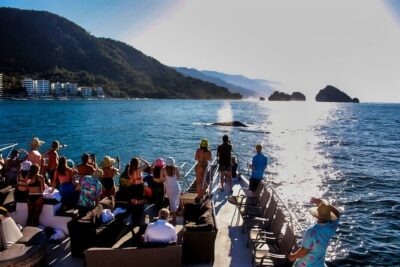
Sunsets and Whales Mega Yachts ALL INCLUSIVE: Puerto Vallarta
Read our review →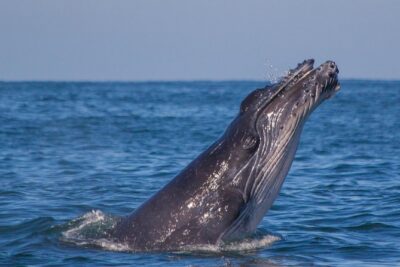
Whale Watching Cruise In Puerto Vallarta & Nuevo Vallarta
Read our review →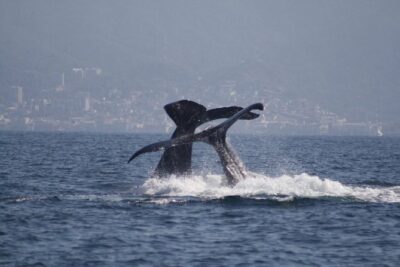
Small-Group Half-Day Whale-Watching Tour in Puerto Vallarta
Read our review →
Whale & Dolphin Watching Cruise in Puerto Vallarta All Inclusive
Read our review →