
Review · SOUTH AFRICA
Whale, Dolphin & Penguin Island Cruise
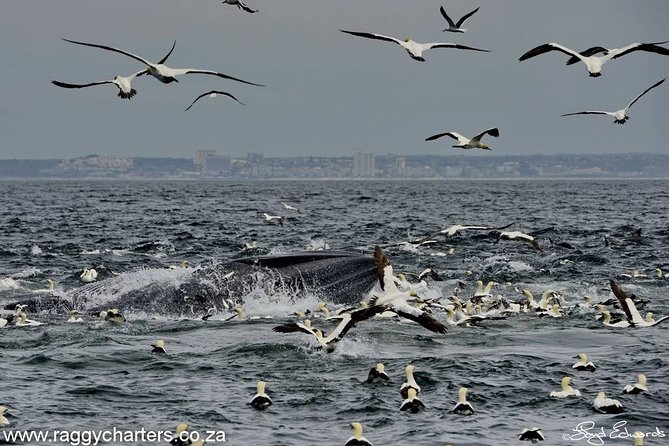
Algoa Bay gives you a fine chance to see several of South Africa’s most memorable marine animals in one morning. From the small catamaran, you may watch dolphins ride the bow waves, humpback whales move through the bay, and African penguins gather around St. Croix Island.
I like the small-group setting, which leaves room to ask questions and get a clear view of the water. I also like the crew’s conservation focus, including a tree-planting campaign to balance the cruise’s carbon footprint. The main caution is simple: wildlife is wild, and even a well-run trip cannot promise whales or penguins on every departure.
Key points to know before booking
- A four-hour morning on Algoa Bay: Meet at 8am at Nelson Mandela Bay Yacht Club in Port Elizabeth, now also called Gqeberha.
- A maximum of 20 people: The smaller boat allows a calmer pace, easier viewing, and more time with the crew.
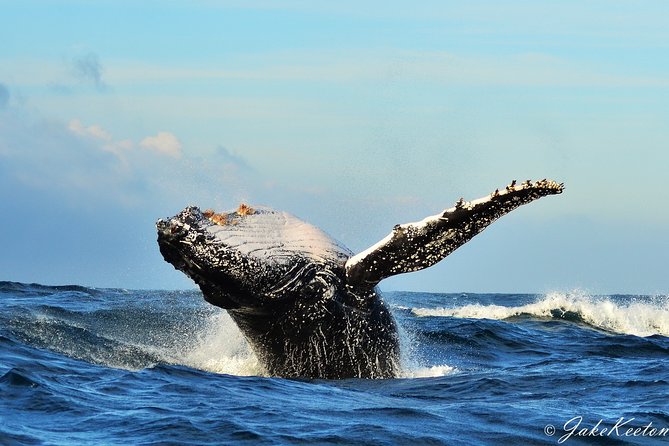
- Whales are seasonal: Humpbacks are seen from June through early December, while southern right whales are closest to shore from July to September.
- Dolphins are the most reliable sighting: Bottlenose dolphins appear year-round, sometimes in groups of 10 to 400.
- St. Croix Island brings penguins and seabirds: You look for African penguins from the water, along with cormorants and African black oystercatchers.
- Weather and wildlife matter: Rough conditions can affect the trip, and poor weather may lead to a new date or a full refund.
Setting out from Nelson Mandela Bay at 8am
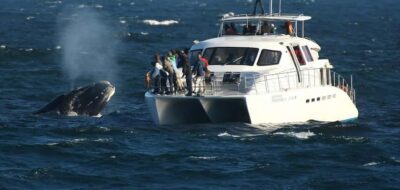
Your morning begins at the Nelson Mandela Bay Yacht Club, at Dom Pedro Jetty in Port Elizabeth Harbour, Gqeberha Central. The cruise starts at 8am, with a short safety briefing before you board the twin-engine catamaran.
That early start makes sense. Marine animals often show well in the quieter morning hours, and four hours gives the skipper enough time to search different parts of Algoa Bay rather than rush from one sighting to the next.
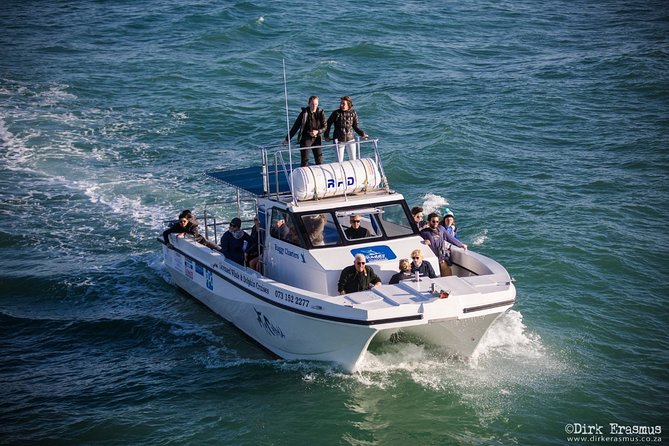
The boat carries no more than 20 people. That number matters here. Wildlife watching can become frustrating when you are packed shoulder to shoulder, especially when a dolphin appears on one side of the boat and disappears seconds later. A smaller group gives you more space to move your eyes, camera, and attention around the boat.
The cruise is described as slow-paced, not a high-speed ride from one point to another. I see that as a strength. The point is to read the water, watch for movement, and spend time near animals without turning the morning into a race.
The boat has twin engines, and the crew places clear emphasis on safety. Life jackets are available for all ages. Most people can take part, and people with disabilities may join if they can board with help from family and crew. You should still use your own judgment about your health and fitness, since conditions at sea can change.
More Whale and Dolphin Watching Tours in South Africa:
- Hermanus: Whale and Dolphin Watching Boat Trip
★ 4.6 · 807 reviews - Durban: Durban: Whale and Dolphin Watching Boat Tour
★ 4.7 · 45 reviews - Tenerife: Eco-Yacht Whale and Dolphin Watching and Swimming
★ 4.7 · 15,619 reviews
The wildlife search across Algoa Bay
The first part of the cruise is a search rather than a fixed sightseeing route. Your skipper and guide watch for blows, fins, birds, and baitfish activity. The water can look empty one moment and suddenly fill with dolphins the next.
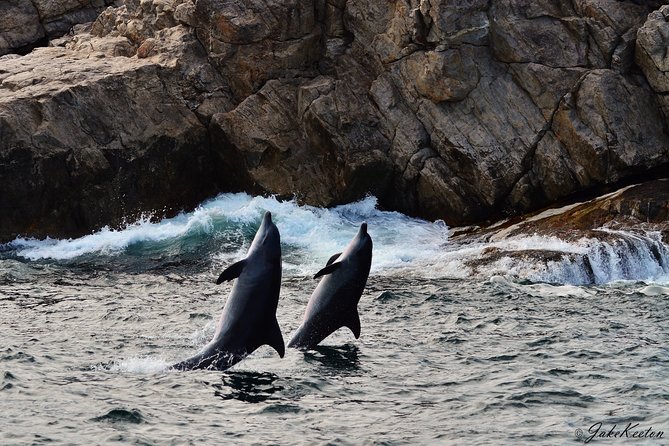
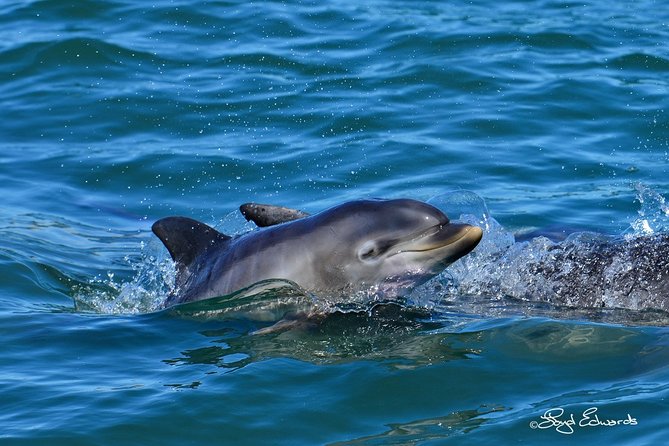
Indo-Pacific bottlenose dolphins are the most frequently seen dolphins in the bay. They live here throughout the year, often in groups from 10 to 400. They favor shallow water near beaches and around St. Croix Island, and they may come close to the boat to ride the bow waves.
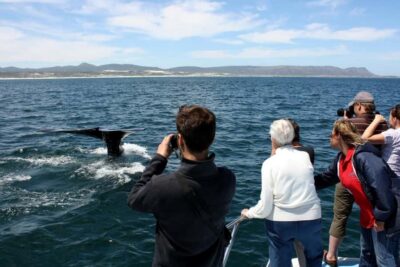
That behavior can produce some of the best photographs of the morning. Keep your camera ready, but do not spend the whole trip looking through a screen. Dolphins can appear at several points around the catamaran, and the best view may be behind you.
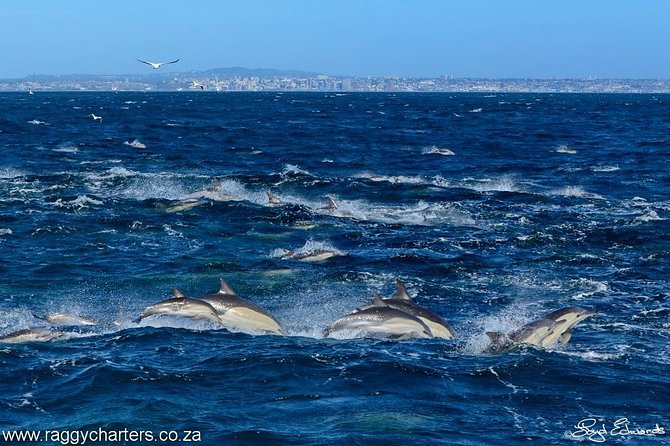
Common dolphins offer a different spectacle. They can gather in groups of 1,000 to 2,000 and move at high speed farther offshore, particularly near the Bird Island groups. They follow large shoals of baitfish, so their appearance depends on where the food is moving.
Humpback dolphins are also found in Algoa Bay. The information provided for the cruise does not promise a particular sighting rate, so treat them as a welcome possibility rather than a target you can count on.
The crew may also point out Cape fur seals, sharks, Cape gannets, and pelagic birds. Terns, petrels, skuas, shearwaters, and albatrosses can all appear on the water. This is where the guides add real value. They are not just pointing out animals. They explain what you are seeing and how the bay’s food chain connects dolphins, whales, seabirds, and fish.
Whale season from June through early December
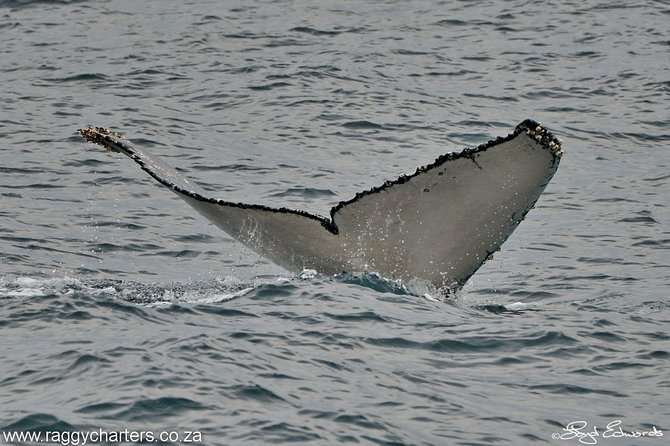
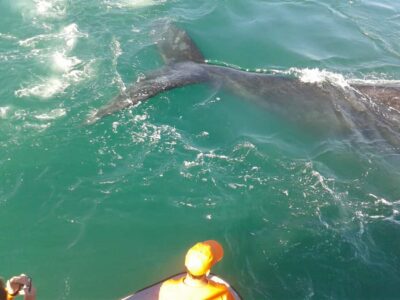
Whales are the big seasonal draw. Humpback whales arrive in Algoa Bay from June as they move along the coast toward breeding grounds farther up the east coast of Africa. They can be seen from June through early December.
From October, some humpbacks begin the return journey, with females sometimes accompanied by calves. A mother and young whale together can make for an especially memorable sighting, though you should not expect that pairing on every cruise.
Southern right whales are generally seen closer to shore from July through September. If you are choosing dates mainly for whales, those months give you two useful possibilities: southern right whales closer to the coast and humpbacks moving through the bay.
The cruise may also encounter Bryde’s whales and minke whales. Again, these are possible sightings, not scheduled stops. The skipper’s job is to find the best wildlife available that day while keeping a respectful distance.
The crew cannot control the season, the sea, or the animals. That is worth saying plainly because the price is not a ticket to a guaranteed whale encounter. You are paying for time on the bay, skilled searching, interpretation, and a serious attempt to find wildlife in its natural setting.
St. Croix Island and the African penguin colony
St. Croix Island is the emotional center of the cruise. It is home to an African penguin colony described as numbering around 12,000 birds, though the population has lost 70 percent in a decade. The island is also part of the Addo Elephant National Park, and rangers patrol the protected area.
You view the penguins from the boat rather than treating the island like a walk-on attraction. That limits the closeness compared with a land-based penguin viewing site, but it also keeps the encounter in the animals’ own space.
The African penguin breeding season peaks between March and May. During that period, you might see chicks from the water. The sighting can be less dramatic than a dolphin racing beside the boat, but it carries more weight when you understand the pressure on the colony.
One practical point is that penguin numbers near the island can vary. Overfishing has affected the food supply, and the colony is not as strong as it once was. You may see fewer birds than the headline population figure suggests. That is not a reason to skip the island. It is part of what makes the conservation talk important.
St. Croix and nearby Brenton Island also support endangered African black oystercatchers, white-breasted cormorants, and Cape cormorants. Your guide may help you separate these species, which can look similar at a distance if you are not used to coastal birds.
More Whale Watching Cruises in South Africa:
- Plettenberg Bay: Whale Watching Boat Cruise
★ 4.4 · 362 reviews - Plettenberg Bay: Whale-Watching Cruise
★ 4.1 · 65 reviews - Reykjavík: Whale Watching and Marine Life Cruise
★ 4.6 · 9,838 reviews - Funchal: Dolphin and Whale Watching Catamaran Cruise
★ 4.5 · 5,697 reviews
Conservation is part of the experience
The cruise has a clear conservation purpose. The guides and skippers explain local marine life and the pressures facing it, rather than presenting the bay as a simple wildlife show.
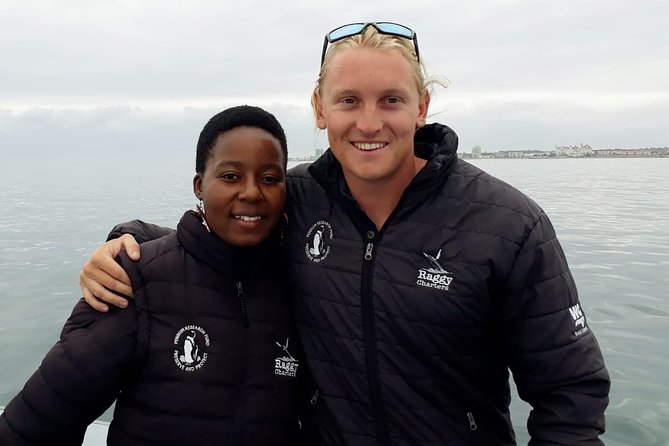
That approach came through strongly in the account of a trip led by Jake and his crew, where the voyage became an education in marine conservation as well as a wildlife outing. The crew’s role is especially useful when the animals are far away or conditions are not ideal. A quiet stretch of water can still teach you something about feeding patterns, migration, breeding, and habitat protection.
The operator also supports a tree-planting campaign to balance the cruise’s carbon footprint. That does not erase the environmental cost of running a motorboat, but it is a practical effort to reduce the impact.
You will also hear about the wider protected area around the islands. St. Croix Island and the Bird Island group now form part of Addo Elephant National Park, giving the islands ranger protection. The declining African penguin colony shows why that protection matters, but also why protection alone cannot solve every problem.
I appreciate this educational side because it changes the way you see the wildlife. A penguin is not just a funny-looking bird near a rock. A dolphin pod is not simply a photo opportunity. The bay is a working ecosystem affected by fishing, migration, breeding, and shifting food supplies.
What the boat ride feels like in real conditions
Algoa Bay can be calm, but the sea is not a controlled viewing platform. One account describes a choppy outing handled well by the skipper, while another found the crew kept the trip enjoyable during heavy rain. Those details are useful because they show the crew’s value when the weather is less than perfect.
Still, you should dress for exposure and accept that visibility can change. The cruise requires good weather, and the operator may cancel if conditions are poor. In that case, you can choose a different date or receive a full refund.
Even in acceptable weather, you may feel spray, wind, or movement underfoot. If you are prone to seasickness, think carefully before booking and use your normal precautions. The supplied information does not specify a meal service, drinks, or specialized camera equipment, so plan around a straightforward wildlife boat trip rather than a luxury cruise.
The boat returns to the same meeting point after roughly four hours. That makes the cruise easy to fit into a Port Elizabeth morning, with time left for another activity later in the day.
How the $185.19 price measures up
At $185.19 per person, this is not the cheapest way to spend a morning in Port Elizabeth. The value comes from the limited group size, the four-hour duration, the marine interpretation, and the chance to cover whales, dolphins, penguins, seals, and seabirds in one outing.
The trip runs only once a day, which limits flexibility but helps keep the experience focused. You are not choosing between several departures with different crowd levels. The small catamaran and maximum of 20 people also make this a more personal option than a large boat excursion.
One useful price detail comes from a passenger who booked directly rather than through a cruise ship excursion and found the direct option saved a lot of money. The same boats were used for both. If you are arriving by cruise ship, compare the ship’s excursion price with this direct booking, but allow enough time for the port schedule and transport arrangements yourself.
I would consider the cost fair for a serious four-hour wildlife search, especially if you value conservation and small groups. I would be less enthusiastic if your only goal is a guaranteed close whale photograph. No responsible wildlife operator can promise that.
Who will get the most from this cruise
This suits you if you enjoy patient wildlife watching, natural history, and time on open water. Families can join, and there is no age restriction, with life jackets available for all ages.
It is also a good choice for photographers, though patience matters more than fancy equipment. Dolphins may appear fast and close, while whales may stay farther away. A camera with a useful zoom can help, but the crew’s positioning and your attention are just as important.
The cruise works well for people who want a smaller group and direct access to a conservation-minded crew. Jake is specifically named among the team, and the staff are described as attentive, safety-focused, and willing to explain animal behavior.
You may want to reconsider if you dislike boat movement, need a guaranteed schedule in poor weather, or want to walk among penguins. This experience keeps you on the water and looks toward St. Croix Island from the catamaran.
Booking confirmation is sent at the time of booking. Free cancellation is available up to 24 hours before the start time. Cancellations or changes made inside that window are not refunded, except when the operator cancels for poor weather or because the minimum number of people is not reached.
Should you book the Algoa Bay cruise?
I would book this if you want a thoughtful marine wildlife outing rather than a quick sightseeing ride. The strongest reasons are the small group, the patient pace, and the chance to see dolphins year-round while learning why whales and African penguins need protection.
Choose your timing with care. June through early December gives you the best stated window for humpback whales, July through September is useful for southern right whales, and March through May is the key period for penguin chicks.
Go in with realistic expectations. You might see dolphins, seals, penguins, and several bird species in one morning. You might also have to work for every sighting. That uncertainty is part of watching wild animals, and the crew’s conservation approach gives the trip value even when the biggest animals stay out of view.
FAQ
Where does the cruise begin?
It begins at 8am at Nelson Mandela Bay Yacht Club, Dom Pedro Jetty, Port Elizabeth Harbour, Gqeberha Central, Gqeberha, 6001, South Africa.
How long is the cruise?
The experience lasts approximately four hours and returns to the original meeting point.
How many people can join the boat?
The maximum group size is 20 people.
When can I see humpback whales?
Humpback whales can be seen in Algoa Bay from June through early December. They begin their return journey from October, and females may be accompanied by calves.
Can I see penguin chicks?
The African penguin breeding season reaches its peak between March and May, when you may be able to see chicks from the boat near St. Croix Island.
What happens if bad weather cancels the cruise?
If poor weather causes cancellation, you will be offered a different date or a full refund. The same options apply if the minimum number of people is not reached.
Newly added whale trips around South Africa
- Whale Watching Knysna – Close Encounter Experience Ocean Odyssey★ 4.5 · 65 reviews
- Hermanus Land based Whale Tour with Dave de Beer★ 5.0 · 24 reviews
- Whale Watching Tour from Cape Town★ 3.5 · 9 reviews
- Whale Watching Hermanus – Boat base★ 4.5 · 17 reviews
- Hermanus Whales and Wine Full Day Private Tour★ 5.0 · 2 reviews
- Whale Watching Tour in Hermanus with Hotel Pickup★ 5.0 · 11 reviews
- Hermanus Whale Watching & Penguins Shared Tour from Cape Town★ 4.0 · 14 reviews
- Hermanus Whale Watching Day Trip from Cape Town★ 3.5 · 29 reviews
South Africa Whale Watching Tours, side by side.
From Cape Town: Hermanus Whale Watching Boat Trip
Read our review →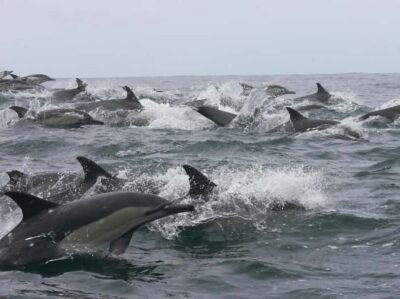
Knysna: Close Encounter Whale Watching Tour by Boat
Read our review →
From Cape Town: Full Day Guided Hermanus and Whale Tour
Read our review →Lists this trip appears in