
Review · SAN JUAN ISLANDS
Whale Watching Tour from Anacortes
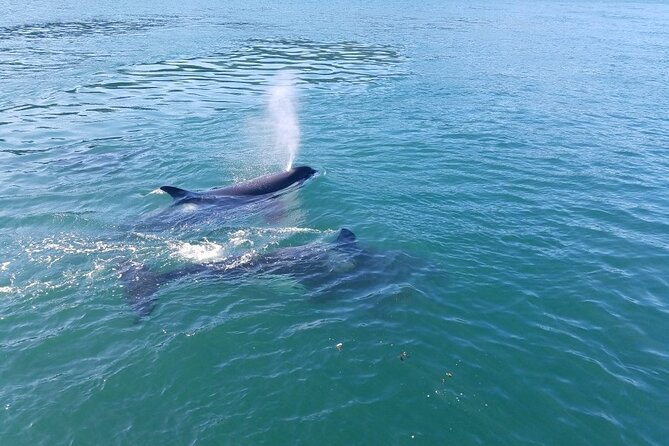
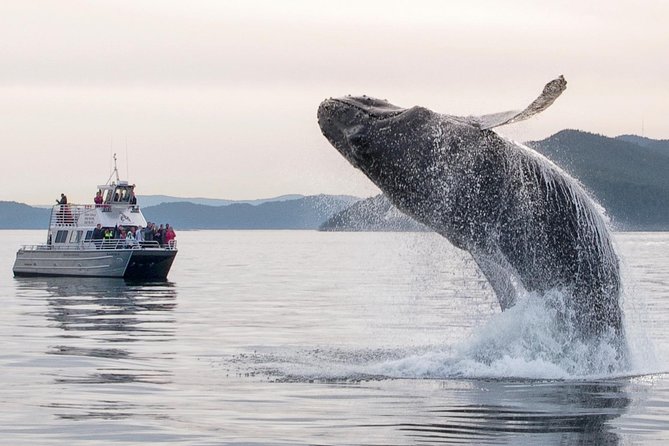
The main event is the search itself. From Anacortes, a fast Blackfish boat heads into the San Juan and Canadian Gulf islands, where you might find resident orcas, humpbacks, gray whales, and minkes in open water. The setting is beautiful enough to carry the trip, but the real thrill comes when a pod appears and the captain settles in for a proper look.
I like the small, fast vessels, which cover ground better than a slow sightseeing boat, and I like the crew’s strong focus on wildlife, local geography, and whale behavior. The main drawback is simple: wild animals do not keep appointments. Sightings are guaranteed from April through early September, but the exact whales, distance, and length of each encounter can vary.
Key points to know before you book
- You leave from Anacortes, not Seattle: The marina is about 90 minutes north of Seattle, with no ferry ride required from the Seattle area.
- The boat can cover serious distance: Some outings travel more than 50 miles while searching the San Juan and Canadian Gulf islands.
- The wildlife list goes beyond orcas: Humpbacks, gray whales, minkes, porpoises, seals, sea lions, otters, bald eagles, and seabirds are all possible.
- The crew keeps looking: Guides and captains have stayed out for roughly four hours on some trips when the search required extra time.
- Cold and wind are real factors: Bring warm layers, a windproof jacket, and sunglasses, even on a bright day.
- The group is capped at 49 people: That is smaller and more personal than a large ferry-style whale boat, though onboard sightlines can still vary.
Why Anacortes is a smart whale-watching base
Anacortes is the practical starting point for this trip. It is the home port for the San Juan Islands, yet you can reach the marina by road without taking a ferry. From Seattle, plan on roughly 90 minutes of driving, and allow extra time for traffic and parking.
That matters because ferry logistics can turn a short excursion into a full-day project. You arrive at 2201 Skyline Way, board there, and return to the same meeting point. If you are coming from Bellingham or Birch Bay, the drive is shorter still.
The town and marina also give you a pleasant change of scene from Seattle. Once the boat clears the harbor, the trip becomes a wide-water search through islands, channels, and Canadian Gulf island scenery. You may spend long stretches watching the horizon, but the surroundings are part of the payoff.
Plan your day carefully if you need to catch a ferry afterward. One party coming from Kitsap nearly missed the return ferry and found that food and activities were limited on that side of the route. If your schedule includes a ferry connection, leave a generous cushion.
More whale trips worth the boat ride around the USA:
- Juneau Wildlife Whale Watching
★ 5.0 · 7,379 reviews - Juneau Wildlife Whale Watching & Mendenhall Glacier
★ 5.0 · 6,236 reviews - Boston: City Cruises Whale Watching Cruise
★ 4.5 · 4,710 reviews
A fast Blackfish boat changes the search
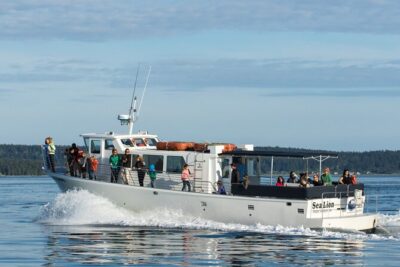
Outer Island Excursions uses high-speed vessels from its Blackfish fleet. The advantage is range. A whale-watching captain may need to cover a wide area to locate animals, and a faster boat can reach more promising water during a three to four hour outing.
Some trips have covered more than 50 miles while searching. That tells you something useful about the region: whales are not always just outside the harbor, and the outing is not a short ride to one fixed viewing point.
The tradeoff is motion and exposure. A fast boat can feel lively on the water, and the wind is stronger than it may seem from the dock. The boat does have interior seating, which is welcome when the temperature drops, and one family found that the views remained good from inside.
Still, dress for the outside deck. Wear several warm layers and bring a raincoat or windproof outer layer. October outings can feel cold even with three layers, and sunny days call for sunglasses. Binoculars are also useful, though the crew works to position the boat for viewing.
The maximum group size is 49 people. That is not a private charter, but it is a manageable number for a specialized wildlife boat. Guides have been described as moving around the vessel, answering questions, and helping people understand what they are seeing.
Searching the San Juan Islands
The first part of the journey is less about a formal stop and more about finding the right water. The boat travels out from Anacortes into the San Juan Islands and may continue toward the Canadian Gulf islands. Your captain and naturalist guides watch for blows, fins, splashes, and reports of nearby whale activity.
The word search is important. This is not an aquarium visit with animals placed in one predictable area. The crew may find whales within minutes, or the boat may spend much longer covering water before a sighting. One outing found orcas only two minutes after departure. Another followed a pod for nearly two hours.
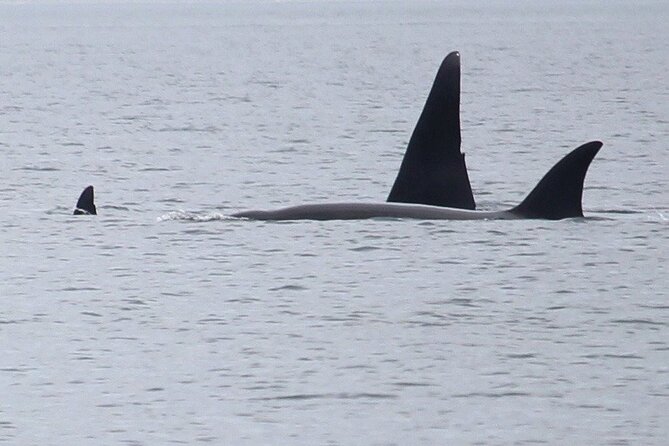
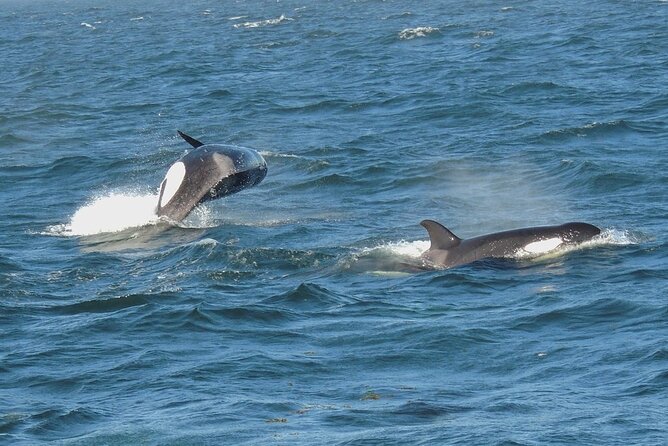
That variety is part of the character of the trip. You might see one lone orca, two brothers passing the boat, five separate pods, or a group of five animals that includes a very young calf. Humpbacks can appear as individuals or in a feeding group. One especially active sighting involved two humpbacks feeding while a lone orca appeared on the return trip.
The guides add value during the quiet periods. They explain local wildlife, island geography, whale families, feeding habits, and behavior. Captains and crew members named in past outings include Drew, Tiffany, Nic, Brooke, Becca, Sam, Andy, Becky, Matt, Isabelle, Sean, Thomas, and Trevor. Crew assignments can change, so do not book expecting one specific person, but the operation clearly uses a hands-on guide team rather than leaving you to guess at every fin and splash.
One practical limitation is sound. On at least one outing, a passenger suggested using microphones so everyone could hear the naturalist. If you are seated far from the guide, some commentary may be harder to catch when the boat is moving or the wind picks up.
What you might see besides orcas
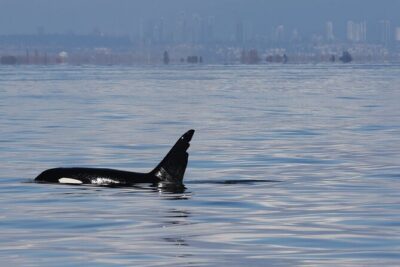
Orcas are the headline attraction, but you should think of this as a marine wildlife trip. Seals and sea lions are common possibilities, and several outings also found porpoises, sea otters, seabirds, and bald eagles.
Sea lions can be surprisingly impressive in person. They are large animals, and watching them haul out, swim, or gather near the islands adds variety when whales are traveling below the surface.
Bird life gives you something to watch between whale blows. Bald eagles have appeared on the route, along with herons and other seabirds. The crew can put those sightings into context, which makes the ride more than a repeated scan of empty water.
Porpoises and otters are smaller and easier to miss, so keep watching even after the first major sighting. The best trips often build in layers: an orca pod, then seals, then an eagle or porpoise while the boat moves to the next location.
The region itself is also worth the trip. You may see Canada from the water, an unexpected treat for anyone visiting from the southern United States. Even on a day with fewer whales, the San Juan scenery gives you a strong sense of place.
Same migration, a different deck:
- Whale Watching Tour in Gloucester
★ 5.0 · 4,460 reviews - City Cruises Boston Whale Watching Cruise by High-Speed Boat
★ 4.5 · 3,115 reviews - Maui Eco-Raft Tour: Eye-Level Whale or Dolphin Watching – Lahaina
★ 5.0 · 2,482 reviews - San Diego Whale Watching Cruise
★ 5.0 · 2,317 reviews
Orcas, humpbacks, gray whales, and minkes
The advertised search includes resident orcas, humpback whales, gray whales, and minkes. The experience is especially associated with orca sightings, but you should not assume every trip will produce the same combination.
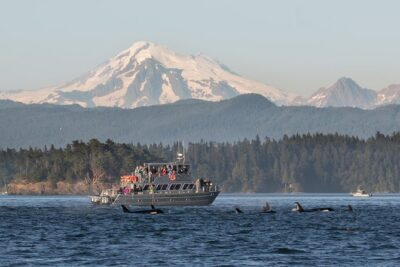
Resident orcas may travel in family groups, and the guides can explain pod relationships and individual behavior when conditions allow. Several outings followed pods for a long time, giving the boat time to watch rather than simply stop for one quick glimpse.
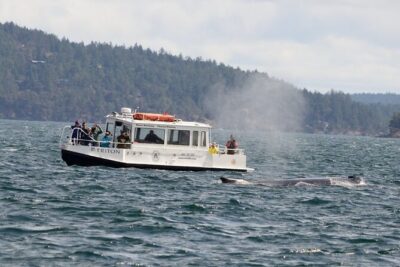
Humpbacks can offer a different kind of sighting. Their larger blows and feeding behavior may be easier to spot at a distance, and a feeding group can become the most memorable event of the day. Gray whales and minkes are also possible, though no particular species is promised on every departure.
The crew follows the animals instead of forcing a close approach. One passenger wished the boat could move nearer to the orcas, but the distance is controlled by wildlife protection rules. That is a good thing to understand before you go. The captain may give you an excellent angle, but the boat must respect legal viewing distances and the animals’ space.
The stated whale sighting rate is about 98 percent overall, and sightings are guaranteed from April through early September. That is a strong reason to choose this trip during that season. A guarantee still does not mean a specific species, a close pass, or a particular length of viewing. If a departure is canceled because of poor weather or too few bookings, you are offered another date or a full refund.
How the three to four hours usually feel
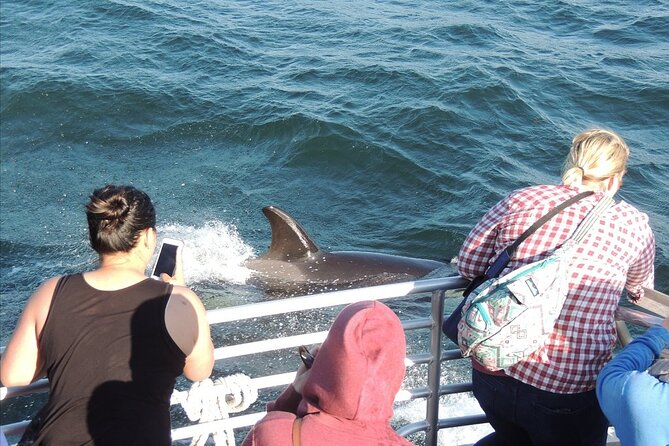
The listed duration is about three hours, while the included tour time is given as three to four hours. In practice, some departures have lasted closer to four or four and a half hours when the crew found worthwhile wildlife.
That extra time can be a benefit, but it also affects your schedule. Do not book a tight dinner reservation, airport transfer, or ferry connection immediately afterward. The captain may need to travel far to find whales, and the return time can stretch when the boat is following active animals.
The trip begins at the Anacortes meeting point and ends there. There is no separate island stop or land-based walking portion. The itinerary is the boat ride itself, with Anacortes as the departure port and the San Juan Islands as the main viewing area.
I like this format for people who want a focused wildlife outing. You spend the whole session looking for animals and learning about the area, rather than breaking the day into several unrelated activities. If you need frequent movement, a café stop, or a guaranteed schedule, the open-water search may feel less predictable.
Is $119 a fair price?
At $119 per person, this is not a casual harbor cruise, but the price is reasonable for a three to four hour wildlife search on a high-speed boat with a professional guide. Washington sales tax and applicable fees are included.
The value improves if you treat the trip as a half-day experience rather than a simple whale sighting. You are paying for the vessel, fuel, crew, naturalist interpretation, and the ability to cover a large section of the islands. The guides also work hard to keep searching when the first location is quiet.
The strongest value comes during peak whale season, particularly April through early September, when sightings are guaranteed under the operator’s policy. Outside that period, you may still see impressive wildlife, but weather and animal movement become more important considerations.
For a family, the cost adds up quickly. For a once-in-a-trip experience, the price is easier to justify, especially when the outing includes orcas, humpbacks, sea lions, and the San Juan scenery in one day.
Who will enjoy this trip most
This is a good fit if you want an active boat outing and do not mind uncertainty. Families, couples, solo visitors, and groups of friends have all found the format rewarding, especially when the crew stays with a pod for an extended period.
It also suits people who care about learning what they see. The guides discuss whale behavior, local geography, wildlife habits, and pod relationships, rather than simply pointing toward a distant fin.
Older passengers and anyone sensitive to cold should prepare carefully. The boat has indoor seating, but you will want outdoor access for the best views, and the wind can make a mild day feel cold.
Children must be accompanied by an adult. Service animals are allowed, and most people can participate. If you have a mobility concern or a specific need beyond that information, contact the operator before booking.
Private charters are also available through Outer Island Excursions. The company can add options such as fishing, kayaking, island hopping, and other custom plans, but those are separate arrangements from this shared whale-watching trip.
Booking advice and final decision
This experience is usually booked about 27 days ahead, so reserve early if your dates are fixed. The ticket is mobile, confirmation arrives at booking, and the activity is non-refundable if you cancel or request a change.
I would book this trip if you can give it a flexible half-day, reach Anacortes without a rushed connection, and accept that nature controls the schedule. Pack warm clothing, protect yourself from wind and sun, and leave extra time after the boat returns.
I would choose another activity if you need a guaranteed close-up view, dislike boat motion, or cannot handle a long outdoor search. For everyone else, the combination of fast boats, strong whale-sighting odds, skilled naturalist guides, and beautiful island scenery makes $119 a solid use of a day in the Pacific Northwest.
FAQ
Where does the whale-watching tour depart?
The tour departs from 2201 Skyline Way in Anacortes, Washington. The boat returns to the same meeting point at the end.
How far is Anacortes from Seattle?
Anacortes is about 90 minutes north of Seattle by car. No ferry is needed to reach the departure point from Seattle.
How long does the tour last?
The tour lasts approximately three hours, with the included time listed as three to four hours. Some outings have lasted longer when the crew was following whales.
What whales might I see?
The search includes orcas, humpback whales, gray whales, and minkes. The exact species seen varies by departure.
Are whale sightings guaranteed?
Sightings are guaranteed from April through early September. The general sighting rate is listed at about 98 percent, but no specific whale species or viewing distance is guaranteed.
What other wildlife could I see?
You might see porpoises, seals, sea lions, sea otters, bald eagles, and a variety of seabirds.
How many people can join the tour?
The maximum group size is 49 people.
Are children allowed?
Yes. Children must be accompanied by an adult.
What should I wear?
Bring warm layers, a windproof jacket or raincoat, and sunglasses. The boat can feel cold and windy, especially in October.
What happens if bad weather cancels the tour?
If poor weather causes a cancellation, you are offered a different date or a full refund. If the minimum number of participants is not reached, you are also offered a different date or experience, or a full refund.
Newly added whale trips around the USA
- Anacortes Whale Watching Adventure Tour – Zodiac Boat★ 5.0 · 149 reviews
- Guaranteed Whale Watch Tour from Anacortes★ 4.5 · 21 reviews
- Orca whale tour near Seattle★ 5.0 · 3 reviews
- Orca Whale Inflatable Rides★ 5.0 · 3 reviews
- 8hr Kenai Fjords Whale Watching Tour w/ 1hr Fishing 16 Passengers★ 5.0 · 2 reviews
- Private Whale Watching and Marine Wildlife Tour★ 5.0 · 10 reviews
- Sitka Whale Watch and Sea Otter Quest★ 5.0 · 8 reviews
- Only Wildlife and Whale Watching Tour Leaving from Seattle★ 4.0 · 248 reviews
San Juan Islands Whale Watching Tours, side by side.

Cafes and Kayaks: Full Day Kayaking Adventure on Orcas Island
Read our review →Lists this trip appears in