
Review · NEW ZEALAND
Auckland: Whale and Dolphin Watching Half-Day Eco Cruise
Auckland’s best wildlife trip may be the one that treats the Hauraki Gulf as a living research site, not just a backdrop for animal photos. On this 4.5-hour cruise, you ride the 65-foot Dolphin Explorer from the city center, search for whales and dolphins, and may watch the crew take samples or explain current marine research.
I like the close viewing made possible by the catamaran and the strong conservation angle, with one dollar from every ticket going to the Hauraki Gulf Guardians fund. I also like that a second cruise is offered if no marine mammals are found. The catch is simple: wildlife is never guaranteed, and $130 is a serious price if your day produces only seabirds and sea views.
Key points to know before booking
- Auckland departure: Board at Berth 9, Eastern Viaduct Marina, opposite the Maritime Museum.
- Four and a half hours at sea: The route includes Devonport, North Head, Rangitoto Island, and wider Hauraki Gulf waters.
- Marine research on board: The vessel is also used for scientific work, including plankton sampling and marine mammal research.
- Wildlife can be varied: You might see common or bottlenose dolphins, Bryde’s whales, orcas, gannets, penguins, shearwaters, and sometimes sharks.
- No-mammal guarantee: If the crew finds no marine mammals, you receive a voucher for another cruise.
- Prepare for weather: Bring warm layers, a showerproof jacket, sun protection, and seasickness medication taken before departure.
From Auckland’s marina to the open Hauraki Gulf
The trip begins in a very convenient spot. The boat sits at Berth 9 in the Eastern Viaduct Marina, at the end of Quay Street and opposite the Maritime Museum. You do not need a long transfer from central Auckland, which makes this a smart choice if you have only one free morning or afternoon.
I would arrive 30 minutes before departure. The crew checks you in at the top of the boarding ramp, and check-in closes 15 minutes before the scheduled departure. That cutoff matters, since you do not want to be searching for the marina while the catamaran is preparing to leave.
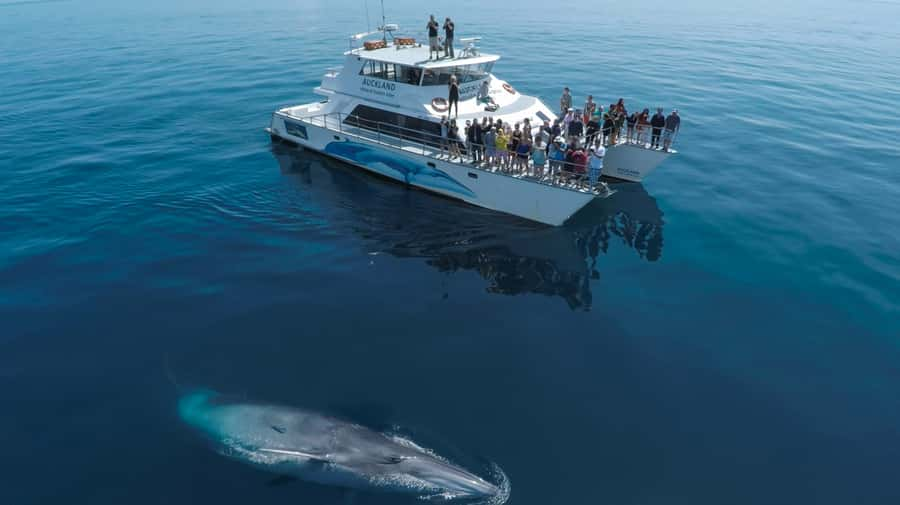
The Dolphin Explorer is a 65-foot luxury catamaran. Its size gives you a steadier platform than a small speedboat, though this remains an ocean trip, not a calm harbor cruise. You have indoor and outdoor areas, seating choices, and room to move when animals appear on one side of the boat.
The first part of the outing gives you a quick view of Auckland from the water. North Head and Devonport appear along the route, followed by Rangitoto Island, the volcanic landmark that anchors many views across the gulf. These sights are not just filler while the crew searches. They help you understand how close Auckland sits to a large marine park.
More Whale and Dolphin Watching Tours in New Zealand:
- Auckland Dolphin and Whale Watching Eco-Safari Cruise
★ 4.5 · 1,790 reviews - Auckland: Tikapa Moana Whales, Dolphins and Islands Cruise
★ 3.9 · 292 reviews - Auckland: Tikapa Moana Dolphin, Whale and Island Cruise
★ 4.0 · 17 reviews
Searching for whales, dolphins, and seabirds
The main work of the trip is the search. The crew watches the water, reads bird activity, follows signs of feeding fish, and keeps communication going across the boat. Gannet activity can be especially useful, since large groups of birds may point toward fish below the surface and larger animals nearby.
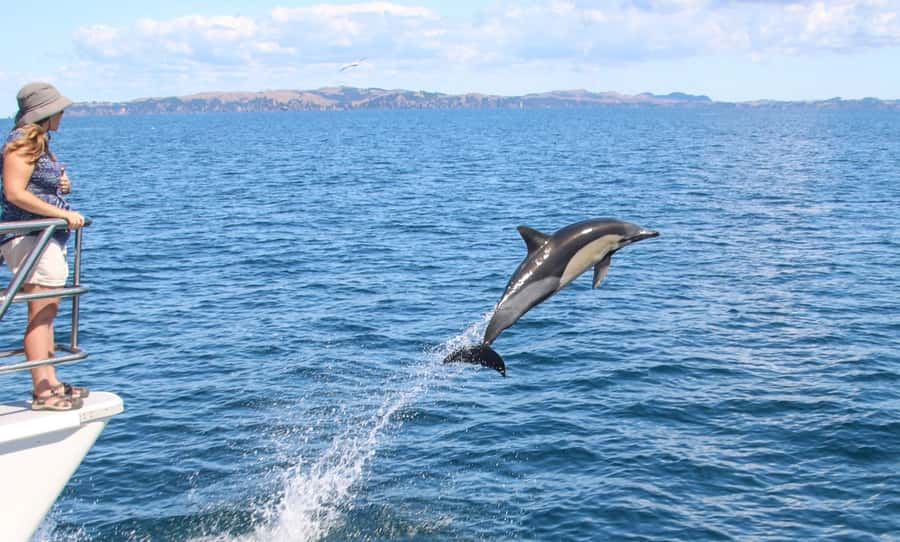
You might see bottlenose dolphins or common dolphins traveling in pods. Several departures have produced large groups, including more than 100 dolphins, while others have found smaller pods swimming beside or beneath the catamaran. The crew generally gives the animals time rather than rushing from one sighting to the next.
That patience is important. A dolphin sighting is not always a quick glimpse of a fin. If conditions allow, the boat may remain with a pod for a while, giving you time to watch young dolphins, social behavior, and animals moving around the hull. You will want a camera ready, but the best moments often happen too fast for a perfect photograph.
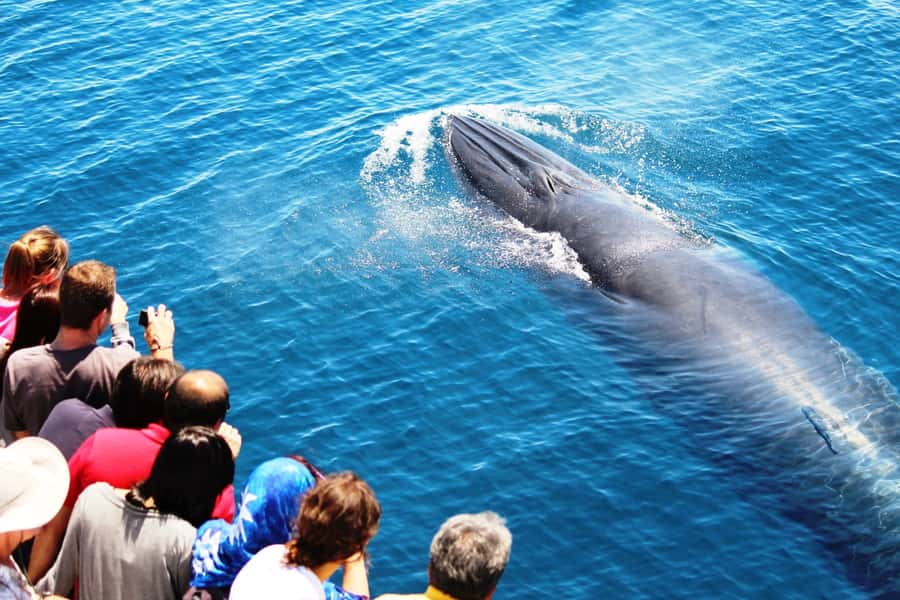
Whales are less predictable. Bryde’s whales have appeared on several trips, sometimes close enough to make a memorable sighting, and sometimes only as distant blows or backs. Orcas also regularly visit the waters near Auckland, but you should treat them as a lucky possibility rather than an expected part of the itinerary.
Birdlife gives the trip a second layer. Australasian gannets, shearwaters, and blue penguins have all been seen. The gannets are particularly striking as they plunge toward fish from above, though I would avoid using the word guaranteed for any animal on this cruise. Even on a day without whales, the changing mix of birds, dolphins, and coastal views can keep the outing worthwhile.
There have also been sightings of blue sharks and hammerhead sharks. These are occasional encounters, not advertised targets, but they show how much life can appear in the gulf when conditions line up.
What the crew adds to the experience
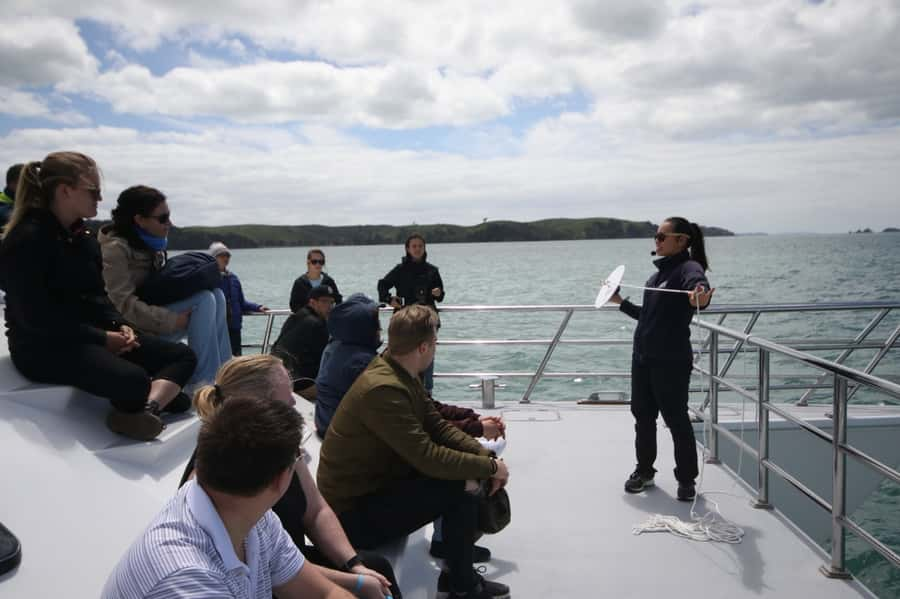
The crew is central to the trip. You are not simply taken to a likely wildlife area and left to scan the waves. The skipper explains what you are seeing, points out land and seabirds, and helps you understand why the animals are behaving as they are.
Crew members have included Emily, Sanaa, John, Joseph, Toni, George, Brittany, Jo, and Jess on different departures. The exact team will vary, but the recurring strength is the mix of boat handling, marine biology, and friendly commentary. Several crew members are marine scientists, so you can ask questions about animal behavior, research methods, and the health of the gulf.
I especially like the way the science is built into the trip rather than presented as a separate lecture. The boat may stop briefly to collect a plankton sample or carry out research work. You might see staff recording observations or discussing how they track marine mammals by following feeding activity and seabird workups.
This gives the cruise a useful sense of purpose. You are still there for whales and dolphins, but you also see how a marine safari can help gather information about the environment. The research element may appeal to families and curious adults who want more than a wildlife photo.
The commentary can be harder to follow when the boat is full, especially if children are excited or the wind picks up. I would stay near the guide during major sightings and use the indoor area if you need a quieter place to hear the explanations.
A close look at the Dolphin Explorer
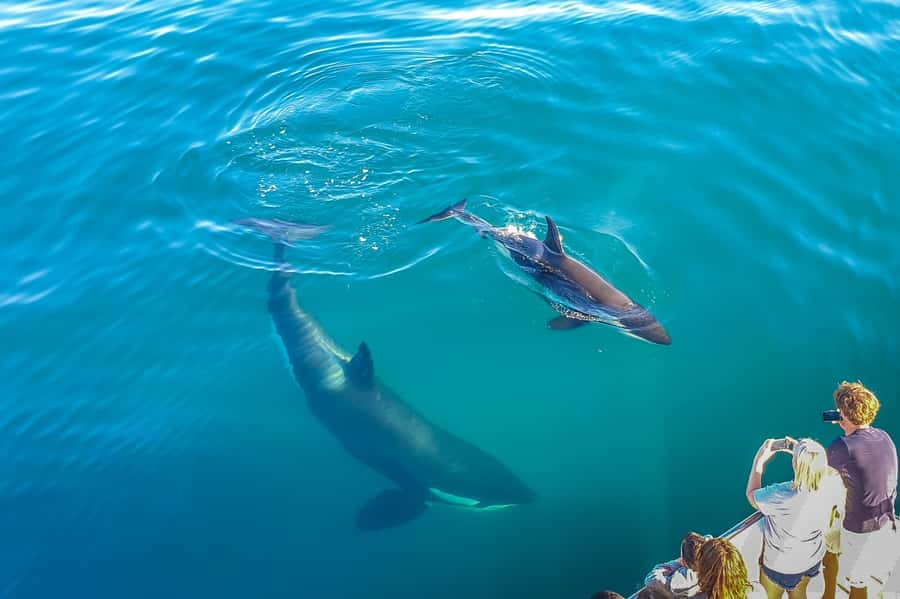
The boat is large enough to feel comfortable but not so large that you become one small face in a crowd. The 65-foot catamaran offers many seating options, and the layout lets people find a place along the rail when animals appear.
That said, this is still a popular activity, and everyone wants the best view. You may need to move calmly from one side to the other as the crew directs attention toward a sighting. The crew works to give everyone a chance, but no boat can offer a perfect front-row position to every person at every moment.
A catamaran can feel stable, but you should not assume you will avoid seasickness. The vessel may encounter wind, swell, and rain, especially as it reaches more open water. Take seasickness medicine before boarding if you need it. Do not wait until the boat is already moving.
Bring warm clothing even on a sunny Auckland day. A showerproof jacket is useful, along with a hat, sunscreen, personal medication, and binoculars if you have them. The sun can feel strong on the water, while wind can make the temperature drop quickly.
A small selection of snacks, hot food, and drinks is available to buy on board, including beer and wine. Food is not included, so I would eat something beforehand if you know you get hungry or queasy at sea. Keep alcohol modest until you are safely back at the marina.
More Whale Watching Cruises in New Zealand:
- Kaikoura: Whale Watching Cruise
★ 4.6 · 3,089 reviews - Reykjavík: Whale Watching and Marine Life Cruise
★ 4.6 · 9,838 reviews - Funchal: Dolphin and Whale Watching Catamaran Cruise
★ 4.5 · 5,697 reviews - Costa Adeje: Whale & Dolphin Eco-Cruise with Snacks & Drinks
★ 4.6 · 5,096 reviews
The conservation side of the cruise
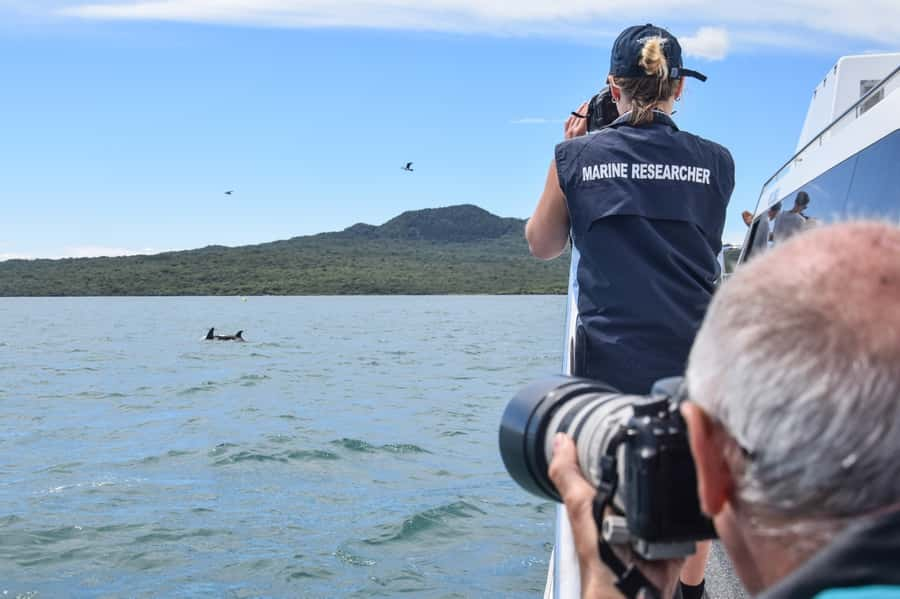
The conservation program is one of the strongest reasons to choose this safari over a standard sightseeing boat. One dollar from every ticket goes to the Hauraki Gulf Guardians fund, which supports efforts to regenerate and protect the marine park.
The vessel also serves as a research platform. That means your ticket supports more than the day’s operation, at least in part. You may watch the crew gather scientific information, discuss plankton, or record marine mammal sightings during the cruise.
I would not book this solely as a donation. You are paying for a long boat trip, and sightings remain uncertain. But if you want a wildlife outing that respects distance, collects information, and connects tourism with protection work, the research element adds real value.
The crew also appears careful around the animals. The catamaran can approach more closely than some whale watching operations, but close does not mean careless. The most satisfying encounters come when the boat slows, the animals choose their own distance, and the crew avoids turning a sighting into a chase.
How the $130 price works for you
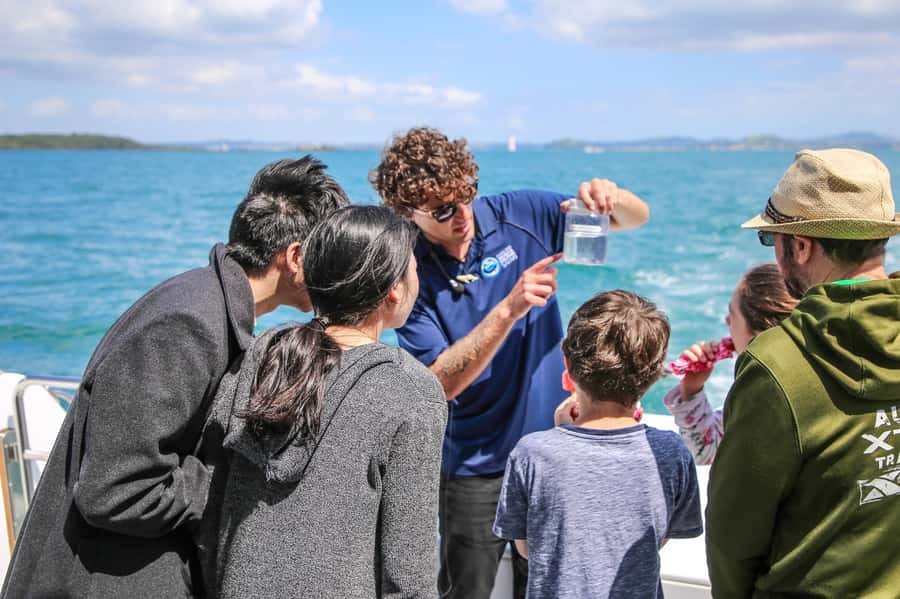
At $130 per person, this is not a cheap way to fill an afternoon. The price makes more sense when you consider the full 270-minute duration, the central Auckland departure, the specialist crew, the large catamaran, the marine research work, and the second-cruise promise if no marine mammals appear.
The value is strongest when you see several kinds of wildlife. A day with dolphins, a whale, gannets, and perhaps penguins can feel like a full marine safari rather than a short boat ride. Some trips have found multiple Bryde’s whales, large dolphin pods, sharks, and active seabird groups.
The value is less certain on a rough day with no mammals. Nature is the deciding factor, and even a skilled crew cannot produce whales on schedule. The free repeat cruise helps, but it may not help if you are leaving Auckland soon or cannot fit another four and a half hours into your plans.
I would book this for the experience of searching and learning, not as a guaranteed whale encounter. If you need certainty, a wildlife park offers predictable animals, but it cannot give you the same feeling of seeing them in the gulf, moving on their own terms.
Weather, timing, and who should go
The safari runs at scheduled departure times, with availability varying by day. Check the start time carefully and leave room around the cruise, since the boat is at sea for 4.5 hours.
Weather can change the plan. The operator may cancel a trip because of wind, weather, or sea conditions. That is a sensible safety rule, and recent departures have offered refunds or rebooking when storm warnings made conditions unsuitable.
Children under five may join only with close supervision by a parent or guardian. Unaccompanied minors are not allowed. The activity is not suitable for heavily pregnant women, and the vessel is not wheelchair accessible because of stairs and narrow doorways.
I think the cruise suits:
- Families with older children who can listen, wait, and follow safety instructions.
- Couples and solo visitors who want a substantial Auckland outing without leaving the city.
- People interested in marine biology and conservation, not just photographs.
- Visitors with flexible schedules who can use a second cruise if sightings fail.
- Anyone comfortable spending several hours outside in changeable weather.
It may not suit you if you dislike boats, struggle with motion sickness, require step-free access, or have only a tight schedule and need guaranteed results.
Practical booking advice
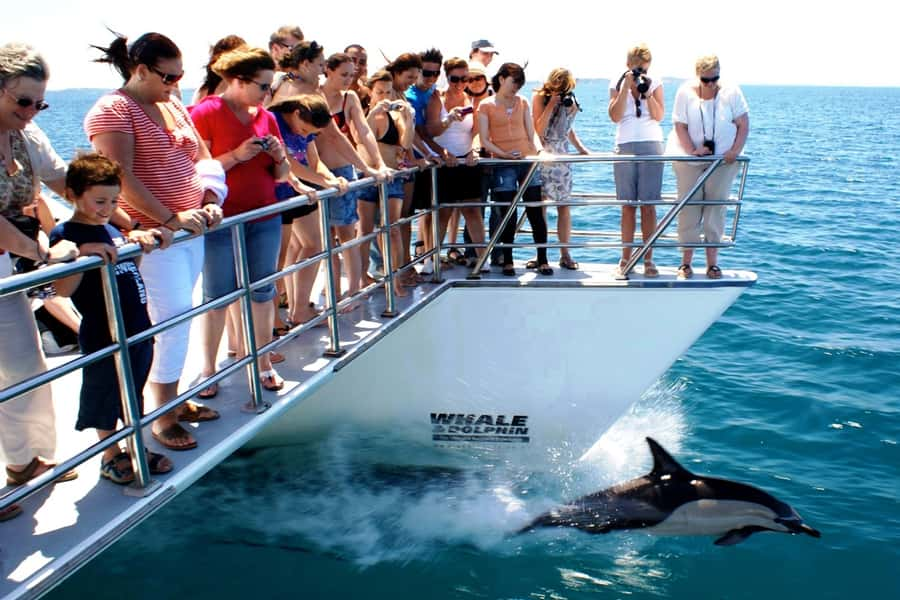
The cancellation terms are useful for planning. You can cancel up to 24 hours before departure for a full refund, and the reserve-now, pay-later option keeps your plans flexible.
I would avoid placing this cruise immediately before an important flight or a fixed evening booking. The scheduled time is 270 minutes, but getting settled, returning to the marina, and dealing with changing sea conditions deserve a little breathing room.
Keep your camera and phone protected from spray. Binoculars can help with distant whales and birds, while a zoom lens is more useful than expecting every animal to come right beside the boat.
Most important, dress for the water rather than the city. Auckland may feel warm at the marina, but the open gulf brings wind and spray. Layers, a waterproof outer jacket, sunscreen, and a hat will make it easier to stay outside when the action begins.
Should you book the Auckland whale and dolphin safari?
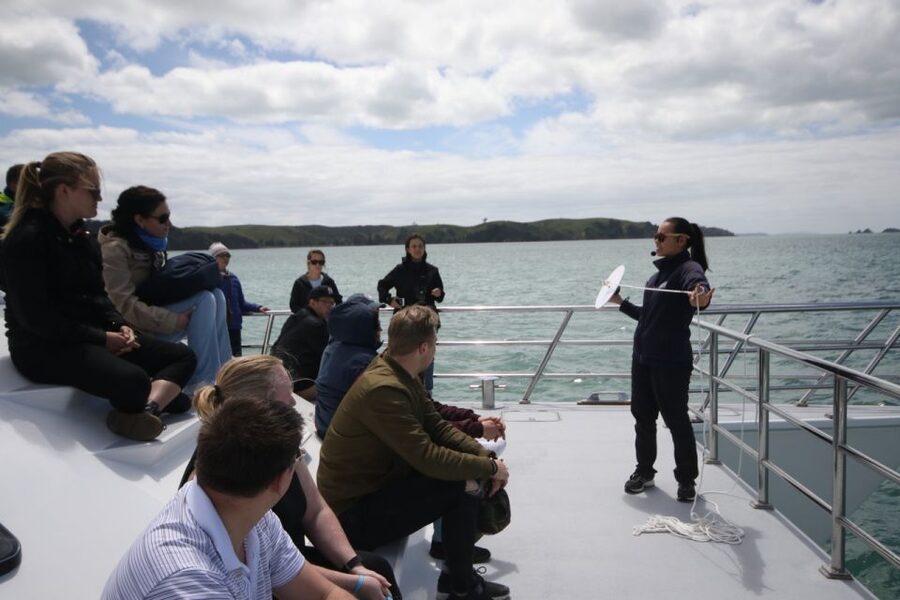
I would book it if you want a genuine marine outing with a strong research and conservation thread. The close dolphin encounters, views of Rangitoto and Devonport, varied birdlife, and science work give the trip substance even when whales stay away.
I would skip it if your Auckland schedule is packed or if $130 feels too high for an uncertain wildlife result. The repeat-cruise policy softens the risk, but it cannot replace your time.
For a flexible visitor who accepts that nature sets the timetable, this is one of the better ways to experience the Hauraki Gulf. Go prepared for wind, keep your expectations open, and treat a whale as a bonus rather than a promise.
FAQ
Where does the Auckland whale and dolphin cruise depart?
The boat departs from Berth 9 at Eastern Viaduct Marina, reached from the western end of Quay Street. The berth is opposite the Maritime Museum.
How long does the cruise last?
The eco-cruise lasts 270 minutes, or 4.5 hours.
What animals might I see?
Possible sightings include orcas, bottlenose dolphins, common dolphins, whales, gannets, shearwaters, and blue penguins. Sharks have also been seen, but no animal sighting is guaranteed.
What happens if no marine mammals are seen?
You can take the cruise again for free using a voucher if no marine mammals are found.
What should I bring?
Bring warm clothes, a showerproof jacket, a sun hat, sunscreen, a camera, binoculars if you have them, personal medication, and seasickness medication taken before the trip.
Is the boat wheelchair accessible?
No. The vessel has stairs and narrow doorways, so it is not wheelchair accessible.
More Half-Day Trips in New Zealand
- Vancouver Half-Day Whale Watching Adventure with Free Photos
★ 5.0 · 5,000 reviews - Victoria Half-Day Whale Watching Adventure with Free Photos
★ 5.0 · 2,259 reviews - Seattle: Half-Day Wildlife and Whale Watching Cruise
★ 4.3 · 378 reviews - Small-Group Half-Day Whale-Watching Tour in Puerto Vallarta
★ 5.0 · 334 reviews
Newly added whale trips around New Zealand
- Kaikōura Whale Watching – 1hr 20min Ultimate Adventure★ 5.0 · 8 reviews
- Kaikōura Whale Watching and Scenic Landing – 1hr Premier Tour★ 5.0 · 24 reviews
- Kaikoura Whale Watching – 45 Minute Ocean Safari★ 5.0 · 39 reviews
- Whale Watching in Kaikoura – Ultimate Experience★ 4.5 · 199 reviews
- Kaikoura Whale Watch Day Tour from Christchurch★ 4.5 · 170 reviews
- Kaikoura Helicopters Top n Tail Whale Watch flight★ 5.0 · 7 reviews
- Kaikoura Helicopters Extended Whale Watch★ 4.5 · 15 reviews
- Kaikoura: Whale Watching Flight★ 5.0 · 100 reviews
New Zealand Whale Watching Tours, side by side.
Auckland Dolphin and Whale Watching Eco-Safari Cruise
Read our review →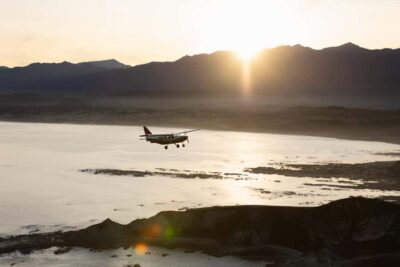
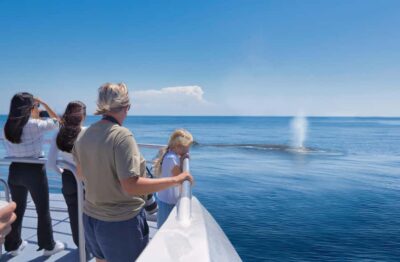
Tikapa Moana Whales, Dolphins and Islands Cruise
Read our review →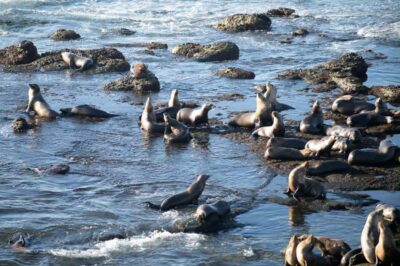
From Christchurch: Kaikōura Day Tour with Whale Watching
Read our review →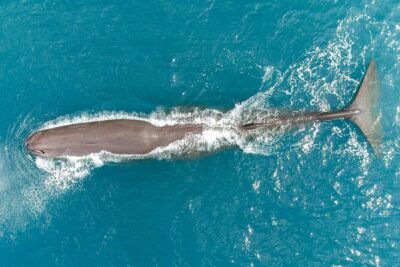
Kaikōura Whale Watching Scenic Flight (40 Minutes)
Read our review →
Whale Watching in Kaikoura – Ultimate Experience
Read our review →Lists this trip appears in