
Review · THE USA
Plymouth: Whale Watching Cruise
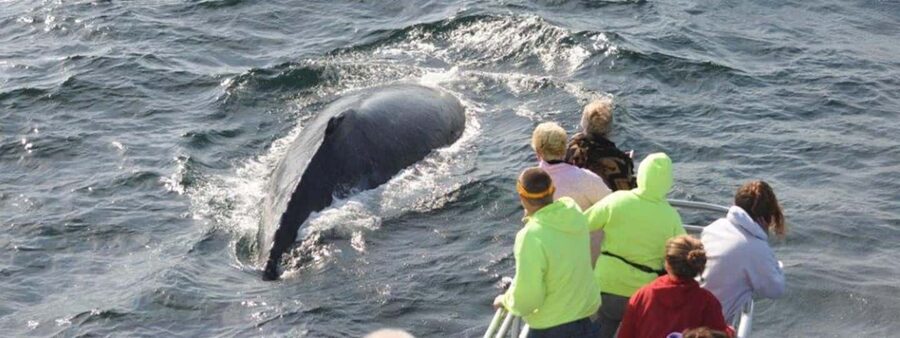
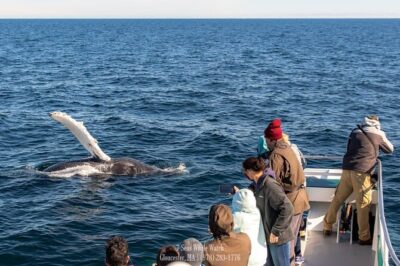
Seeing a humpback whale surface just yards from a boat is the main event here. Captain John Boats takes you from Plymouth into Cape Cod Bay and Stellwagen Bank, a protected feeding area where humpbacks, finback whales, minke whales, pilot whales, and endangered right whales may appear.
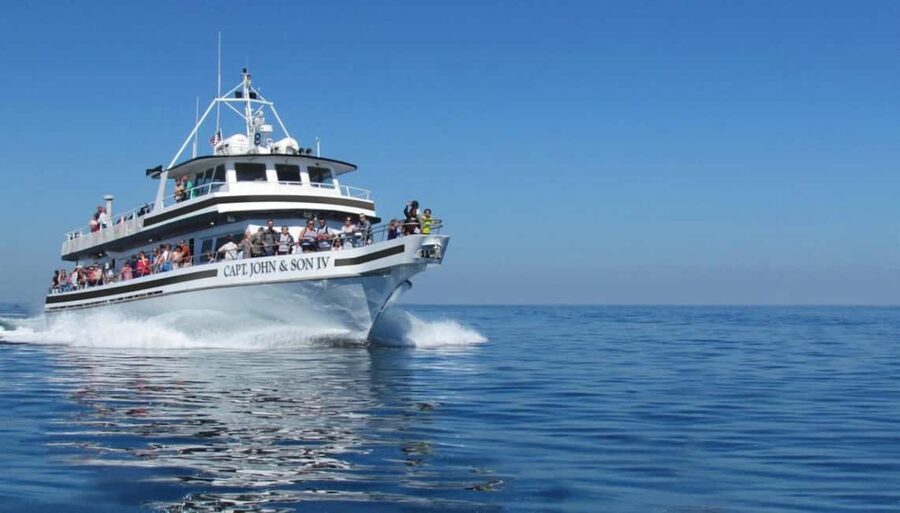
I like the strong naturalist commentary, which turns random splashes into an understanding of whale behavior. I also like the comfortable catamaran setup, with indoor seating, outdoor viewing, and a galley for food and drinks. The tradeoff is simple: this is a four-hour ocean trip, and whales are wild animals. Sightings are common in the season, but never guaranteed, and rough water can be hard on anyone prone to seasickness.
Key points at a glance
- Stellwagen Bank is the target area: The cruise heads toward one of the region’s main feeding grounds for large whales.
- The ride takes four hours: A substantial part of the trip is spent traveling to and from the whale grounds, so plan your day around it.
- Naturalists add real value: Guides such as Lindsay, Skylar, and Kelly have been praised for explaining whale names, behavior, and local geography.
- You may see named whales: Salt, a famous humpback recorded for decades, has appeared on recent trips, along with whales called Music and Tripod.
- The boat has indoor and outdoor options: You can step inside for warmth, then return outside when the crew spots activity.
- Come prepared for the ocean: Bring warm layers, sunscreen, a camera, binoculars, and motion sickness prevention.
From Plymouth Town Wharf to Cape Cod Bay
The trip begins at Town Wharf in Plymouth. The practical advice is to arrive early, not at the scheduled departure minute. Allow about 60 minutes for ticketing and boarding, finding your place on the boat, and settling in before departure.
That extra time matters. Boarding is part of the outing, and you will want a few minutes to decide where you are most comfortable. The boat offers indoor seating as well as outdoor viewing areas, so you can begin inside and move outside once the crew starts looking for whales.
Plymouth adds a pleasant sense of place before the open water begins. One recent trip had a view of the Mayflower II in the harbor, a memorable bonus if the ship happens to be in port. Once the boat leaves shore, the focus shifts quickly to the bay, the weather, and the wildlife.
The ride out can take a good portion of the first half of the cruise. One account described roughly an hour and a half to reach the feeding area. That means you should not think of this as a short harbor outing with a quick whale appearance. It is a full ocean excursion, and the boat needs time to reach the places where feeding whales are active.
More Whale Watching Cruises in the USA
- Boston: City Cruises Whale Watching Cruise
★ 4.5 · 4,710 reviews - City Cruises Boston Whale Watching Cruise by High-Speed Boat
★ 4.5 · 3,115 reviews - San Diego Whale Watching Cruise
★ 5.0 · 2,317 reviews
Why Stellwagen Bank matters
The boat heads toward Stellwagen Bank, a marine sanctuary and major feeding area. It is the kind of place where whale watching has a purpose beyond spotting a large animal. Seasonal food draws several whale species into the same waters, giving the naturalist a chance to explain how the bay supports them.
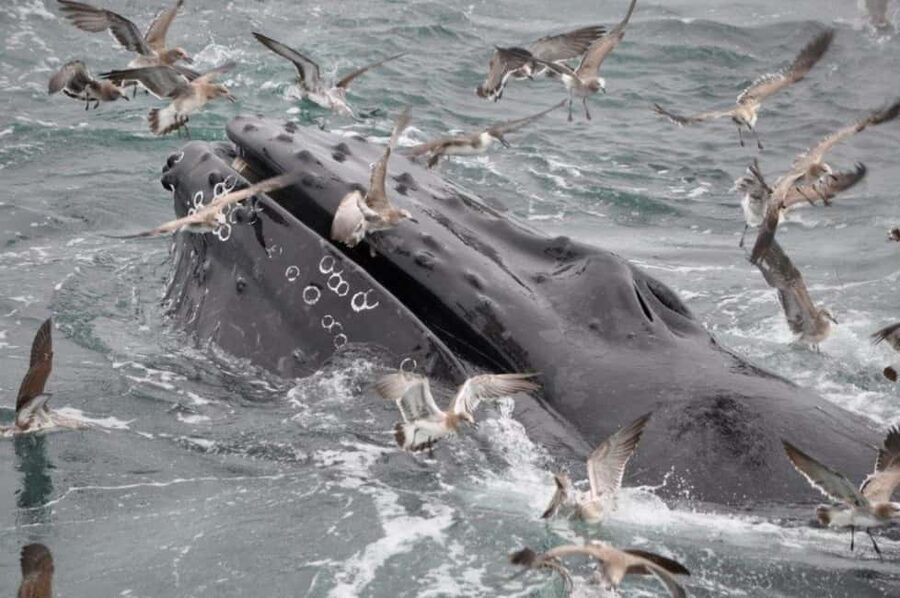
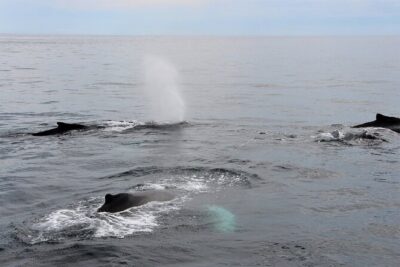
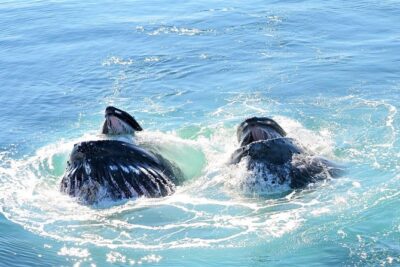
Humpback whales are the stars for many people. You might see a back roll past the surface, a broad tail lift before the animal disappears, or a whale feeding with its mouth open. Some trips have included fin whales, seals, dolphins, and several humpbacks working in the same area.
Fin whales are especially impressive because of their size and speed, though they can be less theatrical than humpbacks. Minke whales, pilot whales, and right whales are also possible. The endangered North Atlantic right whale is a particularly important sighting, but you should treat it as a fortunate possibility rather than an expected part of the trip.
The naturalist helps you understand what you are seeing. A whale may surface only briefly, and without guidance you can easily look in the wrong direction. The crew points out movement, tells you where to watch, and explains whether the animal is feeding, resting, traveling, or showing a more active behavior.
The four-hour itinerary, part by part
Boarding and departure
Give yourself the full hour suggested for ticketing and boarding. The confirmation email includes parking and boarding instructions, so read it before leaving for the wharf. Parking fees are not included in the $74 ticket price.
The first few minutes are a good time to organize your gear. Keep your camera ready, but do not forget the less glamorous items. A jacket, warm clothing, sunscreen, and motion sickness protection will make a larger difference than an expensive lens.
Same migration, a different deck:
- Juneau Wildlife Whale Watching
★ 5.0 · 7,379 reviews - Juneau Wildlife Whale Watching & Mendenhall Glacier
★ 5.0 · 6,236 reviews - Whale Watching Tour in Gloucester
★ 5.0 · 4,460 reviews - Maui Eco-Raft Tour: Eye-Level Whale or Dolphin Watching – Lahaina
★ 5.0 · 2,482 reviews
The ride across the bay
As the boat moves away from Plymouth, you get open-water views and a gradual change in conditions. The temperature can feel cooler on the water than it does on land, even on a sunny day. The breeze is part of the experience, but it can become tiring if you arrive in light summer clothes.
This is also the section where seasickness can begin. If you know you are prone to it, plan ahead with your usual prevention method. The activity is specifically not suited to people who struggle with seasickness, and the trip is long enough that discomfort can affect much of the day.
Finding the whales
Once the captain reaches an active area, the pace changes. The boat may pause while everyone watches for a back, blow, fin, or tail. The captain may move to another spot if activity fades, which is an important part of responsible whale watching and a practical reason sightings can vary from one trip to the next.
The best show is not always a dramatic breach. A whale surfacing repeatedly for an hour can give you better chances to watch its pattern. A feeding whale may appear and disappear in short bursts. A tail wave can last only seconds, but you may see several if the animal remains nearby.
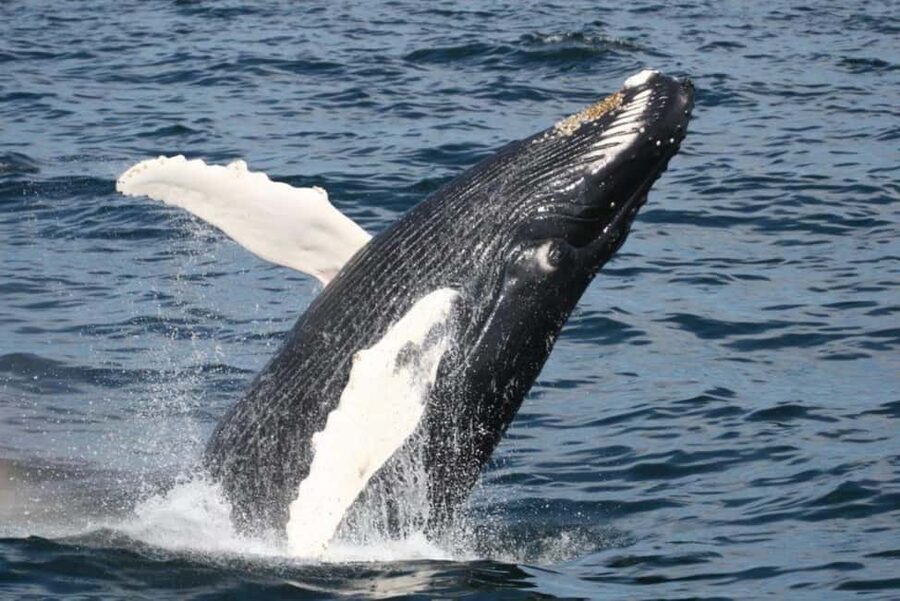
Recent trips have produced different kinds of encounters. One group saw four types of whales in a short time. Another saw 10 to 15 humpbacks, including one resting near the surface and another breaching. Other outings had two active humpbacks, including whales rolling onto their backs, flapping their fins, and making repeated tail movements.
The ride back to Plymouth
The return trip gives you time to warm up, sort photos, and continue listening to the naturalist. On one outing, dolphins followed the boat toward port. That is not something to expect every time, but it shows how the ride home can still bring unexpected wildlife.
The Mayflower II or other harbor sights may appear again as the boat returns. The final part of the cruise is less focused than the whale grounds, but you are still on the water and can use the indoor seating or galley service.
The naturalist is a major part of the value
A whale cruise can be reduced to a boat ride and a search for blows. That would miss half the point. The naturalist gives the trip structure and helps you pay attention to details you would likely overlook.
Guides named Lindsay, Skylar, and Kelly have been singled out for clear explanations, humor, and enthusiasm. The strongest guiding moments involve more than naming species. You may learn how a whale is identified, why certain individuals have names, and what a particular movement means.
The story of Salt is a good example. This famous humpback has been observed and tracked for almost 50 years. Seeing a whale with a long record gives the encounter extra meaning, because you are not simply watching an anonymous animal. You may also hear about whales such as Music, known for repeated fin gestures, or Tripod, recognized by a distinctive tail pattern.
The guide may also explain the geography around you. That helps during the long ride out, when the whale search has not yet begun. A good naturalist keeps you informed without turning the trip into a nonstop lecture.
What the boat experience is really like
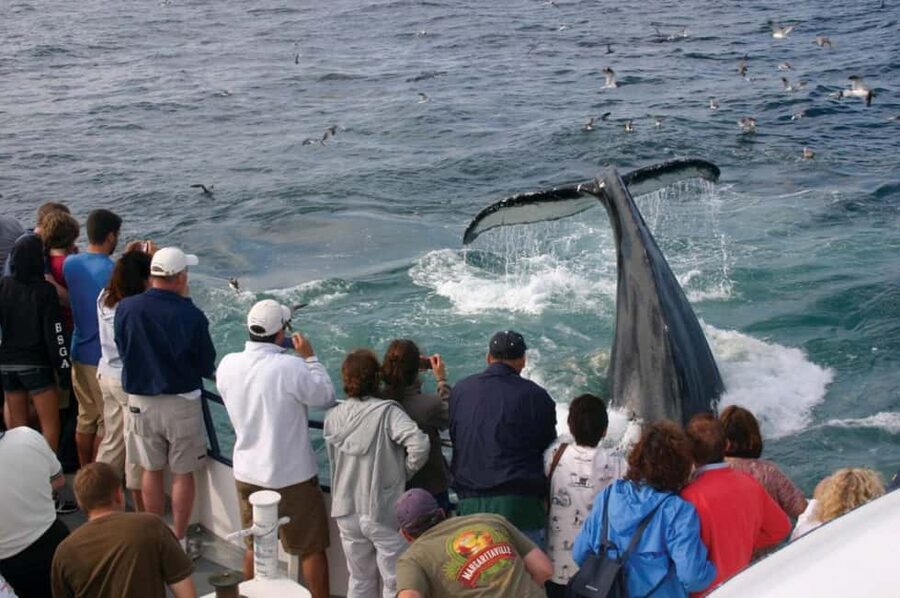
The boat has been described as a comfortable catamaran with indoor and outdoor seating. That arrangement is useful because whale watching demands flexibility. Outside offers the best chance to spot activity, while inside gives you relief from wind, sun, and cold.
Crowding can vary. Some departures have enough room to move between viewing areas. On sold-out or busy trips, you may need to shift around or squeeze into a line of sight when a whale appears. One account found the boat somewhat crowded, while another said a sold-out departure still felt manageable.
That difference is worth keeping in mind. The experience depends partly on how many people are aboard and how concentrated the sightings become. If a whale surfaces on one side, many people will move there at once. The crew works to keep people informed, but you may not have an uninterrupted view at every moment.
The full galley service is another practical plus. You can buy food and drinks on board, and alcoholic beverages are available for purchase. Alcohol is not included in the ticket price, and I would not rely on it as a way to handle seasickness. Warm clothing and sensible preparation are the better plan.
How much wildlife can you expect?
No honest whale tour can promise a particular species or number of sightings. One trip encountered only a single whale in heavy fog, while a second outing the next day found four whales of two types, plus seals. The crew moved around the area to improve the chances, but weather and animal behavior still control the result.
The recent pattern is encouraging. Trips have included humpbacks, fin whales, seals, dolphins, and large groups of whales. A few outings produced especially active animals, including breaching, fin slapping, tail waving, and surface feeding.
Still, you should book this as a wildlife search, not a theater show. The ocean may be calm and clear, or foggy and difficult. The crew can guide you toward likely areas, but it cannot make whales appear on schedule.
That uncertainty is part of the value for some people and a drawback for others. If you need a guaranteed attraction, choose something on land. If you enjoy watching nature unfold at its own pace, the waiting becomes part of the experience.
Is $74 a fair price?
At $74 per person, this is not a cheap add-on, especially once you include parking, food, and any drinks purchased on board. But the ticket covers a four-hour cruise, the naturalist, and access to the boat’s galley service. Compared with a brief harbor trip, you are paying for substantial time on the water and the chance to reach the feeding grounds.
I consider the price reasonable for a dedicated whale-watching outing, particularly if seeing whales is one of your main reasons for visiting Plymouth or Cape Cod. The value is strongest on a day with several sightings and active guiding. It feels less satisfying if fog limits visibility or the whales remain distant, though that is the risk built into any wild-animal trip.
The reserve-now-and-pay-later option can help if you are arranging a larger itinerary. You can reserve a place without paying immediately, and cancellation is allowed up to 24 hours before departure for a full refund. Check the available starting times when choosing your date, since the cruise lasts four hours and can shape the rest of your day.
Who should book this cruise?
I would recommend it to families, couples, photographers, and anyone who wants a substantial day on the ocean rather than a quick boat ride. Children and adults can enjoy it, especially when the naturalist keeps the information lively and the whales remain active.
It is also a good choice for people who want more than a checklist sighting. The named whales, feeding behavior, and explanations of local geography give the outing an educational side without making it feel like a classroom.
You should think twice if you dislike long rides, cold wind, crowded viewing areas, or uncertain results. You also need to be comfortable with four hours at sea. The indoor seating helps, but it does not change the nature of the trip.
What to bring for a better day
Pack more warmth than you think you need. A jacket and extra layers are useful because conditions on the water can be cooler than at the wharf. Sunscreen still matters on cloudy days, since you can spend long periods outside.
Bring a camera and binoculars if you have them. A zoom lens helps, but do not spend the entire trip looking through a screen. Whale sightings can happen quickly, and your own view is often more rewarding than chasing a perfect photograph.
Motion sickness prevention deserves serious attention. If you are prone to seasickness, this may not be the right activity. Arriving early also helps, since rushing through ticketing and boarding is a poor way to begin a long ocean outing.
My call: book it if whales are a trip priority
Book this Plymouth cruise if you want a well-guided, four-hour search for whales in Cape Cod Bay and you accept that nature sets the schedule. The repeated praise for the crew, the useful naturalist commentary, and the range of wildlife make the $74 fare a solid value for a serious whale-watching day.
Choose another activity if you need certainty, dislike open water, or have little patience for a long ride to the feeding grounds. For everyone else, arrive early, dress warmly, keep your eyes on the water, and give the crew room to do its work. The reward may be a brief tail wave, a named humpback, a fin whale at the surface, or a full afternoon of whales moving around the boat.
FAQ
How long is the Plymouth whale watching cruise?
The cruise lasts four hours. This includes the ride from Plymouth into Cape Cod Bay and Stellwagen Bank, time searching for whales, and the return trip.
Where does the cruise depart?
The boat departs from Town Wharf in Plymouth, Massachusetts.
How early should I arrive?
Allow about 60 minutes for ticketing and boarding. Parking and boarding instructions are provided in your confirmation email.
What whale species might I see?
Possible sightings include humpback, finback, pilot, minke, and endangered right whales. Seals and dolphins have also appeared on some trips.
Is food available on board?
Yes. The boat has full galley service. Alcoholic beverages are available for purchase but are not included in the ticket price.
What should I wear and bring?
Bring warm clothing, a jacket, sunscreen, a camera, binoculars, and motion sickness prevention if needed. Temperatures can be cooler on the water.
Can I cancel the booking?
You can cancel up to 24 hours before the activity for a full refund. A reserve-now-and-pay-later option is also available.
Newly added whale trips around the USA
- Anacortes Whale Watching Adventure Tour – Zodiac Boat★ 5.0 · 149 reviews
- Guaranteed Whale Watch Tour from Anacortes★ 4.5 · 21 reviews
- Orca whale tour near Seattle★ 5.0 · 3 reviews
- Orca Whale Inflatable Rides★ 5.0 · 3 reviews
- 8hr Kenai Fjords Whale Watching Tour w/ 1hr Fishing 16 Passengers★ 5.0 · 2 reviews
- Private Whale Watching and Marine Wildlife Tour★ 5.0 · 10 reviews
- Sitka Whale Watch and Sea Otter Quest★ 5.0 · 8 reviews
- Only Wildlife and Whale Watching Tour Leaving from Seattle★ 4.0 · 248 reviews
USA Whale Watching Tours, side by side.
Juneau Wildlife Whale Watching & Mendenhall Glacier
Read our review →
City Cruises Boston Whale Watching Cruise by High-Speed Boat
Read our review →
Maui Eco-Raft Tour: Eye-Level Whale or Dolphin Watching – Lahaina
Read our review →
Whale Watching Trips to Stellwagen Bank Marine Sanctuary. Guaranteed sightings!
Read our review →Lists this trip appears in